Where Should Your Puppy Sleep? Tips for Creating a Cozy Spot

Your puppy needs a secure, quiet sleeping spot to support their 18-20 hours of daily sleep requirements. Start with placing their crate in your bedroom to provide comfort and security during the adjustment period. Line the crate with appropriate bedding and consider using familiar scents to help them feel at ease. Establish a consistent bedtime routine that includes playtime, potty breaks, and quiet time before sleep. You'll want to gradually shift their sleeping location to a permanent spot away from household traffic while maintaining a comfortable temperature. Let's investigate how to make this shift smooth and stress-free for your furry friend.
Understanding Your Puppy's Sleep Needs
A new puppy's sleep needs might surprise many first-time dog owners. Your furry friend requires an impressive 18-20 hours of sleep each day to support healthy growth and development. This extensive sleep schedule isn't just a luxury - it's indispensable for their physical and mental well-being.
You'll notice your puppy's sleep patterns change as they grow. Newborns spend most of their time sleeping, only waking for essential activities like feeding and bathroom breaks. As they mature, they'll develop more structured sleep patterns, staying awake for longer periods during the day while still requiring frequent naps between bursts of activity.
Understanding your puppy's sleep needs will help you create an appropriate schedule and environment. Your puppy needs a designated sleeping area that's quiet and comfortable, away from household disturbances. This dedicated space helps them establish consistent sleep patterns and guarantees they get the quality rest they require. If you're noticing your puppy becoming irritable or overexcited, they might be telling you it's time for a nap. Respecting their need for sleep is pivotal in raising a healthy, well-adjusted dog.
Choosing the Perfect Sleeping Location
Success in creating the perfect sleeping spot for your puppy starts with selecting an ideal location in your home. During your puppy's first night at home, you'll want to place their crate in your bedroom, as this provides them with a sense of security and helps strengthen your bond. Your presence will comfort them during this shift period, making the adjustment easier for both of you.
As your puppy becomes more comfortable, you can gradually move their sleeping space to a permanent location downstairs or in another designated area. This change should be done slowly to prevent anxiety or distress. When choosing the final location, look for a quiet spot away from household traffic and disruptions.
Ensure the sleeping area maintains a comfortable temperature and good ventilation throughout the year. Remove any potential hazards from the space, and add familiar elements that'll help your puppy feel at ease. Consider placing soft bedding with their scent, a favorite toy, or using white noise to create a calming environment. Remember, your puppy's sleeping location should be their safe haven where they can rest undisturbed and feel completely secure.
Setting Up the Crate
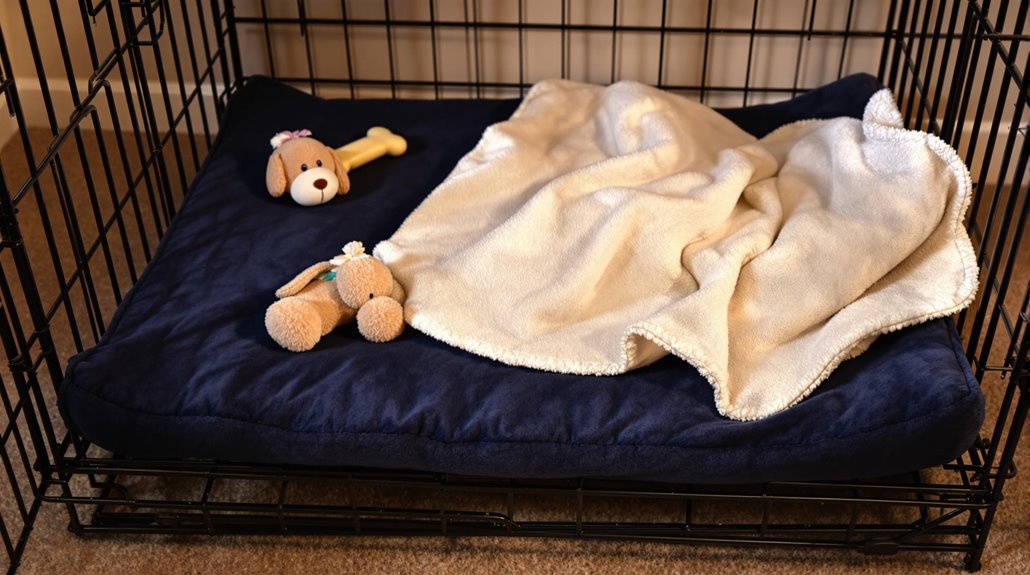
Properly setting up your puppy's crate creates the foundation for successful sleep training and safety. When preparing your puppy's nighttime space, you'll need to focus on both comfort and practicality to guarantee your furry friend feels secure and protected throughout the night.
Choose a quiet corner of your home where your puppy won't be disturbed by household traffic or noise. You'll want to line the bottom of the crate with newspaper or potty pads first, then add soft, appropriate bedding on top. If you're placing the crate on carpet, don't forget to protect your flooring with waterproof pads underneath.
A properly sized crate that allows your puppy to stand, turn, and lie down, multiple layers of absorbent newspaper or potty pads for accidents, comfortable, washable bedding that's appropriate for your puppy's size, waterproof padding for floor protection, and a cover or positioning near a wall to create a den-like atmosphere.
First Night Survival Guide
The first night with your new puppy can test even the most patient pet parent's resolve. When bringing your puppy home, you'll need to prepare for some sleep disruption over the next couple of weeks as your furry friend adjusts to their new environment.
To help your puppy settle in, consider moving their bed or crate to your bedroom temporarily. Your presence will help build trust and provide reassurance during this changeover period. Create a comforting atmosphere by adding familiar scents, like a blanket from their previous home, and maintain a consistent white noise or gentle music to help mask unfamiliar sounds.
Keep in mind that puppies naturally cycle through bursts of energy followed by the need for rest. Before bedtime, engage your puppy in playtime to tire them out, making them more likely to settle down for the night. Establish a consistent bedtime routine that includes a potty break, quiet time, and gentle praise when they enter their sleeping space.
Don't worry if the first night isn't perfect - it's normal for puppies to need time to adjust. By responding to their needs and maintaining consistency, you'll help your puppy develop healthy sleep habits that will last.
Building a Bedtime Routine
Building a solid bedtime routine helps your puppy understand when it's time to wind down and rest. The first step is establishing consistent activities that signal it's night time, creating a predictable pattern your puppy can rely on. By maintaining regular sleep schedules and incorporating calming activities before bedtime, you'll help your puppy develop good sleeping habits.
Your puppy's sleeping area should be comfortable and secure, with a properly-sized crate lined with cozy bedding. If you plan to have your puppy sleep downstairs eventually, start with the crate in your bedroom and gradually shift to the desired location.
Here's what your bedtime routine should include:
- Set aside time for gentle play to help your puppy burn remaining energy
- Take your puppy out for a final potty break before bedtime
- Create a calm atmosphere with dimmed lights and reduced noise
- Place your puppy in their crate with appropriate bedding
- Respond quickly if your puppy signals they need to go out during the night
Remember to stay consistent with this routine, as it helps your puppy develop reliable sleeping patterns and makes nighttime more peaceful for everyone.
Managing Nighttime Potty Breaks
Successful nighttime training depends heavily on managing your puppy's potty breaks effectively. During the first few nights, your puppy needs to eliminate every 2-4 hours, so you'll need to be prepared for multiple trips outside. When your puppy cries and it's been a few hours since their last bathroom break, take them out quietly to do their business.
To maintain good sleep habits, keep these nighttime potty breaks brief and businesslike. Once your puppy has finished, return them to their sleeping area and go back to bed immediately. Don't engage in play or give them extra attention, as this can encourage them to wake up for social interaction rather than genuine bathroom needs.
As your puppy grows, they'll gradually develop better bladder control. Many puppies can sleep through the night by 12 weeks of age, while older puppies can typically hold it for 6-8 hours. However, you'll still need to stay attentive to your puppy's signals that they need to go out. Being consistent and responsive to their bathroom needs will help establish good habits and prevent accidents during the night.
Adjusting With Other Pets

For households with existing pets, introducing a new puppy's sleeping arrangements requires thoughtful consideration. Placing your puppy's crate near your current dog's bed can provide comfort and security during the first few weeks in their new home. This proximity helps your puppy adjust while maintaining a sense of connection similar to what they experienced with their littermates.
Consider these key strategies when managing sleeping arrangements:
- Position the puppy's crate in the same area where your current dogs sleep to encourage bonding and familiarity
- Keep a watchful eye on how your existing pets respond to the puppy's presence in their sleeping space
- Be prepared to create separate sleeping zones if your current dogs show signs of stress or discomfort
- Allow for gradual introductions during daytime hours before establishing permanent sleeping arrangements
- Make sure each pet has their own designated dog bed or space to prevent territorial conflicts
While most pets eventually adapt to sharing their sleeping area, always monitor the situation closely. If your current dogs don't warm up to the puppy, it's perfectly fine to maintain separate sleeping spaces until everyone feels more comfortable with the new arrangement.
Creating Comfort and Security
A cozy sleeping space acts as your puppy's sanctuary during those crucial first weeks at home. To guarantee your puppy gets the best sleep possible, start with a properly sized crate lined with soft, comfortable bedding. You'll want to let your puppy feel secure in their new environment, much like they would in a natural den.
Initially, it's a good idea to place the crate in your bedroom. This proximity helps your puppy bond with you while providing reassurance during their adjustment period. To enhance their comfort, include familiar scents from their previous home – a blanket from their breeder can work wonders in creating a sense of security. Adding a gentle, rhythmic sound, such as a ticking clock, can simulate the comforting presence of littermates, helping your puppy settle more easily at night.
As your puppy becomes more confident, you can gradually shift their sleeping area to your preferred location. Take this process slowly, moving the crate step by step until you reach the final destination. This patient approach helps maintain your puppy's sense of security while establishing healthy sleeping habits in their new home.
Sleep Training Success Strategies
Training your puppy to sleep through the night requires consistency and patience during the first few weeks. You'll need to establish a bedtime routine that helps your puppy understand when it's time to rest. Guarantee you take them out for a final potty break before bedtime, and don't give them water at least two hours before sleep.
If you decide to let your puppy sleep downstairs, you might hear whining at first. Don't immediately go back to comfort them, as this reinforces attention-seeking behavior. Instead, wait until they're quiet before checking on them, gradually increasing the intervals between visits.
Essential strategies for successful sleep training:
- Set a consistent bedtime schedule and stick to it every night
- Exercise your puppy adequately during the day to ascertain they're naturally tired
- Create a bedtime routine that includes potty breaks, quiet play, and cuddle time
- Use a white noise machine or soft music to mask unfamiliar sounds
- Reward quiet behavior and avoid responding to attention-seeking whines
Remember that each puppy adapts differently to sleep training, so adjust these strategies based on your pet's personality and needs. Stay committed to the process, and you'll soon have a puppy who sleeps soundly through the night.
Common Sleeping Challenges
While sleep training sets the foundation for good sleep habits, many puppy owners face common challenges during the first few weeks. You'll likely notice your puppy's sleep patterns are disrupted as they adjust to their new environment, which can last up to two weeks. If you decide to let your puppy sleep in your bed initially, moving them to sleeping downstairs or in another room later can trigger separation anxiety and increased crying.
One of the biggest obstacles you'll encounter is managing nighttime bathroom breaks. Your puppy needs to sleep in a location that allows easy access to their designated potty area, which can be problematic if their crate is far from your bedroom. While crate training provides a secure sleeping environment, introducing it incorrectly can create negative associations that make sleep training more difficult.
Remember that your puppy needs time to adapt to their new sleeping arrangements. Whether you choose to keep them near your bedroom or in another area of the house, consistency is key. Be prepared for some restless nights and maintain your chosen routine to help your puppy develop healthy sleep patterns.
Transitioning Sleeping Spaces
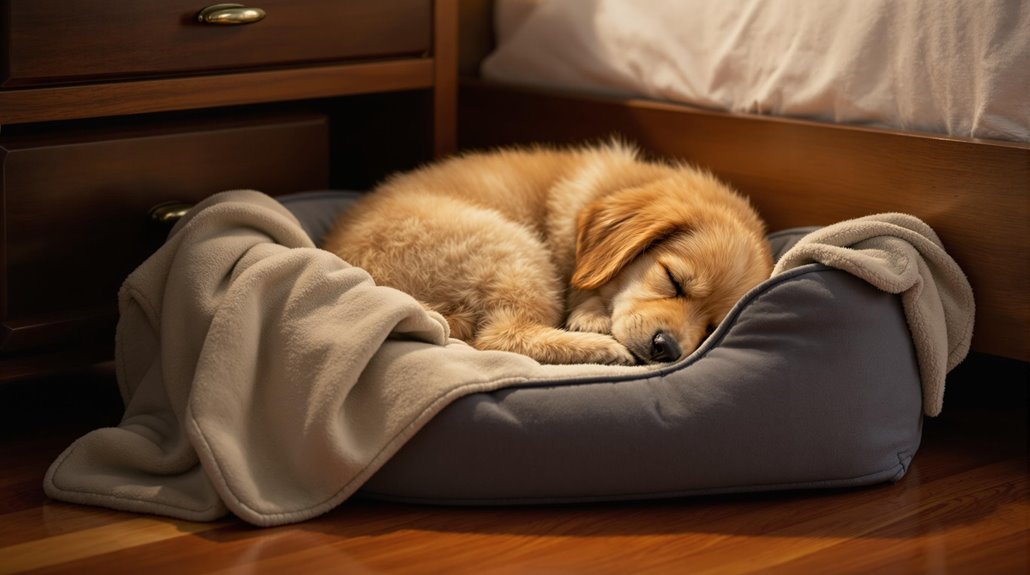
Through careful planning, you can successfully move your puppy's sleeping space as they grow and develop. Even though your puppy might resist changes at first, they'll quickly become comfortable with their new sleeping arrangement when you take the right approach. The shift will likely take several days to a few weeks, depending on your puppy's personality and adaptability.
Move your puppy's familiar bedding, toys, and blankets to the new location to maintain a sense of security and comfort. Gradually shift the sleeping area by moving it a few feet each night until you reach the desired location. Keep your puppy's routine consistent during the shift, including bathroom breaks and bedtime rituals. Use positive reinforcement, like treats and praise, when your puppy shows interest in their new sleeping spot. Consider using a white noise machine or calming music to help mask unfamiliar sounds in the new location.
Remember to be patient and consistent throughout the process. If your puppy shows signs of anxiety, slow down the shift and spend more time helping them adjust to each small change.