
What to Do If Your Puppy Won’t Sleep at Night
To help your puppy sleep at night, establish a consistent bedtime routine that includes moderate exercise and mental stimulation earlier in the evening. Set up a quiet, comfortable sleeping area with a properly sized crate or bed, and add soothing elements like soft music or a ticking clock. Avoid high-energy play close to bedtime, instead focusing on calming activities. Take your puppy out for a final potty break before settling in, and maintain a regular schedule for meals and exercise throughout the day. Consider keeping the crate in your bedroom initially for security. These foundational steps will set you up for many peaceful nights ahead.
Common Puppy Sleep Challenges
A new puppy's sleep challenges can test even the most patient pet parents. When you bring your new puppy home, you'll likely encounter several common sleep issues that stem from their adjustment period and developmental stage.
Your puppy's inability to sleep through the night often relates to their new environment, which can feel overwhelming and unfamiliar. They're leaving their littermates and familiar surroundings behind, which naturally causes anxiety. Additionally, your puppy's small bladder means they'll need frequent potty breaks, sometimes every few hours during the night.
Proper puppy training, especially crate training, plays an essential role in establishing good sleep habits. However, you might face challenges like whining, excessive puppy energy before bedtime, or inappropriate puppy chew behavior when they're anxious. Remember that most puppies don't naturally sleep through the night until they're about 16 weeks old.
Creating a consistent sleeping area and bedtime routine helps address these challenges. You can support your puppy's sleep development by ensuring they get enough exercise during the day, scheduling regular potty breaks, and making their sleeping space comfortable and secure. These steps help your puppy adapt to their new home's schedule and environment.
Setting Up The Perfect Sleep Space
Creating the perfect sleep space for your puppy serves as the foundation for successful nighttime rest. When setting up your puppy's sleeping area, choose a quiet room separate from your bedroom to encourage independent sleep habits. Whether you opt for a crate or dog bed, guarantee it's appropriately sized for your puppy's comfort and growth.
During the first few nights in their new home, make the nighttime crate or sleeping space as inviting as possible. Layer it with comfortable bedding that suits the room's temperature, preventing sleep disruptions from being too hot or cold. Consider adding soothing elements like soft background music or a ticking clock to create a calming environment that helps your puppy relax and drift off to sleep.
Don't rush the sleep training process. Gradually introduce your puppy to their designated sleeping space rather than forcing them to stay there immediately. Start with short periods during the day, making positive associations with their sleep area. This gentle approach will help your puppy feel secure and comfortable in their space, leading to better sleep habits as they adjust to their nighttime routine.
Evening Exercise and Mental Stimulation

Your puppy's energy levels play an indispensable role in their ability to sleep through the night. To help your puppy settle down and relax, engage them in 10-20 minutes of moderate exercise and mental stimulation during the evening hours. This balanced approach guarantees they're tired but not overstimulated when bedtime arrives.
Incorporate puzzle feeders and snuffle mats into your evening routine to provide both physical and mental engagement. These activities help tire out your puppy's body and mind naturally. However, be careful to avoid high-energy play too close to bedtime, as this can make it harder for your puppy to wind down and fall asleep.
Focus on calm activities in the lead-up to bedtime. Encourage behaviors like licking, chewing, and sniffing, which naturally promote relaxation in dogs. You can offer appropriate chew toys or engage in gentle training exercises that don't overly excite your puppy. Remember that proper daily exercise and mental stimulation throughout the day are indispensable - a well-exercised puppy is more likely to sleep soundly through the night without disruptions.
Establishing a Bedtime Routine
Building on proper exercise and mental nourishment, establishing a consistent bedtime routine will help your puppy learn when it's time to sleep. Start by creating a predictable schedule that includes set times for meals, playtime, and potty breaks throughout the day. As bedtime approaches, shift to calming activities and avoid anything that might excite your pup.
Your bedtime routine should include these essential elements:
- A brief grooming session to help your puppy wind down
- A final potty break before settling in for the night
- Dimmed lights and possibly soothing music as calming sensory inputs
- A comfortable, distraction-free designated sleeping area
- Gradually increased time spent in the sleeping area to build confidence
You'll want to maintain this routine consistently every night. When you create a predictable pattern, your puppy will naturally begin to associate these activities with sleep time. Remember to keep the sleeping area quiet and comfortable, as this helps your puppy feel secure and relaxed. Over time, you'll notice your puppy becoming more accepting of bedtime as they learn to recognize and respond to these consistent pre-sleep cues.
Crate Training for Better Sleep
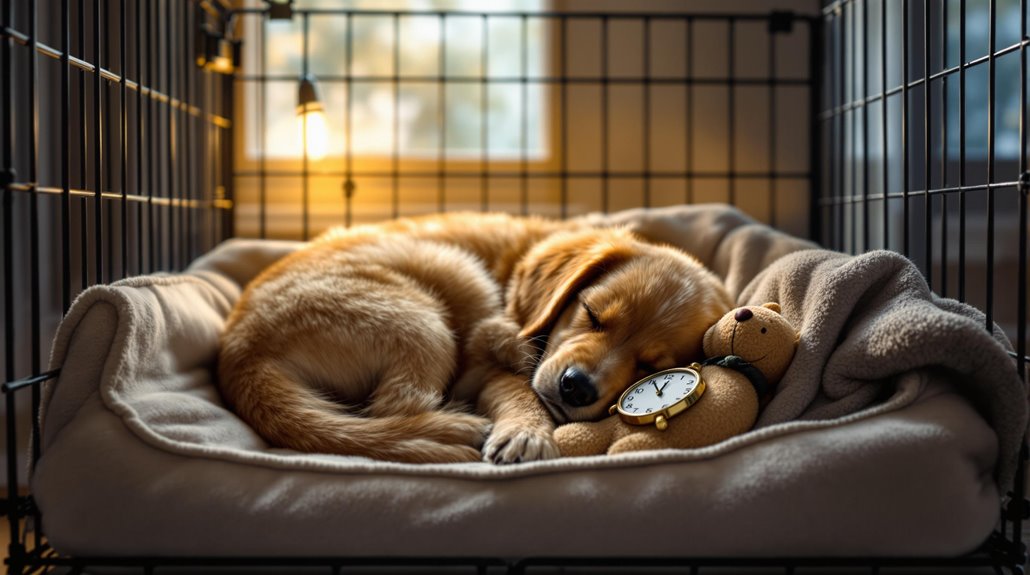
Effective crate training offers one of the most reliable solutions for puppy sleep troubles. When you introduce crate gradually and make it a positive experience, your puppy will view their crate as a secure sleeping space where they can fully relax and rest.
To maximize the effectiveness of crate training, you'll need to guarantee you're using the right size crate - one that's large enough for your puppy to stand, turn around, and lie down comfortably. Placing a cover over the crate creates a den-like environment that naturally promotes sleep by triggering melatonin production. Initially, keeping the puppy crate in your bedroom can help your new pet feel more secure and adjust to sleeping through the night.
Consistent crate use, combined with a calming bedtime routine, helps establish healthy puppy sleep habits. Your puppy will learn to associate their crate with rest time, making it easier for them to settle down when it's time for bed. As they become more comfortable with this routine, you'll notice improvements in their ability to sleep through the night without disturbances or anxiety.
Managing Nighttime Potty Breaks
One of the biggest challenges new puppy owners face is managing nighttime potty breaks. Young puppies have small bladders and typically need to pee every two to three hours, which means interrupted sleep for everyone. If your puppy won't sleep through the night, establishing a consistent potty break routine is crucial.
To prevent potty accidents and guarantee better sleep, consider these key strategies:
- Stop giving water 2-3 hours before bedtime to reduce nighttime bathroom breaks
- Take your puppy for their last potty break immediately before going to bed
- Keep nighttime bathroom trips quick and businesslike, avoiding play or excitement
- Respond promptly when your puppy signals they need to go potty
- Maintain this routine until your puppy reaches about 15 weeks of age
When your puppy needs a bathroom break during the night, stay calm and matter-of-fact. Take them directly to their designated spot, wait for them to go potty, and return them to their sleeping area without fanfare. This business-only approach helps them understand that nighttime outings are strictly for elimination, not playtime. With consistency, your puppy will gradually develop better bladder control and sleep longer through the night.
Comfort Items and Sleep Aids
A well-chosen comfort item can make all the difference in helping your puppy sleep through the night. Consider providing a Snuggle Puppy or warm blanket, which can mimic the warmth and comfort your puppy felt when sleeping with their littermates. These comfort items can create a sense of security in their new environment and encourage better sleep patterns.
You'll find several effective sleep aids that can complement these comfort items. Installing calming pheromone diffusers in your puppy's sleeping area can create a relaxing atmosphere that helps them feel safe and settled. Playing soft white noise or gentle background music can mask sudden sounds that might disturb your puppy's rest.
If you're looking for additional solutions, aromatherapy using lavender or chamomile scents can provide natural calming effects. Place these scents near your puppy's sleeping area, but guarantee they're not too strong or directly accessible. While melatonin supplements can help regulate your puppy's sleep cycle, don't administer them without first consulting your veterinarian. Remember that the combination of appropriate comfort items and sleep aids can vastly improve your puppy's nighttime rest.
Addressing Separation Anxiety at Night
Many puppies struggle with separation anxiety at night, which can lead to restless behavior and disrupted sleep for both you and your pet. To help your puppy feel more secure, you'll need to implement a combination of proven techniques focused on gradual desensitization and counter-conditioning.
Start by creating a comforting sleep environment that includes items with your scent, such as worn clothing or blankets. Adding white noise or relaxing music can help mask disturbing sounds and create a calming atmosphere. Consider using synthetic pheromones designed specifically to soothe anxious puppies.
Key strategies for addressing nighttime separation anxiety include:
- Establishing a consistent bedtime routine to build security and predictability
- Using positive reinforcement when your puppy displays calm behavior
- Gradually increasing the distance between you and your puppy's sleeping area
- Providing comfort items that carry your scent
- Incorporating calming aids like white noise or pheromone diffusers
Remember that overcoming separation anxiety requires patience and dedication. Don't rush the process, as this could heighten your puppy's anxiety. Instead, maintain consistency in your approach and celebrate small improvements as your puppy learns to feel more confident sleeping alone.
Breaking Bad Sleep Habits
Breaking bad sleep habits requires a consistent and firm approach to reset your puppy's nighttime behavior. You'll need to establish a calming bedtime routine that helps your puppy to sleep by signaling it's time to wind down. Make sure your puppy gets plenty of exercise during the day, as a tired puppy will sleep better at night.
If your puppy's still struggling to sleep through the night, you'll need to be patient but firm. Don't respond to attention-seeking behaviors like whining or barking, as this only reinforces the habit. Instead, help soothe your puppy by creating a comfortable sleeping environment that's quiet and free from distractions. You can gradually move their sleeping area away from your bedroom as they become more independent.
Remember to address any physical needs before bedtime. Make sure your puppy doesn't need to go potty, as this is a common reason for nighttime wakeups. Following proper tips on potty training during the day will help prevent midnight bathroom emergencies. By maintaining consistency and avoiding the reinforcement of unwanted behaviors, your puppy will develop healthier sleep patterns over time.