
What Does AM and PM Stand For? A Simple Explanation
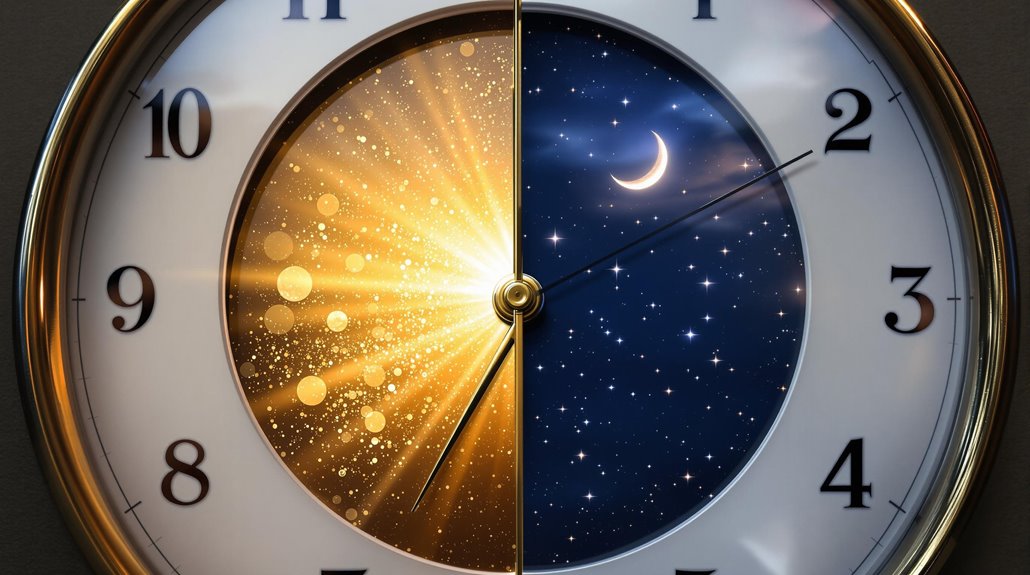
AM and PM come from Latin phrases that help you tell time throughout the day. AM stands for "Ante Meridiem," meaning "before noon," and covers the hours from midnight to noon (12:00 AM to 11:59 AM). PM stands for "Post Meridiem," meaning "after noon," and covers noon to midnight (12:00 PM to 11:59 PM). This 12-hour system traces back to ancient civilizations that tracked time using the sun's position. While many countries now use the 24-hour clock, the AM/PM format remains common in the US, Canada, and Australia. There's much more to uncover about these time-telling terms and their fascinating history.
Origins of AM and PM
The origins of AM and PM can be traced back to ancient Mesopotamia and Egypt, where people relied on the movement of celestial bodies to track time. These ancient civilizations divided their day into two distinct periods, using the sun's position to determine the midpoint between sunrise and sunset.
This system of splitting the day eventually led to the Latin terms we use today. "Ante Meridiem" (AM) literally means "before midday," while "Post Meridiem" (PM) means "after midday." When you're wondering what does AM and PM stand for, these Latin phrases provide the answer. The Romans adopted this time-tracking method and helped spread its use throughout their empire.
The 12-hour clock system with AM and P.M. designations has proven remarkably enduring, continuing to be used for centuries across different cultures and regions. While newer systems like the 24-hour clock have emerged, the AM/PM format remains widely recognized and used globally. You'll find it's particularly common in English-speaking countries, where it's the preferred method for expressing time in everyday situations.
Understanding the 12-Hour Clock System
Understanding how the 12-hour clock system works begins with its fundamental split of each day into two distinct periods. The first period, marked as AM (ante meridiem), runs from midnight to noon, while the second period, PM (post meridiem), extends from noon to midnight. In this system, you'll find the hours numbered from 1 to 12, with 12:00 AM representing midnight and 12:00 PM indicating noon.
You'll notice that the 12-hour clock system is particularly prevalent in countries like the United States, Canada (except Québec), Australia, New Zealand, and the Philippines. When you're using this system, it is crucial to include AM or PM to avoid any confusion about the time of day you're referring to. For example, 8:00 AM clearly indicates morning, while 8:00 PM specifies evening.
If you need to convert between 12-hour and 24-hour formats, you'll follow a simple rule: for PM times, add 12 hours to get the 24-hour equivalent (except at noon), and for AM times, simply use the same number (except at midnight, which becomes 00:00).
Noon and Midnight Explained

While the AM/PM system might seem straightforward, noon and midnight present unique cases that often cause confusion. In the 12-hour clock system, these two specific times don't fall into either the AM or PM category. You'll find that 12 noon marks the middle of your day when the sun reaches its highest point, while 12 midnight signals the beginning of a new day when the sun is at its lowest.
To help you remember the unique nature of these times in both 12-hour clock and 24-hour clock formats, here are the key points:
- Neither noon nor midnight should technically be labeled as AM or PM, as they're junctures in the day
- Midnight (00:00 in 24-hour time) represents the start of a new day
- Noon (12:00 in 24-hour time) divides your day exactly in half
- These two times are the only points in a 24-hour cycle that don't belong to either AM or PM categories
Understanding these distinctions helps you avoid common mistakes when telling time. While many people incorrectly say "12 PM" for noon or "12 AM" for midnight, you now know that these times stand independently in the daily cycle.
Converting Between Time Formats
Converting between 12-hour and 24-hour time formats becomes second nature once you grasp a few simple rules. When you're converting from 12-hour time to 24-hour time, you'll subtract 12 hours for times between 1:00 AM and 12:59 PM. For times between 1:00 PM (post meridiem) and 11:59 PM, you'll add 12 hours to get the 24-hour equivalent.
Going the other way, from 24-hour time to 12-hour time, follows a similar pattern. For times between 00:00 and 00:59, add 12 hours and mark it as AM. Keep times between 1:00 and 12:59 the same, just adding AM or PM as appropriate. For times between 13:00 and 23:59, subtract 12 hours and mark them as PM. For example, if you see 15:30 in the 24-hour clock format, you'd convert it to 3:30 PM in 12-hour time.
Regular practice with these conversions will help you move smoothly between both systems. While the 24-hour time format is standard in military and aviation settings, you'll find the 12-hour time system more commonly used in everyday situations in many countries.
Global Usage and Time Zones

Time formats differ substantially across the globe, with most nations favoring the 24-hour system over the 12-hour AM/PM format. You'll find that countries around the world have adopted different approaches to telling time, with the United States, Canada, Australia, and New Zealand being among the few that primarily stick to AM/PM designations.
The 24-hour clock system has become the international standard, particularly in professional and military settings. When you travel to countries like Italy or France, you'll notice they use the 24-hour clock in everyday situations, counting hours from noon to represent afternoon times.
- North America (except Québec) mainly uses AM/PM in everyday life
- European nations chiefly use the 24-hour clock for all purposes
- Military and aviation sectors worldwide use the 24-hour clock for precision
- International business often defaults to the 24-hour format to avoid confusion
While cultural preferences continue to influence how we tell time, the trend is moving toward the more straightforward 24-hour system, especially in professional and cross-cultural communications.
Military Time Vs Standard Time
Understanding military time versus standard time doesn't have to be complicated. While you might be familiar with the standard 12-hour clock using AM and PM, military time follows a 24-hour format that eliminates the need for these distinctions entirely.
In military time, the day begins at 00:00 (12:00 AM) and continues through 23:59 (11:59 PM). You'll find this system particularly useful in situations where precision is essential. For example, instead of potentially confusing 8:00 AM with 8:00 PM, military time clearly distinguishes them as 0800 and 2000, respectively.
The 24-hour clock has become the preferred method for military organizations and scientific institutions worldwide, as it reduces the risk of scheduling errors and miscommunication. You'll also notice that many countries have adopted this system for everyday use. In places like Italy and France, you'll commonly see train schedules, business hours, and daily activities displayed in the 24-hour format. While the standard time with AM and PM remains popular in countries like the United States, the military time system offers a more straightforward and unambiguous way to track time throughout the day.
Common Time-Telling Mistakes
Common timekeeping blunders can trip up even the most careful individuals. When you're dealing with AM and PM, it's easy to make mistakes that can throw off your entire schedule. Understanding the difference between the first hour of the day and the twelfth, or knowing when to add 12 hours or subtract 12 hours for military time conversion, requires careful attention.
Here are some frequent time-telling errors you should watch out for:
- Mixing up AM and PM, like scheduling a 7 PM breakfast meeting when you meant 7 AM
- Misunderstanding that noon is 12 PM and midnight is 12 AM, which often leads to confusion about the two hour periods around these times
- Forgetting that the first hour after noon requires you to add 12 hours when converting to military time (1 PM = 1300)
- Not realizing that when converting from 24-hour time to standard time, you need to subtract 12 hours for any time past 1200 (1500 = 3 PM)
These mistakes can cause scheduling conflicts and misunderstandings, especially when coordinating across different time formats or time zones.
Digital Vs Analog Time Display
While both display methods serve the same purpose, digital and analog time formats offer distinctly different approaches to showing the current hour and minute. In the United States, you'll commonly encounter these two distinct ways of reading clock time throughout your daily activities.
Digital displays present time in a straightforward numerical format, making it easier to read the exact hours of the day without any ambiguity. When you look at your smartphone or digital clock, you'll see precise numbers like 13:25, which leaves no room for misinterpretation. This format is particularly useful when you need to track time down to the minute.
Analog clocks, with their traditional clock face and rotating hands, provide you with a more visual and intuitive way to understand time progression. You can quickly grasp the relationship between different times of day by observing the position of the hour and minute hands. While they might take longer to read precisely, analog displays often enhance the aesthetic appeal of your space and can help you develop a better sense of time intervals and duration.
Historical Development of Timekeeping
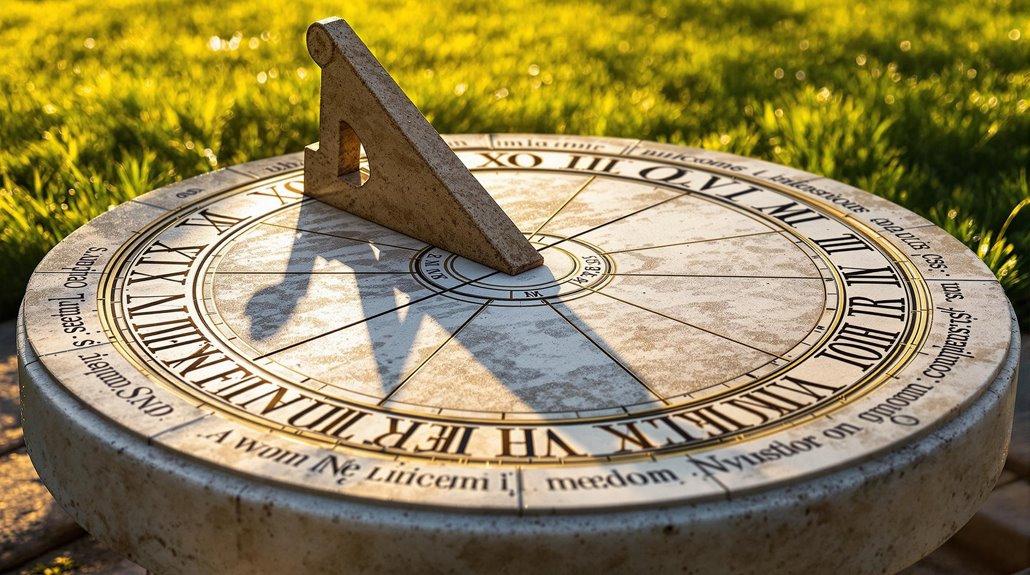
The time-tracking methods we use today emerged from ancient civilizations' careful observations of natural cycles. The Egyptians made a pioneering contribution when they divided the day into 24 equal parts, using their base-12 counting system. This innovation laid the foundation for how you track time in the modern world.
Ancient civilizations split the day into two distinct periods, using the sun and moon as their guides. This natural division evolved into the 12-hour clock system with AM and PM that you're familiar with, marking the periods from midnight to noon and beyond. While this system has ancient roots, the 24-hour format didn't gain widespread adoption until Sir Sandford Fleming's proposal in the late 19th century.
- Ancient Egyptians created the first 24-hour day division
- Mesopotamians established tracking the first and second halves of the day
- The 12-hour AM/PM system emerged from early civilizations
- The 24-hour format gained popularity in the late 1800s
Today, both systems coexist, with different countries preferring one format over the other.