Tuft & Needle vs. Tulo: Comfort Matters When Choosing a Mattress
When choosing between Tuft & Needle and Tulo, your sleeping position and comfort preferences matter most. You'll find Tulo's plush memory foam better for side sleeping and pressure relief, while Tuft & Needle's firmer feel supports back and stomach sleepers more effectively. If you're a hot sleeper, Tulo's cooling features might serve you better than Tuft & Needle's basic construction. Budget-conscious shoppers will appreciate Tulo's $595 Queen price tag compared to Tuft & Needle's $750. Both offer 10-year warranties and identical size options, but your ideal choice depends on specific comfort factors we'll investigate below.
Price and Value Comparison
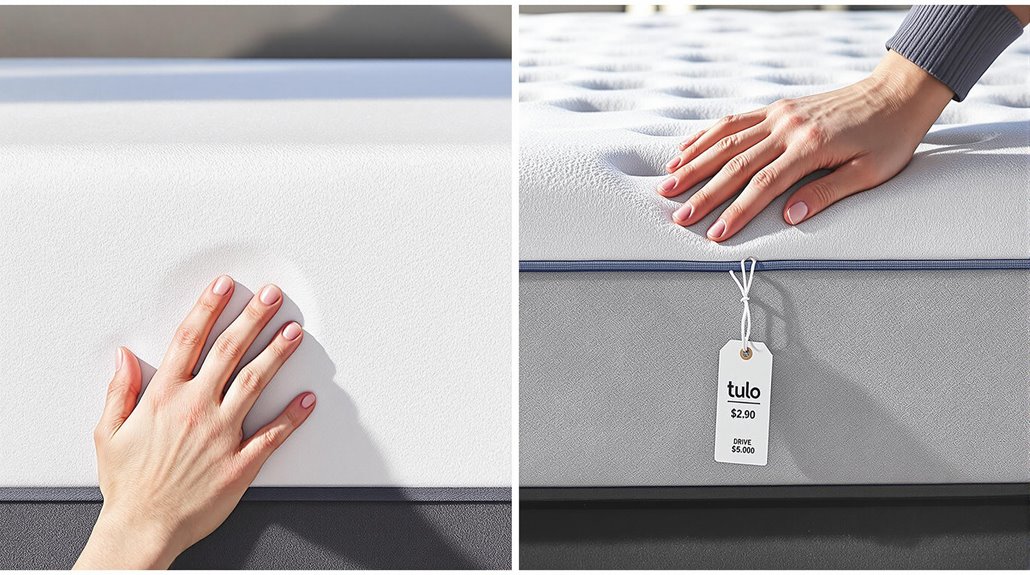
When it comes to mattress shopping, the price difference between Tuft & Needle and Tulo is significant. You'll find that Tuft & Needle's Queen size mattress is priced at $750, while Tulo offers their Queen at $595, making it a more budget-friendly option. This $155 difference might influence your decision, especially if you're shopping with a specific budget in mind.
While Tuft & Needle comes with a higher price tag, it does offer more sizing options, including Cali King, Full, King, Queen, Twin, and Twin XL. This variety gives you greater flexibility in choosing the perfect mattress size for your needs. Both brands provide the same 10-year limited warranty, so you're equally protected regardless of which option you choose.
If price is your primary concern, Tulo presents better value with its more affordable price point. However, if you're willing to invest more for what may be a more premium product, Tuft & Needle could be worth the extra cost. Consider your budget priorities and comfort requirements when making your final decision between these two mattress options.
Available Sizes and Dimensions
Size selection plays a crucial role in your mattress-buying endeavor, and both Tuft & Needle and Tulo deliver on this front. You'll find identical size offerings from both manufacturers, with options including Twin, Twin XL, Full, Queen, King, and Cali King sizes. This comprehensive range guarantees you'll find the perfect fit for your bedroom, whether you're furnishing a child's room or seeking a spacious sleeping solution for couples.
While both brands offer comparable size options, there are some notable differences in their dimensional specifications. Tulo provides clear height measurements, with their all-foam model standing at 10 inches tall and their hybrid version reaching 12 inches. Unfortunately, Tuft & Needle doesn't publicly specify their exact mattress dimensions, which might make it challenging if you're planning your bedroom layout with precise measurements in mind.
When you're shopping for either brand, you won't need to compromise on size availability. Whether you're looking to upgrade your principal bedroom with a King or outfit a guest room with a Twin, both manufacturers have you covered with their standard size selections.
Support for Different Sleep Positions

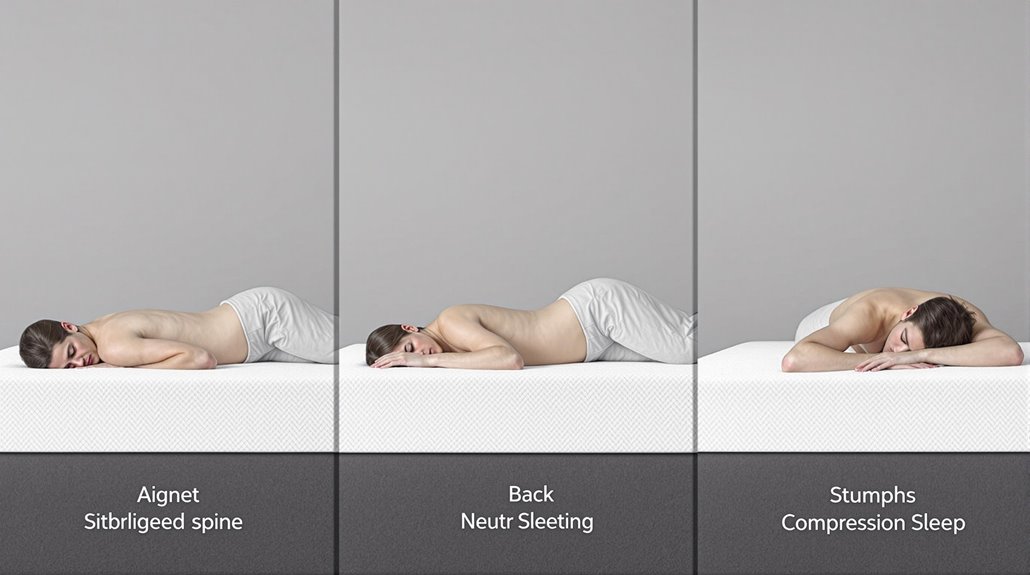
Choosing between Tuft & Needle and Tulo boils down to your preferred sleeping position and body type. If you're a side sleeper, you'll likely prefer Tulo's plush feel and superior pressure relief. The mattress's Memory Foam Mattresses construction offers excellent contouring that cradles your shoulders and hips during side sleep.
On the other hand, Tuft and Needle vs Tulo presents a clear distinction for back and stomach sleepers. Tuft & Needle's firmer feel and layered structure provide better overall support for these sleeping positions. If you weigh over 200 pounds, you'll find that Tuft & Needle offers more balanced support across your body, similar to what you'd experience with Brooklyn Bedding Signature Hybrid.
Your body weight plays an essential role in determining which mattress will serve you better. Lightweight individuals might find Tulo's plush comfort more accommodating, regardless of their sleeping position. However, if you're a heavier sleeper, Tuft & Needle's design will likely provide the support you need to maintain proper spinal alignment. Remember that your preferred sleeping position combined with your body weight should guide your final decision between these two mattresses.
Temperature Management Features
Temperature regulation can make or break your sleep experience, and these two mattresses offer distinctly different cooling capabilities. When comparing Tulo and Tuft & Needle, you'll find significant differences in their temperature management features.
Tulo takes the lead in cooling performance with its advanced temperature regulation system. You'll appreciate its specialized foam layers that incorporate cooling gel and enhanced breathability features. If you tend to sleep hot, Tulo's superior heat distribution mechanisms work actively to maintain a comfortable sleep climate throughout the night.
Tuft & Needle, on the other hand, falls short in this aspect. You might find yourself struggling with heat retention issues, as this mattress lacks dedicated cooling features. If you're someone who tends to sweat during sleep or naturally runs warm, you'll want to carefully consider this limitation. The mattress's basic construction doesn't include the specialized temperature management components that you'll find in Tulo.
For a temperature-regulated sleep experience, Tulo's innovative design clearly outperforms its competitor. The combination of cooling gel infusions and breathable materials guarantees you'll experience a more temperate sleeping surface compared to Tuft & Needle's basic temperature control capabilities.
Expert Reviews and Ratings
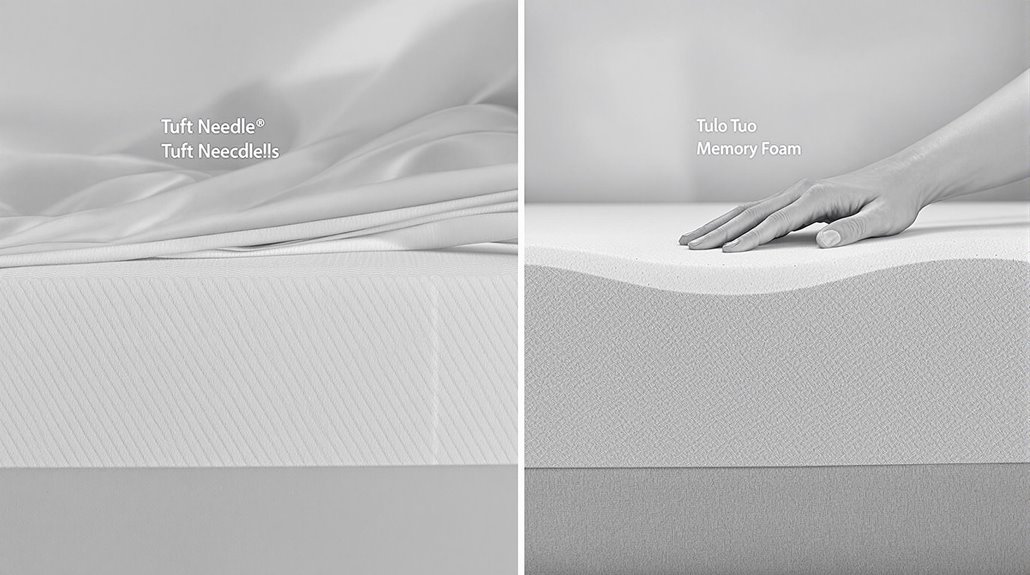
Professional mattress critics assess with distinctly different evaluations of these two brands. While both Tulo and Tuft & Needle receive positive expert reviews, they excel in different areas. Tuft & Needle's Memory foam mattress stands out for its exceptional weight distribution and firmer feel, making it particularly suitable if you're a sleeper over 200 pounds.
Industry experts consistently praise Tulo's versatility, as you'll find multiple firmness options to match your specific comfort preferences. The Hybrid construction of Tulo mattresses delivers effective pressure relief, though some reviewers note concerns about heat retention. Mattress Clarity experts position Tulo as a leading budget-friendly choice in the market.
The Sleep Sherpa highlights Tuft & Needle's distinctive Memory foam feel, while other experts emphasize its superior temperature regulation capabilities. If you're comparing prices, both brands receive high marks for value, but Tuft & Needle tends to skew firmer overall. Your choice might ultimately depend on whether you prefer Tuft & Needle's consistent medium-firm support or Tulo's customizable firmness levels. Remember that expert opinions consistently rate both mattresses as strong performers in their respective price categories.
Customer Experience Highlights
Real customer experiences offer meaningful observations beyond expert analysis. When you find users sharing their personal trips with Tuft & Needle, you'll notice several patterns that make this mattress stand out. One extraordinary story comes from an immune disease sufferer who experienced significant relief after switching to their new mattress, highlighting how the right sleep surface can impact health conditions.
Side sleepers particularly praise Tuft & Needle's ability to prevent joints hurt and discomfort. Many report sleeping through the night without the usual morning aches that plagued them on their previous mattresses. The mattress's unique composition, which experts describe as firm but with a soft top layer, makes it especially suitable for those seeking balanced support.
Even with its value pricing, customers consistently mention the mattress delivers quality sleep experiences. However, it's worth noting that some users who tend to sleep hot have reported temperature regulation issues. This feedback aligns with expert observations about the mattress's heat retention properties. When considering Tuft & Needle, your sleeping temperature preferences should factor into your decision, as this could affect your overall comfort experience.
Material Quality Analysis
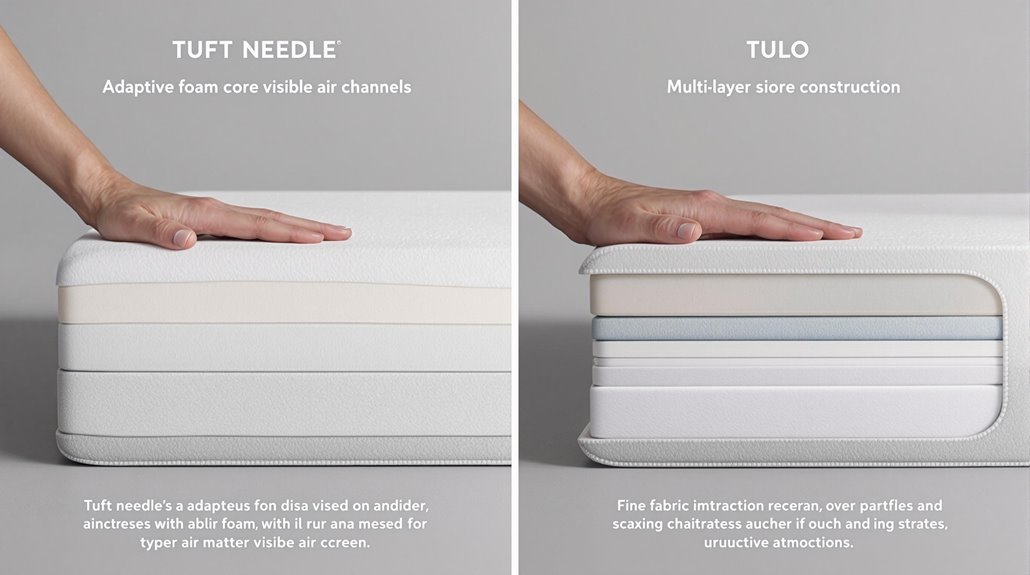
Materials form the foundation of any mattress's performance, and both Tuft & Needle and Tulo bring distinct options to the table. When looking at material quality, Tuft & Needle stands out as a renowned mattress with two key advantages: their high-density polyfoam layers and exceptional durability that prevents back problems over time.
While Tulo incorporates CertiPUR-US certified foams with green tea and lavender infusions, their material composition skews a little toward the basic side. Even a side sleeper might notice that Tuft & Needle's materials offer superior resilience without the risk of sagging that makes my joints hurt over time. The Tuft & Needle Hybrid takes quality a step further by incorporating pocketed coils, providing enhanced bounce and responsiveness that you won't find in Tulo's lineup.
Though Tulo positions itself as a budget-friendly option, the difference in material quality is evident. You'll find that Tuft & Needle's investment in premium materials translates to better long-term performance and support. Their dense foam construction resists impressions and maintains its shape, making it a more reliable choice for sustained comfort and durability.
Edge Support Performance
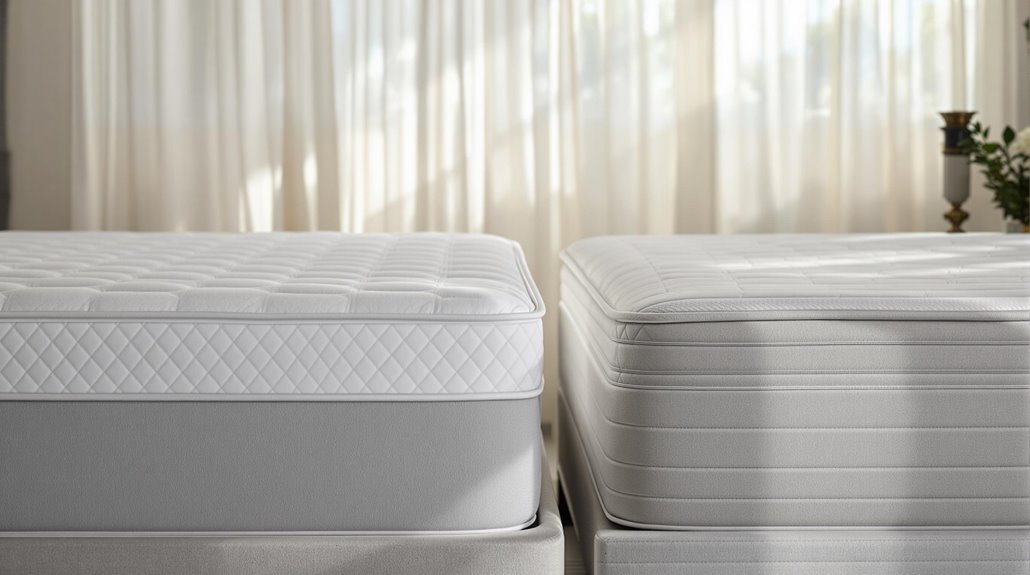
Building on the quality of materials, edge support represents another significant difference between these mattresses. When comparing these popular bed-in-a-box mattresses, you'll find that Tuft & Needle clearly outperforms Tulo in this essential aspect of mattress design.
The Tuft & Needle Hybrid mattress particularly stands out with its reinforced edges, providing exceptional stability whether you're sleeping or sitting on the bed's perimeter. You won't feel like you're about to roll off when you're near the edge, which is especially important if you tend to sleep close to the side of your mattress. This enhanced edge support means you can confidently use the entire surface of your mattress, maximizing the sleeping area available to you.
In contrast, Tulo's all-foam construction doesn't offer the same level of edge support. While it's still a quality mattress that doesn't require a box spring, its edges aren't as firm or supportive as Tuft & Needle's. User experiences consistently confirm this difference, with many noting that Tuft & Needle's superior edge support contributes to a more secure and comfortable sleep experience overall.
Motion Transfer Testing
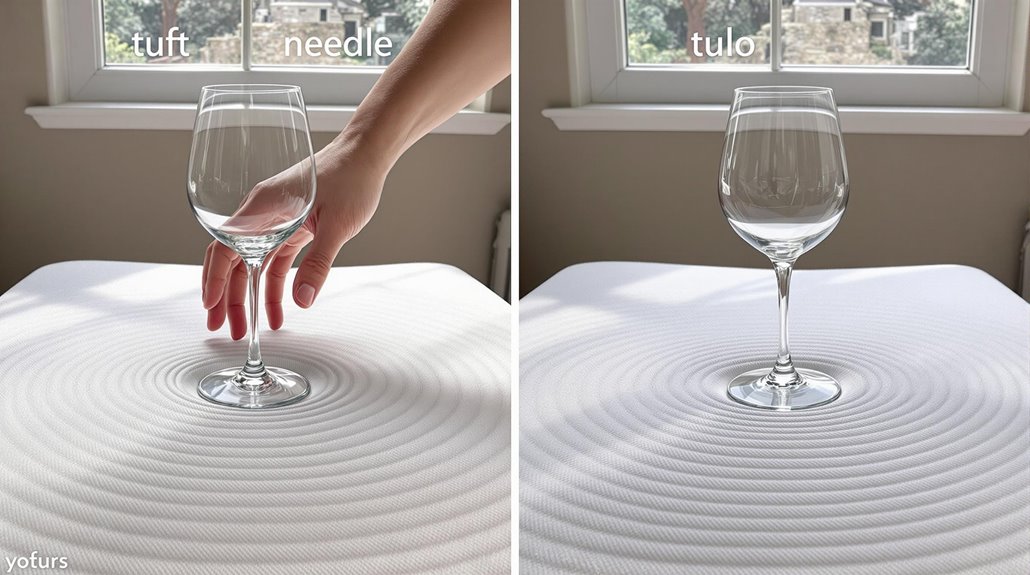
Consistently, motion transfer testing reveals significant differences between these two mattress brands. If you're sharing your bed with a partner, you'll want to pay close attention to how these "bed in a box" options handle movement disruption.
Tuft & Needle's all-foam construction demonstrates superior motion isolation compared to Tulo's hybrid design. You'll wake up less frequently during the night when your partner moves, as Tuft & Needle's technology effectively minimizes movement transfer across the mattress surface. This is particularly beneficial if you're a lightweight sleeper who's sensitive to disturbance.
The test results show that Tulo's hybrid construction doesn't provide the same level of good motion control. You're more likely to feel your partner's movements throughout the night, especially if you or your sleep partner are on the heavier side. The side-by-side testing confirms that movement on one side of the Tulo mattress is more noticeable on the other side.
If motion transfer is a priority for you, Tuft & Needle's performance stands out. Its design allows you to wake up without disruption from your partner's movements, contributing to a more restful night's sleep.
Durability and Longevity
Beyond the immediate comfort factors, you'll want to ponder how long your mattress investment will endure. When comparing Tuft & Needle and Tulo mattresses, there are notable differences in their durability and potential longevity.
Tuft & Needle stands out with its exceptional resistance to sagging, thanks to high-quality materials and sturdy construction. You'll find their mattresses maintain their shape and support over time, whether you choose their standard medium-firm option or the medium-soft Mint version.
In contrast, Tulo's durability metrics raise some concerns. While they offer multiple firmness options, recent reviews have highlighted issues with sagging and overall longevity. The layered structure of Tuft & Needle proves particularly advantageous for sleepers over 200 pounds, providing better long-term support compared to Tulo's plush construction.
If you're prioritizing a mattress that will maintain its comfort and support for years to come, Tuft & Needle emerges as the more reliable choice. Their commitment to using strong materials and thoughtful design translates into a more durable product that's likely to outlast its competitor in terms of consistent performance and structural integrity.
Warranty Coverage Details
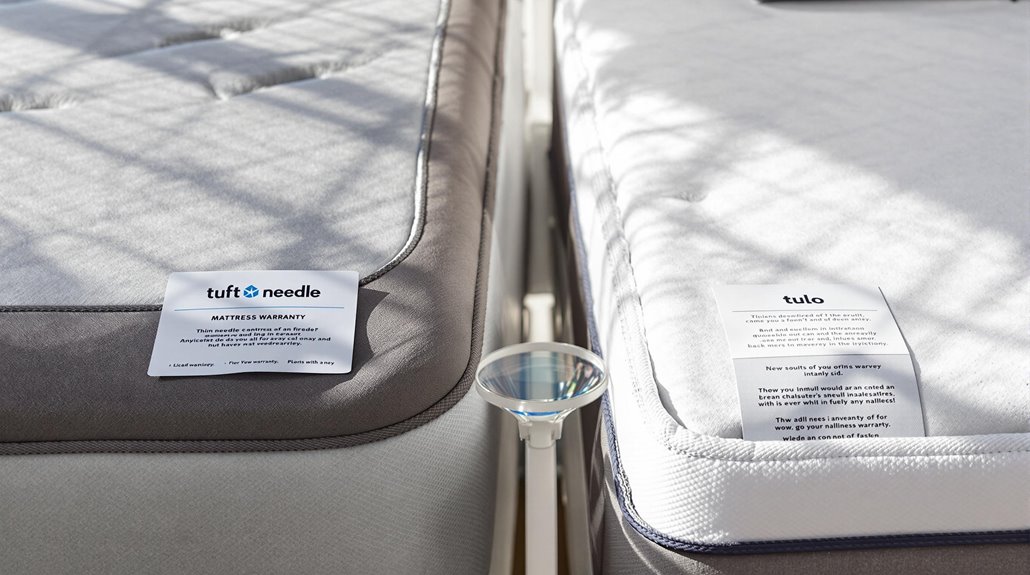
Understanding warranty protection can greatly impact your mattress investment decision. Both Tuft & Needle and Tulo offer 10-year limited warranty coverage on their mattresses, but there are key differences you'll want to take into account before making your choice.
While both brands cover defects in materials and workmanship, Tuft & Needle's warranty stands out with its non-prorated coverage throughout the entire 10-year period. This means you'll receive full warranty benefits regardless of how long you've owned the mattress. In contrast, Tulo's warranty shifts to a prorated structure after the first year, which means you'll be responsible for an increasing portion of replacement costs as time goes on.
You'll need to maintain proof of purchase for both brands to make valid warranty claims. This documentation is essential, so make sure you keep your receipt in a safe place. If you're comparing these two options purely from a warranty viewpoint, Tuft & Needle's non-prorated coverage offers more straightforward protection for your investment. However, remember that both warranties still provide the same duration of coverage and protect against similar types of manufacturing defects.
Shipping and Return Policies
When comparing shipping and return policies, both Tuft & Needle and Tulo offer convenient options with some notable differences. Tuft & Needle provides free shipping with faster delivery times of 1-5 business days, while Tulo's shipping takes longer at 5-7 business days. If you're impatient to try your comfortable mattress sooner, Tuft & Needle has the advantage.
The trial periods give you time to test your mattress thoroughly at home. Tuft & Needle offers a 100-night trial with no additional fees, while Tulo, owned by Mattress Firm, extends their trial to 120 nights but charges a small fee. During these trial periods, both companies' customer service teams will help if you're not satisfied with your purchase. They'll even assist in coordinating to donate the mattress to a local charity.
For returns, both companies demonstrate their commitment to customer satisfaction and sustainability through their donation programs. While neither company advertises a free travel pillow with purchase, their focus remains on providing a hassle-free experience from delivery to potential returns. Remember to review the specific terms and conditions of each company's policies before making your final decision.