How to Make Your Mattress Last Longer: Maintenance Tips to Know
To make your mattress last longer, you'll need to focus on protection and regular maintenance. Start by using a high-quality waterproof mattress protector and ensuring proper support with a sturdy box spring. Rotate your mattress 180 degrees every 3-6 months, and flip it twice yearly if it's designed for flipping. Keep your mattress clean by washing bedding weekly, vacuuming monthly, and addressing spills immediately with mild detergent. Don't forget to air out your mattress in direct sunlight every couple of months. These basic care steps will help extend your mattress's life, but there's much more you can do to protect your investment.
Essential Protection and Support Basics
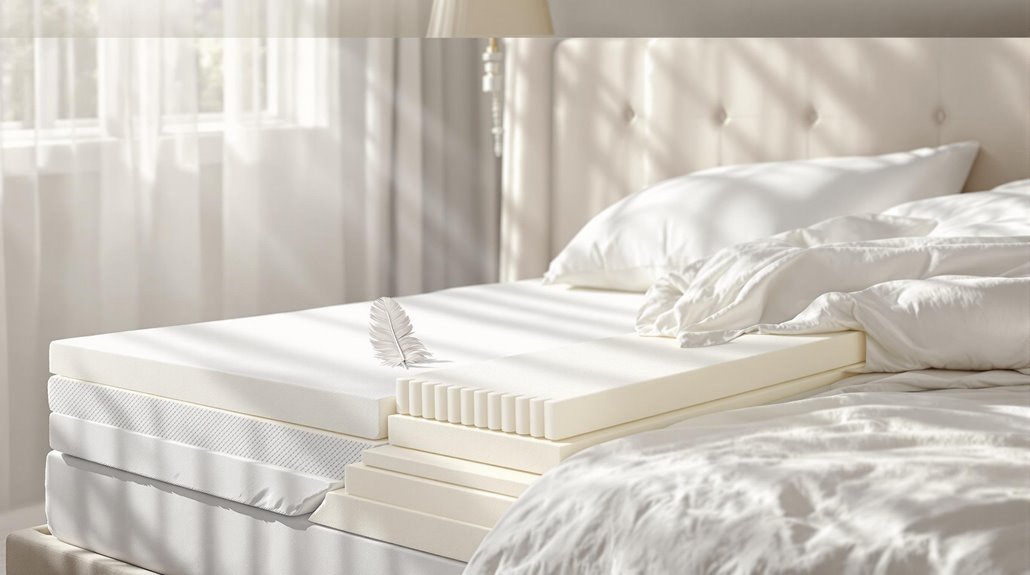
A well-protected mattress forms the foundation of a long-lasting sleep investment. To maximize your mattress's lifespan, start by investing in a high-quality waterproof mattress protector. This essential barrier shields your mattress from spills, stains, and allergens that can compromise its integrity over time.
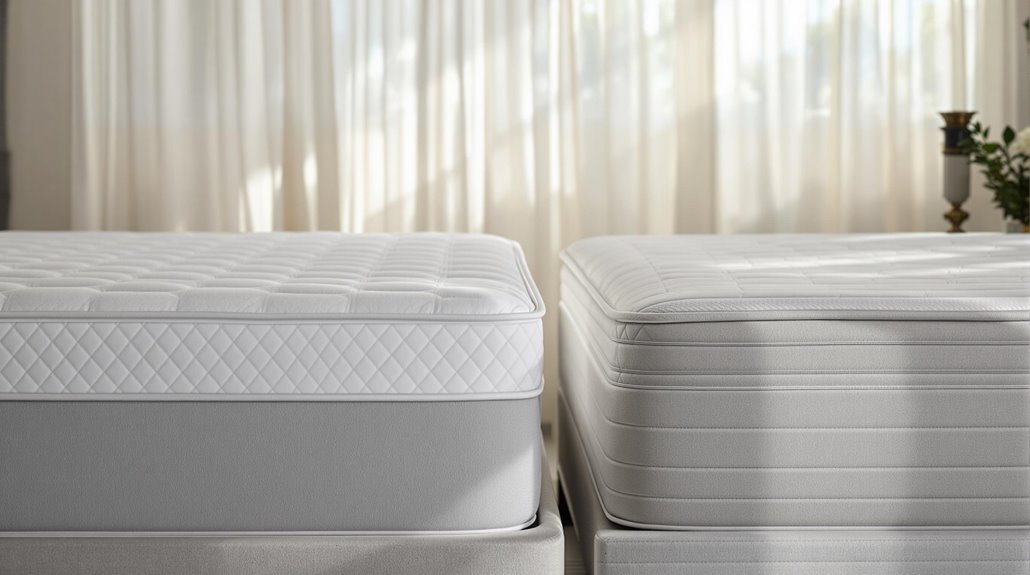
Your mattress needs proper support to maintain its shape and prevent premature wear. Place it on a sturdy box spring or foundation that's specifically designed to work with your mattress type. To guarantee even wear, you'll need to rotate your mattress 180 degrees every three to six months and flip it over twice yearly, if it's designed for flipping.
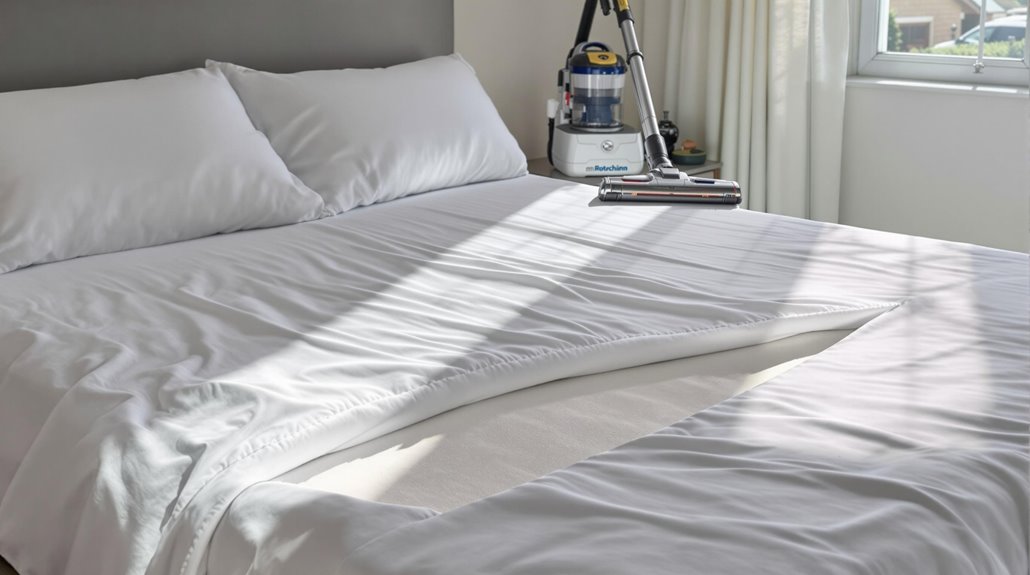
Regular maintenance is indispensable for extending your mattress's life. Vacuum the surface thoroughly to remove dust, debris, and allergens that can accumulate over time. When you need to transport your mattress during a move, wrap it completely in plastic and avoid bending or folding it, as this can damage the internal structure. Keep the mattress upright during transport, and secure it properly to prevent shifting that could cause permanent damage.
Regular Cleaning and Care Routine
Building on proper protection measures, establishing a consistent cleaning schedule will dramatically extend your mattress's life. The key to maintaining a hygienic sleep surface lies in regular cleaning tasks you'll need to perform at different intervals.
Start with weekly maintenance by washing all bedding, including sheets and mattress protectors, to prevent the buildup of body oils and sweat. When it comes to monthly care, vacuum your mattress thoroughly to remove dust, dirt, and potential allergens that can accumulate over time. For stubborn odors, sprinkle baking soda across the surface and let it sit for 24 hours before vacuuming it away.
Don't forget to address spills and stains immediately using a mild detergent and water solution to prevent permanent damage. Every couple of months, take advantage of sunny days by airing out your mattress in direct sunlight. This natural method helps eliminate excess moisture and reduces dust mites that can jeopardize your mattress's integrity. Remember, consistent cleaning not only preserves your mattress but also guarantees you're sleeping in a healthier environment free from common allergens and irritants.
Proper Rotation Methods
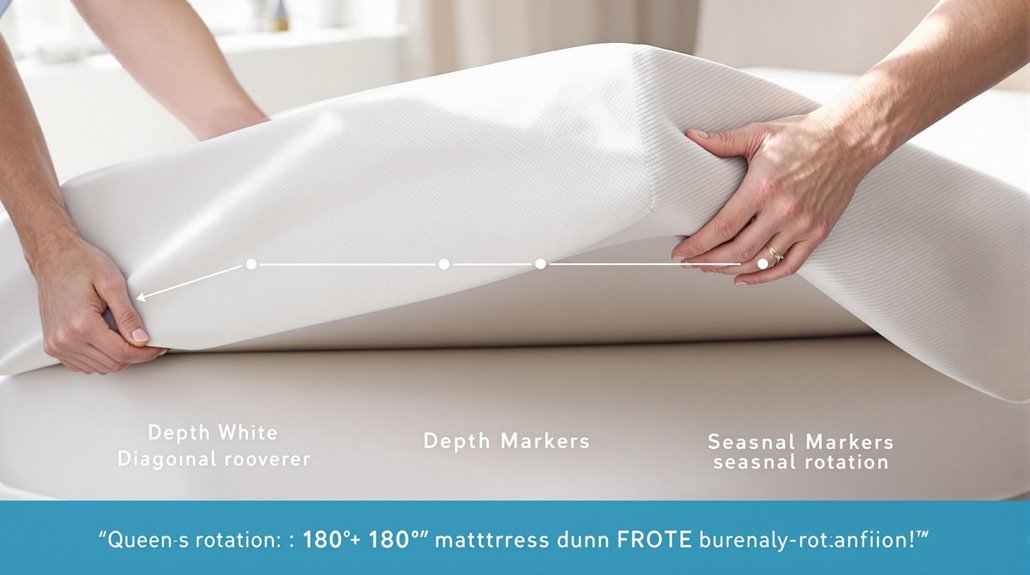
While regular cleaning maintains hygiene, proper rotation methods play an equally critical role in extending your mattress's lifespan. To maximize the bed's durability, you'll need to rotate your mattress 180 degrees every three to six months. This practice prevents depressions and guarantees even wear across the sleeping surface.
In addition to rotation, you should flip your mattress over every six to twelve months, which helps distribute body impressions across both sides. However, before implementing any maintenance routine, check your manufacturer's guidelines, as some modern mattresses aren't designed for flipping. To maintain ideal support, don't sleep in the same spot night after night, as this can lead to premature sagging and uneven wear patterns.
Dealing With Spills and Stains
Proper mattress maintenance extends beyond rotation and flipping to include smart spill management. When spills and accidents happen, you'll need to act quickly to prevent permanent mattress stains that could void your mattress warranties. Always blot liquid spills immediately with a clean, absorbent cloth, avoiding the urge to rub the area, which can make the stain worse.
For most stains, you'll want to spot clean the affected area using mild detergent and cold water. Be careful not to oversaturate the mattress, as excess moisture can lead to mold growth. When dealing with bodily fluids, it's imperative to disinfect the area using a cleaning solution approved by your mattress manufacturer. After cleaning, guarantee the mattress is fully dry before replacing bedding to prevent moisture-related issues.
The best defense against future spills is prevention. Invest in a quality mattress protector that's both comfortable and waterproof. This simple addition not only guards against liquid spills and stains but also helps protect against dust, allergens, and other contaminants that can deteriorate your mattress over time. A good protector is far less expensive than replacing a damaged mattress.
Preventing Common Damage Sources

Simple daily habits play an essential role in preventing mattress damage. While it might be tempting to jump on the bed or let pets sleep with you, these actions can drastically reduce your mattress's lifespan. The excessive force from jumping can compromise the internal structure, while pets can introduce hair, dander, and potential accidents that wear down the material.
Another pivotal practice is to avoid eating in bed, as food and drink spills can lead to stubborn stains and attract unwanted pests. When moving your mattress, always consider the weight of the mattress and use proper protection. A fitted mattress bag or encasement mattress cover will keep dirt and potential damage at bay during transport, while also preventing bed bug infestations. Speaking of bed bugs, regular inspection of your mattress and box springs is indispensable to catch any signs of these pests early. Make it a habit to wash bed linens frequently and examine the mattress surface during changes. These preventive measures not only extend your mattress's life but also maintain a clean, healthy sleeping environment that's free from common sources of damage.
Signs of Mattress Wear
Telltale signs of mattress deterioration can help you determine when it's time for a replacement. One of the most obvious indicators is visible sagging or indentations deeper than one inch, which often occurs in foam mattresses where you regularly sleep. If you notice these depressions, they won't improve with time, even if you rotate your mattress regularly.
Pay attention to how you feel when you wake up. If you're experiencing consistent aches, pains, or stiffness, your mattress may no longer provide the support your body needs. Additionally, watch for physical damage like tears, rips, or exposed inner materials - these issues can't be fixed with a mattress protector and signal the end of your mattress's life.
Even if you clean and protect your mattress diligently, age remains a pivotal factor. Most mattresses need replacement after 7-10 years of regular use. If you're waking up feeling unrested despite getting adequate sleep hours, it's likely time to start shopping for a new mattress. Don't wait until these signs become severe, as sleeping on a worn-out mattress can affect your daily well-being.
Extending Your Mattress Lifespan
Smart maintenance strategies can dramatically extend your mattress's lifespan beyond its typical expectancy. While latex mattresses naturally last 7.5-8.5 years and hybrid ones 6.5-7.5 years, you can make your mattress last longer by following essential care practices.
To help prevent premature wear, use a mattress protector - preferably a waterproof one - to shield against spills, stains, and daily wear. Keep your mattress clean by vacuuming it regularly and immediately spot clean stains when they occur. Flipping and rotating your mattress every 2-6 months ensures even weight distribution and prevents sagging in frequently used areas.
A solid foundation is vital for maximizing your mattress's lifespan. Guarantee your box spring or bed frame properly supports both the mattress and its occupants. Avoid eating in bed to prevent accidental spills and crumbs that can attract pests or create stains. Additionally, regularly wash your bedding to minimize the amount of dirt, sweat, and oils that can seep into your mattress. These maintenance habits are particularly important for foam and innerspring mattresses, which typically have shorter lifespans of 6-7 and 5-6 years, respectively.