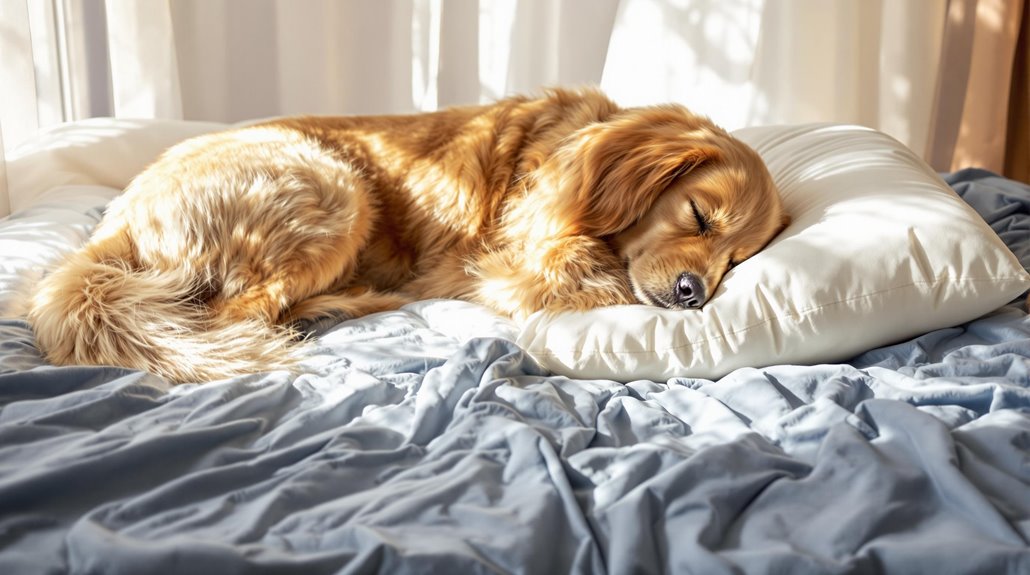
How to Handle Sleeping Problems in Your Dog

If your dog has sleeping problems, you'll need to identify the underlying cause and create a comfortable sleep environment. Start by designating a quiet sleeping area with appropriate bedding and maintaining a moderate room temperature. You can try natural solutions like calming herbs, pheromone diffusers, or lavender scents to help your pet relax. Make sure your dog gets enough daily exercise, and stick to a consistent bedtime routine. If you notice unusual behaviors like excessive snoring, sudden collapses, or violent movements during sleep, consult your veterinarian, as these could indicate serious sleep disorders that require medical intervention. Understanding more about your dog's specific sleep issues will help you choose the most effective solutions.
Common Sleep Disorders in Dogs
Dogs can experience various sleep disorders that affect their quality of rest and overall well-being. As your pet ages, they're more likely to develop insomnia, which can be triggered by cognitive dysfunction, anxiety in dogs, physical discomfort, or persistent itching.
If you have a flat-faced breed like a Pug or Bulldog, your dog may suffer from sleep apnea. This condition interrupts their breathing during sleep and becomes worse if your pet is overweight. You'll notice loud snoring and frequent sleep disruptions.
Some breeds inherit narcolepsy, causing them to experience fragmented sleep patterns and sudden collapses during normal activities. Meanwhile, REM sleep behavior disorder can make your dog physically act out their dreams, leading to concerning movements and vocalizations during sleep.
Watch for signs of nighttime barking and restlessness in your dog sleeping habits, as these often indicate underlying issues like separation anxiety or excess energy. Environmental changes can also disrupt their sleep patterns. Understanding these common sleep disorders in dogs is vital for identifying when your pet needs veterinary attention and developing appropriate management strategies to help them rest better.
Signs Your Dog Needs Help
When your pet displays unusual behaviors during their sleeping hours, it's crucial to recognize potential warning signs that warrant attention. If you notice your dog pacing, whining, or barking at night instead of sleeping, they might be experiencing insomnia or underlying anxiety that needs addressing.
Pay close attention to your dog's breathing patterns during sleep. Excessive snoring or sudden jolting awake could indicate sleep apnea, particularly in flat-faced breeds. These symptoms can greatly impact your pet's health and should be evaluated by a veterinarian. Watch for unexpected physical collapses followed by excessive daytime sleepiness, as these may signal narcolepsy, an inherited condition requiring medical management.
You'll also want to monitor your dog's behavior during REM sleep. If you observe violent movements or vocalizations while they're sleeping, this might point to a REM sleep behavior disorder. Additionally, take note of any notable changes in your dog's mood, energy levels, or general behavior throughout the day. These shifts could be directly connected to poor sleep quality and may indicate an underlying sleep disorder that requires professional intervention to ensure your pet's well-being.
Understanding Environmental Sleep Factors
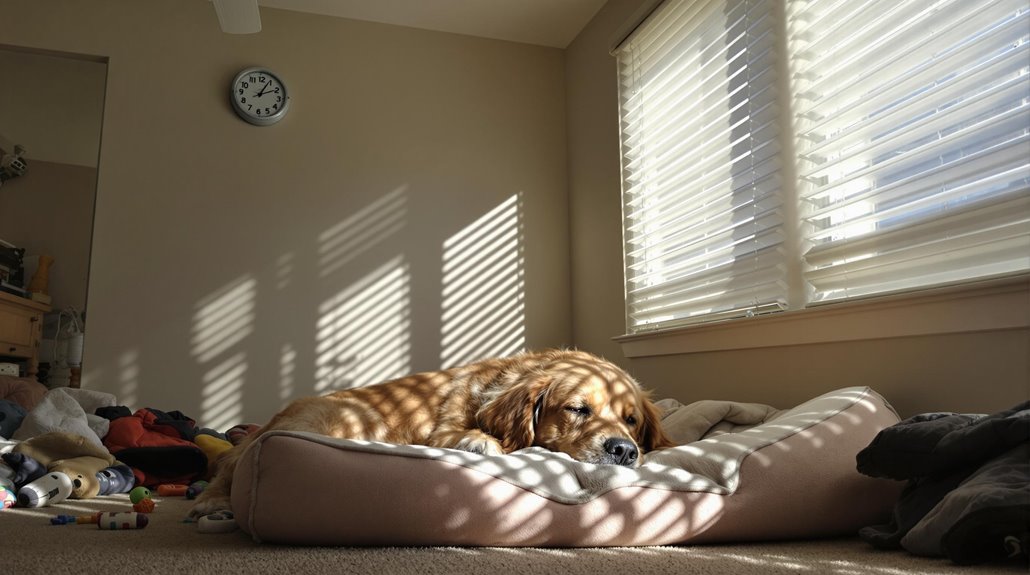
After identifying potential sleep issues in your pet, creating the right environment can make a significant difference in your dog's sleep quality. You'll need to focus on several key environmental factors that directly impact how well your dog sleeps throughout the night.
Start by designating a specific sleeping area that's consistently quiet and comfortable. Your dog's sleep environment should be free from disturbances like loud noises, bright lights, or sudden movements that could startle them awake. Keep the room temperature moderate, as extreme heat or cold can prevent your dog from getting proper rest.
Invest in appropriate bedding that suits your dog's size and preferences, placing it in the same location each night to establish a routine. You can enhance the sleep environment by using calming aids like lavender scents or pheromone diffusers, which naturally help dogs relax. Consider using blackout curtains if your dog is sensitive to light changes, and minimize household activity near their sleeping area during rest periods. Remember that maintaining these environmental conditions consistently will help your dog develop healthy sleep patterns and improve their overall rest quality.
Natural Solutions for Better Sleep
Several natural remedies can effectively improve your dog's sleep quality without resorting to medication. You can start by incorporating calming herbs like valerian or passionflower into your dog's routine about an hour before bedtime. These natural supplements help ease your pet into a more restful state, making the shift to sleep smoother.
Creating a sleep-friendly environment is vital for addressing anxiety-related sleeping issues. Install pheromone diffusers in your dog's sleeping area to create a calming atmosphere that reduces stress and promotes better rest. You'll also find that adding a few drops of lavender essential oil to your dog's bedding can enhance the soothing effect.
Don't underestimate the power of physical activity in promoting good sleep. Ensure your dog gets adequate exercise during the day to naturally tire them out. If your pet shows signs of discomfort while sleeping, consider investing in an orthopedic bed, especially for older dogs or those with joint problems. This specialized bedding provides essential support that can drastically improve sleep quality by reducing pain and increasing comfort throughout the night.
Medical Treatment Options
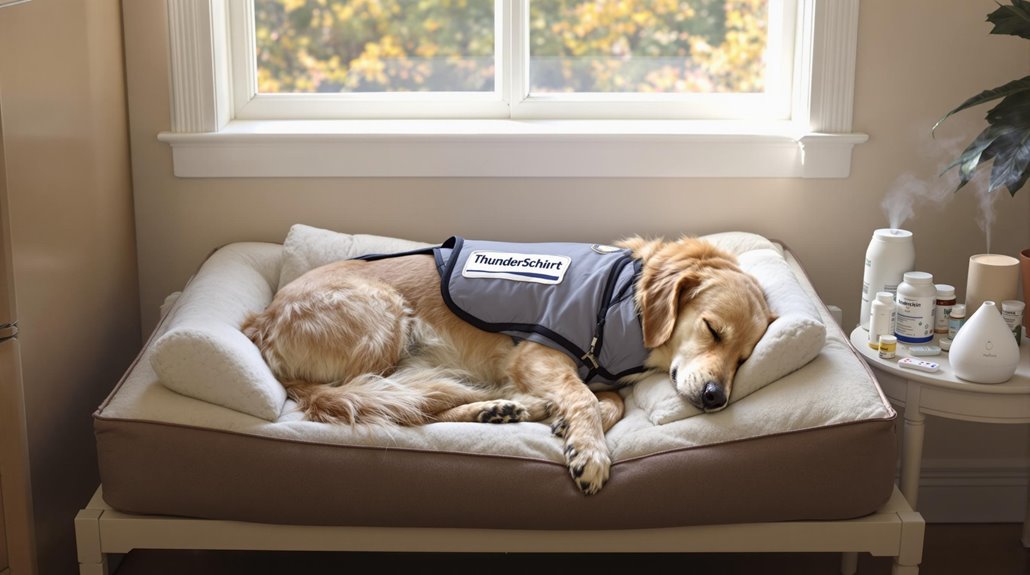
In cases of severe sleep disorders, your veterinarian may recommend prescription medications as part of a thorough treatment plan. These may include sedatives or antidepressants, particularly if your dog's insomnia is linked to separation anxiety or other stress-related issues. Your vet will first evaluate any underlying health conditions that could be affecting your pet's sleep patterns before prescribing medication.
For dogs with sleep apnea, your veterinarian might suggest surgical intervention to widen the airways, which can dramatically improve breathing and reduce disruptive snoring. If your dog has narcolepsy, stimulant medications can help manage excessive daytime sleepiness and regulate their sleep-wake cycle. Dogs suffering from REM sleep behavior disorder may benefit from anticonvulsant medications like potassium bromide to prevent violent movements during sleep.
In addition to prescription medications, your vet might recommend natural supplements to complement the treatment. Options like melatonin, L-theanine, or valerian root can help promote relaxation and improve sleep quality in dogs with insomnia. Remember that medication should always be administered under veterinary supervision, as dosages and treatment duration will vary based on your dog's specific condition and needs.
Creating an Ideal Sleep Space
A comfortable sleeping space serves as the foundation for your dog's healthy sleep habits. To create the perfect environment for your pet, start by selecting a quiet area away from household traffic and distractions. Set up a supportive dog bed that gives them enough room to stretch out comfortably, and make sure the room temperature stays between 65-75°F for conducive rest.
You'll want to establish a consistent sleep schedule by incorporating calming elements into their bedtime routine. Consider using soft lighting or playing gentle background music to help your dog wind down. Some pet owners find that aromatherapy can create a more relaxing atmosphere, though you should always confirm any scents are pet-safe.
Make the space more inviting by providing your dog with their favorite toys or chews. These familiar items offer security and comfort, helping them feel more at ease in their designated sleeping area. Remember to maintain this space exclusively for rest, keeping it free from exciting activities that might interfere with sleep. By creating this dedicated sleep sanctuary and sticking to regular bedtime habits, you'll help your dog develop healthy sleep patterns.