How Much Sleep Does My Dog Really Need? A Dog Owner’s Guide
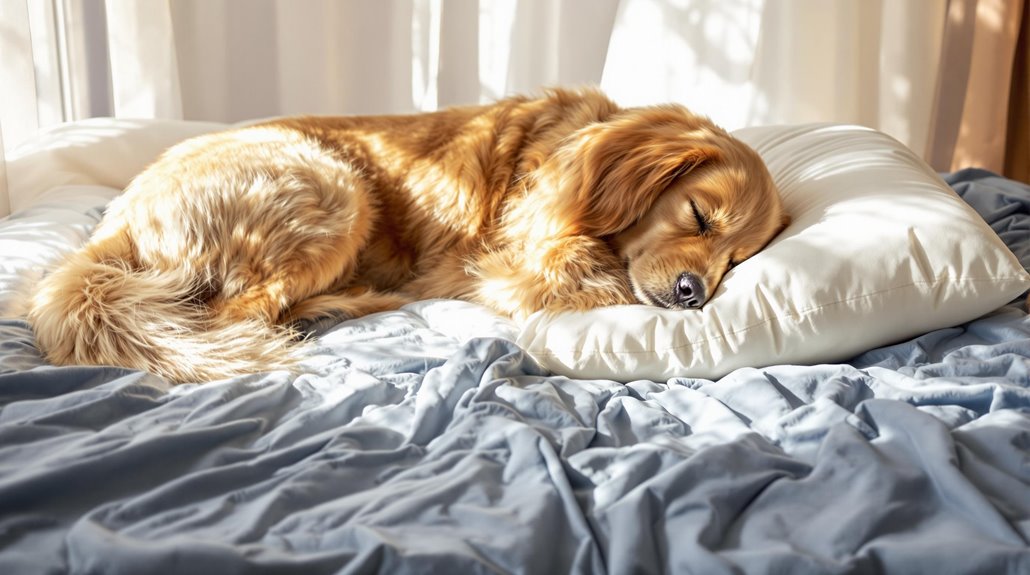
Your dog's sleep needs vary considerably based on age and size. While adult dogs require 11-12 hours of sleep daily, puppies need up to 20 hours to support their rapid development. You'll notice your furry friend taking multiple naps throughout the day - this is completely normal, as dogs are polyphasic sleepers. Larger breeds typically need more rest than smaller ones, and senior dogs often return to puppy-like sleep patterns. If you're concerned about your dog's sleep habits, watch for signs of restlessness or unusual behavior. Understanding your pet's unique sleep requirements will help you create the perfect environment for healthy rest.
Understanding Normal Dog Sleep Patterns
Unlike humans who follow a single sleep cycle at night, dogs are polyphasic sleepers who take multiple naps throughout the day. Your dog's sleep patterns are uniquely designed to help them rest and recharge through shorter sleep sessions rather than one long period of continuous sleep.
Adult dogs sleep between 11-12 hours daily to fulfill their basic sleep needs, while puppies require even more rest, often sleeping 16-20 hours per day. During these sleep sessions, your dog cycles through both REM sleep and slow wave sleep, just like you do. However, dogs move through these cycles more quickly than humans, which explains their frequent periods of rest throughout the day.
Understanding these natural sleep behaviors can help you better accommodate your dog's rest requirements. If you notice your dog sleeping frequently during daylight hours, don't be alarmed - it's completely normal. In fact, research shows that dogs who maintain regular sleep patterns throughout the day tend to be more relaxed overall. By recognizing and respecting your dog's natural sleep cycles, you can provide for them to get the quality rest they need to stay healthy and happy.
Signs of Healthy Dog Sleep
Now that you know how dogs naturally sleep, you'll want to recognize what healthy sleep looks like in your pet. Normal sleep patterns include both deep sleep and REM cycles, though your dog moves through these stages more quickly than you do. During healthy sleep, your dog should appear relaxed and may occasionally twitch or make small movements.
Watch your dog's sleep duration closely. Adult dogs need 11-12 hours of sleep daily, while puppies require substantially more – up to 20 hours – to support their growth and development. If you notice your dog's sleep behavior changing dramatically, particularly with excessive twitching, it's time to consult your veterinarian.
Healthy sleep behaviors include finding a comfortable spot, circling before lying down, and maintaining a consistent sleep-wake schedule. Your dog's daytime sleep habits are just as important as nighttime rest. Dogs who get adequate sleep during the day typically display more balanced, content behavior. You'll notice they're more relaxed during their waking hours and show appropriate energy levels for their age and breed. Remember that each dog's individual sleep patterns may vary slightly while still being perfectly healthy.
Common Sleep Disorders in Dogs
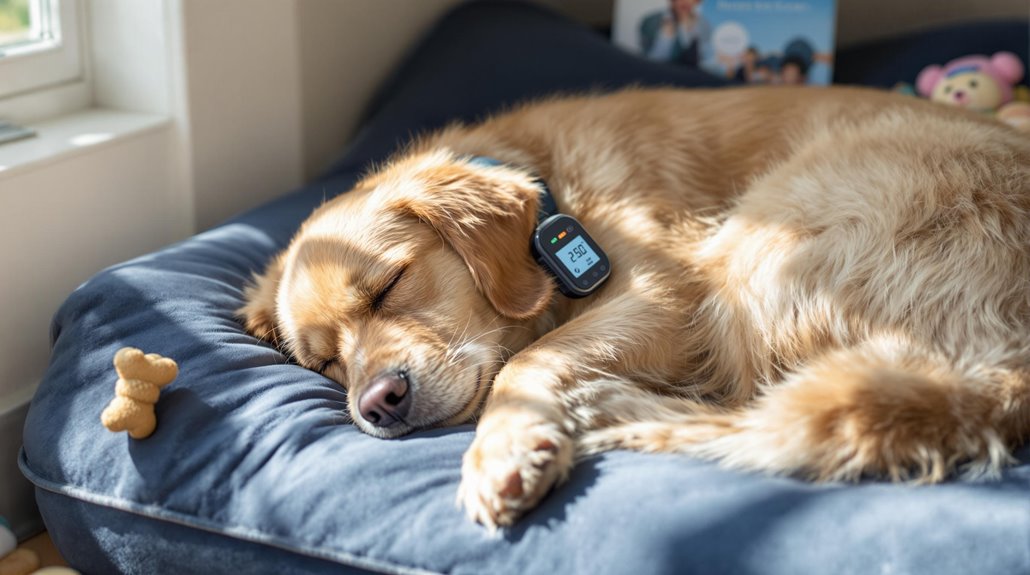
Sleep disorders can considerably impact your dog's health and quality of life, with several common conditions affecting canines. Understanding these disorders will help you identify potential issues in your pet's sleep duration and behaviors.
Narcolepsy in dogs is a genetic condition that's more prevalent in certain breeds. While there's no cure, recognizing the symptoms can help you manage your pet's condition more effectively. If you have a flat-faced breed like a bulldog, watch for signs of obstructive sleep apnea, which can disrupt their breathing during sleep and require veterinary attention.
Rapid eye movement sleep behavior disorder is another condition you should know about, particularly if your dog is under one year old. During REM sleep, affected dogs may exhibit unusual movements or behaviors. The good news is that more than 75% of dogs with this sleep behavior disorder respond well to medication, making it a manageable condition with proper veterinary care.
Since research in canine sleep disorders is still advancing, it is crucial to consult your veterinarian if you notice any unusual sleep patterns. They can help diagnose specific conditions and recommend appropriate treatment options for your dog's particular situation.
Age-Related Sleep Requirements
Much like human sleep patterns, your dog's rest requirements change considerably throughout their life stages. You'll notice the most dramatic sleep needs during puppyhood, when your furry friend may snooze up to 20 hours daily. This extensive rest period is vital for their growth and development. As your dog matures into adulthood, their sleep needs gradually decrease to about 11-12 hours per day.
- Puppies (0-1 year): Require 18-20 hours of sleep daily, spread across multiple naps to support rapid physical and mental development
- Adult dogs (1-7 years): Need 11-12 hours of sleep, including nighttime rest and daytime naps
- Senior dogs (7+ years): Need even more sleep, often returning to puppy-like sleep patterns
When it comes to sleep in a dog, size matters too. Larger breeds typically require more rest than their smaller counterparts, regardless of age. As your dog enters their senior years, you'll notice they need additional rest periods throughout the day. Understanding these age-related changes helps you better support your dog needs and provide them with adequate rest at every life stage.
Creating the Perfect Sleep Environment
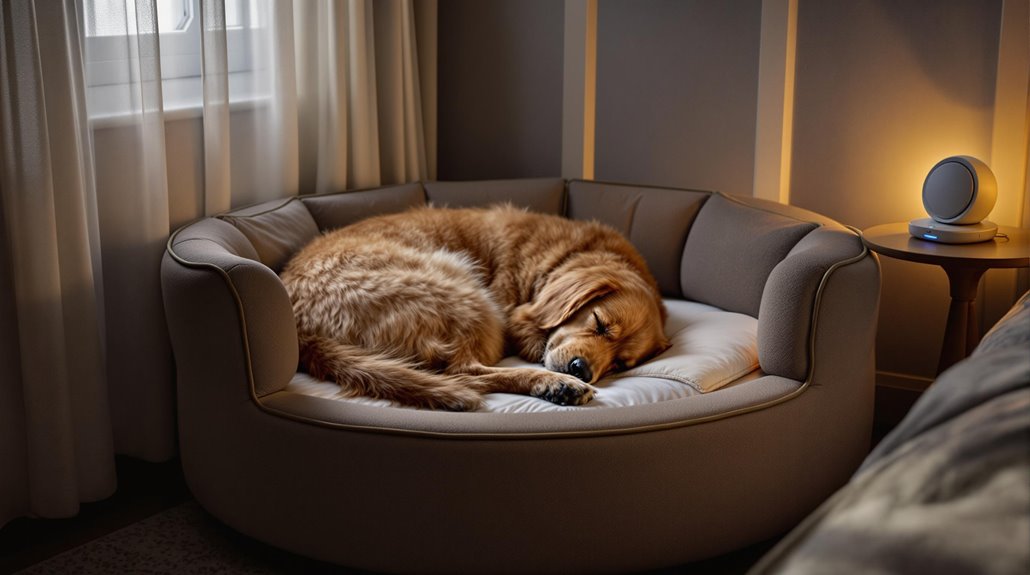
Your dog's sleep quality depends heavily on their environment, just as your own rest improves with the right bedroom setup. Creating an ideal sleep environment for your furry friend involves several key elements that promote relaxation and consistent sleeping patterns.
Start by designating a specific area that's quiet, dark, and temperature-controlled. You'll want to minimize disruptions that could interrupt your dog's natural sleep cycle. Consider using white noise machines to mask sudden sounds and light-blocking curtains to maintain darkness. If your dog uses a crate, a cover can provide additional security and darkness.
Provide multiple comfortable options for rest, including at least one high-quality dog bed placed away from high-traffic areas. This gives your pet choices while maintaining a consistent sleep routine. The sleeping area should be free from excessive stimuli that might prevent relaxation.
Temperature control is vital - keep the sleep environment comfortably cool and well-ventilated. Most importantly, stick to using the same sleeping space consistently. This helps your dog develop regular sleeping patterns and associates the area with rest, making it easier for them to wind down when it's time for sleep.
Breed-Specific Sleep Considerations
Different dog breeds exhibit distinct sleep patterns that evolved from their historical roles and physical characteristics. Your dog's sleep requirements largely depend on their breed type, with larger breeds like Great Danes typically needing more rest than smaller, more energetic breeds like Yorkshire Terriers.
Consider these breed-specific factors when evaluating your dog's sleep patterns:
- Working breeds with herding or hunting backgrounds generally require less sleep, as they're naturally programmed to stay alert and active for longer periods
- Sight hounds, including Greyhounds and Whippets, are surprisingly low-energy and may sleep up to 18 hours daily despite their athletic builds
- Flat-faced breeds such as Pugs often experience sleep disruption due to their respiratory challenges
Understanding your breed's typical sleep patterns helps you better address their needs. For instance, companion breeds like Cavalier King Charles Spaniels might sleep more when left alone due to separation anxiety. If you notice significant changes in your dog's sleep routine, consult your veterinarian, as variations from breed-specific norms could indicate underlying health issues. Remember that while breed tendencies provide general guidelines, each dog's individual needs may vary.
Exercise and Sleep Connection
Maintaining a consistent exercise routine plays an essential role in your dog's sleep quality. When your furry friend doesn't get enough physical activity during the day, you'll likely notice restless behavior and disrupted sleep patterns at night. Both physical and mental exercise help tire your dog out, promoting better sleep and reducing unwanted nighttime activity.
Your dog's exercise needs will vary based on their age and energy level. If you have a puppy or a high-energy breed, you'll need to provide more intensive daily exercise to validate they get the activity they need. Without proper exercise, your dog may become excessively sleepy during the day and struggle to maintain healthy sleep cycles.
Consider incorporating moderate evening exercise into your dog's routine to help them wind down naturally before bedtime. A leisurely walk or gentle play session can serve as an effective precursor to nighttime rest. Remember that a tired dog is typically a well-sleeping dog, so if you're noticing sleep issues, first evaluate whether your pet is getting enough exercise. By maintaining regular physical activity, you'll help ascertain your dog gets the quality sleep they need.
Nighttime Routines That Work
Building on the importance of daily exercise, establishing predictable nighttime routines can transform your dog's sleep quality. Your furry friend needs to know what to expect each evening, just as you do. Creating a consistent bedtime schedule helps both you and your dog shift smoothly into sleeping hours.
Start by setting up a sleep-friendly environment that's quiet and comfortable. You'll want to ponder whether your dog should sleep in your bedroom or have a separate space. Many dogs benefit from having their own designated sleeping area, complete with a cozy crate or bed.
Schedule the last potty break at the same time each night, followed by calm activities like gentle petting or quiet play. Use alarms consistently to signal bedtime preparation, teaching your dog to recognize when it's time to wind down. Create a relaxing atmosphere by dimming lights and reducing noise levels about 30 minutes before bedtime.
Medical Issues Affecting Sleep
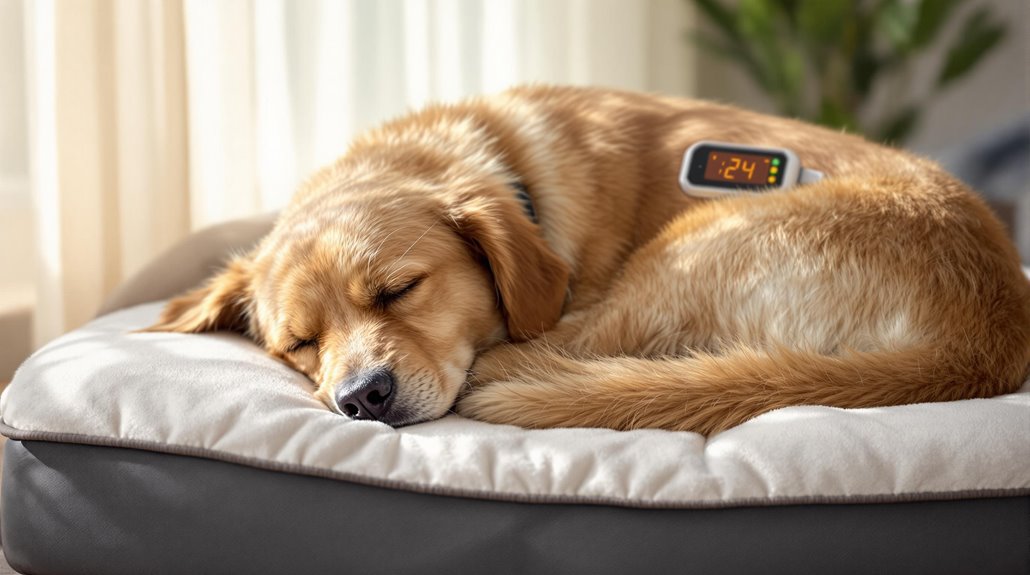
Along with regular sleep needs, your dog's rest patterns can be markedly impacted by various medical conditions. If you notice significant changes in your dog's sleeping behaviors, it is crucial to evaluate potential health issues that might be causing these alterations.
Several medical conditions can affect your dog's sleep quality and duration. Thyroid disorders, heart disease, and arthritis commonly disrupt normal sleep patterns. If your dog suddenly starts sleeping more than usual, this could signify serious conditions like diabetes or kidney disease that require immediate veterinary care.
Sleep disorders themselves can pose significant health risks. Sleep apnea, particularly common in flat-faced breeds, can cause breathing difficulties during rest. You might notice your dog snoring excessively or experiencing brief pauses in breathing while sleeping. Additionally, younger dogs under one year old may experience REM sleep behavior disorder, which causes unusual movements during deep sleep phases.
If you observe any concerning changes in your dog's sleep patterns, do not hesitate to seek professional help. Your veterinarian can perform necessary tests to identify underlying medical conditions and develop an appropriate treatment plan to improve your pet's sleep quality.
Seasonal Changes in Sleep
The natural rhythms of changing seasons markedly influence your dog's sleep patterns throughout the year. During winter months, you'll notice changes in how much sleep they need as your furry friend adapts to colder temperatures and shorter days. Just like humans, dogs often go back to sleep for longer periods when daylight hours decrease.
Your dog's sleep and resting behaviors naturally adjust to help them conserve energy during colder months. Research on welfare in shelter dogs has shown that seasonal changes significantly impact day and sleep patterns across all breeds, though some dogs are more sensitive to these changes than others.
- Dogs typically sleep longer during winter nights and may take more frequent naps during daytime hours
- Senior dogs and certain breeds may show more pronounced seasonal sleep pattern changes
- You'll need to adjust your dog's routine to accommodate their increased winter sleep needs
Monitor your pet's sleep patterns as seasons change, and don't be alarmed if you notice more napping during winter months. This natural adaptation helps them maintain essential energy levels and stay healthy throughout the year. Just guarantee they still get adequate exercise and mental stimulation between rest periods.
Training Better Sleep Habits
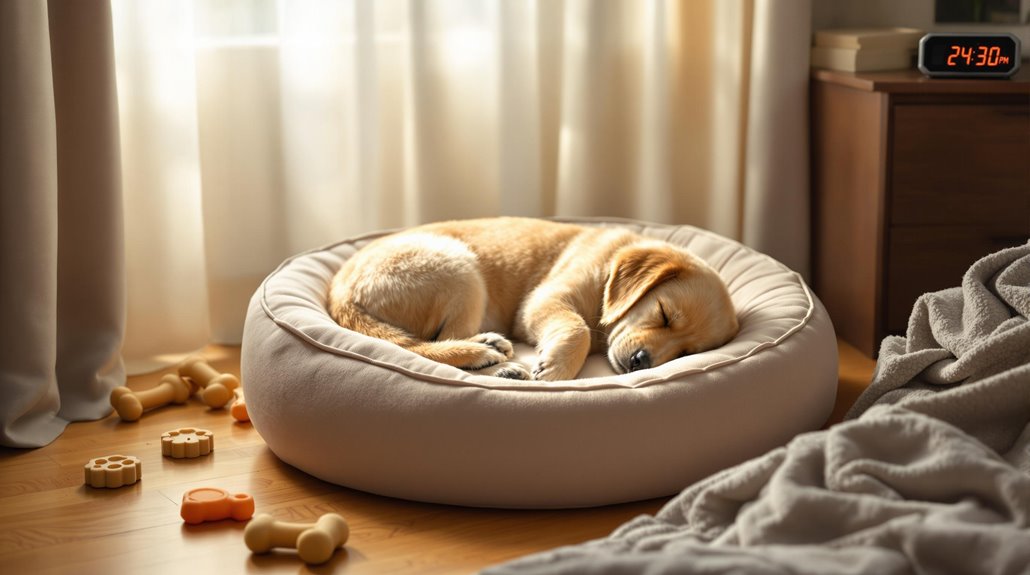
Good sleep habits don't happen by accident - they require consistent training and patience to develop. Just like humans, dogs need structured routines to establish healthy sleep patterns. Whether you have energetic Labrador Retrievers or laid-back breeds, the clinical management of your dog's sleep habits starts with a consistent daily schedule.
Set specific times for meals, exercise, and bedtime to help regulate your dog's internal clock. Create a sleep-friendly environment that's quiet, dark, and comfortable. If your dog struggles with settling down, try using white noise machines or calming pheromone products to ease the move to bedtime.
Implement a predictable bedtime routine that includes a final potty break and calming activities. You can use alarms or specific cues to signal when it's time to wind down. The amount of sleep your dog gets will improve naturally when these routines become second nature. Train your dog to assist with sleep-related tasks, such as fetching an alarm clock or helping with morning routines - this not only reinforces good sleep habits but also strengthens your bond while serving a practical purpose.
When to Consult Your Veterinarian
While establishing good sleep routines helps most dogs, some sleep issues require professional medical attention. If you notice sudden changes in your dog's sleep patterns, it's essential to consult your veterinarian to rule out any underlying medical condition. These changes could signal various health issues, including pain, illness, or neurological disorders that need immediate attention.
A thorough veterinary examination and diagnostics will help determine the root cause of your dog's sleep-related concerns. Your vet can assess their overall health and recommend specific adjustments to improve their sleep quality, which may include changes to:
- Diet and nutrition modifications personalized to your dog's needs
- Exercise routines that promote better sleep-wake cycles
- Environmental adjustments to create ideal sleeping conditions
Don't hesitate to seek professional guidance if your dog's sleep habits change dramatically. Your veterinarian is your best resource for addressing sleep disturbances and ensuring your pet's well-being. They can develop an extensive treatment plan that addresses both the symptoms and any underlying health issues affecting your dog's rest. Remember, early intervention often leads to better outcomes for your pet's health.