Why Do Children Have Trouble Falling Asleep? Common Causes Explained
Your child's sleep troubles likely stem from multiple factors working together. Common culprits include irregular bedtime routines, screen time before bed, and consuming sugary foods or caffeine too close to sleep. Medical conditions like asthma, allergies, or sleep apnea can also disrupt rest, while psychological factors such as anxiety or ADHD may make it harder to wind down. Environmental disruptions like bright lights, uncomfortable temperatures, or household noise can prevent relaxation. Even natural developmental stages and growing independence can lead to bedtime resistance. Understanding these underlying causes will help you develop effective solutions for better sleep.
Understanding Childhood Sleep Patterns
From birth through adolescence, children's sleep patterns undergo significant changes that can challenge both parents and children alike. Your newborn's difficulty falling asleep often stems from their natural curiosity about the world and their need for frequent feedings, while your toddler's sleep resistance typically reflects their growing independence and developing imagination.
As your children grow, their sleep disorders can become more complex. Preschoolers and school-aged kids might develop sleep apnea due to enlarged tonsils or adenoids, while teenagers frequently struggle with daytime sleepiness due to various lifestyle factors. Understanding these age-specific patterns is essential for maintaining good sleep hygiene and addressing potential insomnia.
Your child's sleep environment and habits play pivotal roles in their ability to rest properly. While younger children might experience night terrors and parasomnias, older kids often face sleep disruptions from increased screen time and social commitments. You'll need to adjust your approach based on your child's developmental stage, recognizing that sleep disorders can manifest differently at various ages. By identifying these patterns early, you can help establish healthy sleep habits that support your child's growth and well-being.
Medical Conditions Affecting Sleep
Various medical conditions can greatly disrupt your child's ability to fall asleep and maintain restful slumber. If your child has asthma, allergies, or eczema, these conditions can cause significant discomfort and itching that make it challenging to drift off to sleep. The physical symptoms often worsen at night, leading to increased sleep disturbances.
Children suffering from chronic pain conditions, including migraines and musculoskeletal issues, may find it particularly difficult to get comfortable in bed. The persistent pain can prevent them from finding a relaxing position and achieving quality sleep. Additionally, if your child takes medications for ADHD, you should be aware that some stimulant medications can cause insomnia as a side effect.
Sleep apnea presents another serious concern, as it can cause your child's airway to become temporarily blocked during sleep. This condition leads to frequent sleep interruptions and difficulty falling asleep initially. Gastrointestinal issues, particularly acid reflux, can also interfere with sleep quality. When your child lies down, stomach acid may flow back into the esophagus, creating discomfort that makes both falling and staying asleep problematic.
Environmental Sleep Disruptors
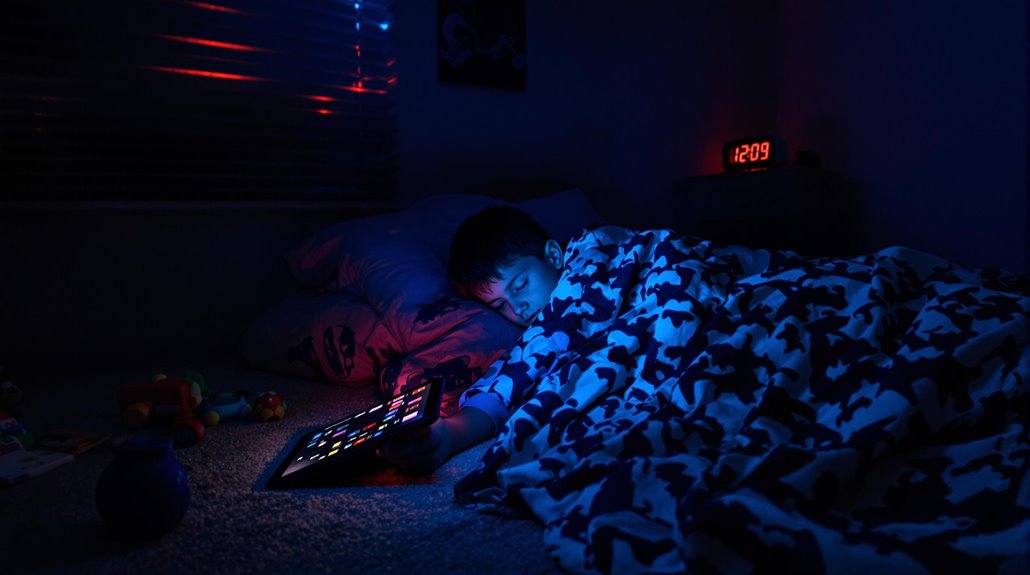
While medical conditions pose significant challenges to children's sleep, the environment where they rest can be equally disruptive. Your child's sleep environment plays an integral role in their ability to fall and stay asleep. Exposure to blue light from screens and bright lighting can suppress melatonin production, making it harder for your child to wind down naturally. That's why it's crucial to limit screen time before bedtime.
The importance of a consistent bedtime routine can't be overstated, as irregular schedules can throw off your child's circadian rhythm. If you're allowing caffeinated beverages too close to bedtime, you're likely setting up obstacles to sound sleep. Additionally, uncomfortable sleep conditions, such as wrong room temperature, inadequate mattresses, or excessive light penetration, can prevent your child from achieving quality rest.
Your home environment's overall stability also impacts sleep quality. Chaotic households can generate anxiety and stress, making it difficult for children to relax at bedtime. To promote better sleep, it's essential to ensure your child's bedroom is calm, quiet, and comfortable, with appropriate temperature control and light-blocking features. Creating a peaceful sleep environment helps establish healthy sleep patterns for your child.
Behavioral and Psychological Factors
Behavioral and psychological issues rank among the most significant barriers to healthy sleep patterns in children. When your child struggles with falling asleep, it's often due to underlying factors that disrupt their natural sleep-wake cycle. Common challenges include anxiety about bedtime, stress from daily activities, and learned sleep associations that make independent sleep difficult.
Children with ADHD or other mental health conditions face unique obstacles, as racing thoughts and hyperactivity can interfere with their ability to wind down at bedtime. Your child's bedtime routine plays an indispensable role in establishing healthy sleep patterns. Here are key behavioral factors that often contribute to sleep difficulties:
- Screen-related overstimulation before bed disrupts your child's natural ability to feel sleepy
- Inconsistent sleep schedules and irregular nap patterns confuse their internal clock
- Dependency on specific conditions or parental presence to fall asleep creates challenging sleep associations
- Academic, social, or family-related stress increases bedtime anxiety and makes relaxation difficult
Understanding these behavioral and psychological factors helps you identify and address the root causes of your child's sleep challenges, leading to more effective solutions.
Diet and Sleep Connection
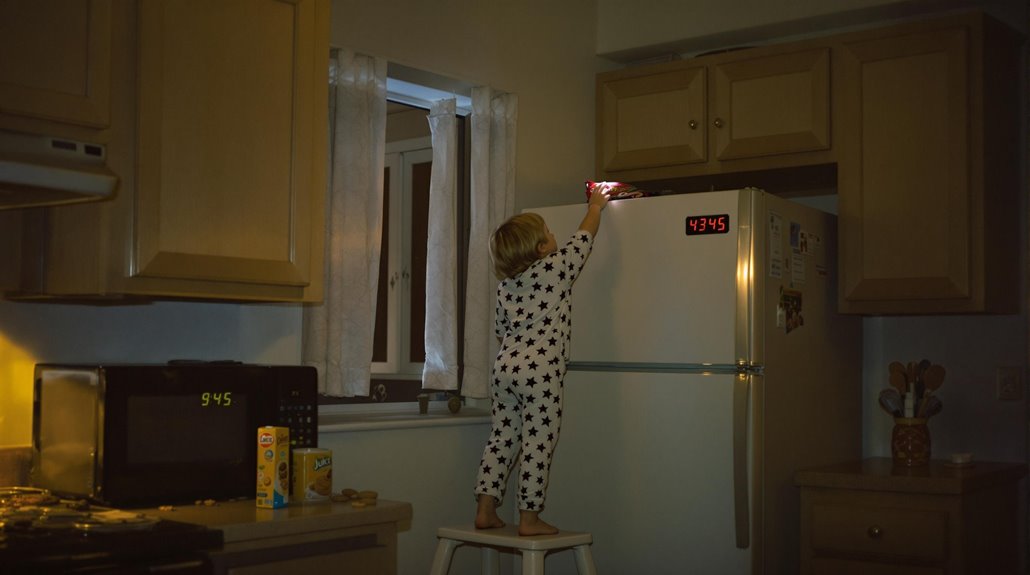
Beyond bedtime routines and behavioral factors, your child's diet plays a critical role in their ability to fall asleep. What your child eats and drinks throughout the day, especially in the hours leading up to bedtime, can greatly impact their sleep quality and how easily they drift off to sleep.
Pay close attention to substances that can disrupt your child's central nervous system, particularly caffeine found in sodas, chocolate, and some snacks. Similarly, sugary foods consumed close to bedtime can cause a surge in energy levels, making it challenging for your child to wind down. You'll want to avoid serving heavy meals right before bed, as they can cause physical discomfort and restlessness.
Your child's eating patterns throughout the day matter too. Irregular meal times can disturb their circadian rhythm, making it harder to maintain a consistent sleep schedule. When planning bedtime snacks, opt for light, easily digestible options. Don't forget about hydration - ensure your child drinks enough water during the day, but limit fluids close to bedtime to prevent midnight bathroom trips. Proper hydration helps prevent sleep-disrupting restlessness while supporting healthy sleep patterns.
Treatment and Management Strategies
Success in treating your child's sleep difficulties requires an extensive approach that combines multiple strategies. Establishing a consistent bedtime routine and maintaining good sleep hygiene are fundamental steps in addressing sleep problems. You'll want to work with healthcare providers to rule out underlying medical conditions like sleep apnea or restless leg syndrome that could be affecting your child's rest.
For persistent sleep issues, cognitive-behavioral therapy for insomnia (CBT-I) can be particularly effective. This approach teaches children relaxation techniques and helps them develop healthier sleep habits. While medication may be prescribed for chronic cases, it should only be used short-term under professional supervision.
To effectively manage your child's sleep difficulties, implement these essential strategies:
- Create a calming environment by dimming lights and removing screens
- Maintain consistent bedtime and wake-up times, even on weekends
- Guarantee regular daytime exercise, but not too close to bedtime
- Monitor and limit caffeine intake, particularly in the afternoon
Remember that improvement takes time, and you'll need to consistently apply these strategies to see lasting results in your child's sleep patterns.