When Eczema Disrupts Your Sleep: Tips to Soothe and Snooze Better

You can fight back against nighttime eczema flares with a strategic bedtime routine. Start with a quick lukewarm bath, then apply moisturizer within 3 minutes while your skin is still damp. Keep your bedroom cool at around 65°F and use breathable bedding materials like cotton or bamboo. Cover trouble spots with petroleum jelly and wear cotton gloves to prevent scratching. Wash bedding regularly with fragrance-free detergent and maintain proper air circulation to regulate humidity. By making these simple changes to your sleep environment and skincare routine, you'll find lasting relief for peaceful nights ahead.
Understanding Nighttime Eczema Flares
During nighttime hours, eczema symptoms often intensify, creating a frustrating cycle of discomfort and disrupted sleep. If you're among the many people with eczema who experience trouble sleeping, understanding why your symptoms worsen at night can help you better manage your condition.
Your body's natural circadian rhythm plays a significant role in nighttime eczema flare-ups. As you sleep, your body temperature fluctuates, and your skin loses more moisture than during the day. These changes can compromise your skin's protective barrier, making Atopic dermatitis symptoms more severe. Additionally, you may unconsciously scratch throughout the night, further damaging your skin and intensifying the itch-scratch cycle.
Sleep problems aren't just a consequence of physical discomfort. Evening stress and anxiety can trigger inflammation, making your eczema symptoms more pronounced. The relationship between stress and eczema creates a challenging cycle: eczema disrupts your sleep, leading to increased stress, which then worsens your symptoms. Understanding these factors helps explain why managing your condition requires a thorough approach that addresses both daytime and nighttime triggers.
Creating Your Bedtime Skin Routine
Establishing a consistent bedtime skin routine serves as your first line of defense against nighttime eczema flares. Since eczema can disrupt your sleep patterns, it's vital to prepare your skin properly before bed to maximize your chances of good nights ahead.
Start by taking a quick 5-10 minute bath in lukewarm water, as hot water can trigger irritation. Once you've finished, gently pat your skin dry and immediately apply your moisturizing cream within three minutes to lock in hydration. For particularly troubled spots, apply a layer of petroleum jelly and cover with cotton gloves to prevent scratching and enhance absorption overnight.
Like many adults with eczema, you'll want to make certain your bedroom environment supports your skin health. Choose bedding made from natural fibers, and wash all your linens with fragrance-free laundry detergent, skipping fabric softeners entirely. Keep your bedroom cool and use lightweight, breathable clothing for sleeping. If you find certain areas need extra attention, apply an additional layer of fragrance-free moisturizer to those spots before getting into bed.
Optimizing Your Sleep Environment
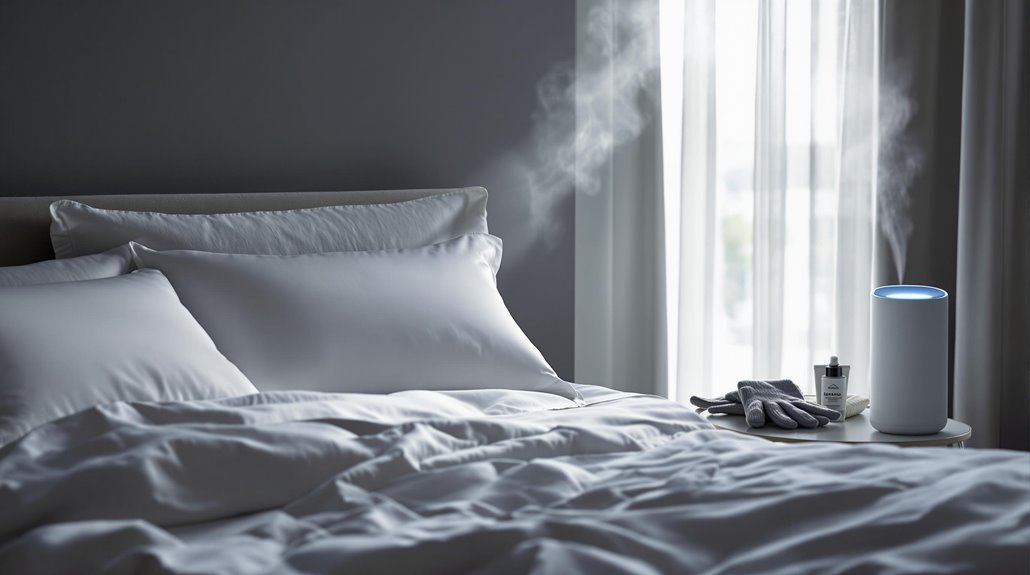
A well-optimized bedroom serves as your sanctuary for managing eczema while you sleep. Start by setting your room temperature to around 65°F, as cooler conditions help prevent the urge to scratch and reduce nighttime flare-ups. Don't forget to maintain proper air circulation by using a fan or opening windows, which helps regulate humidity levels that can affect your eczema.
Your bed plays an indispensable role in managing symptoms. Choose breathable bedding materials like cotton or linen instead of synthetic fabrics that can trap heat and irritate your skin. Make sure you're washing your sheets, pillowcases, and blankets regularly with fragrance-free, gentle detergents to remove potential irritants and allergens that could trigger flare-ups.
Keep your bedroom free from dust mites by minimizing clutter and soft furnishings. These tiny creatures can worsen your eczema symptoms, making it harder to get quality sleep. Avoid using hot water when washing bedding, as it can set in allergens rather than removing them. By maintaining these environmental controls, you'll create a sleep space that supports your skin's healing process and helps you rest more comfortably through the night.
Choosing Sleep-Friendly Bedding Materials
Selecting the right bedding materials can make or break your nightly comfort when dealing with eczema. Natural fibers like cotton, linen, and bamboo should be your go-to choices, as they're superior at wicking away sweat and allowing your skin to breathe throughout the night. When caring for your bedding, you'll want to use detergents and softeners specifically formulated for sensitive skin to prevent irritation.
Your bedding care routine should focus on these essential elements:
- Choose bedding materials that can withstand hot water washing to eliminate dust mites effectively
- Guarantee thorough rinsing to remove all traces of detergent that could trigger flare-ups
- Avoid products containing harsh chemicals like Sodium Lauryl Sulfate
- Select breathable, natural fabrics that help regulate temperature and moisture
Remember that proper laundering is just as important as the materials themselves. Double-rinse your sheets if necessary, and don't overload your washing machine - giving your bedding plenty of space to get thoroughly clean. By combining the right materials with proper care techniques, you'll create a more comfortable sleep environment that's less likely to trigger eczema symptoms.
Managing Temperature and Humidity
Temperature and humidity levels can make or break your sleep quality when you're dealing with eczema. While people without eczema might not think twice about room temperature, Adults With Atopic dermatitis often have trouble falling asleep when their environment isn't properly regulated.
To help you sleep better, aim to keep your bedroom around 65 degrees Fahrenheit. This cool temperature helps prevent skin irritation and reduces nighttime flare-ups that can keep you tossing and turning. It's a good idea to use fans or crack windows to maintain proper airflow and regulate your body temperature throughout the night.
Your pre-bedtime routine matters too. Skip those hot showers that might feel tempting - they'll only dry out your skin and trigger itching. Instead, opt for lukewarm water and immediately apply a thick, fragrance-free moisturizer afterward. This helps lock in essential hydration that your skin needs overnight.
Many people with atopic dermatitis find that managing humidity is just as critical as temperature control. Too much moisture can promote bacterial growth, while too little can lead to dry, itchy skin. Consider using a humidity monitor to maintain optimal levels in your bedroom.
Breaking the Itch-Scratch Cycle
During the night, the itch-scratch cycle can become your biggest enemy when living with eczema. When you scratch, your body releases histamine, which only intensifies the itching and creates a frustrating cycle that's hard to break. To interrupt this pattern, you'll need a multi-pronged approach focusing on both prevention and relief.
Start by applying moisturizers and anti-itch creams before bedtime to create a protective barrier and reduce inflammation. Wearing cotton gloves or mittens while you sleep can prevent unconscious scratching that often occurs during the night. Keep your nails trimmed short to minimize damage if you do scratch.
To effectively manage your nighttime symptoms, consider these essential strategies:
- Identify and eliminate your personal eczema triggers, such as certain fabrics, detergents, or foods
- Practice relaxation techniques before bed to reduce stress-induced itching
- Create a consistent bedtime routine that includes applying medications and moisturizers
- Keep your bedroom cool and use breathable cotton bedding to prevent overheating
Building Better Sleep Habits
A consistent sleep routine forms the foundation of managing eczema-related sleep disturbances. Since eczema tends to worsen at night, it's imperative to establish habits that improve your sleep quality. Try to go to bed and wake up at the same time every day, even on weekends, to regulate your body's internal clock.
Your evening routine plays a critical role in managing eczema symptoms and promoting Good Sleep. Start by dimming lights and avoiding electronic devices at least two hours before bedtime, as blue light can interfere with your natural sleep patterns. If you moisturize after bathing, make sure your skin isn't still damp when you get into bed, as excess moisture can trigger itching.
Make your bedroom a sleep sanctuary by keeping it cool, quiet, and dark. Cut off caffeine intake after noon, as it can stay in your system for hours and disrupt sleep. Incorporate relaxing activities like gentle stretching, meditation, or reading a book before bed. These practices not only help reduce stress but also create a calming conversion from day to night, making it easier to drift off despite eczema-related discomfort.