What to Know About Hogmanay in Scotland: A New Year’s Celebration

Hogmanay, Scotland's legendary New Year celebration, combines ancient Viking customs with modern festivities across the entire nation. You'll experience the famous first-footing tradition, where the first person to cross your threshold after midnight brings symbolic gifts for good luck. Don't miss Edinburgh's spectacular street party, which draws over 100,000 revelers for live music and world-class fireworks against the medieval castle backdrop. You'll feast on traditional shortbread and black bun while warming up with cock-a-leekie soup and Scotch whisky. From mesmerizing fire festivals to traditional ceilidh dances, Scotland's lively Hogmanay traditions offer an unforgettable way to welcome the New Year.
The Origins of Hogmanay
Steeped in centuries of tradition, Hogmanay emerged from ancient Viking winter solstice celebrations before altering into Scotland's distinctive New Year's festivities. As you investigate the origins of this celebrated holiday, you'll uncover how the winter solstice customs of Norse settlers evolved into the modern Scottish word for the last day of the year.
The exact origins of the word "Hogmanay" remain a mystery, with scholars debating whether it's derived from French, Gaelic, Scandinavian, or Old English influences. Some connect it to the Old French word "hoginane," meaning "gala day," though no single etymology has been definitively proven.
You might be surprised to learn that Hogmanay gained particular significance during the Scottish Reformation of the 16th century. When Christmas celebrations were banned, Scots turned to Hogmanay as their primary winter festival. This ban's impact was so lasting that Hogmanay continued to overshadow Christmas in Scotland until 1958, when Christmas finally became a public holiday. The celebration you'll experience today represents a fascinating blend of Viking winter solstice celebrations and centuries of Scottish cultural transition.
Traditional First-Footing Custom
Among Hogmanay's most cherished customs, first-footing stands as a vivid example of how ancient Norse and Celtic traditions continue to shape modern Scottish celebrations. If you're celebrating Hogmanay in Scotland, you'll want to pay special attention to who crosses your threshold first after the stroke of midnight on New Year's Eve.
According to tradition, the ideal first footer should be a tall, dark-haired man, and they must enter with their right foot first to guarantee good luck for the coming year. You'll find that these first footers don't arrive empty-handed - they bring symbolic gifts that each carry special meaning. Coal represents warmth, shortbread promises food, salt secures life's flavor, and whisky brings good cheer and prosperity to the household.
While the tradition has evolved over generations, first-footing remains an integral part of Scottish New Year's celebrations. Even today, many Scottish families carefully plan who'll be their first footer, understanding that this moment sets the tone for their entire year. It's a beautiful example of how Hogmanay traditions continue to bring communities together, connecting modern celebrations with centuries-old customs.
Scottish Fire Festivals
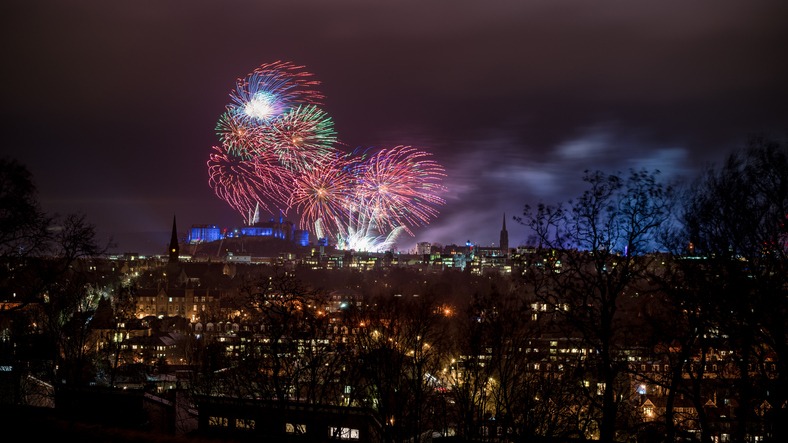
The ancient fire festivals of Scotland illuminate Hogmanay with spectacular displays that merge pagan traditions with modern celebrations. As darkness falls on New Year's Eve, you'll witness these awe-inspiring fire festivals that trace their origins to Winter Solstice customs, when communities would light up the longest nights of winter.
You can't miss the most dramatic of these celebrations, the Stonehaven Fireball Festival, where brave locals swing blazing balls of tar through the streets at midnight. In Burghead, you'll find the unique burning of the Clavie, where a flaming barrel leads a procession through town, continuing a centuries-old tradition.
- Watch the mesmerizing torchlight processions winding through historic Scottish streets
- Experience the world-famous Up Helly Aa fire festival in Shetland
- Join locals swinging fireballs at Stonehaven's breathtaking midnight spectacle
- Enjoy spectacular fireworks displays lighting up castle backdrops
These fire festivals remain at the heart of Hogmanay celebrations, combining ancient customs with modern festivity. As bonfires blaze and fireworks illuminate the sky, you'll be part of a tradition that's been lighting up Scotland's winter nights for generations.
Edinburgh's Famous Street Party
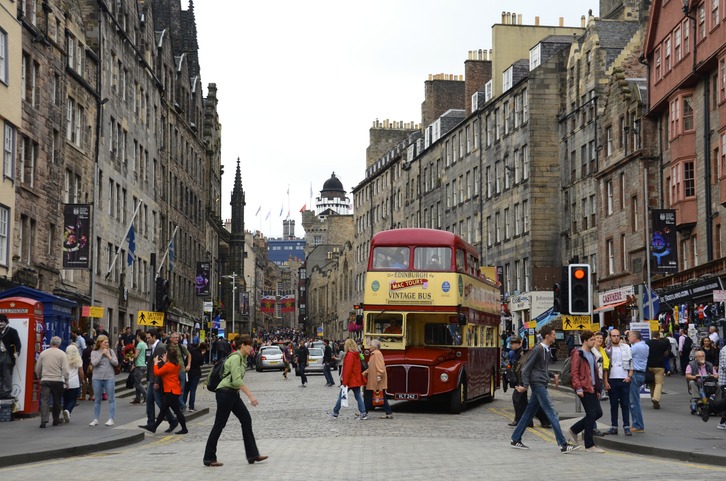
While fire festivals light up Scotland's coastal towns, Edinburgh's Hogmanay Street Party stands as the nation's crowning New Year celebration. You'll join over 100,000 revelers from around the world at this spectacular event, where the historic streets come alive with music, dancing, and festivities against the backdrop of Edinburgh's stunning design.
As you make your way through Princes Street, you'll experience live performances from top musicians and DJs who keep the energy high throughout the evening. The excitement builds as midnight approaches, with the city's medieval castle providing a dramatic stage for one of the world's most impressive fireworks displays. From this vantage point, you can see the pyrotechnics reflecting off the Firth of Forth in the distance.
If you're planning to participate in this unforgettable celebration, you'll need to secure your tickets well in advance, as they sell out quickly. The street party is just one part of Edinburgh's complete Hogmanay program, which includes traditional Scottish ceilidh dances and the age-old custom of first footing, where neighbors visit one another after midnight bearing gifts for good luck.
Essential Hogmanay Food and Drink
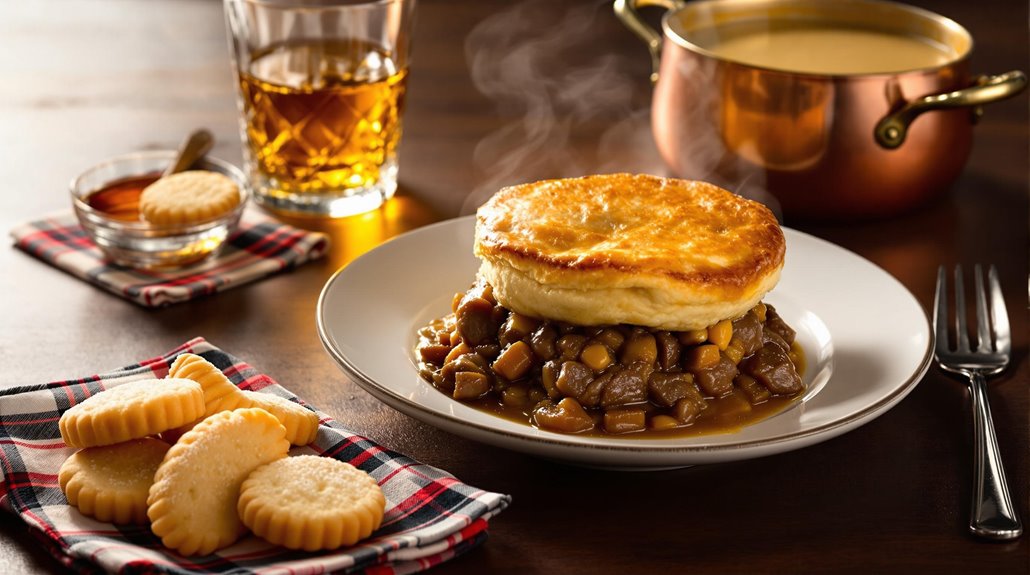
Savoring traditional Scottish fare remains central to any authentic Hogmanay celebration. You'll find a delectable array of warming and comforting dishes that reflect Scotland's rich gastronomic traditions throughout the festivities. When participating in first-footing, you're expected to bring food and drink as gifts to your hosts, showing hospitality and goodwill for the year ahead.
As midnight approaches, you'll want to have your champagne and Scotch whisky ready for the traditional New Year's toast. These celebratory beverages perfectly complement the classic Scottish treats that define Hogmanay's culinary experience.
Here are the essential Hogmanay foods you shouldn't miss:
- Traditional shortbread, buttery and crumbly, often shaped into rounds or fingers
- Rich fruitcake packed with dried fruits and nuts
- Black bun, a dense fruit cake wrapped in pastry that's traditionally served at first-footing
- Warming savory dishes like cock-a-leekie soup or steak pie
These time-honored foods and drinks aren't just sustenance - they're an integral part of Scotland's New Year traditions, bringing friends and families together in celebration of the year to come.
Auld Lang Syne Tradition
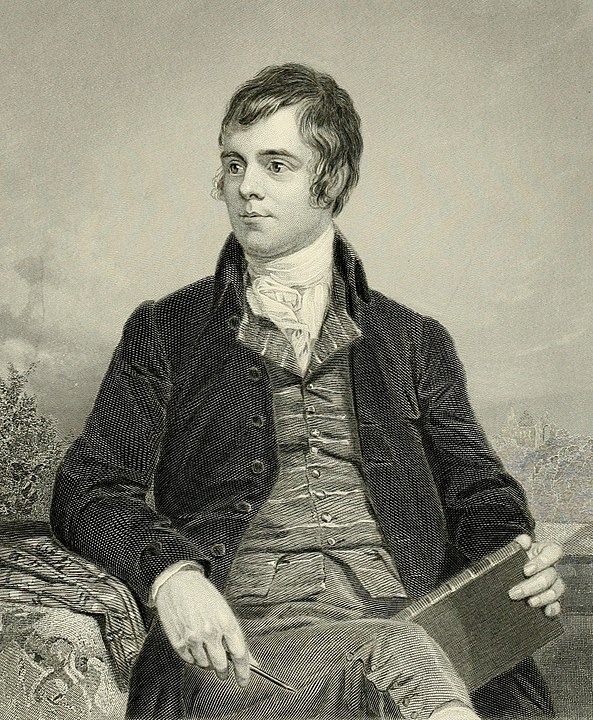
At the heart of every Hogmanay celebration stands Robert Burns's beloved "Auld Lang Syne," a timeless poem set to music that captures the bittersweet essence of New Year's Eve. Written in 1788 in Scots language, this moving tribute to friendship and remembrance has become Scotland's most cherished New Year tradition.
You'll find yourself caught up in the emotion as the clock approaches midnight during Hogmanay celebrations across Scotland. The phrase "auld lang syne" translates to "old long since," reflecting on times past and cherished memories. When the bells strike twelve, you'll join hands with those around you, forming a circle as the familiar melody begins. What started as a distinctly Scottish custom has now spread far beyond Scotland's borders, thanks in part to Guy Lombardo's popular English adaptation that helped introduce the song to global audiences.
Whether you're in Edinburgh, Glasgow, or a small Highland village, you'll experience the powerful connection of singing "Auld Lang Syne" as one year ends and another begins. It's a moving reminder that some traditions transcend time, bringing people together in a shared moment of reflection and hope.
Regional Celebrations Across Scotland
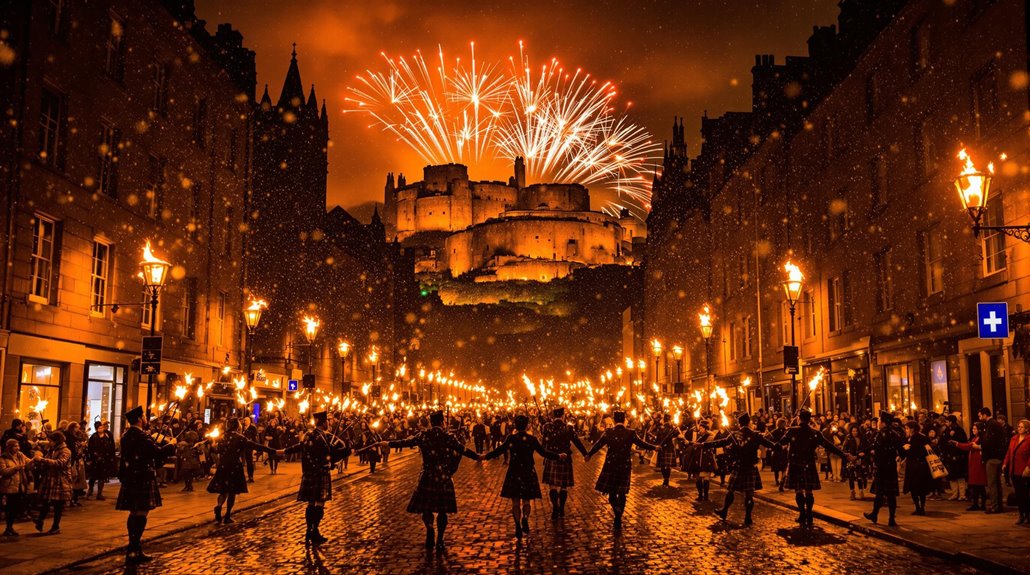
Beyond the unifying song of Auld Lang Syne, Scotland's Hogmanay celebrations showcase the country's rich regional diversity. As you plunge into the country during New Year's Day festivities, you'll uncover unique local traditions that make each celebration special. Edinburgh's grand celebrations may be the most famous, but other regions offer equally compelling experiences.
You can witness the spectacular Stonehaven Fireball Festival, where locals create an unforgettable display by swinging blazing balls through the streets at midnight. In Inverness, you'll find the Red Hot Highland Fling, a family-friendly celebration along the River Ness that's free for everyone to enjoy. Up in Shetland, the Up Helly Aa festivities combine Hogmanay spirit with Viking heritage, featuring torch-lit processions and the dramatic burning of a Viking galley.
Throughout Scotland's villages, you'll find these distinctly local celebrations:
- Traditional ceilidhs with Scottish dancing and live music
- Community gatherings in village halls and town squares
- Local pipe bands leading midnight processions
- Regional food and drink specialties unique to each area
These varied celebrations guarantee that no matter where you are in Scotland, you'll experience a memorable and authentic Hogmanay celebration.
Planning Your Hogmanay Visit
To make the most of your Hogmanay experience in Scotland, early planning is essential. Popular events like Edinburgh's famous Hogmanay street parties and the Torchlight Procession often sell out months in advance, so you'll need to secure your tickets early. Don't wait to book your accommodations either, as hotels and vacation rentals across Scotland fill up quickly during the New Year celebrations.
When preparing for your Hogmanay expedition, consider Scotland's winter weather conditions. You'll want to pack warm, waterproof clothing to stay comfortable during the outdoor events and festivities. Remember that December temperatures can be quite cold, and rain is common during this time of year.
Before you arrive, familiarize yourself with traditional Hogmanay customs to enhance your cultural experience. Learn about first-footing, where the first person to cross a home's threshold after midnight brings good luck for the coming year. Practice singing "Auld Lang Syne," as you'll join thousands of revelers in this beloved tradition when the clock strikes twelve. By planning ahead and understanding these traditions, you'll be well-prepared to fully immerse yourself in Scotland's magnificent New Year celebrations.
What to Wear and Pack
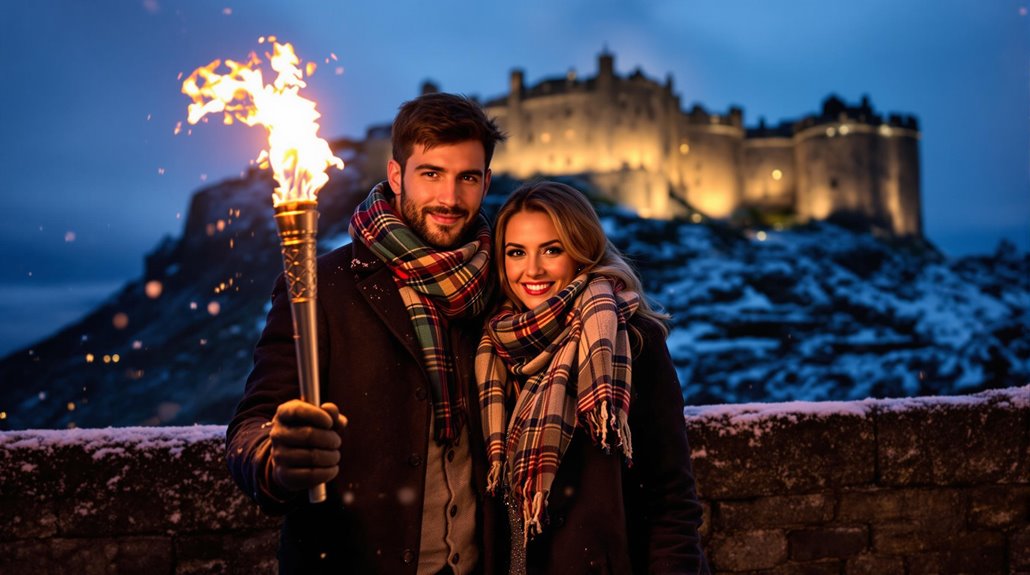
Choosing the right attire for Hogmanay celebrations will make or break your experience in Scotland's winter weather. As one of the world's most famous winter festivals, this New Year celebration demands proper preparation for the chilly outdoor events. You'll want to dress smartly for both comfort and style as you ring in the first day of the year.
Layer your clothing strategically for Scotland's unpredictable winter weather. Start with thermal base layers, add warm mid-layers, and top it off with a waterproof outer shell to stay dry during the holiday in Scotland. If you're embracing tradition, wear a kilt with appropriate accessories, but guarantee you've got warm leggings underneath. Don't forget your feet - comfortable, waterproof walking shoes are essential for the hours of standing and walking during the celebration of the winter season.
- Pack a small backpack with extra layers you can add or remove as needed
- Bring waterproof accessories like gloves, scarves, and a hat
- Include rain protection such as a foldable umbrella or raincoat
- Consider hand warmers for extra comfort during outdoor Hogmanay events
Related posts