
What Is the Sleep Cycle? a Complete Guide to REM and Nrem Stages

Your sleep cycle consists of four distinct stages that repeat throughout the night in roughly 90-minute intervals. You'll start with three NREM (non-rapid eye movement) stages, beginning with light sleep in NREM 1, progressing through NREM 2's deeper sleep, and reaching the restorative NREM 3. The cycle culminates in REM sleep, where your brain becomes highly active while your muscles remain paralyzed. During a typical night, you'll experience 4-6 complete cycles, each playing vital roles in your physical restoration and cognitive function. Understanding these stages can help you optimize your nightly rest for better health.
Understanding Sleep Cycles
During a typical night's sleep, your body moves through a complex series of stages known as sleep cycles. Each cycle lasts approximately 90 minutes and consists of both REM sleep and NREM sleep phases, creating a sophisticated sleep architecture dynamics that's essential for your overall well-being.
Your sleep stages follow a predictable pattern, starting with NREM sleep, which includes three distinct phases: N1 (light sleep), N2 (deeper sleep), and N3 (deep, restorative sleep). After completing these NREM phases, you'll enter REM sleep, where your brain becomes highly active, your eyes move rapidly, and your muscles temporarily paralyze.
Understanding your sleep patterns is pivotal for ideal sleep health. While sleep cycles remain relatively consistent, individual sleep differences can affect both sleep quality and sleep duration. You'll typically complete several full cycles throughout the night, with each cycle playing a fundamental role in physical restoration and cognitive function. The proportion of time spent in each stage may vary based on factors such as age, lifestyle, and overall health, but maintaining regular sleep cycles is elemental to ensuring restorative rest.
The Four Sleep Stages
Sleep design consists of four distinct stages, each serving a unique purpose in your body's nightly restoration process. During a typical night, you'll cycle through non-REM (NREM) sleep and REM sleep multiple times.
The first stage, NREM 1, marks your essential transition into sleep, lasting about 5-10 minutes. Your brain activity begins to slow as you drift off, making this stage relatively light and easy to wake from. NREM 2 follows, occupying roughly half of your total sleep time. In this deeper stage, your brain produces slower waves, and you become less aware of your surroundings.
The deep sleep stage, NREM 3, is when your body performs its most intensive restoration work. Your brain generates slow delta waves during this 20-40 minute period, making it harder to wake up. Finally, you enter REM sleep, where your brain becomes highly active while your body experiences temporary muscle paralysis. This pivotal stage helps process emotions and consolidate memories.
Each cycle through these stages takes approximately 90-120 minutes, and you'll typically complete several cycles throughout the night, though the time spent in each stage may vary.
NREM Sleep Explained
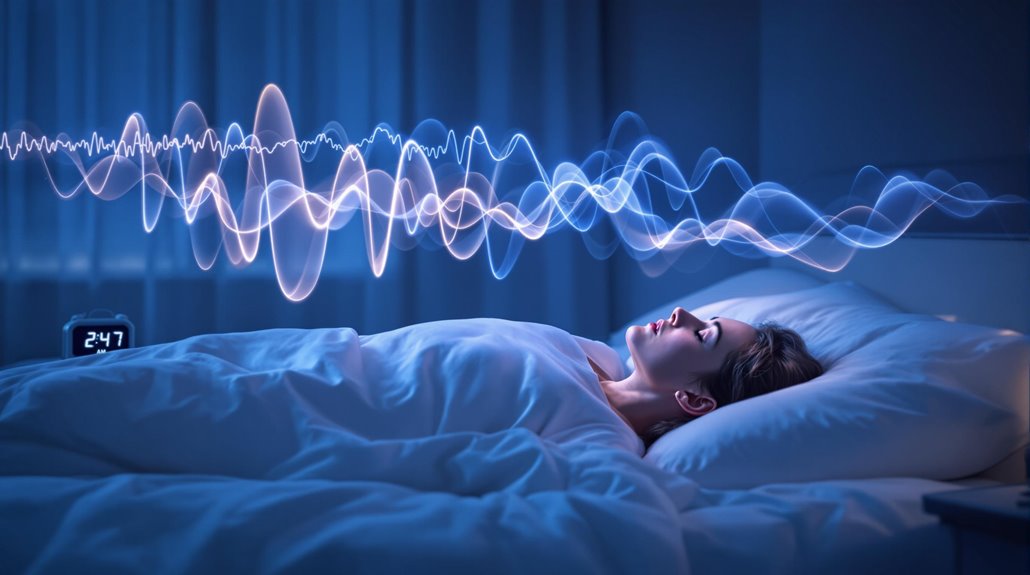
Breaking down NREM sleep reveals three distinct phases that form the foundation of your nightly rest cycle. Stage 1 NREM acts as your initial passage phase, lasting between 1-7 minutes as you drift from wakefulness into sleep. During this time, your brain waves slow, and your body begins to relax.
As you progress into stage 2 NREM, which typically lasts 10-25 minutes, your body temperature drops, and your heart rate and body movements become more subdued. This stage serves as a bridge between light and deep sleep, preparing you for the most restorative phase ahead.
Stage 3 sleep, deeper than stage 1 or 2, represents the most central period of NREM sleep. During this 20-40 minute phase, your body enters its deepest state of rest, characterized by brain patterns known as delta waves. This final NREM stage is when your body conducts essential repairs, promotes physical growth, and strengthens your immune system. Your time in deep sleep is fundamental for feeling refreshed and rejuvenated, as stage 3 provides the most restorative benefits of all sleep phases.
REM Sleep Deep Dive
After experiencing the restorative phases of NREM sleep, your brain shifts into a remarkably different state known as REM sleep. During this unique stage of the four stages of sleep, your brain activity increases dramatically, resembling patterns similar to when you're awake. Your eyes dart back and forth rapidly beneath your closed eyelids, giving rapid eye movement (REM) its name, while your voluntary muscles become temporarily paralyzed.
As you progress through your NREM and REM sleep cycles and stages throughout the night, you'll experience your first REM stage approximately 90 minutes after falling asleep. What's fascinating is that these REM stages become progressively longer as the night continues. While your body repairs itself during Deeper sleep in NREM, REM sleep plays a central role in your cognitive well-being. This is when most of your dreaming occurs, and your brain processes emotions, consolidates memories, and enhances learning capabilities. If you don't get enough REM sleep, you might notice difficulties with emotional regulation, concentration problems, and even a weakened immune system, highlighting why both NREM and REM sleep are indispensable for your overall health.
Sleep Cycle Duration

Your body's natural rhythm operates in predictable 90-minute intervals throughout the night, with each complete sleep cycle moving you through both NREM and REM stages. During your total sleep time, you'll need to complete four to six cycles to feel properly rested. The first sleep cycle typically differs from the rest, lasting between 70 to 100 minutes, while subsequent cycles may run longer.
Your sleep cycles can affect how you feel when you wake, which is why understanding their length is essential for your health. Multiple factors can influence how long each cycle lasts, including:
- Your eye movement patterns during REM sleep
- Your age and overall physical condition
- Your stress levels and daily activity
- Your sleep environment and bedroom conditions
You'll spend much of your night going through these cycles, with each one lasting approximately 90 minutes. By the time you wake naturally, you should have completed at least four cycles. Remember that while 90 minutes is the average cycle length, yours may vary slightly based on individual factors, making it important to pay attention to your body's unique patterns.
Common Sleep Cycle Disruptions
Many factors can throw off the delicate balance of your sleep cycles, leading to poor-quality rest and daytime fatigue. Stress and anxiety are common disruptors that can keep you tossing and turning, making it difficult to both fall asleep and maintain continuous sleep throughout the night.
Your lifestyle choices profoundly impact your sleep cycles. Consuming caffeine or alcohol, especially close to bedtime, can interfere with how your body progresses through different sleep stages. Similarly, irregular sleep schedules can confuse your body's natural rhythm, affecting the time in stage for each sleep phase.
Your sleep environment plays an essential role too. Excessive noise, bright lights, or uncomfortable bedding can wake someone before they've completed their natural sleep cycle. Additionally, certain health conditions and medications may prevent you from achieving proper sleep stage progression.
Age-related changes also affect how you cycle through sleep stages. As you get older, you'll typically experience decreased deep sleep and shorter total sleep duration. Understanding these common disruptions can help you identify and address the factors that might be compromising your sleep quality.
Optimizing Your Sleep Cycle

Implementing proven strategies can dramatically improve your sleep cycle quality and help maintain consistent rest patterns. Understanding sleep architecture dynamics allows you to optimize both REM and NREM sleep phases by following specific lifestyle adjustments.
To enhance your sleep cycles, establish a consistent sleep schedule that aligns with your body's natural rhythm. Create a relaxing bedtime routine that signals to your brain it's time to wind down. Your sleep environment plays an indispensable role in maintaining uninterrupted sleep cycles, so ensure your bedroom promotes restfulness.
- Imagine your bedroom as a peaceful sanctuary: cool air flowing, blackout curtains blocking all light, and premium bedding embracing you
- Visualize yourself turning off all screens, allowing your mind to naturally produce melatonin as evening approaches
- Envision a calming pre-bed ritual: soaking in a warm bath, gentle stretches, or reading a physical book
- Imagine completing energizing physical activity earlier in the day, setting the stage for deep sleep later
Managing blue light exposure and incorporating regular physical activity substantially impacts your sleep quality, helping you achieve exemplary proportions of deep sleep throughout the night.
Sleep Quality Indicators
Throughout your nightly rest, several key indicators reveal the true quality of your sleep cycles. Your sleep efficiency, which measures how much time you're actually sleeping while in bed, serves as a primary indicator of whether you're getting quality rest. During the night, you usually go through four to six cycles, including periods of rapid eye movement (REM) sleep, where your breathing and heart rate fluctuate.
The time you spend in each stage, particularly Much Deep Sleep and REM stage, profoundly impacts your overall sleep quality. During REM sleep, your eyes move rapidly while your brain and body undergo important restoration processes. REM sleep is important for cognitive function and emotional well-being. When measuring sleep quality, experts look at your sleep latency - how quickly you fall asleep - and any disruptions like waking after sleep onset. These disruptions might signal issues such as obstructive sleep apnea or other sleep disorders. By monitoring how often you wake up and how long these awakenings last, you can better understand your sleep cycle's effectiveness and identify areas for improvement.
Natural Sleep Enhancement Methods

Natural sleep techniques offer powerful ways to improve your sleep quality without medication. To get a good night's sleep, you'll need to optimize both your habits and environment. Creating a relaxing bedtime routine signals your body it's time to wind down, while exposure to natural sunlight during the day helps regulate your circadian rhythm.
To achieve healthy sleep and uninterrupted sleep patterns, incorporate these proven techniques:
- Create a cool, dark sanctuary in your bedroom by using blackout curtains, maintaining a temperature between 65-68°F, and removing electronic devices
- Develop a consistent bedtime routine that includes calming activities like reading, gentle stretching, or meditation at least 30 minutes before sleep
- Limit caffeine intake after 2 PM and avoid heavy meals within 3 hours of bedtime
- Practice deep breathing exercises or progressive muscle relaxation while lying in bed to release tension
Quality sleep makes you Feel Better in countless ways, from improved cognitive function to enhanced emotional stability. By implementing these natural methods consistently, you'll establish a sustainable foundation for restorative sleep that supports your overall well-being.