
What Is That Falling Sensation During Sleep? The Science Explained

That sudden falling sensation you experience while drifting off to sleep is called a hypnic jerk or sleep start. It happens when your brain's sleep-wake regulation system gets a bit confused during the shift to sleep, causing your muscles to suddenly contract. You're not alone - up to 70% of people experience these harmless but startling jerks, often triggered by caffeine, stress, or irregular sleep patterns. While they're completely normal, you can reduce their frequency by establishing better sleep habits and avoiding stimulants before bedtime. Understanding the science behind these peculiar sleep phenomena can help you rest easier.
Understanding the Hypnic Jerk Phenomenon
A sudden jolt, accompanied by the sensation of falling, startles you awake just as you're drifting off to sleep. This common experience, known as a hypnic jerk, affects up to 70% of people, particularly young adults and children.
These involuntary muscle contractions occur during the delicate shift between wakefulness and sleep, when your brain's sleep-wake regulation system is adjusting. While scientists haven't pinpointed the exact cause, they've identified several factors that can increase their frequency. If you're experiencing more hypnic jerks than usual, you might want to examine your lifestyle habits. Consuming caffeine, especially close to bedtime, can trigger these sleep starts. Similarly, stress and sleep deprivation may amplify both their intensity and occurrence.
While these falling sensations are typically harmless, they can impact your sleep quality if they happen frequently. If you're concerned about persistent hypnic jerks disrupting your rest, consider reducing caffeine intake, managing stress levels, and maintaining a consistent sleep schedule. However, if these episodes substantially interfere with your ability to get proper sleep, it's worth consulting a healthcare provider for a thorough evaluation.
Common Triggers and Risk Factors
Frequently, several everyday factors can trigger or intensify hypnic jerks, making your passage to sleep more challenging. If you're consuming caffeine and nicotine, especially close to bedtime, you're greatly increasing your chances of experiencing these sleep-related disruptions. These stimulants can interfere with your natural sleep cycle and amplify the sensation of falling that accompanies hypnic jerks.
Your emotional and physical state plays an essential role too. When you're dealing with high levels of stress, anxiety, or fatigue, you're more likely to experience these sudden muscle contractions while falling asleep. Additionally, if you've developed poor sleep habits, such as irregular bedtimes or not getting enough rest, you're setting yourself up for more frequent hypnic jerks.
Medical conditions can also increase your susceptibility. If you have peripheral neuropathy or restless leg syndrome, you might notice these sleep disruptions occurring more often. Even your environment matters - sudden changes like unexpected noises or flashing lights can startle your body and trigger a hypnic jerk just as you're drifting off to sleep.
Brain Activity During Sleep Transitions
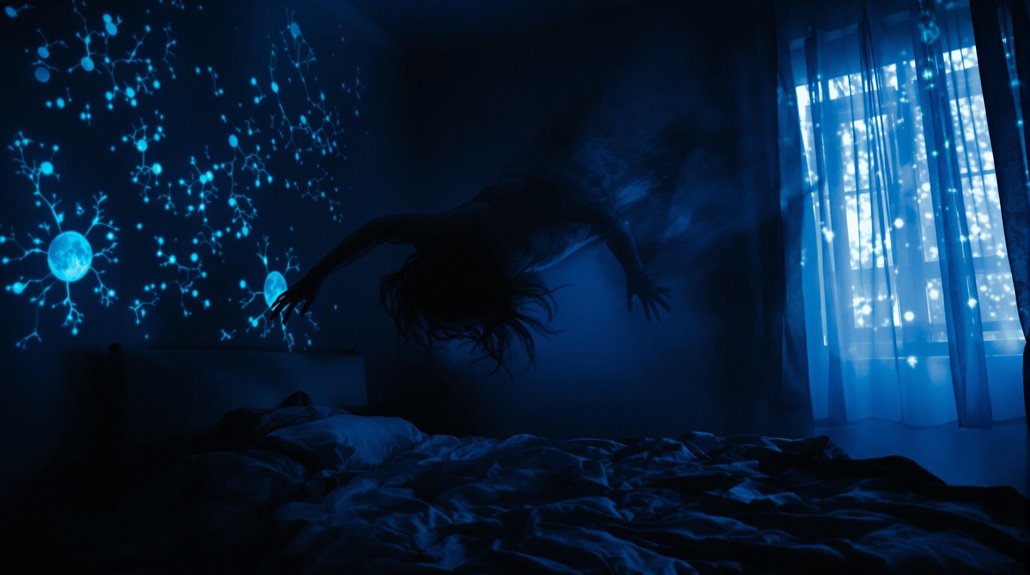
During the delicate shift from wakefulness to sleep, your brain orchestrates a complex dance between neural systems. When you experience that sudden falling sensation accompanied by muscle jerks, you're encountering what scientists call hypnic jerks - a common phenomenon that occurs as your brain struggles to passage smoothly between consciousness states.
These hypnagogic events happen because your brain's sleep-wake mechanisms sometimes conflict. Your reticular activating system and ventrolateral preoptic nucleus engage in a neural tug-of-war, which can trigger these involuntary muscle contractions. Here's what's happening in your brain during these conversions:
- Your neurotransmitters begin attaching to muscle protein cells
- Random bursts of wakefulness surface as your brain powers down
- Your muscle control systems receive mixed signals
- Your body responds with sudden, jerky movements
Unlike the muscle activity you experience during dreams, hypnic jerks occur specifically during the transition phase into sleep. The falling sensation you feel is your brain's response to this neurological conflict, as it attempts to maintain control over your muscle functions while simultaneously shutting down for sleep.
Prevention and Management Strategies
While hypnic jerks can't be completely eliminated, several effective strategies can help minimize their occurrence and impact on your sleep quality. If you frequently Feel Like Im Falling or experience sudden muscle movements when drifting off, start by reducing your intake of stimulants, especially in the hours before bedtime. These involuntary muscle movements, often called hypnagogic jerks, can be particularly disruptive to your sleep patterns.
To reduce these People Twitch When Falling experiences, establish a consistent sleep schedule and create an environment that promotes restful sleep. Practice relaxation techniques like deep breathing or meditation before bed to calm your nervous system. You can also try natural supplements like melatonin or magnesium to improve your sleep quality and reduce the frequency of hypnic jerks.
If these periodic limb movement disorder-like symptoms persist or substantially affect your rest, don't hesitate to consult a healthcare provider. They can help determine if your hypnic jerks are related to an underlying condition and recommend appropriate treatment options. Remember, quality sleep is essential for your overall well-being, so taking steps to manage these sudden movements is worth the effort.
When to Seek Medical Help
Although most hypnic jerks are harmless, certain signs should prompt you to consult a medical professional. The occurrence of hypnic jerks during your sleep phase might require evaluation by a Sleep Medicine specialist if they're severely disrupting your night's sleep or affecting your daily life.
You should seek medical attention if you experience any of these concerning patterns:
- Your Hypnagogic Jerks happen frequently throughout the night, making it difficult to move into deeper sleep stages
- The movement during sleep is accompanied by unusual symptoms like persistent muscle weakness or unexplained numbness
- You're experiencing excessive daytime sleepiness, even after getting adequate rest
- The jerks are becoming more intense or frequent, potentially indicating underlying conditions
If you're concerned about how often people experience these sensations, don't hesitate to consult a healthcare provider. They may investigate potential causes, including medication side effects or neurological issues. Your doctor might recommend specific tests to rule out sleep disorders and may suggest treatments ranging from lifestyle adjustments (like avoiding Consuming too much caffeine) to cognitive-behavioral therapy or medication when necessary.