
Ways to Boost Your Wheatgrass Consumption for Better Health
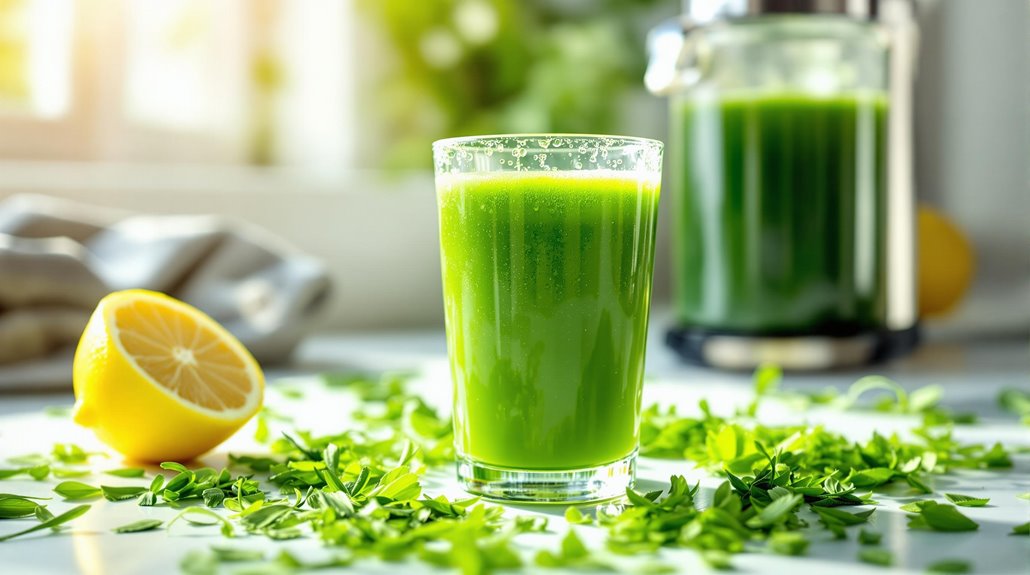
You can augment your wheatgrass intake through several practical methods. Start by consuming 1-2 ounces of fresh juice or 2-4 grams of powder daily on an empty stomach. Mix wheatgrass with apple juice or blend it into smoothies with vitamin C-rich fruits to improve taste and absorption. For convenience, try adding wheatgrass powder to yogurt, soups, or salads. If you're ambitious, grow your own wheatgrass at home for the freshest nutrients and cost savings. Remember to introduce it gradually and listen to your body's response. There's much more to explore about maximizing wheatgrass's powerful health benefits.
Understanding Wheatgrass Basics
Down through the centuries, wheatgrass has emerged as a powerful superfood that's revolutionizing modern nutrition. This remarkable plant, scientifically known as Triticum aestivum, is harvested in its young, green stage before grain development, concentrating an impressive array of nutrients in its tender shoots.
You'll find that wheatgrass is exceptionally nutrient-dense, packing the equivalent nutritional value of 2-4 pounds of vegetables into a small serving. Its rich chlorophyll content gives it that stunning green color, while its complex profile includes critical vitamins, minerals, amino acids, and antioxidants that support your overall health.
When you're ready to incorporate wheatgrass into your diet, you've got several convenient options. You can consume it as fresh juice, which preserves its natural enzymes, or opt for powder or supplement forms that offer longer shelf life and easier storage. Each serving delivers a potent dose of nutrients that can help fight inflammation and support your body's natural detoxification processes. Understanding these basics helps you make informed decisions about adding this superfood to your daily routine.
Daily Dosage Guidelines
Getting your wheatgrass dosage right plays an essential role in maximizing its health benefits. The standard daily dose ranges from 1-2 ounces of fresh juice or 2-4 grams of powder, though you can consume up to 4 ounces of juice if you're seeking stronger effects. To optimize the absorption of nutrients, you'll want to take your wheatgrass on an empty stomach.
If you're new to wheatgrass, it's important to introduce it gradually into your diet. Start with just 1 ounce of juice or 1 gram of powder per day to assess your tolerance. You can then slowly increase your intake over several weeks until you reach your desired dosage. This approach helps your body adjust and minimizes potential digestive discomfort.
Before starting a wheatgrass regimen, it's wise to consult a healthcare professional who can recommend the most appropriate dosage for your specific needs. They'll consider your health goals, existing medical conditions, and overall wellness profile to determine the ideal amount. Remember that individual responses to wheatgrass can vary, so what works for others might not be perfect for you.
Fresh Juice Preparation Methods

Now that you understand proper dosing, preparing fresh wheatgrass juice correctly will help you maximize its nutritional value. When it comes to juicing wheatgrass, you've got two main options: using a masticating juicer or a centrifugal juicer. The masticating juicer's slow-grinding process helps preserve more nutrients, making it the preferred choice for serious health enthusiasts.
For the best results, always use fresh wheatgrass and consider these preparation methods:
- Pour freshly extracted wheatgrass juice into a glass container, watching the vivid green liquid flow smoothly
- Run your blended mixture through a fine-mesh sieve, observing the smooth texture develop
- Mix wheatgrass with apple juice in your blender, creating a more palatable drink
- Combine wheatgrass powder into your morning smoothie bowl, sprinkling it like green dust
- Fold wheatgrass powder into your favorite recipes, watching it blend seamlessly
The texture of your wheatgrass drink matters, so if you're new to this superfood, try blending it with water or fruit juice. You can also experiment with adding wheatgrass to smoothies or incorporating wheatgrass powder into various recipes to find your preferred method.
Smoothie Blending Techniques
Creating the perfect wheatgrass smoothie requires strategic blending techniques to maximize both nutrition and flavor. To achieve ideal results, you'll need a high-powered blender that can thoroughly incorporate wheatgrass powder or juice with other ingredients for a silky-smooth texture.
Start by combining wheatgrass with vitamin C-rich fruits like oranges or pineapple, which will help your body better absorb the chlorophyll while masking the grass-like taste. Add healthy fats such as avocado chunks or a spoonful of nut butter to enhance the absorption of fat-soluble vitamins and create a creamier consistency. To amplify your overall nutrient intake, experiment with different flavor combinations. A popular nutrient-dense blend includes wheatgrass, banana, and spinach, which provides a balanced taste while packing multiple health benefits.
Don't hesitate to mix and match various fruits and vegetables to find your preferred combination. The key is to create smoothies that you'll enjoy drinking regularly while maintaining their nutritional value. Remember to layer your ingredients properly, starting with liquids and soft fruits, then adding harder ingredients for the most effective blending process.
Powder and Supplement Options

While fresh wheatgrass makes excellent smoothies, not everyone has time to blend ingredients daily. That's where wheatgrass powder and supplements come in as a convenient way to incorporate this nutrient-rich superfood into your daily routine. You'll find these concentrated sources of nutrients in wheatgrass available in various forms that fit your lifestyle.
- A sprinkle of verdant green powder dissolving into your morning smoothie
- Compact capsules sitting neatly in your daily supplement organizer
- A sprinkling of wheatgrass powder adding color to your yogurt bowl
- Travel-friendly tablets tucked into your gym bag
- A pinch of powder transforming your fresh-pressed juice into a nutrient powerhouse
You can easily add wheatgrass powder to smoothies, juices, or sprinkle it on meals to amplify your nutrient intake throughout the day. Whether you choose powder or supplements, you'll get a concentrated source of chlorophyll and other beneficial compounds. Before starting any supplement routine, consult with your healthcare provider to determine the right dosage for your needs. You'll find these products readily available online and in health food stores, making it simple to maintain your wheatgrass regimen.
Creative Recipe Ideas
Looking to augment your wheatgrass consumption beyond basic shots and smoothies? There are numerous creative ways to incorporate this nutrient-rich ingredient into your daily meals and snacks.
Start your day by adding wheatgrass powder to your breakfast staples. You can sprinkle it over your oatmeal, stir it into yogurt, or mix it into your overnight oats for an effortless nutrition amplification. For invigorating beverages, try blending wheatgrass into fruit smoothies with bananas, berries, and citrus fruits. You can also freeze wheatgrass into ice cubes, which you'll drop into water, juices, or cocktails for a subtle health enhancement.
Get creative with your savory dishes by incorporating wheatgrass into homemade dressings, dips, and hummus. These additions won't just amplify nutrition - they'll add a unique flavor profile to your favorite condiments. If you enjoy baking, you'll find that wheatgrass works well in crackers, breads, and muffins. By incorporating wheatgrass into your baked goods, you're creating healthier versions of everyday staples while maintaining their delicious taste and texture.
Storage and Preservation Tips
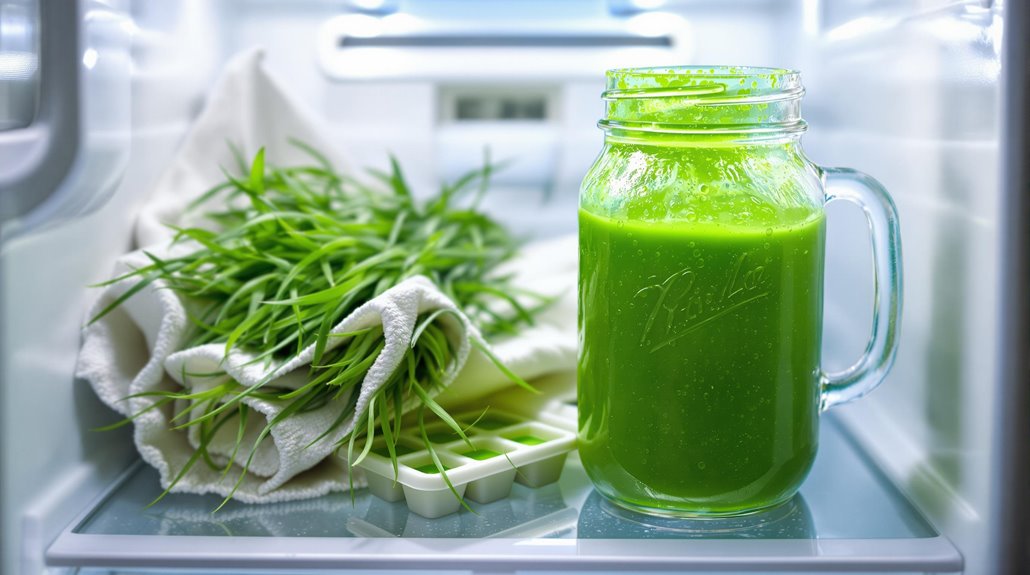
Proper storage and preservation techniques can stretch out wheatgrass's short shelf life while maintaining its nutritional value. If you've just cut fresh wheatgrass, wrap it in a damp paper towel and store it in your refrigerator - this method keeps it fresh for up to 5 days. For longer preservation, you'll want to consider freezing wheatgrass juice in ice cube trays, which extends its life to 6 months while making it easy to portion out for your daily needs.
If you're looking for the longest storage option, try drying your wheatgrass or converting it to powder form. Store either in an airtight container away from light and heat, and you'll preserve its benefits for up to a year. The powder version maintains most nutrients and easily blends into various drinks.
- Fresh wheatgrass stems standing tall in a glass jar, wrapped in a misty paper towel
- Ice cube trays filled with lively green juice, ready for freezing
- Clear airtight containers lined up in a pantry, filled with dried wheatgrass
- A measuring spoon of bright green powder being stirred into a morning smoothie
- Freshly cut wheatgrass being harvested from a home growing tray
Safety and Precautions
Prioritizing safety when consuming wheatgrass is essential, as certain groups face higher risks. If you're pregnant, nursing, or have young children, you'll want to avoid wheatgrass due to potential contamination risks. The same applies if you have weakened immune systems, as you're more susceptible to harmful bacteria that may be present.
Before adding wheatgrass to your diet, consider your sensitivities. If you're allergic to wheat or grass, be cautious as wheatgrass might trigger an allergic reaction. While wheatgrass is naturally gluten-free, gluten-sensitive individuals should only purchase from certified gluten-free sources to avoid cross-contamination.
When choosing wheatgrass products, always opt for reputable sources that follow strict safety guidelines. Commercial producers must adhere to regulatory guidelines, making their products generally safer than home-grown alternatives. If you're growing wheatgrass at home, you'll need to be extra vigilant about preventing contamination. Remember that supplement quality can vary considerably, so research manufacturers thoroughly and verify their compliance with local regulations before making a purchase.