Understanding Your Puppy’s Sleeping Habits and Patterns

Your puppy needs considerably more sleep than adult dogs, typically 18-20 hours per day, as their bodies and minds are rapidly developing. You'll notice various sleep positions that indicate their comfort level, from the secure curled ball to the relaxed side-sleeping pose. Creating a consistent bedtime routine and the right sleep environment, including a properly sized crate with familiar items, will help establish healthy sleep patterns. For puppies under 16 weeks, plan for bathroom breaks every 2-4 hours during the night. Understanding these sleep habits and implementing proper sleep practices will set the foundation for your puppy's lifelong well-being.
Normal Sleep Patterns for Puppies
Understanding your puppy's sleep requirements will help guarantee they get enough rest. Their circadian rhythms are still developing, which affects when and how long they sleep. Various factors influence their sleep patterns, including their daily activity levels, stress, and environmental conditions. If you want to help your puppy establish healthy sleeping patterns, maintain a consistent bedtime routine and provide plenty of exercise during their waking hours. This will help them develop more regular sleep cycles over time.
Creating the Perfect Sleep Environment
Once you've established your puppy's sleep routine, the right environment will reinforce those healthy habits. Start by placing a properly sized crate in your bedroom, where your pup can feel your presence during their first few weeks in their new home. This proximity helps establish comfort and security as your puppy adjusts to their sleep patterns.
Inside the crate, create a cozy space with a comfortable dog bed and soft bedding. Make sure your pup has enough room to stretch out and sleep on their side, but not so much space that they feel overwhelmed. Add familiar-smelling items, like a toy that carries your scent, to help them feel more at ease.
Establish a consistent nighttime routine that includes dinner, a potty break, and gentle playtime before bed. Wind down with calming activities to signal it's time to rest. Keep the sleeping area quiet, dark, and at a comfortable temperature. These environmental factors play an essential role in ensuring puppies sleep soundly through the night. By maintaining these conditions, you'll help your pup get the rest they need for healthy growth and development.
Common Puppy Sleep Positions
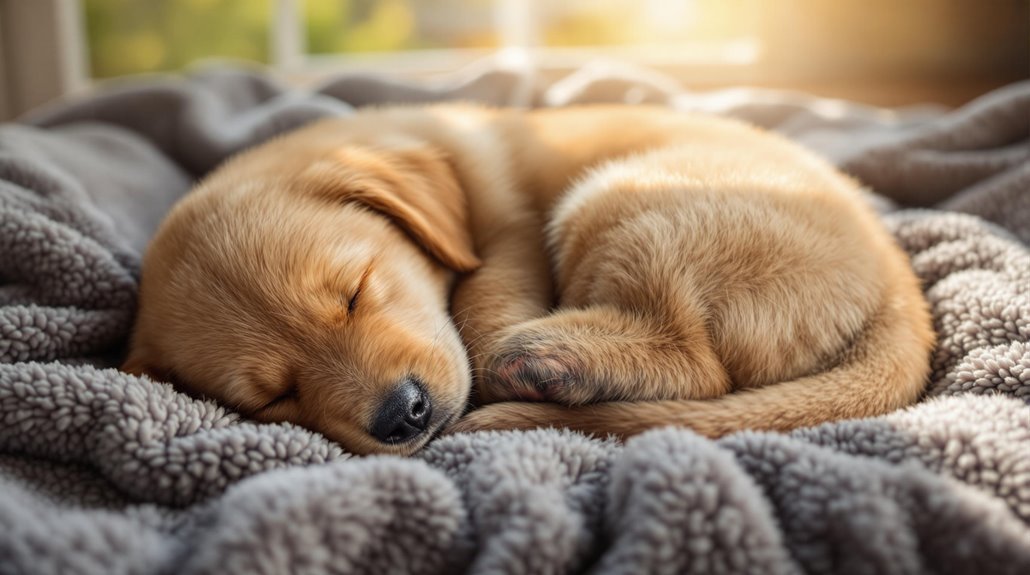
Just like humans, puppies express themselves through unique sleeping positions that can reveal much about their comfort and state of mind. When your dog sleeps, you'll notice several common positions that indicate different levels of relaxation and security.
Your puppy might often sleep in the "Superman" position, where they're sprawled out with limbs extended. This playful position shows they're ready to jump into action at any moment. If your dog likes to sleep curled up in a tight ball, they're seeking security and warmth - a natural instinct that dates back to their wild ancestors. The "side" sleeping position, where your dog's legs are fully stretched out, indicates they're comfortable and at ease in their environment.
When your puppy sleeps in the "tummy" position with legs tucked under, they're not fully relaxed and might be ready for quick movement. The "lion" position, where your dog rests their head on their paws, is often a preparatory stage before deeper sleep. Understanding these positions is important because Puppies need 18-20 hours per day of sleep, and their sleeping position can tell you a lot about their comfort level.
Nighttime Bathroom Break Schedule
A consistent potty break schedule is essential for your puppy's nighttime routine and house training success. Your young puppy will need a lot of bathroom breaks during the night, typically every 2-4 hours, until they're around 12-16 weeks old. As they grow older, they'll gradually develop the ability to sleep through the night without needing to go to the bathroom as frequently.
When your puppy needs a nighttime bathroom break, keep these key points in mind:
- Take them out quietly and minimize interaction to avoid stimulating playtime
- Return them directly to their crate after the potty break
- Don't scold them for waking you - this helps maintain trust and communication
- Expect more frequent breaks for puppies under 12 weeks old
- Plan for longer sleep stretches as your puppy approaches 16 weeks
Signs of Sleep-Related Problems
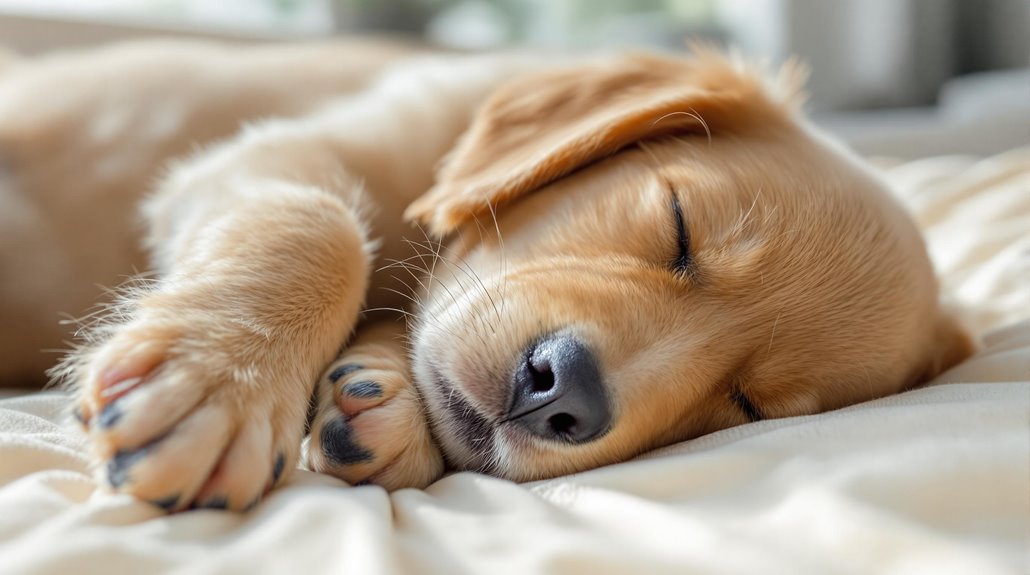
Recognizing sleep-related problems in your puppy early on can help prevent more serious health issues from developing. Dogs Sleeping patterns can tell you a lot about their overall health, and monitoring your best friend's Sleep Habits is essential for their well-being.
Getting enough sleep is essential for puppies, who typically need more than eight hours of sleep daily, including periods of REM sleep. If you notice your puppy displaying excessive panting, restlessness, or waking up frequently during the night, it's time to pay attention. Watch for sudden changes in their sleep patterns, whether they're sleeping more or less than usual, as these could indicate underlying pain, illness, or anxiety.
To help your puppy get good, quality hours of sleep, observe their behavior around bedtime. If they're whining, howling, or barking persistently at night despite having their basic needs met, they might be experiencing separation anxiety. Additionally, if you notice any breathing pauses during sleep, don't wait - seek veterinary care immediately, as this could indicate sleep apnea or other serious respiratory issues.
Establishing a Bedtime Routine
To prevent sleep-related issues and promote better rest, establishing a consistent bedtime routine for your puppy sets the foundation for healthy sleep habits. Dogs tend to find comfort in predictability, and your furry friend will quickly adapt to a structured schedule that helps them feel safe and relaxed before falling asleep. Creating an environment where your puppy falls asleep naturally leads to sleeping longer through the night.
Keep an eye on these essential elements of a successful bedtime routine:
- Schedule dinner, potty breaks, and playtime at consistent times to help your puppy anticipate when it's time to wind down
- Provide appropriate exercise during the day so they're naturally tired when bedtime approaches
- Create a calm, quiet sleeping area near your bedroom where they can feel safe while fast asleep
- Adjust their sleeping space as they grow to maintain its coziness and comfort
- Include calming activities before bedtime, such as gentle petting or quiet bonding time.
Managing Separation Anxiety at Night
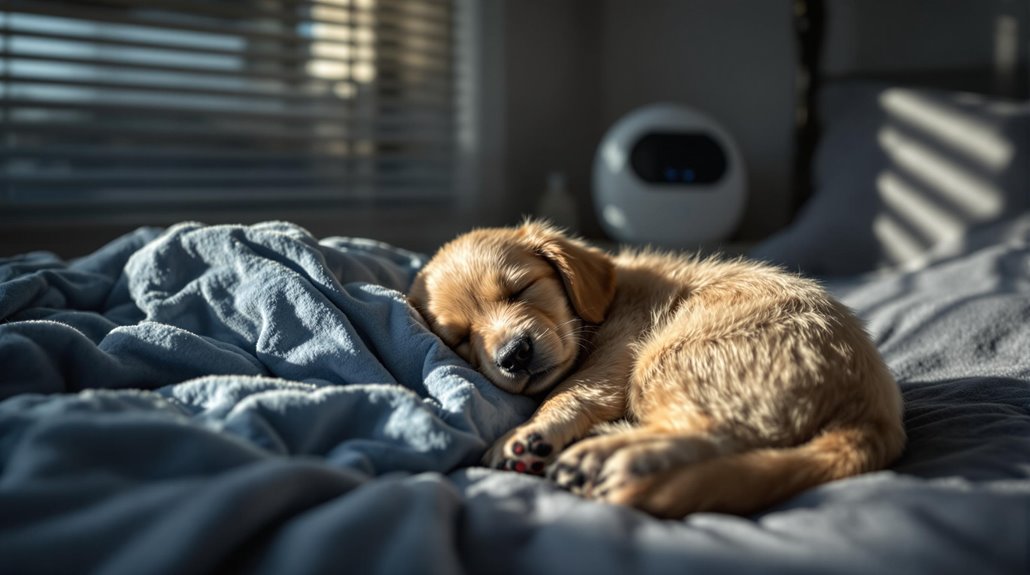
Many puppies experience separation anxiety when it's time for bed, often expressing their distress through persistent whining, barking, or destructive behavior. You might notice your puppy isn't comfortable with their surroundings when they refuse to sleep in this position you've set up for them, keeping their paws tucked close in a defensive posture instead of relaxing.
To help your puppy achieve a peaceful night's sleep, start with gradual crate training and create a soothing environment. Place calming toys in their sleeping area and consider using pheromone diffusers to reduce anxiety. While dogs dream and need proper rest, separation anxiety can disrupt their natural sleep patterns. When your dog lies down but remains distressed, resist the urge to respond to their cries, as this may reinforce anxious behavior.
Remember that puppies tend to sleep better when they've had sufficient exercise during the day. If your puppy's separation anxiety persists despite these measures, don't hesitate to consult a veterinarian or animal behaviorist. They can provide specialized strategies to address your puppy's specific needs and help establish healthy sleeping habits.
Exercise and Sleep Connection
Physical activity plays an essential role in your puppy's sleep quality. Unlike adult dogs sleep patterns, puppies need more exercise during the day to maintain healthy sleep cycles. You'll notice your dog sleeps better when you establish a consistent exercise routine, as different breeds tend to require varying activity levels. While puppies sleep eight to 14 hours daily, making sure they get proper daytime stimulation helps them rest more soundly at night.
Key benefits of exercise for your puppy's sleep:
- Regular physical activity helps regulate their natural sleep-wake patterns
- Mental nourishment prevents restlessness that can take longer to settle at night
- Active playtime reduces nighttime anxiety, a common dog behavior issue
- Consistent exercise routines support better sleep position for dogs of all types, including those with short noses
- Daily activities tire them out naturally, promoting deeper sleep cycles
Remember these health tips when planning your puppy's exercise schedule. A well-exercised puppy is more likely to sleep through the night without disruptions, creating a positive cycle of rest and activity that benefits both you and your growing companion.
Crate Training for Better Sleep

Building on the benefits of exercise, creating a dedicated sleeping space through crate training can dramatically improve your puppy's rest quality. When you choose the right-sized crate, you're providing your puppy with a safe and comfortable den-like environment that naturally promotes better sleep.
To make crate training successful, you'll want to place the crate in your bedroom during the first few weeks. This proximity helps your puppy feel secure and strengthens your bond. Start by introducing the crate gradually, using positive reinforcement techniques like treats and praise to help your puppy associate their new space with pleasant experiences.
Before bedtime, establish a consistent routine. Take your puppy out for their final potty break and provide them with a soothing toy in their crate. When you hear nighttime crying, respond with quiet, gentle reassurance without letting them out. This helps your puppy understand that the crate is for sleeping, not playing or attention-seeking.
Remember that successful crate training takes time and patience, but the investment pays off with a well-rested puppy who views their crate as a peaceful sleeping sanctuary.
Daytime Naps and Rest Periods
Throughout the day, your puppy needs regular nap breaks to maintain their health and happiness. When your furry friends are napping during the day, you'll notice they often sleep in different positions - from legs stretched out with their belly in the air to curled up next to other pack members. These positions indicate they're comfortable and getting the quality rest they require.
Your puppy requires 18-20 hours of sleep daily, with naps typically lasting 2-3 hours. During these rest periods, you might notice them twitch in their sleep, which is normal during REM (rapid eye movement) cycles. A common position is when your puppy lies on their back, showing they feel safe in their environment.
Schedule 2-3 hour naps throughout the day to prevent overtiredness. Maintain consistent nap times to support healthy brain development. Create a quiet space away from household disruptions. Watch for signs of fatigue, such as increased biting or barking. Allow your puppy to complete their nap cycles without interruption.
Following these guidelines helps your puppy develops properly and maintains good behavior throughout their waking hours.