
Understanding the Human Sleep Cycle: REM and Non-REM Explained

Your nightly sleep consists of alternating REM (rapid eye movement) and non-REM phases that follow a predictable pattern. You'll spend about 75% of your sleep in non-REM sleep, which progresses through three distinct stages - from light drowsiness to deep, restorative sleep. The remaining 25% is REM sleep, where you'll experience vivid dreams while your brain shows activity similar to wakefulness. During REM, your muscles become temporarily paralyzed to prevent you from acting out dreams. Each sleep stage serves specific purposes for your physical and mental restoration, and understanding these cycles can help you optimize your sleep quality.
Overview of Sleep Cycles
Throughout the night, your sleep follows a predictable pattern of alternating cycles that consist of both REM and non-REM phases. These sleep stages work together to create your overall sleep structure, with each phase serving distinct biological purposes. Your sleep cycles typically begin with NREM sleep, which progresses through three increasingly profound stages, culminating in the highly restorative stage 3.
About 90 minutes after you've fallen asleep, you'll enter your first REM sleep period. During REM sleep, your brain becomes highly active, your eyes move rapidly beneath your eyelids, and your muscles experience temporary paralysis. As the night progresses, your sleep dynamics shift - REM periods become longer while NREM periods generally shorten. Your sleep patterns naturally adjust to these changing proportions throughout the night.
Your sleep duration and sleep quality depend on successfully moving through these different stages. As you age, you'll notice changes in your sleep structure, particularly with decreased deep sleep. Understanding these natural sleep patterns can help you create an optimal sleep environment and maintain healthy sleep habits.
REM Sleep Fundamentals
REM sleep stands as one of the most fascinating phases of your nightly rest. During this essential stage of your sleep cycle, you'll experience rapid eye movement accompanied by brain activity levels similar to when you're awake. Unlike non-REM sleep, your brain and heart rate increase while your muscles become temporarily paralyzed to prevent you from acting out your dreams.
This remarkable phase accounts for approximately 25% of your total sleep time and plays a central role in several cognitive functions. As you progress through your sleep stages, REM periods become longer, particularly in the later hours of the night. During this time, your brain processes emotions and consolidates memories from the day.
Key aspects of REM sleep include:
- Enhanced brain activity that supports learning, memory formation, and creative thinking
- Vivid dreaming experiences that help with emotional processing and mental well-being
- Longer REM periods during the final hours of sleep, which contribute to ideal cognitive function
Understanding REM sleep's importance helps you appreciate why getting a full night's rest is indispensable for both your mental and emotional health.
Non-REM Sleep Stages

Your brain cycles through three distinct stages of non-REM sleep before reaching REM sleep, with each stage serving unique biological and cognitive functions. As you begin to drift off, you enter NREM stage 1, where your muscle activity decreases and your awareness starts to fade in this significant period between wakefulness and sleep.
Moving into NREM stage 2, you'll spend approximately half of your sleep cycle in this phase. Your body temperature drops, and your brain produces sleep spindles, which are essential for memory consolidation. You'll become less aware of your surroundings as your sleep deepens.
Stage 3 sleep, often called deep sleep, is where you'll experience the most restorative benefits of the sleep cycle. During this phase, your blood pressure drops, and your brain produces slow delta waves. This stage is necessary for both your physical restoration and declarative memory processing. Your muscle activity reaches its lowest point, and your body focuses on repair and regeneration. The progression through these NREM sleep stages is critical for your overall health, with each deeper stage providing increasingly important restorative functions.
Brain Activity During Sleep
Brain activity patterns shift dramatically as you move through different sleep stages, revealing the complex orchestration of neural processes at work. During NREM sleep, you'll experience a significant slowdown in brain waves, with neural activity becoming more synchronized and organized. This creates distinctive sleep architecture that's essential for your brain's restoration processes.
When you transition into REM sleep, your brain activity undergoes a remarkable metamorphosis, becoming highly active in ways that mirror your waking state. This phase is particularly essential for memory consolidation, with regions like your hippocampus and prefrontal cortex showing increased engagement.
Your sleep cycles are regulated by sophisticated neurotransmitter systems that coordinate the alternation between sleep stages. Here's how brain activity varies across your sleep architecture:
- NREM sleep showcases synchronized brain waves with reduced overall activity
- REM sleep exhibits rapid desynchronization and heightened brain activity patterns
- Transitions between stages involve complex interplay of neural mechanisms
Understanding these patterns helps explain why proper sleep regulation is indispensable for cognitive function and overall brain health. Each stage serves specific purposes in maintaining your neural well-being through the night.
Effects of Sleep Deprivation

Sleep deprivation wreaks havoc on both your mind and body, triggering a cascade of negative effects that impact your daily functioning. When you don't get enough sleep, your brain's cognitive function suffers enormously, making it harder to maintain concentration, form memories, and make sound decisions throughout the day.
Beyond immediate mental impacts, insufficient sleep puts your health at serious risk. You'll find your immune system weakened after just one night of poor sleep, leaving you more vulnerable to illnesses. Over time, chronic sleep deprivation can lead to severe health complications, including obesity, diabetes, and heart disease.
Your mood also takes a substantial hit when you're not getting proper rest. You're likely to experience increased irritability, anxiety, and even depression, which can strain both personal and professional relationships. Perhaps most concerning is the impact on safety - when you're sleep-deprived, your reaction time slows considerably, increasing your risk of workplace accidents and dangerous driving incidents. These effects demonstrate why maintaining healthy sleep patterns isn't just a matter of feeling refreshed - it's vital for your overall wellbeing and safety.
Optimizing Your Sleep Pattern
While understanding the risks of sleep deprivation is important, taking practical steps to enhance your nightly rest can help prevent these negative effects. Optimizing your sleep pattern requires a thorough approach that supports both REM sleep and non-REM sleep phases of your natural sleep cycle.
To maximize your sleep quality, you'll need to establish a consistent sleep-wake schedule that aligns with your body's natural rhythms. This means going to bed and waking up at the same times, even on weekends. Creating a sleep-conducive environment is equally pivotal, keeping your bedroom cool, dark, and quiet.
- Limit blue light exposure from electronic devices 1-2 hours before bedtime to maintain healthy sleep hormone production
- Engage in relaxing pre-bed activities like reading or gentle stretching to move your mind and body toward rest
- Include regular exercise in your daily routine, but schedule workouts earlier in the day to avoid disrupting your sleep cycle
Sleep Duration by Age
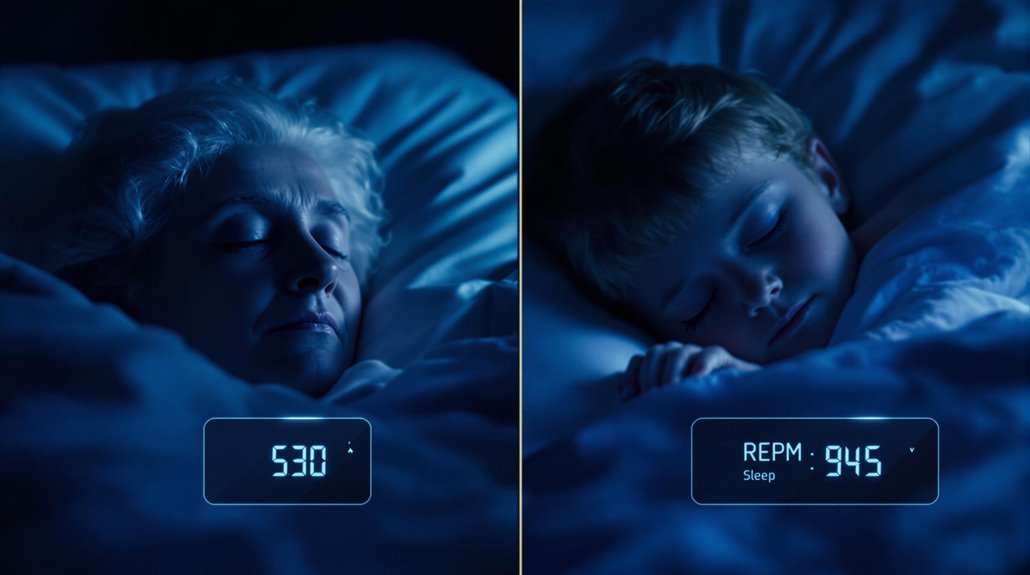
The required amount of rest varies greatly throughout our lifespans, with specific sleep needs changing as we progress from infancy to adulthood. Understanding your sleep requirements based on age is imperative for maintaining ideal health and well-being.
Newborns have the highest sleep requirements, needing 14-17 hours daily to support their rapid development. As babies transfer into infants, their sleep duration slightly decreases to 12-16 hours, including regular naps throughout the day. Young children between ages 1-5 continue to need substantial rest, requiring 10-14 hours of sleep with naps gradually becoming less frequent.
When children reach school age, their sleep needs adjust to 9-12 hours per night, typically without naps. During the teenage years, sleep requirements decrease further to 8-10 hours, though many teens don't get enough rest due to academic and social demands. Finally, adults need 7-9 hours of sleep to function properly.
These sleep duration guidelines by age aren't just suggestions - they're based on your body's biological needs. Getting the right amount of sleep for your age group helps guarantee proper physical development, cognitive function, and emotional well-being.
Common Sleep Disruptions
Various factors can wreak havoc on your nightly rest, preventing you from cycling through the essential stages of sleep. Sleep apnea, a serious condition that causes breathing interruptions, disrupts your natural sleep architecture and reduces time spent in deep sleep stages. When you're dealing with stress and anxiety, you'll likely struggle to fall asleep and maintain continuous rest, which directly impacts your REM sleep quality.
Your lifestyle choices and physical conditions can substantially affect sleep patterns in several ways:
- Consuming alcohol or certain medications suppresses REM sleep and fragments your sleep cycles, preventing you from getting the restorative rest you need
- Age-related changes naturally alter your sleep architecture, resulting in less deep sleep and more frequent nighttime awakenings as you get older
- Disruptions to your circadian rhythm, whether from shift work or irregular sleep schedules, interfere with your body's ability to properly cycle through sleep stages
Understanding these common sleep disruptions is pivotal because they don't just affect how long you sleep - they impact the quality and structure of your sleep cycles, potentially leading to long-term health consequences if left unaddressed.
Natural Sleep Enhancement Methods

Maintaining healthy sleep cycles doesn't require medication or complex interventions. You can enhance your natural sleep patterns through simple, consistent practices that align with your body's rhythms. By following proper sleep hygiene guidelines, you'll improve both the quality and quantity of your rest.
Start by establishing a consistent sleep schedule, going to bed and waking up at the same time every day. Expose yourself to natural sunlight during morning hours to regulate your circadian rhythm and support your sleep cycle. Create a relaxing bedtime routine that signals to your body it's time to wind down. This might include dimming lights, avoiding screens, and engaging in calming activities 30-60 minutes before bed.
Your bedroom environment plays an essential role in achieving uninterrupted sleep and reaching the deep sleep stage. Keep your room cool, as your body temperature drops naturally during sleep. Use blackout curtains, white noise, or earplugs if needed. Avoid heavy meals, caffeine, and alcohol close to bedtime, as they can interfere with your sleep quality. Regular exercise, particularly in the morning or early afternoon, can also promote healthy sleep patterns.