
Tips for Preparing for International Travel Without Losing Sleep
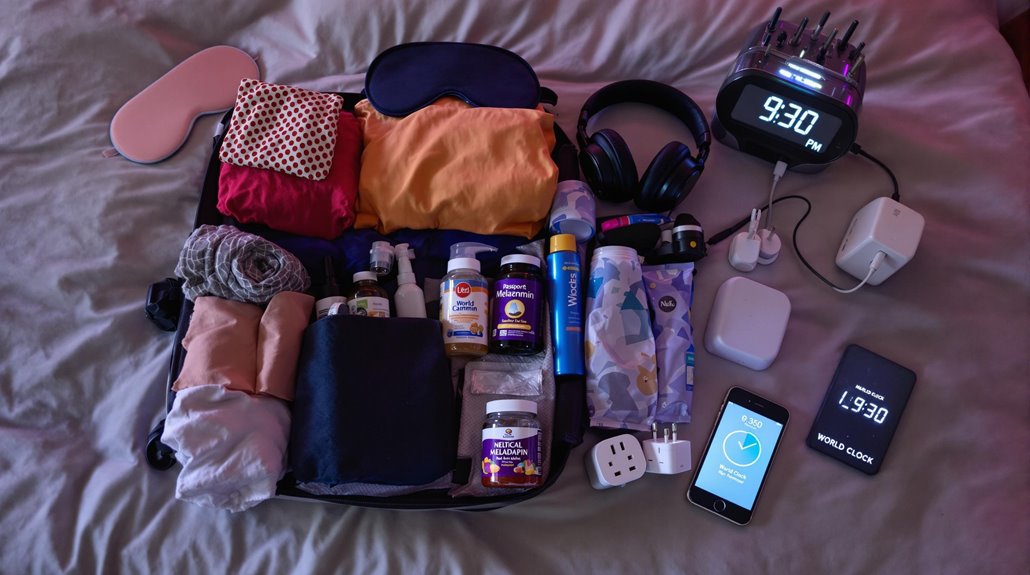
Prepare for international travel by adjusting your sleep schedule 3-5 days before departure, shifting your bedtime to match your destination's time zone. You'll want to choose daytime flights that arrive during daylight hours and avoid red-eye options when possible. During your flight, skip the alcohol, stay hydrated, and use sleep accessories like an eye mask and earplugs if you need rest. Once you arrive, resist the urge to nap and expose yourself to natural sunlight through outdoor activities. Strategic preparation and smart in-flight choices can make all the difference between feeling refreshed and fighting fatigue during your travels.
Pre-Flight Sleep Preparation
Jet lag can wreak havoc on your travel experience, but you can minimize its effects by preparing your sleep schedule before departure. Start adjusting your sleep patterns 3-5 days before your trip, gradually shifting your bedtime to match your destination's time zones. If you're traveling east, go to bed earlier; if heading west, stay up later.
To support your circadian rhythm adjustment, expose yourself to bright light in the morning and dim lighting in the evening. You'll need to maintain excellent sleep quality during this change, so aim for 7-9 hours of rest each night. Don't take long daytime naps, as they'll interfere with your new sleep schedule and make the adjustment more difficult.
Consider using sleep aids like melatonin supplements to help regulate your body clock. Take them strategically a few days before your departure to ease into the new schedule. While adjusting your sleep patterns, remember to stay hydrated and maintain consistent meal times. This thorough approach to pre-flight preparation will help your body adapt more smoothly to the new time zone, reducing the impact of jet lag on your travels.
Strategic Flight Selection Tips
When selecting international flights, strategic choices can greatly impact your travel comfort and recovery time. Your first priority should be choosing flights that arrive during daylight hours, which will help you stay awake until local nighttime and adapt to your new time zone more quickly. To avoid jet lag, look for routes that cross fewer time zones, even if this means a slightly longer flight duration.
You'll sleep well and feel better if you skip the red-eye flights, despite their often attractive prices. Instead, invest in daytime flights with carriers known for superior cabin comfort and air quality. Use comparison tools to research specific aircraft models and airlines, paying attention to seating configurations and cabin pressure ratings. Good air circulation and comfortable seating can make a significant difference in how you feel upon arrival.
To minimize travel fatigue, select direct flights when possible. If you must have connections, confirm they don't require rushing between gates, which can increase stress and impact your ability to stay alert during your first day at your destination. Remember, it's better to spend extra time planning your flight selection than to need extra time to recover at home afterward.
During Flight Sleep Management
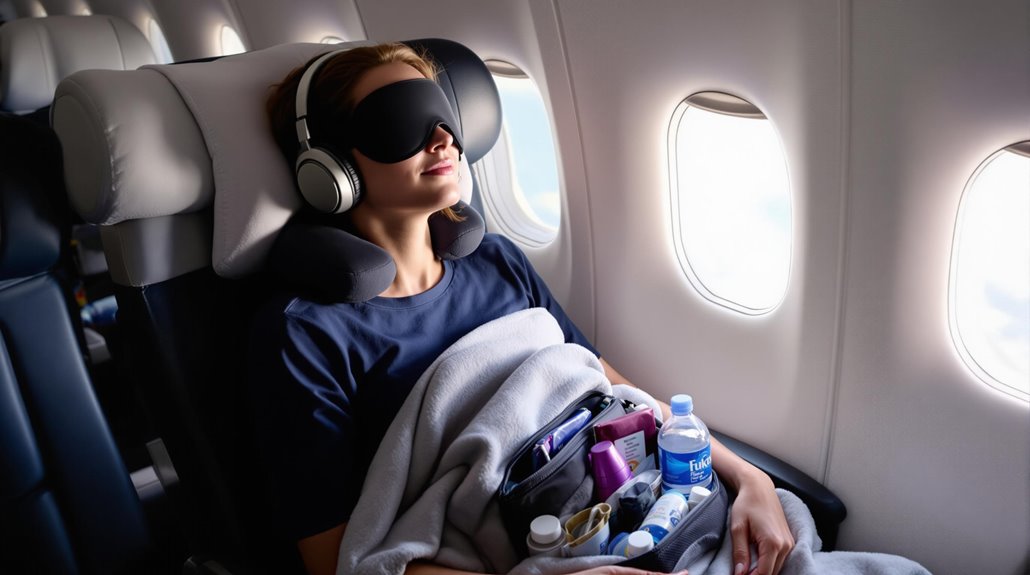
Proper sleep management during your international flight plays an indispensable role in minimizing jet lag and starting your trip refreshed. To fall asleep effectively during air travel, you'll need to create ideal conditions while avoiding common disruptors like alcohol, which can prevent you from getting quality rest. If you're trying to sleep, pack essential accessories like a travel pillow, sleep mask, and earplugs to sleep deep despite cabin noise and lighting.
For those who can't sleep easily on planes, follow these proven strategies:
- Skip alcoholic beverages and opt for water instead - this helps maintain proper hydration for better rest
- Time your sleep schedule to match your destination's timezone, aiming for 7-8 hours of rest
- Create a comfortable environment using sleep accessories before attempting to rest
- Avoid sleep medicine or sleeping pills, as they can leave you groggy upon arrival
Upon reaching your destination, stay awake by engaging in light activities until an appropriate local bedtime. On your first night, turn in early to help regulate your body's natural rhythms and minimize jet lag effects. This approach helps you adapt more quickly to your new time zone.
First Day Arrival Tactics
Effectively maneuvering your first day in a new time zone necessitates strategic planning and willpower. To minimize jet lag and reset your circadian rhythm, you'll need to resist the temptation to stay in bed, even if your internal clock is fighting against you. The key is to immediately immerse yourself in the local schedule, leaving your home time zone behind.
When you arrive, don't give in to afternoon naps, as they'll delay your adjustment and prolong jet lag symptoms. Instead, take an active walk around the world outside your hotel, allowing natural sunlight to help regulate your body clock. Stay outdoors until early evening, combining exercise and daylight exposure to naturally reset your circadian rhythm. Health care experts recommend this approach as one of the most effective strategies for fighting jet lag.
Prepare yourself mentally for an early morning wake-up on day one. Rather than viewing this as a disruption, welcome the productive energy that often comes with it. You'll likely feel surprisingly alert, and this is the perfect opportunity to investigate your destination while it's coming to life. The quicker you adapt to local time, the sooner you'll feel normalized in your new environment.
Time Zone Adjustment Methods
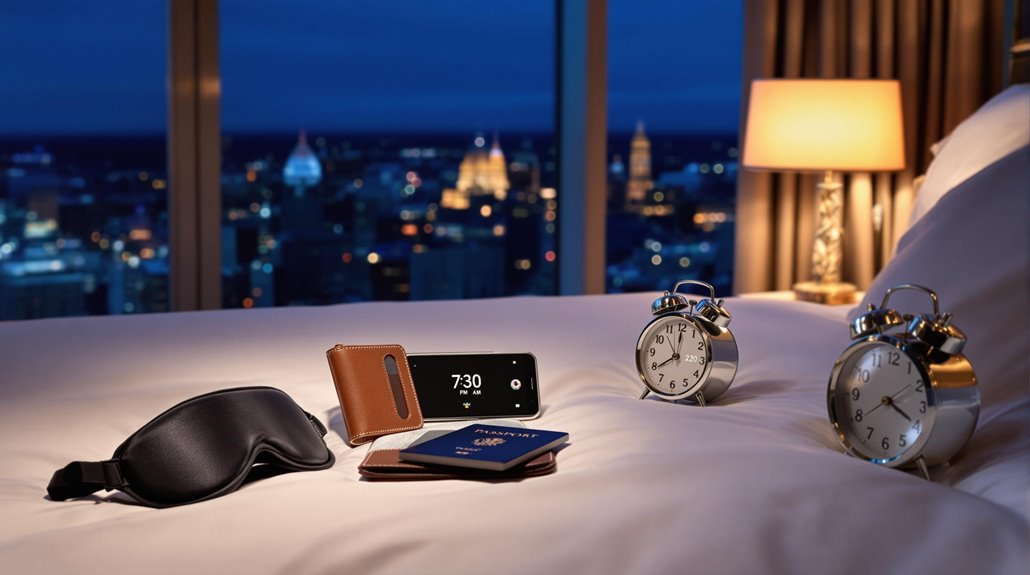
Commanding time zone changes requires a multi-faceted approach that begins well before your departure date. You'll want to gradually adjust your sleep and wake times several days before traveling to minimize the impact on your circadian rhythm. This proactive strategy, combined with proper exposure to bright light at your destination, can considerably reduce jet lag symptoms.
For ideal time zone adjustment, consider these essential methods:
- Begin shifting your bedtime by 30-60 minutes each day, starting 3-4 days before departure, to align with your destination's schedule
- Use melatonin supplements strategically, following your physician's guidance, to help regulate your sleep-wake cycle
- Maintain an active daytime schedule upon arrival, avoiding napping longer than 20 minutes
- Seek natural or artificial bright light exposure at specific times to reset your internal clock
If you're struggling with jet lag despite these measures, don't hesitate to consult a sleep specialist. They can develop customized strategies based on your travel pattern, health conditions, and specific needs. Remember that everyone's body responds differently to time zone changes, so what works for others might need adjustment for you.