
Tips for Avoiding Bed Bugs During Your Travels
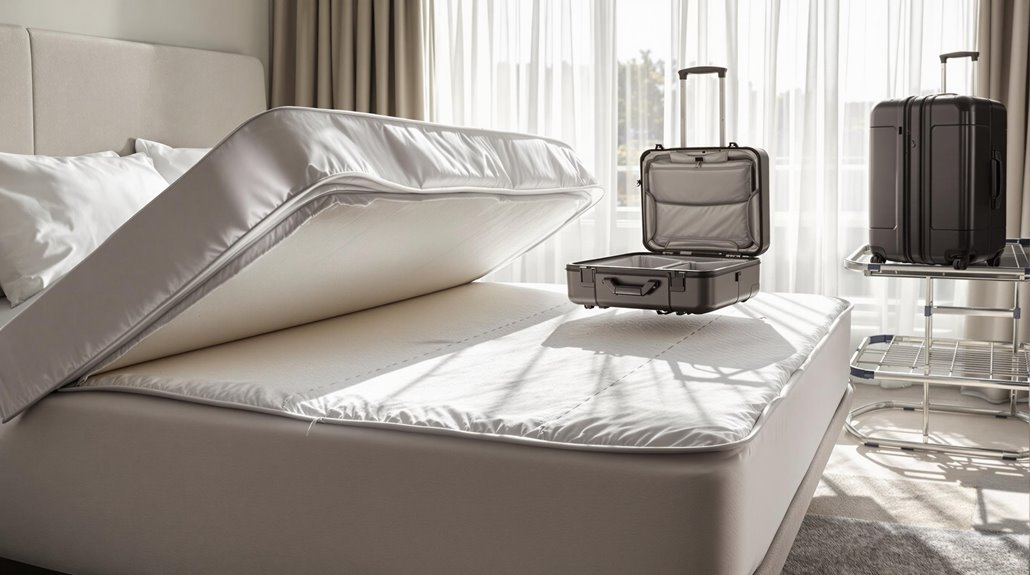
You'll greatly reduce your risk of encountering bed bugs during travel by taking smart precautions before, during, and after your trip. Start by choosing hard-sided luggage and using protective bed bug-proof packing cubes. When you arrive at your hotel, thoroughly inspect the mattress, headboard, and furniture for signs of bugs before unpacking. Keep your suitcase elevated off the floor and away from beds and furniture. After returning home, immediately wash all clothing on high heat and vacuum your luggage thoroughly. These basic steps will help protect you, but there's much more you can do to enhance a bug-free odyssey.
Choose Your Luggage Wisely
Smart travelers opt for hardside luggage when trying to prevent bed bug infestations during their trips. Unlike fabric suitcases that offer numerous hiding spots and crevices, hardside luggage presents a smooth, less inviting surface for these unwanted hitchhikers. The sleek exterior makes it exceedingly more difficult for bed bugs to attach themselves and catch a ride to your home.
When you're selecting your travel gear, consider that bed bugs are particularly drawn to dark, textured materials where they can easily conceal themselves. A hardside suitcase, especially in lighter colors, eliminates these preferred hiding places. While bed bugs can technically climb any surface, they're less likely to successfully establish themselves on the polished exterior of hardside luggage.
To maximize protection, you'll want to store your belongings in plastic bags inside your hardside luggage for an extra layer of security. This double-barrier approach creates an even more challenging environment for bed bugs to infiltrate. By choosing hardside luggage over fabric alternatives, you're taking a proactive step in protecting your belongings and preventing these persistent pests from making their way back to your home.
Pre-Trip Prevention Steps
Beyond selecting the right luggage, effective bed bug prevention starts well before you leave home. Taking proactive steps can considerably reduce your risk of bringing these unwanted hitchhikers back from your travels. To protect your belongings, pack all your clothing and fabric items in resealable plastic bags, creating isolated compartments that make it harder for bed bugs to infest your possessions.
Essential pre-travel preparation includes gathering the right inspection tools and organizing your bag strategically. Here are three critical steps to take before departure:
- Pack a small flashlight to thoroughly examine hotel room surfaces, particularly around the bed frame, headboard, and mattress seams
- Include a lint roller in your travel kit - it's an excellent tool for detecting and removing potential bed bugs from surfaces and clothing
- Designate a "quarantine zone" in your garage or storage area where you'll keep your luggage upon return, never bringing bags directly into your bedroom
Remember to avoid the common mistake of spraying your luggage with pesticides, as this can be harmful to your health and won't effectively prevent bed bugs. Instead, focus on proper packing techniques and preparation of inspection tools.
Airport Safety Strategies

Three key areas in airports require vigilance to avoid bed bug encounters: seating areas, luggage storage spots, and waiting zones.
When choosing a place to sit during your layover, opt for well-lit areas with hard, smooth chairs rather than upholstered seating. Before settling in, inspect the seating area thoroughly for any signs of bed bugs or their droppings. You'll want to avoid darker, more secluded corners of the airport where these pests commonly hide.
If you're traveling during daytime hours, you're already at an advantage since bed bugs are nocturnal. However, don't let your guard down when using overhead luggage racks or storage areas, as these spaces can still serve as perfect hiding spots. Keep your belongings off the floor and avoid placing them directly on carpeted areas.
Consider using protective covers for your luggage and keeping a small flashlight handy for quick inspections. If you suspect your clothes have been exposed, seal them in plastic bags until you can get them to the dry cleaners. Remember, being proactive in the airport environment considerably reduces your risk of carrying unwanted passengers to your destination.
Hotel Room Initial Inspection
A careful room inspection immediately upon check-in serves as your first line of defense against bed bugs. Before unpacking your luggage, you'll want to conduct a thorough examination of your hotel room to guarantee it's free from these unwanted pests. Start by inspecting the mattress seams and corners, looking for any suspicious stains or spots that might indicate bed bug activity.
Your inspection shouldn't stop at the bed. Check behind the headboard, examine any upholstered furniture, and inspect nearby sofas and chairs. If you spot any signs of bed bugs, don't hesitate to contact hotel management right away. Remember, you shouldn't accept a room that's next to, above, or below any space with known bed bug issues, as these pests can easily travel between rooms.
Mattress seams, edges, and corners, paying special attention to any discoloration, behind headboards, pictures, and other wall-mounted items, and upholstered furniture, including chairs and sofas, particularly in their seams and cushion folds.
This initial examination can save you from dealing with bed bugs during and after your trip.
Safe Unpacking Methods
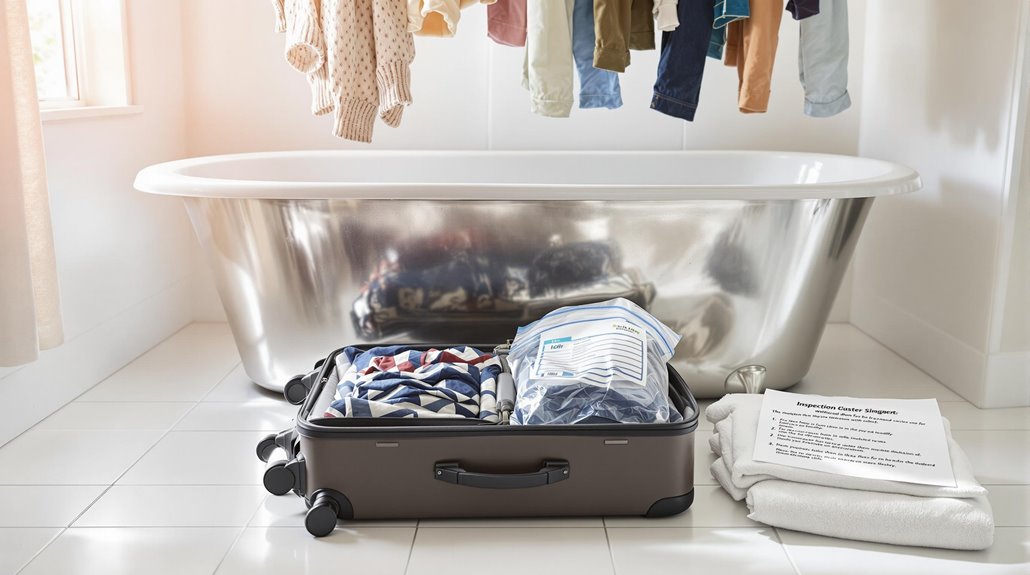
Proper unpacking procedures serve as your final defense against bringing bed bugs into your home. When you return from your travels, don't bring your luggage directly into your bedroom or living areas. Instead, place your suitcase in the bathroom or another room with hard, light-colored flooring where bed bugs are easier to spot.
Empty your suitcase carefully, placing all clothing directly into a plastic trash bag for immediate washing. Wash everything you can in the hottest water setting and dry on high heat, which effectively kills both bed bugs and their eggs. For delicate items that can't withstand high temperatures, have them dry cleaned to eliminate any potential bed bug threats.
Once your suitcase is empty, vacuum it thoroughly, paying special attention to seams, pockets, and corners where bed bugs might hide. For extra protection, use a garment hand steamer to steam clean the entire suitcase. The high temperature from the steam will kill any remaining bugs or eggs. Don't store your suitcase until you're confident it's completely bed bug-free, as these pests can survive for months without feeding.
Daily Travel Precautions
Taking daily precautions during your travels can substantially reduce your risk of encountering bed bugs. While you're on the road, it is indispensable to maintain vigilant habits that protect you and your belongings from these unwanted hitchhikers. Here are critical travel tips to incorporate into your daily routine.
- Inspect your suitcases daily, paying special attention to seams, zippers, and corners where bed bugs like to hide. Do this every morning and evening, preferably in the bathroom where surfaces are less likely to harbor pests.
- Keep your clothes sealed in a trash bag or protective covering when they're not in use. When you've worn items, place them in a separate sealed bag until you can wash them in hot water.
- Store your luggage in the bathroom or on a metal luggage rack, never on upholstered furniture or the bed. If a rack isn't available, place your bags on a clean, hard surface away from carpeting.
Remember to maintain these practices throughout your entire trip, not just at the beginning. Even luxury hotels aren't immune to bed bugs, so consistency in your preventive measures is vital for protecting yourself.
Protecting Your Belongings

Your belongings serve as potential vehicles for bed bug transmission, making protective measures essential during travel. Choose hard-sided suitcases over fabric ones, as they provide fewer hiding spots where bed bugs can conceal themselves. Place your clothing and personal items in resealable plastic bags within your luggage to create isolated compartments that prevent infestations from spreading.
Consider placing your suitcase in a plastic protective cover during the duration of your stay, particularly when storing it in hotel rooms. Keep your luggage away from bedrooms and furniture, as these areas are prime spots for bed bugs to migrate from your bags to your living spaces. To guarantee you haven't Brought Bed Bugs into your accommodations, use a flashlight to inspect your belongings thoroughly, paying special attention to seams, corners, and crevices. A lint roller can help detect any bed bugs or eggs that might be present on your items. While it might be tempting, avoid using pesticides on your luggage, as they're both ineffective against bed bugs and potentially harmful to your health. These protective strategies will drastically reduce your risk of transporting unwanted hitchhikers during your travels.
Signs of Infestation
Early detection of bed bug infestations can save travelers from bringing these pests home. When you travel, it's imperative to inspect your hotel room immediately upon arrival to guarantee that bed bugs aren't present. You'll want to look for distinctive signs these unwanted guests leave behind, including blood spots on sheets, shed skins in seams, and tiny white eggs in crevices.
To properly check for infestations of bed bugs during your travels, follow these key inspection points:
- Look for reddish-brown, oval-shaped adults in mattress seams, headboards, and furniture joints - they're about the size of an apple seed
- Check for sweet, musty odors that often indicate a significant bed bug presence, particularly in areas near the bed
- Examine dark spots or stains on mattresses and nearby walls, which could be bed bug excrement or dried blood
Preventing bed bugs from hitching a ride home starts with vigilant inspection. Don't place your luggage on beds or upholstered furniture until you've completed a thorough check. If you spot any signs that suggest bed bugs travel between rooms, request an immediate room change to a non-adjacent unit to protect yourself and your belongings.
Emergency Response Plan
While thorough inspection helps prevent encounters with bed bugs, locating these pests in your hotel room requires immediate action. If you find bed bugs, contact the hotel management right away, as these pests can quickly spread to neighboring rooms. Take clear photos of any evidence, including bites on your body and signs of infestation, to document the situation for potential compensation claims.
Don't unpack your belongings if you spot these unwanted guests. Instead, keep your luggage sealed and consider relocating to a different hotel to avoid further exposure. Bed bug prevention tips suggest maintaining distance between your possessions and any infested areas until you can safely leave the premises. Remember, your safety and comfort should be the priority.
Upon returning home, don't take chances with this bed bug pest problem. Contact a professional pest control service immediately to inspect your belongings and living space. They'll guarantee that no hitchhiking bugs made their way into your home. This proactive approach can prevent a full-scale infestation and protect your household from these persistent pests. Keep all documentation of the incident, including hotel correspondence and pest control reports.
Post-Trip Cleaning Protocol
Proper cleaning protocols immediately after your trip serve as the final defense against bringing bed bugs into your home. Even if you've been vigilant during your travels, you'll need to take immediate action upon return to guarantee these unwanted hitchhikers don't become permanent residents.
Before bringing your suitcase inside, inspect it thoroughly for telltale signs like reddish-brown stains or shed skins. Once you're ready to unpack, follow these essential steps:
- Transfer all clothing directly from your suitcase to the dryer and run on high heat for at least 15 minutes, even if the items are clean
- Use a garment steamer on items that can't go in the dryer, as the high heat will eliminate any bugs and eggs
- Vacuum your suitcase scrupulously, paying special attention to seams and crevices where bed bugs hide
After completing these steps, wash all clothes in hot water, including items you didn't wear. Don't forget to vacuum both the interior and exterior of your suitcase before storing it. These preventive measures might seem time-consuming, but they're far less troublesome than dealing with a full-blown bed bug infestation in your home.
Home Protection Measures

Taking preventive measures at home before your trip can markedly reduce the risk of a bed bug infestation upon return. By preparing your luggage strategically, you'll minimize the chances of bringing these unwanted pests back to your residence. Before you even pack, consider investing in protective plastic covers for your suitcases, which create an effective barrier against bed bugs attempting to take up residence in your belongings.
When you arrive home, don't immediately bring your suitcase into your bedroom. Instead, take it to your bathroom or place it in the bathtub, as these locations make it harder for any potential bed bugs to spread. If you've stored your clothes properly during your trip by hanging them in the hotel closet and keeping them in sealed bags, you're already ahead of the game. However, it's still essential to unpack methodically. Remove your clothes directly into the washing machine, and run them on high heat to eliminate any bugs that might have hitched a ride. Store your empty suitcase in a sealed plastic bag or protective cover, preferably in a garage or storage area away from your living spaces.
Essential Prevention Tools
Beyond home preparation, specific tools can greatly enhance your defense against bed bugs during travels. You'll want to invest in hardside luggage, as its smooth surface gives these pests fewer places to hide compared to fabric suitcases. A portable steaming device is another essential tool, as heat will kill both bugs and their eggs effectively - similar to how running items through a dryer on high temperature eliminates infestations.
- Vacuum-sealed storage bags to compress clothing and create an impenetrable barrier between your belongings and potential bed bug habitats like box springs
- Multiple resealable plastic bags or heavy-duty garbage bags to isolate potentially contaminated items during your trip
- Natural bed bug prevention spray to treat your luggage and clothing before, during, and after your excursion
These tools work together to create multiple layers of protection. While no single method guarantees complete protection, using these items consistently will substantially reduce your risk of bringing unwanted hitchhikers home. Remember to inspect and treat your tools regularly, especially after returning from areas where bed bugs might be present.
Long-Term Storage Solutions
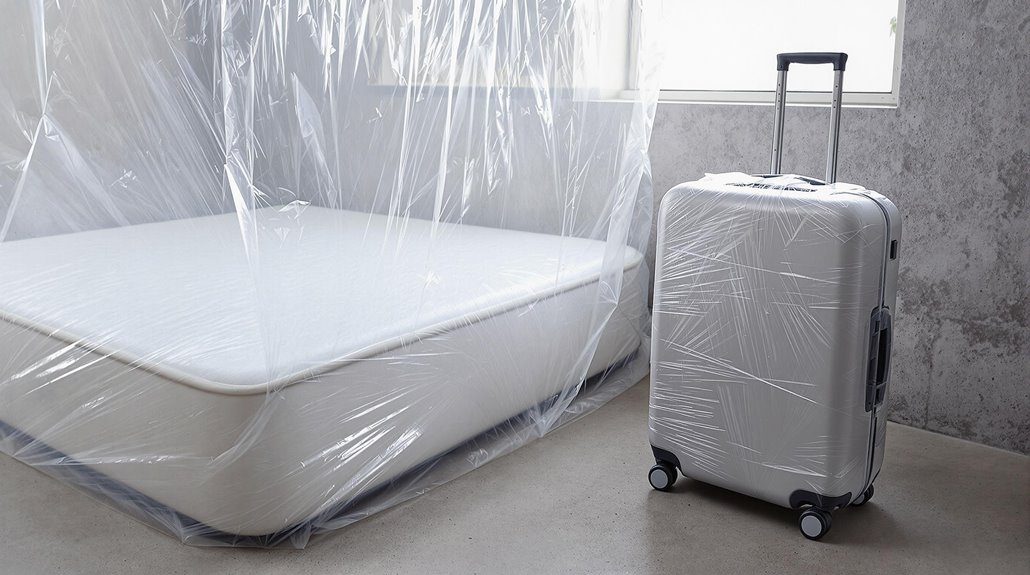
Strategic storage of your luggage between trips plays an essential role in preventing bed bug infestations. When you're not traveling, it's vital to store your suitcases and bags in a way that protects both your luggage and your home from these persistent pests.
Invest in airtight plastic bins or totes that can fully contain your luggage during storage periods. Before placing your bags in these containers, thoroughly inspect and clean them to make sure there aren't any bed bugs or eggs present from your prior trip. To maximize protection, consider adding pest control sachets inside the storage container, which will help deter any bed bugs that might try to make your luggage their residence during the duration of your trip.
Choose a dry, temperature-controlled area of your home for storing these containers, such as a closet or basement. This controlled environment makes it less appealing for bed bugs to establish themselves there. By keeping your luggage sealed in protective containers between trips, you're creating an effective barrier that prevents potential bed bug problems from spreading throughout your home, while also safeguarding your travel gear for future use.