Tinku “Punch Your Neighbor” Festival: A Traditional Bolivian Ritual
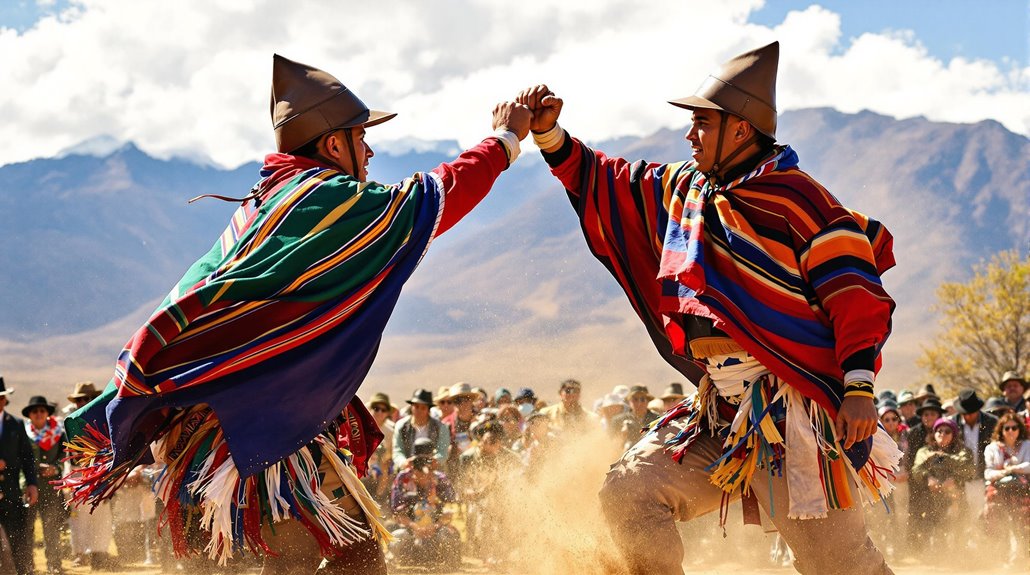
If you're curious about Bolivia's most intense festival, the Tinku or "Punch Your Neighbor" celebration alters peaceful Andean villages into ritual battlegrounds each May. You'll witness one-on-one combat between participants wearing colorful ponchos and feathered helmets as they engage in ceremonial fights that honor Pachamama (Mother Earth) through sanctioned bloodshed. While modern police supervision guarantees safety, the festival preserves its ancient spiritual essence as a way to resolve disputes and reinforce community bonds. Behind the spectacle of physical combat lies a deep-rooted cultural tradition that connects today's Quechua people with their ancestral heritage in ways you won't believe.
Origins of the Tinku Festival
Deep in the heart of Bolivia's Andean region, the Tinku festival emerged as a sacred ritual long before Spanish colonization. The tradition's roots stretch back to pre-Hispanic times when indigenous communities believed in offering blood sacrifices to the earth Goddess Pachamama. You'll find that the word "Tinku" carries deep meaning in two native languages - it translates to "encounter" in Quechua and "physical attack" in Aymara, perfectly capturing the festival's dual nature.
This ancient practice has evolved into an annual event that you can witness each May in various Quechua towns throughout Bolivia. The festival serves a practical purpose, offering communities a structured way to settle their differences through ritualized combat. When you attend a Tinku celebration, you'll see participants wearing distinctive traditional attire, including leather montera helmets decorated with colorful feathers. These carefully preserved customs reflect the Quechua people's commitment to maintaining their cultural heritage. Through generations of practice, the Tinku festival continues to be a living record of the enduring traditions of Bolivia's indigenous communities.
The Sacred Blood Offering
At the heart of the Tinku festival lies its most sacred element - the blood offering to Pachamama. When you witness this ancient ritual, you'll see participants deliberately engaging in physical combat with their neighbors, not out of hatred, but with the deep belief that their spilled blood will nourish the earth goddess and guarantee abundant crops.
For the Quechua people, this blood offering transcends mere violence - it's a profoundly spiritual act that connects them to their ancestral traditions. You'll notice that while the confrontations can be intense, they're woven into a larger fabric of celebration that includes traditional music, dancing, and communal blessings. The participants believe that their blood sacrifice serves as a direct channel of communication with Pachamama, reinforcing their sacred bond with the land.
Despite modern authorities' attempts to curb the more violent aspects, you'll find that this ritual remains fundamentally important to the cultural identity of Bolivia's Quechua communities. They continue to practice this centuries-old tradition, viewing the blood offering as an essential spiritual exchange that maintains harmony between their people and the earth goddess.
Traditional Clothing and Equipment

The eye-catching attire of Tinku participants reflects the lively cultural heritage of Bolivia's Quechua people. You'll notice participants dressed in traditional Quechua clothing, including colorful ponchos that showcase their community's distinct style and identity. The outfits aren't just for show - they're an essential part of preserving the rich cultural practices that have been passed down through generations.
What's particularly striking about the participants' gear is their leather montera helmets. These protective headpieces are adorned with vibrant feathers that symbolize the ritual's connection to nature. While you're watching the festival, you'll see how these helmets serve both a practical and ceremonial purpose - they protect the fighters during their physical confrontations while maintaining the ritual's traditional aesthetic. Some participants also carry a small leather tube for additional protection during the matches. Every element of their attire, from their distinctive hats to their ponchos, plays an indispensable role in maintaining the authenticity of this ancient practice. Through these traditional garments, you're witnessing the living embodiment of Quechua cultural identity in action.
Rules of Combat
Operating under strict guidelines, Tinku combat follows traditional rules that maintain both safety and spiritual significance. When you participate in a Tinku Festival match, you'll engage in one-on-one combat, following specific protocols that honor both tradition and safety.
You can't use weapons or target sensitive areas of your opponent's body during the fight. The combat continues until police observers spot the first sign of blood, at which point they'll immediately stop the confrontation. This rule helps prevent serious injuries while maintaining the ritual's intensity.
As a participant in these Quechua traditions, you're expected to demonstrate physical endurance rather than intent to harm. The combat isn't about winning through excessive violence - it's about showing your devotion to Pachamama, the earth goddess, through controlled and respectful engagement with your opponent.
While the fights may appear brutal to outsiders, they serve a deeper community purpose. You're participating in a time-honored method of conflict resolution, where physical confrontation under strict rules helps settle disputes and strengthen community bonds.
Community Role in Dispute Resolution

Beyond its ceremonial aspects, Tinku's dispute resolution system plays a pivotal role in maintaining social order within Bolivian Quechua communities. You'll find that this festival serves as a structured platform where neighbors can address their grievances through ritualized combat, rather than letting conflicts simmer throughout the year.
When you look at how Quechua communities handle disputes, you'll notice that the Tinku provides a culturally sanctioned outlet for tension. The festival's traditional rules guarantee that confrontations don't spiral out of control, while still allowing participants to resolve their differences through physical contests. You'll see that this approach combines spiritual significance with practical dispute resolution, as the blood spilled during these encounters is considered an offering to Pachamama.
Modern adaptations of the festival now include police oversight to prevent excessive violence, but this hasn't diminished its effectiveness in resolving community conflicts. You'll observe that the ritual continues to unite communities by providing a designated time and place for addressing disagreements, ultimately promoting social harmony through this unique blend of tradition and conflict resolution.
Police Involvement and Safety
Modern safety concerns have altered how police interact with the Tinku festival, creating a delicate balance between preserving tradition and preventing tragedy. You'll notice police officers stationed throughout the event, acting as referees to safeguard participants follow traditional hand-to-hand combat rules while prohibiting the use of weapons.
When you attend the Tinku ritual, you'll see how police involvement has evolved to address safety concerns stemming from past incidents where celebrations turned deadly. Officers don't hesitate to use tear gas when fights escalate beyond acceptable limits, and they're quick to disperse crowds that become too aggressive. While some participants receive informal medical attention from onlookers who help treat their bleeding lips and faces, the police presence helps preclude more serious injuries.
The relationship between law enforcement and this cultural tradition has become increasingly important. You'll observe how police carefully monitor the proceedings, ready to intervene when necessary while still allowing the ritual's essential elements to unfold. This approach helps maintain the festival's cultural significance while preventing it from crossing into dangerous territory.
Cultural Significance Today

The beating heart of Bolivia's indigenous identity continues to pulse through the Tinku ritual, where ancient traditions merge seamlessly with contemporary life. You'll find that across the Bolivian Andes, Indigenous Quechua communities maintain this practice as a vital thread in their cultural fabric, refusing to let modernization diminish its significance.
While the ritual's physical nature has been tempered by police oversight, you'll witness how its spiritual essence remains firmly intact. The ceremonial battles continue to serve as profound presentations to Mother Earth, reflecting the deep connection between the people and their ancestral beliefs. What's particularly remarkable is how younger generations aren't shying away from the tradition - they're actively embracing it, ensuring the Tinku's survival for years to come.
You'll explore that this enduring celebration represents more than just a festival; it's a powerful statement of cultural identity and resistance. Despite external pressures and societal changes, the Indigenous Quechua communities have adapted the Tinku to modern times while preserving its core spiritual and social functions, demonstrating noteworthy resilience in maintaining their heritage.
Passing Down Ancient Traditions
Bolivia's ancient Tinku ritual lives on through a dedicated system of intergenerational teaching within Quechua communities. You'll find that elders take great care in passing on traditions to younger members, guaranteeing that every aspect of this significant cultural inheritance remains intact. From the traditional clothing to the ritual's deeper meaning, each element is carefully preserved and explained to new generations.
Within these Quechua communities, you'll witness how the preservation of Tinku goes beyond mere physical demonstration. It's a comprehensive cultural education where children learn not just the movements and customs but also understand the ritual's historical roots in ancient Andean practices. You'll notice that this commitment to maintaining authenticity has helped the tradition survive for centuries while retaining its core values and significance.
The continuation of Tinku serves as a crucial thread in the social fabric of Quechua society. When you visit these communities, you'll observe how seriously they take their role as custodians of this heritage, with organized efforts to document and teach every aspect of the ritual to confirm it remains an enduring part of their identity.