
The Sleeping Habits of Horses: How They Rest and Recharge

Your horse's unique sleep patterns reflect their evolution as prey animals. They'll get 5-7 hours of total rest each day through multiple short periods, with the ability to doze while standing thanks to their "stay apparatus" leg-locking system. However, they must lie down for at least 30 minutes daily to achieve vital REM sleep. You'll notice horses taking turns as lookouts when resting in groups, and they need a comfortable, quiet environment to feel secure enough to lie down. Understanding these distinct rest habits will help you create the perfect conditions for your horse's essential recharge time.
Natural Sleep Patterns in Horses
Understanding a horse's natural sleep patterns reveals a fascinating cycle quite different from human sleep habits. As prey animals, horses have evolved unique sleeping patterns that allow them to remain vigilant while getting the rest they need. You'll find that horses sleep standing during their lighter sleep phases, using a specialized anatomical feature called the stay apparatus to lock their legs in place.
While horses require 5-7 hours of sleep per day, they don't get it all at once. Instead, they break their sleep cycles into multiple shorter periods throughout the day and night. What's particularly interesting about their lying behavior in group-housed settings is that horses take turns serving as lookouts while others rest. When it comes to REM sleep, horses need to lie down completely, as this deeper sleep stage requires full muscle relaxation.
You'll notice that weather conditions and environmental factors play a pivotal role in their sleeping pattern. If a horse doesn't feel safe or comfortable, they'll modify their rest schedule accordingly. This polyphasic sleep strategy guarantees they get adequate rest while maintaining the alertness necessary for survival.
Standing vs. Lying Down
A striking contrast exists between a horse's ability to rest while standing and its need to lie down for indispensable REM sleep. While you'll often see horses sleeping on their feet thanks to their remarkable joint-locking mechanism, this behavior only allows for light rest. It's an evolutionary adaptation that helped them survive as prey animals, enabling quick escape from predators.
What you might not realize is that horses can't achieve complete rest without lying down. To meet their sleep requirements, they must spend at least 30 minutes daily in REM sleep, which is only possible when they're lying flat. Horses typically break up their sleeping patterns into short intervals of 2-5 minutes throughout the day, but lying down is pivotal for their physical and mental well-being.
If your horse can't or won't lie down due to uncomfortable stall conditions or health issues, they'll miss out on vital REM sleep. This can lead to serious problems, including irritability and physical exhaustion. That's why it's of the utmost importance to ensure your horse has both the opportunity and appropriate environment to engage in both standing rest and lying down periods.
The Power of REM Sleep
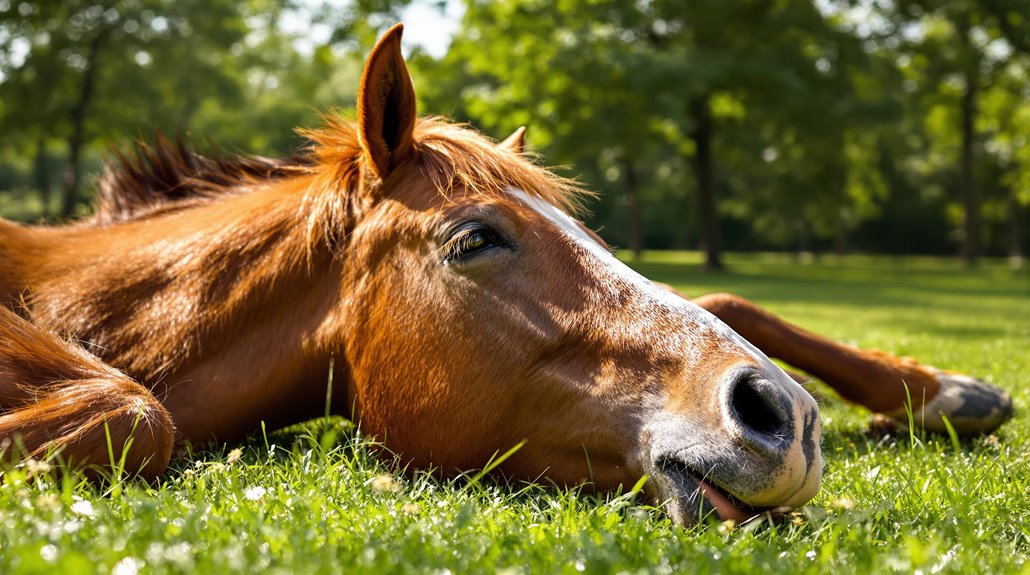
REM sleep plays an essential role in a horse's daily well-being, going far beyond the basic rest they get while standing. Your horse needs at least 30 minutes of Rapid eye movement (REM) sleep each day to maintain both physical and mental health. During these precious hours of sleep, horses must lie down completely, as it's the only way they can achieve a full sleep cycle and enter REM state.
If your horse isn't getting enough REM sleep, you'll notice signs of irritability and physical exhaustion. That's why it's imperative to ensure you're providing an area suitable for horses to lie down safely and comfortably. Without proper conditions, your horse won't feel secure enough to enter deep sleep. Older horses, in particular, may struggle to find comfortable positions for lying down, making it even more important to create an ideal environment.
To help your horses able to sleep properly, you'll need to address any obstacles that might prevent them from lying down. This includes maintaining appropriate stall conditions, addressing health issues promptly, and ensuring they have enough space in a quiet, protected setting.
Creating Optimal Sleep Environments
Inside your horse's sleeping area, every detail matters when creating an environment conducive to deep rest. Your horses need a well-bedded area that's comfortable enough for lying down, as this position is essential for achieving REM sleep. You'll want to guarantee the environment remains quiet and free from unnecessary disturbances that could startle your horses awake or prevent them from relaxing completely.
Provide sufficient space for all horses to lie down simultaneously without crowding
Install proper bedding that's soft, clean, and deep enough for comfort
Minimize external noise and light pollution that could disrupt sleep patterns
Maintain consistent temperatures and good ventilation
Schedule regular health checks to address any physical issues affecting rest
When you observe your horses' sleeping habits closely, you'll notice they're more likely to lie down and rest deeply in spaces where they feel secure. By addressing these environmental factors, you're supporting their physical well-being and ensuring they get the quality sleep they need to stay healthy and energetic.
Social Dynamics During Rest

Social behaviors markedly influence how your horses rest, particularly within a herd environment. When keeping multiple horses together, you'll notice a hierarchical system that directly impacts their sleep patterns. The dominant horses typically claim the first opportunity for rapid eye movement (REM) sleep, while subordinate members must wait their turn.
Your horse needs adequate minutes of REM sleep each day to maintain health, but social fluctuations can interfere with this requirement. Without proper management, lower-ranking horses may go minutes or even hours without achieving deep sleep due to interruptions from dominant herd members. You can help address this by ensuring your horses have enough area to spread out while resting. A well-designed, littered area affects lying behavior positively, giving each horse the space they need to feel secure.
Pay special attention when introducing new horses to your herd, as this temporarily disrupts established sleeping patterns. You'll often observe that bonded horses prefer to rest near each other, creating a natural security system. This mutual protection allows them to achieve better quality sleep, ultimately benefiting the entire herd's well-being.
Sleep Disturbances and Warning Signs
During routine observation of your horses, certain warning signs can alert you to potential sleep disturbances. When you notice changes in your horse's sleeping habits, it's essential to take action, as sleep deprivation can profoundly impact your horse's health and quality of life. Pay close attention to lying behavior, as horses need to recline for proper REM sleep. If you observe unusual sleep patterns or excessive daytime drowsiness, these could indicate underlying physical complaints requiring veterinary attention.
Watch for these key warning signs of sleep behavior issues:
- Increased daytime napping or drowsiness, which may signal nighttime sleep disruptions
- Reluctance or inability to lie down, often linked to lameness or chronic pain
- Changes in normal sleeping habits, including shortened rest periods
- Signs of physical exhaustion, such as reduced activity levels or decreased immunity
- Development of stress behaviors like cribbing or weaving
Early recognition of these sleep disturbances allows you to address potential health issues before they become severe. If you notice any of these signs, consult your veterinarian to develop an appropriate treatment plan and restore your horse's natural sleep patterns.
Age-Related Sleep Requirements

Sleep patterns naturally shift throughout a horse's life, just as their physical and behavioral needs change with age. Young horses require dramatically more sleep than their adult counterparts, with foals spending more than half of their day catching up on invaluable rest. During their first three months, you'll notice that foals frequently sleep during the day, taking multiple napping sessions to sustain their rapid growth and development.
As your horse matures, their sleep requirements gradually decrease. While horses are able to get some rest through drowsing (light sleep) while standing, they'll still need periods of deeper sleep lying down. Adult horses typically establish more consistent sleep routines, though individual needs may differ. Senior horses often experience changes in their Equine Sleep patterns, generally requiring less sleep and taking fewer naps throughout the day.
As a horse owner, it is critical to understand how much sleep your horse needs at different life stages. Since sleep requirements can vary based on individual characteristics and health conditions, you should consult your veterinarian to confirm your horse is receiving sufficient rest for their age and circumstances.
Environmental Impact on Rest
Environmental factors play a critical role in your horse's ability to achieve quality rest. To safeguard sleep, your horse needs to sleep every day, particularly getting 30 minutes of REM sleep. According to Frontiers in Veterinary Science, horses lie down for their deepest sleep phases, making proper bedding and space essential. Wild horses naturally adjust their sleep patterns to their surroundings, but domesticated horses can find it difficult to maintain a full sleep cycle when faced with environmental challenges.
To guarantee your horse gets proper rest in a secure environment, consider these key factors:
- Minimize noise and overstimulation in their resting area
- Provide adequate bedding space and comfortable stall conditions
- Consider social dynamics when housing multiple horses together
- Maintain consistent feeding and training schedules to support natural circadian rhythms
- Reduce artificial lighting during nighttime hours to protect melatonin production
Horses can rest more effectively when you create an environment that addresses these needs. Pay special attention to lower-ranking horses, as they may struggle to find opportunities for lying down due to herd dynamics. Managing these environmental factors helps prevent sleep-related health issues and promotes overall well-being.
Managing Stress for Better Sleep
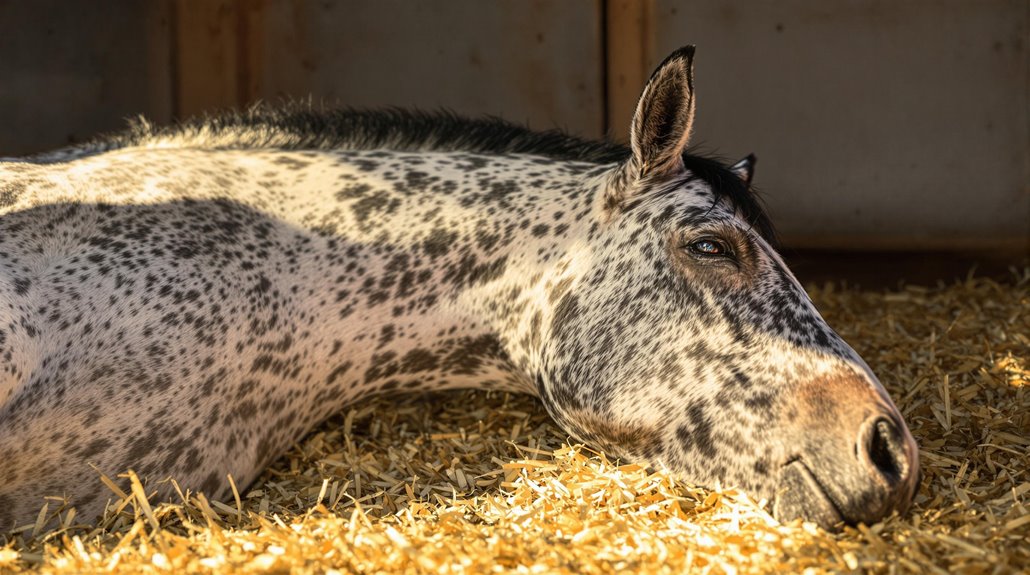
Proper stress management plays an essential role in your horse's sleep quality and overall well-being. You'll notice that horses with and without adequate stress management show different lying behavior patterns, where relaxed horses spent at least 30 minutes in deep sleep, while anxious ones get less than 30 minutes of quality rest.
To help your horse achieve better sleep, you'll need to create an environment where it's not difficult to lie down. Start by reducing environmental stressors like loud noises and bright lights. Horses prefer quiet, dimly lit areas for rest, and without access to soft, comfortable bedding, they may resist lying down altogether. You can support your horse's natural sleep patterns by maintaining a consistent daily schedule and ensuring they have a familiar area that affects lying behavior positively.
Don't overlook the importance of social connections - horses feel more secure when they can rest near trusted herd mates. Additionally, regular veterinary check-ups help identify and address any health issues that might be preventing restful sleep. Remember, a well-rested horse is a healthier, happier companion.
Physical Comfort and Rest Positions
Rest patterns in horses encompass both standing and lying positions, each serving distinct purposes for their well-being. While they're able to sleep and rest while standing thanks to specialized tendons and ligaments that lock their joints, you'll notice horses need to lie down for pivotal REM sleep periods. To guarantee your horse gets proper rest, you'll want to provide an environment where they feel secure enough to lie down, particularly when considering behavior in group-housed horses.
- Install rubber mats and adequate bedding to encourage comfortable lying positions
- Monitor low-ranking horses to ensure they get sufficient opportunities to lie down
- Create quiet zones where horses feel safe to enter deep sleep
- Provide enough space for all horses to rest comfortably, whether standing up or lying down
- Check for signs of discomfort that might prevent lying down behavior
When horses aren't able to lie down due to environmental or social factors, they can't achieve essential REM sleep. You'll need at least 30 minutes of lying-down time daily for your horse to maintain maximum health. Pay attention to their rest patterns and adjust their environment accordingly to support natural sleeping behaviors.