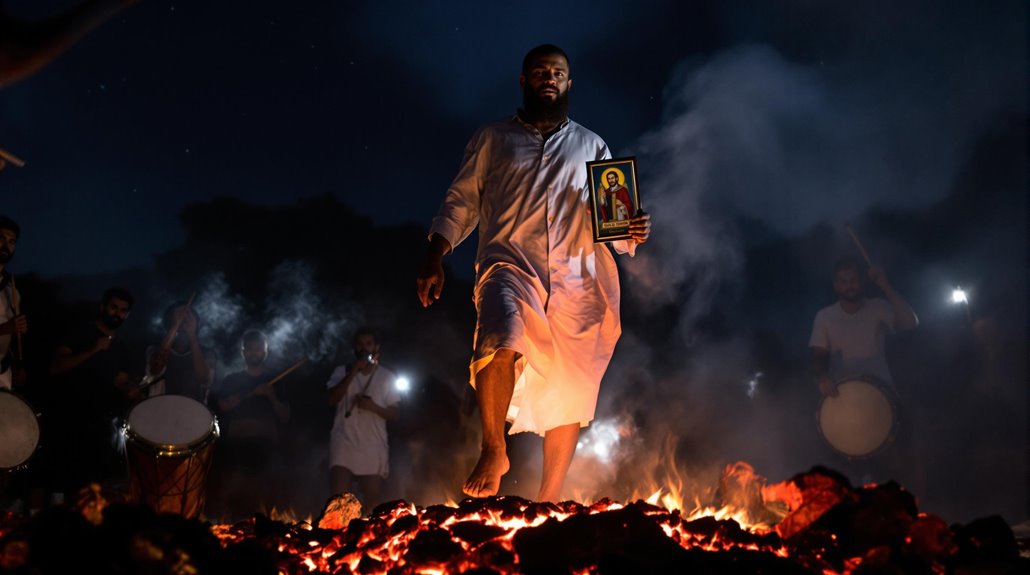
The Significance of Whit Sunday: A Day of Faith and Reflection
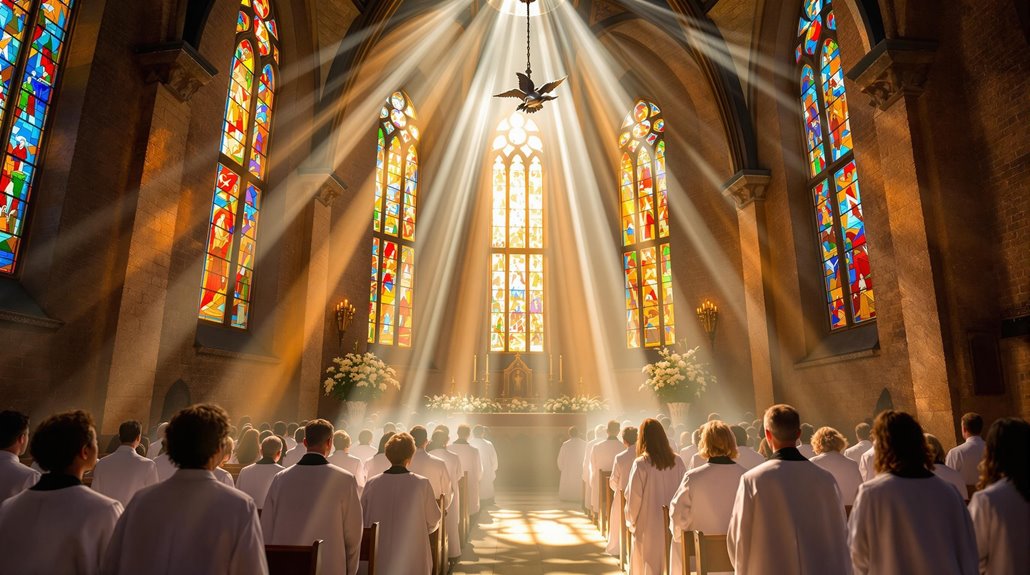
Whit Sunday, also known as Pentecost, marks the pivotal moment when the Holy Spirit descended upon Jesus's apostles. You'll find its roots in the ancient Jewish festival of Shavuot, celebrated 50 days after Passover. The name "Whit Sunday" comes from the white garments worn by newly baptized Christians, symbolizing spiritual purity. Today, you can experience this significant Christian feast through special church services, traditional Whit walks, and community celebrations featuring brass bands and Morris dancing. This holy day unites Catholics, Protestants, and Orthodox Christians worldwide in remembering the birth of the Church. The rich fabric of Whitsun traditions holds deeper meanings that continue to inspire faithful reflection.
Origins of Whit Sunday
Christianity's most significant feast of Pentecost, widely known as Whit Sunday, traces its roots to the ancient Jewish celebration of Shavuot. You'll find that this Jewish feast, observed fifty days after Passover, formed the foundation for what would become one of the Christian Church's most important observances.
The change from Shavuot to Whit Sunday centers on a crucial moment described in the Acts of the Apostles, where the Holy Spirit descended upon Jesus's followers. This event, which you'll recognize as the birth of the Christian Church, gave new meaning to the traditional harvest celebration. The name "Whit Sunday" itself emerged from the practice of newly baptized Christians wearing white garments during this feast, symbolizing their spiritual rebirth and purification.
As you investigate the origins of this feast, you'll uncover how it bridged two faith traditions while establishing its own distinct identity. The timing of fifty days after Easter mirrors the Jewish calendar, while the Christian significance alters it into a celebration of spiritual harvest rather than an agricultural one, marking the moment when the apostles began their mission to spread Christianity worldwide.
The Holy Spirit's Descent
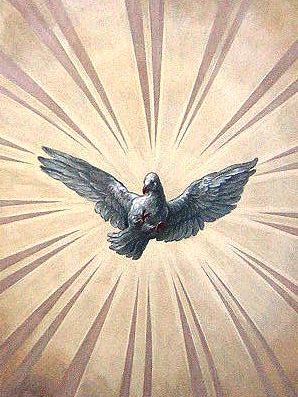
The pinnacle of Whit Sunday's story unfolds in the dramatic events recorded in the Acts of the Apostles. On this life-changing day of Pentecost, you'll uncover how the Holy Spirit descended upon the apostles, forever altering the course of Christianity. This divine intervention equipped Christ's followers with extraordinary abilities, most remarkably the gift of speaking in foreign languages, enabling them to spread their message across cultural and linguistic barriers.
The descent of the Holy Spirit manifested through powerful symbols that you can still recognize in Christian traditions today:
- Tongues of fire appeared above the apostles' heads, representing divine inspiration and spiritual enlightenment
- A mighty rushing wind filled the house, symbolizing the Holy Spirit's overwhelming presence
- The gift of tongues enabled clear communication across language barriers
- The dove, though not present at Pentecost, became a lasting symbol of the Holy Spirit's peace
Through this extraordinary event, you'll understand why Pentecost marks the birth of the Christian Church. The gift of the Holy Spirit emboldened the apostles to begin their worldwide mission, transforming them from uncertain followers into confident messengers of faith.
Symbols and Sacred Traditions
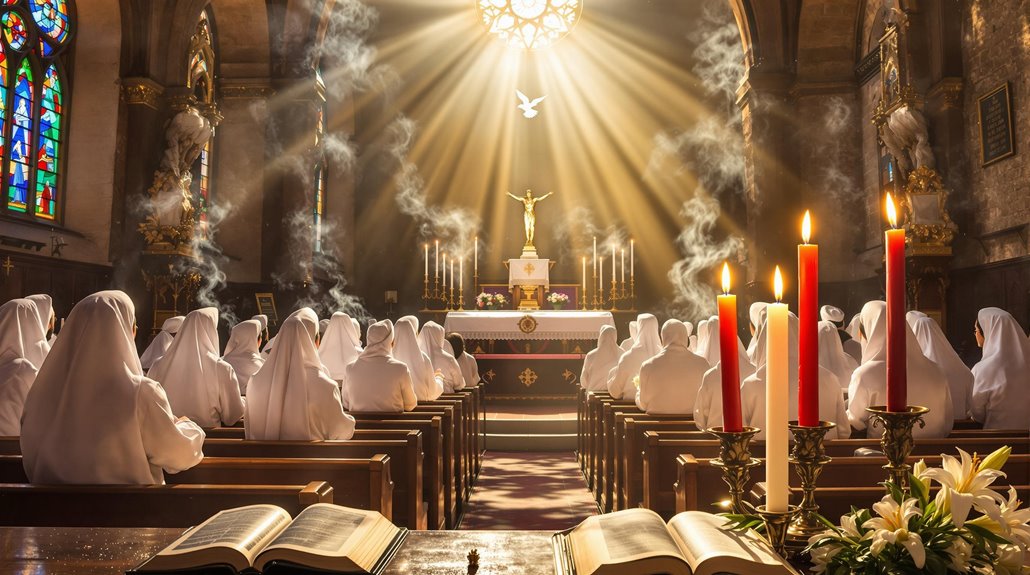
Sacred traditions mark Whit Sunday with rich symbolism that brings together both ancient and enduring customs. You'll find the Holy Spirit represented through powerful symbols: the dove soaring overhead, the rushing wind that filled the disciples' chamber, and the tongues of fire that descended upon Jesus's followers. These symbols remind you of the power of the Holy Spirit's presence during this sacred celebration.
In churches across the world, you'll witness newly baptized Christians wearing pristine white garments, a tradition that's been passed down through generations to symbolize spiritual purity and renewal. The customs extend beyond church walls, particularly in Northern England, where you can experience the vibrant Whit walks featuring church choirs and brass bands marching through the streets.
Throughout Whitsuntide, you'll encounter a blend of religious observance and community festivities. Traditional celebrations include Whitsun ales, Morris dancing, and village fêtes that bring communities together. These customs serve as a reminder of how spiritual traditions have woven themselves into the fabric of cultural life, creating a rich embroidery of faith and fellowship.
Modern Celebration Practices
Blending ancient traditions with contemporary life, modern Whit Sunday celebrations have evolved to meet today's spiritual needs while preserving their sacred essence. You'll find communities embracing both time-honored customs and fresh approaches to mark this significant day in the Christian calendar.
In many regions, you can still witness traditional parades called Whit walks, where brass bands lead processions through town centers, often accompanied by Morris dancing and communal singing. Churches continue to hold special services, making the day particularly meaningful for those choosing baptism or confirmation.
Here's how you can participate in modern Whit Sunday celebrations:
- Join community gatherings featuring brass bands and choral performances
- Decorate your home with seasonal greenery and flowers, reflecting nature's renewal
- Organize family picnics or festive meals that bring loved ones together
- Engage children through creative activities like crafting dove headbands
You'll notice how today's celebrations maintain their spiritual core while adapting to contemporary lifestyles. Whether you're attending a formal church service or participating in community events, Whit Sunday offers meaningful ways to connect with both faith and fellowship.
Global Religious Observances
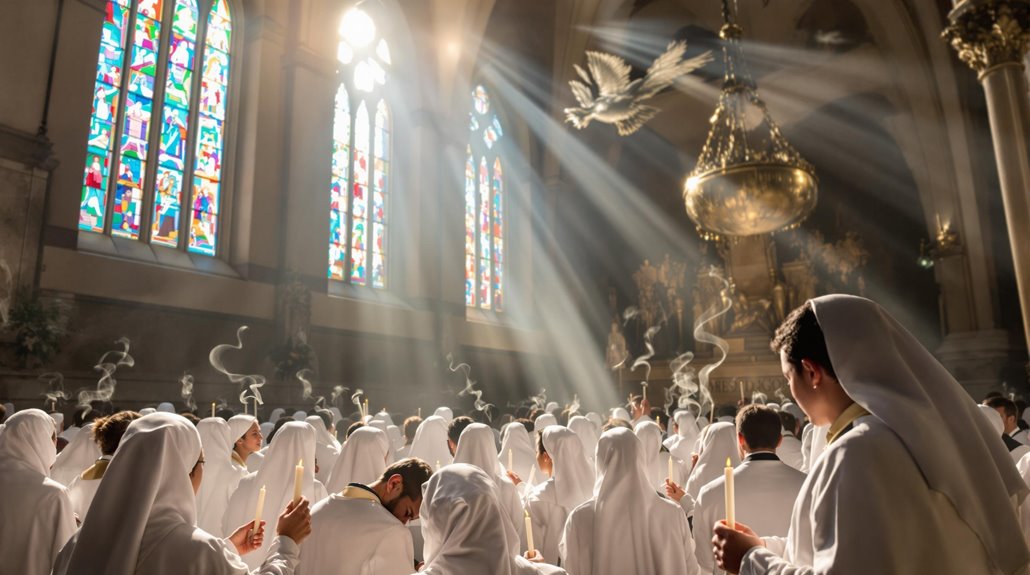
Across the globe, Whit Sunday unites diverse Christian communities in a shared submerge of the Holy Spirit's descent. You'll find Catholic, Protestant, and Orthodox churches marking this special day with their unique traditions, all rooted in the followers of Jesus receiving the Holy Spirit at Pentecost.
When you investigate different countries' observances, you'll notice how Whit Sunday's significance extends beyond church walls. In the UK, for instance, Whit Monday follows as a public holiday, allowing communities to prolong their celebrations. The Thy Kingdom Come prayer movement has added a contemporary dimension to these observances, connecting millions of Christians worldwide during the period from Ascension to Pentecost.
Pentecostal denominations particularly emphasize this celebration, as it represents the core of their spiritual identity. You'll see churches conducting special baptism services and confirmations, marking new believers' commitment to their faith. Whether you're in a grand cathedral or a small local church, you'll witness how this celebration transcends cultural boundaries, bringing together Christians who share in the remembrance of that metamorphic moment when, as ancient texts tell us, the Spirit descended upon the early church.
Cultural Impact Through History
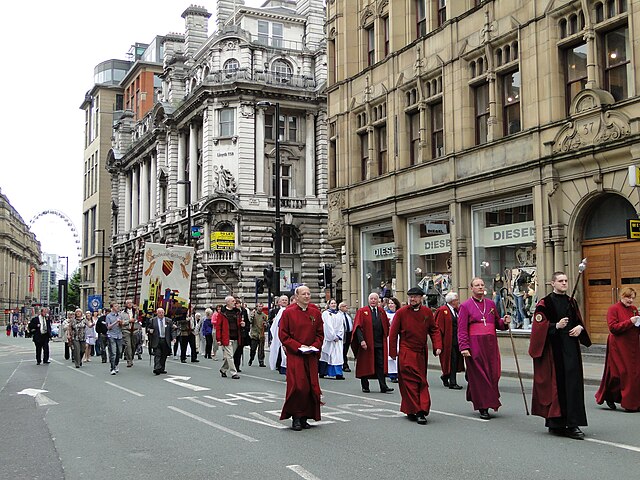
Image : Richerman, Whit walks Manchester, CC BY-SA 3.0
Throughout centuries of European history, Whit Sunday has woven itself into the cultural fabric far beyond its religious origins. You'll find its influence across various aspects of English society, from traditional Morris dancing to community fêtes that brought entire villages together. The term "Whitsun" itself comes from the white garments worn by those awaiting baptism, creating a visual tradition that's shaped countless celebrations.
When you investigate the cultural significance of Whit Sunday, you'll uncover these enduring impacts:
- The establishment of Whit Monday as a bank holiday in 1871, making celebrations accessible to working-class communities
- The emergence of Whitsun ales and festivals that became centerpieces of community life
- The creation of Whit walks in the North West, featuring brass bands and choirs that continue today
- The inspiration it provided to literary giants from Shakespeare to Plath
You can still witness this rich heritage in action, particularly in England's North West, where Pentecost celebrations maintain their traditional character. Through parades, pageants, and community gatherings, Whit Sunday's cultural influence continues to shape local identities and preserve historical connections.
Spiritual Meanings Today
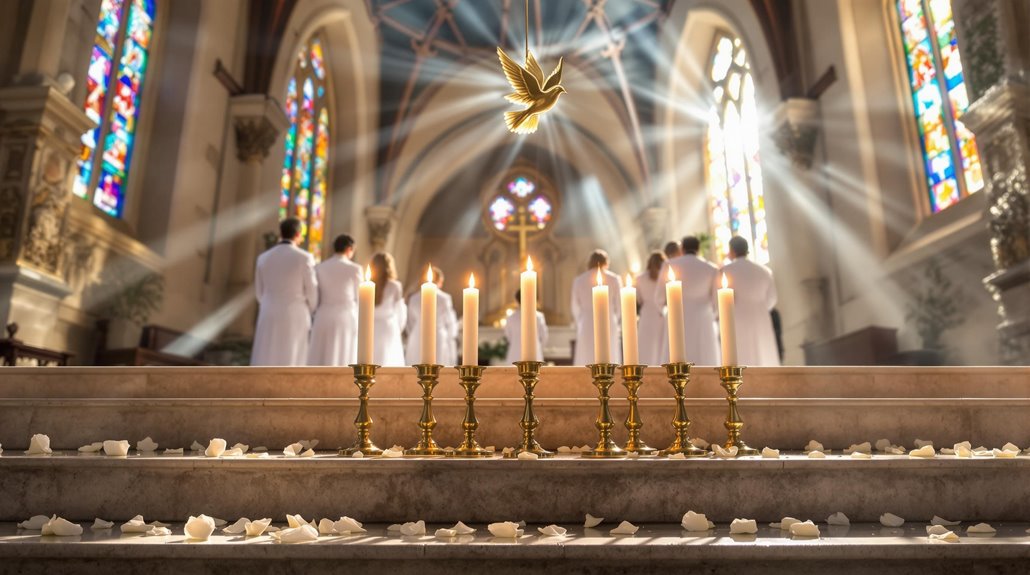
While Whit Sunday's cultural traditions have shaped communities for generations, its spiritual essence remains deeply meaningful to modern Christians. The celebration, associated with Pentecost, which comes from the Greek word for "fiftieth day," marks a transformative moment when the Holy Spirit descended upon Jesus Christ's followers.
Today, you'll find that Whit Sunday represents more than just a historical event - it's a living reminder of spiritual empowerment and divine guidance. In churches worldwide, you'll experience special services that emphasize the Holy Spirit's continuing work in believers' lives. The day's symbols carry profound meaning: tongues of fire represent spiritual awakening, while the dove symbolizes peace and divine presence.
When you participate in Whit Sunday services, you're connecting with a tradition that celebrates spiritual renewal and the universal nature of faith. Many congregations use this time for baptisms and confirmations, affirming their commitment to the teachings of Jesus Christ. The day reminds you that the Holy Spirit's power isn't confined to the past but continues to inspire, guide, and unite believers across cultural and linguistic boundaries in their spiritual quest.