
The Progesterone Link to Sleeping Disorders: What You Need to Know

Progesterone plays a crucial role in your sleep quality, and when levels are low, you'll likely experience disrupted sleep patterns. This hormone helps regulate your breathing, promotes relaxation, and naturally increases during your menstrual cycle's luteal phase. If you're having trouble sleeping, you might be dealing with a progesterone imbalance, especially if you're experiencing symptoms like hot flashes, night sweats, or persistent fatigue. Women face unique sleep challenges during pregnancy and menopause due to hormonal fluctuations. Understanding the connection between progesterone and sleep can help you identify and address these issues, opening the door to better sleep solutions.
Understanding Progesterone's Role in Sleep
Nearly everyone experiences sleep challenges at some point, but you might not realize how hormones like progesterone influence your sleep patterns. This natural hormone plays a vital role in promoting relaxation and enhancing sleep quality through its calming effects on your central nervous system.
When your progesterone levels rise during the luteal phase of your menstrual cycle, you'll likely experience better sleep with fewer sleep disturbances. This is particularly noticeable in the reduction of common symptoms like night sweats and hot flashes. If you're taking oral progesterone, your liver processes it in a way that creates metabolites specifically targeting GABA receptors, which further improves its sleep-promoting properties.
You might be interested to know that progesterone also helps stabilize breathing patterns by increasing respiratory drive, making it beneficial if you're dealing with sleep apnea. If you're experiencing menopausal symptoms or have conditions affecting your hormonal balance, like irregular menstrual cycles, progesterone therapy could greatly improve your sleep quality. Understanding this connection between progesterone and sleep can help you better address your sleep-related concerns with healthcare providers.
Signs of Low Progesterone
Identifying signs of low progesterone can help you understand why you're experiencing sleep difficulties. If you're noticing changes in your sleep patterns along with other symptoms, your progesterone levels might be the underlying cause. Watch for hot flashes and night sweats, which commonly occur during the menopausal transformation when hormonal fluctuations affect your body's temperature regulation.
You might also experience mood changes, decreased sex drive, and persistent fatigue throughout the day. These symptoms often accompany sleep problems and can create a cycle of poor rest and daytime exhaustion. If you have irregular menstrual cycles or polycystic ovary syndrome (PCOS), you're more likely to have low progesterone, which can further disrupt your sleep quality. The balance between estrogen and progesterone plays a vital role in maintaining healthy breathing patterns during sleep, and imbalances may contribute to sleep apnea symptoms.
Pay attention to signs like flushed skin, particularly if they occur alongside sleep disturbances. Since progesterone naturally calms your central nervous system, insufficient levels can make it harder for you to relax and maintain consistent sleep throughout the night.
Sleep Changes During Menstrual Cycles
Throughout your menstrual cycle, sleep quality fluctuates in response to changing hormone levels. You'll notice these changes most distinctly during two main phases: the follicular phase, when estrogen dominates, and the luteal phase, when progesterone levels peak. During the follicular phase, higher estrogen can affect your REM sleep patterns, potentially altering your sleep structure.
When you enter the luteal phase, enhanced progesterone levels typically improve your sleep in several ways. You'll likely experience decreased sleep latency, meaning you'll fall asleep more quickly. The increased progesterone also helps reduce upper airway resistance by relaxing your upper airway muscles, which can lead to better breathing patterns while you sleep.
Your hormones work together to influence various sleep parameters throughout your menstrual cycle. If you're tracking your sleep patterns, you might notice better overall sleep quality during the luteal phase when progesterone is at its peak. Understanding these cyclical changes can help you better prepare for and adapt to your body's natural sleep fluctuations, as the relationship between your reproductive hormones and sleep is deeply interconnected.
Pregnancy and Sleep Disruptions
Many expectant mothers face dramatic sleep changes during pregnancy, starting with the overwhelming urge to nap in the first trimester. You'll notice this happens because progesterone levels surge immensely during early pregnancy, making you feel unusually drowsy during the day.
As you progress into your third trimester, you'll encounter a different set of sleep challenges. Frequent urination interrupts your sleep multiple times per night, while breathing during sleep becomes more difficult. You might also experience leg cramps and restless leg syndrome, making it harder to find a comfortable sleeping position. If you're dealing with reflux and snoring, try elevating your head while sleeping to reduce these symptoms.
The statistics are telling: if you're pregnant, you have an 84% chance of experiencing sleep problems several nights weekly, and 30% of expectant mothers rarely get a good night's sleep. Pay special attention if you develop sleep apnea in pregnancy, as it increases your risk of preeclampsia. Your healthcare provider might recommend early nasal CPAP therapy if you show signs of sleep apnea. While these sleep disruptions are common, they shouldn't be ignored, especially if they profoundly impact your rest.
Menopause and Sleep Quality
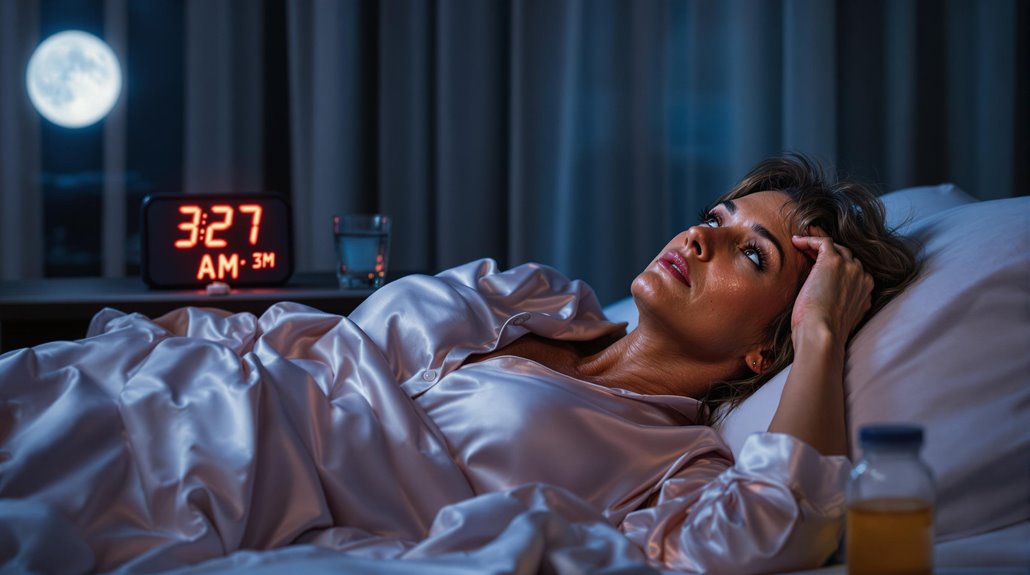
The menopausal shift brings substantial changes to your sleep patterns, largely due to declining progesterone levels. As you move through menopause, you'll likely experience dramatic fluctuations in both progesterone and estrogen, which can significantly impact your sleep quality. You might find yourself dealing with disruptive symptoms like hot flashes and night sweats, making it harder to get restful sleep.
What's particularly concerning is that menopausal women face an increased risk of developing sleep apnea and other sleep-disordered breathing conditions compared to their premenopausal counterparts. These sleep disturbances can leave you feeling exhausted and affect your daily functioning. However, you have several options to improve your sleep during this journey. Hormone replacement therapy can help stabilize your progesterone levels and reduce sleep-disrupting symptoms. Additionally, you can adopt lifestyle changes to enhance your sleep quality. Consider incorporating regular exercise into your routine, developing effective stress management techniques, and avoiding sleep disruptors like caffeine and alcohol, especially in the evening hours. These combined approaches can help you maintain better sleep patterns as your body adapts to hormonal changes.
Treatment Options and Sleep Solutions
Effective sleep treatment strategies often begin with hormone replacement therapy for menopausal women experiencing disrupted sleep. If you're struggling with hot flashes and night sweats that keep you awake, natural progesterone supplementation can substantially improve your sleep quality. The oral form of progesterone is particularly effective, as it's metabolized through the liver, maximizing its sleep-promoting benefits.
For women with sleep apnea, progesterone therapy offers a dual benefit. Not only can it help regulate your breathing patterns by increasing respiratory drive, but it also stabilizes your sleep cycle. If you're dealing with irregular menstrual cycles or polycystic ovary syndrome (PCOS), progesterone therapy may help normalize your hormone levels and improve sleep disruptions related to these conditions.
Before starting any hormone therapy, you'll need to consult your healthcare provider, especially if you're taking anticoagulants or corticosteroids. They'll evaluate your medical history, current medications, and potential pregnancy status to determine if progesterone supplementation is right for you. Your doctor can also help monitor your progress and adjust dosages to optimize your sleep outcomes while minimizing any potential side effects.