
The Different Types of Naps and Their Health Benefits

Different types of naps can markedly enhance your health and performance throughout the day. Power naps lasting 10-20 minutes provide quick rejuvenation and elevated focus without grogginess, while recovery naps of 60-90 minutes help repay sleep debt and restore alertness. You'll benefit from prophylactic naps before night shifts, and appetitive naps can improve your mood and reduce fatigue. For the best results, choose your nap type based on your specific needs: quick energy augmentation, recovery from sleep loss, or preparation for anticipated sleep deprivation. Understanding these napping strategies can reshape how you approach your daily rest.
Understanding Nap Duration
Throughout the day, your body responds differently to naps of varying lengths. When you're feeling tired at work, the time you spend napping can considerably impact your health and productivity. Short naps of 15-30 minutes provide quick benefits without leaving you groggy when you wake up, making them ideal for busy workdays.
If you've got more time to spare, longer naps around 90 minutes let you complete a full sleep cycle. However, you might feel disoriented upon waking due to sleep inertia, so plan accordingly. Power naps lasting just 10-20 minutes can give you an impressive enhancement in energy and mental performance without disrupting your nighttime sleep schedule.
When you're dealing with sleep debt from a poor night's rest, recovery naps help restore your alertness, though they won't completely fix chronic sleep deprivation. If you know you'll face extended periods without proper sleep, consider taking proactive naps of several hours beforehand. Understanding these different nap durations helps you choose the right type for your situation, maximizing the benefits while minimizing potential downsides to your daily routine and overall health.
Common Types of Naps
Today's sleep science recognizes several distinct types of naps, each serving unique purposes for your body and mind. You'll find that different napping strategies can address specific needs, from enhancing alertness to making up for sleep deprivation.
When you need quick rejuvenation, power naps lasting 10-20 minutes are your best choice. These short breaks can sharpen your focus without leaving you groggy. For deeper restoration, recovery naps of 60-90 minutes allow you to cycle through complete sleep stages, helping consolidate memories and repay sleep debt.
If you're planning for a challenging schedule, proactive naps can prepare your body in advance. Shift workers often take these longer naps to combat anticipated sleep deprivation. You might also enjoy appetitive naps purely for pleasure, which can improve your mood and reduce fatigue. For maximum alertness, try coffee naps by drinking caffeine right before a 20-minute snooze.
Your mind clearing like a fog lifting on a sunny morning, your energy returning like a recharged battery, and your focus sharpening like a newly tuned instrument.
Choose the type of nap that best matches your needs and schedule to optimize your daily performance.
Power Naps Explained
Taking a power nap might be the most efficient way to recharge your body and mind during a busy day. These short naps, typically lasting 10-20 minutes, can significantly enhance your alertness and productivity without causing sleep inertia - that groggy feeling you often get after longer naps.
During a power nap, you'll experience just enough rest to boost your cognitive performance and improve reaction times, but not so much that you'll disrupt your nocturnal sleep patterns. You'll find that these brief rest periods can keep you energized for several hours, making them particularly helpful during your workday. If you're among the sleep deprived, such as shift workers or athletes with irregular schedules, power naps can be especially beneficial in maintaining your mental and physical performance.
The key to effective power napping lies in its brevity. By keeping your nap under 20 minutes, you'll avoid falling into deeper sleep stages that could leave you feeling disoriented upon waking. You can strategically schedule these short breaks to combat afternoon fatigue and maintain high productivity levels throughout your day.
Benefits of Recovery Naps
While power naps offer quick energy enhancements, recovery naps serve a different purpose in your sleep routine. When you're experiencing sleep deprivation, these longer naps can help counteract the effects of insufficient nighttime sleep. Recovery naps provide restorative sleep that can critically improve your alertness and reduce feelings of fatigue and confusion.
If you're sleep-deprived, you'll particularly benefit from recovery naps if you fall into these categories:
- New parents adjusting to interrupted sleep patterns due to childcare duties
- Athletes requiring additional rest to support physical recovery and performance
- Older adults dealing with changing sleep patterns or sleep disruptions
While recovery naps can offer temporary relief from sleep deprivation, it is crucial to understand they're not a long-term solution for chronic poor sleep. Think of them as a helpful tool to manage sleep debt, but not a replacement for quality nighttime sleep. If you find yourself consistently relying on recovery naps, it is vital to examine and address the underlying causes of your poor sleep patterns. This might involve adjusting your sleep schedule, improving your sleep environment, or consulting a healthcare provider.
Strategic Napping for Shift Workers

Shift workers regularly face unique challenges in maintaining healthy sleep patterns due to their non-traditional schedules. Working overnight shifts can lead to sleep deprivation and an increased risk of health problems, making strategic napping essential for your well-being and safety.
If you work overnight shifts, you'll want to nap before your shift begins. Taking a prophylactic nap of 2-3 hours prior to work can help you maintain alertness throughout your shift and make up for lost sleep. Studies focusing on nurses and nurse aides have shown that 1.5-hour naps before night shifts considerably improved their alertness and performance.
During your shift, if you have enough time for breaks, consider taking power naps of 10-20 minutes. These brief naps increase your energy levels without leaving you groggy. To maximize the benefits of your napping strategy, establish a consistent routine and create a comfortable sleep environment. This might mean finding a quiet break room or keeping a sleep mask and earplugs handy. By incorporating strategic napping into your work schedule, you'll better manage fatigue and reduce your risk of accidents and long-term health issues.
Coffee Naps and Energy Boost
For those seeking an extra jolt of energy, coffee naps combine the benefits of caffeine and short rest periods into a powerful fatigue-fighting technique. By drinking coffee right before taking a 20-minute short nap, you'll maximize both your alertness and physical performance. The science behind this strategy is simple: caffeine takes about 15 minutes to kick in, allowing you to rest while the stimulant begins working.
To get the most out of your coffee nap:
- Quickly drink a cup of coffee
- Find a quiet spot and set a 20-minute alarm
- Close your eyes and drift off, even if you don't fully sleep
This combination is particularly effective for improving mental performance and maintaining productivity throughout your day. If you're experiencing sleep deprivation or working irregular hours, you'll find coffee naps especially beneficial. Research shows they're remarkably effective at enhancing driving performance and reducing accident risks compared to either coffee or napping alone. Your energy levels will get a substantial increase as the caffeine binds to more receptors during your rest period, leaving you feeling more refreshed and alert when you wake up.
Optimal Nap Times
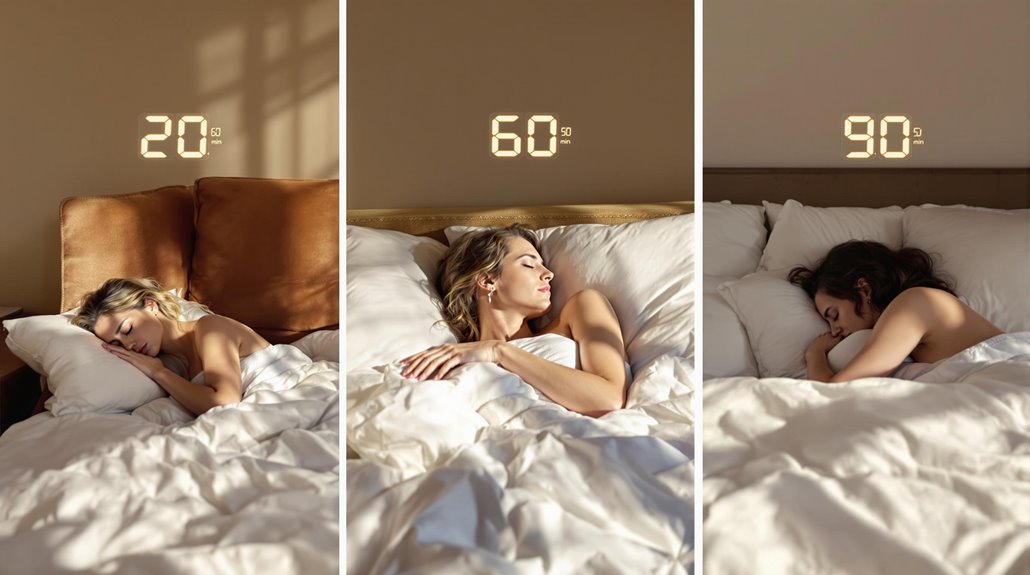
Timing your naps correctly makes all the difference between feeling refreshed or groggy afterward. For most people, the best time to take a nap is during the post-lunch dip, typically before 3 PM. This natural dip in energy aligns with your body's circadian rhythm, making it easier to fall asleep and wake up refreshed.
To help maintain your nighttime sleep schedule, you'll want to take power naps at least 8 hours before your regular bedtime. While many adults take naps whenever they can squeeze them in, scheduling your short daytime nap strategically can make your day more productive. Choose a cool, dark environment free from distractions to maximize your nap's effectiveness.
Keep in mind that longer naps aren't always better. Stick to 20-30 minutes to avoid entering deeper sleep stages that can leave you feeling disoriented. If you're finding it difficult to determine your ideal nap time, try tracking your energy levels throughout the day. This will help you identify your personal post-lunch dip and optimize your napping schedule accordingly.
Creating Your Perfect Nap Environment
Setting up the ideal nap environment can make or break your daytime rest. Whether you're planning to take a nap for light sleep or hoping to enter deep sleep, your surroundings play a pivotal role in your nap time success. Creating the right atmosphere helps you fall asleep faster and maintains your overall sleep schedule.
To optimize your nap space for different types of naps, focus on these essential elements:
- Darkness - Install blackout curtains or use a sleep mask to block out light, signaling to your brain that it's time to transition from wakefulness to REM sleep
- Sound control - Minimize disruptions with earplugs or create a consistent audio backdrop using a white noise machine
- Temperature and comfort - Keep your nap area cool and ensure your sleeping surface supports proper rest
Establish a consistent pre-nap routine that includes light stretching or deep breathing exercises. This routine becomes one dependable way to prepare your mind and body for sleep. When you wake up, expose yourself to bright light immediately to help you feel alert and refreshed, preventing that groggy feeling that can sometimes follow a nap.
Health Impact of Regular Napping
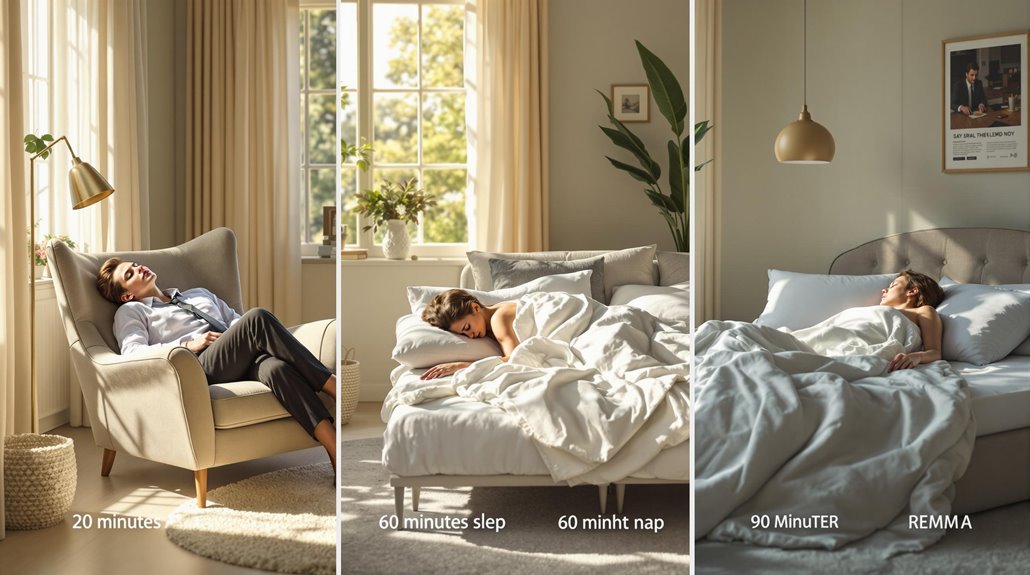
Through years of scientific research, the health benefits of regular napping have become increasingly clear. If you're struggling with chronic sleep issues, naps can help restore your body's natural rhythms while providing significant health advantages. Research shows that napping during the day reduces your risk of cardiovascular problems, including the chances of intracranial aneurysm rupture and high blood pressure, particularly in women.
When you nap well, you're not just revitalizing your mind - you're supporting your immune system and potentially decreasing your risk of developing type 2 diabetes and metabolic syndrome. The health content of a good sleep schedule that includes strategic napping can lead to reduced stress levels and improved physical performance. However, it is crucial to recognize that poor sleep habits, including excessive napping, can be counterproductive, especially for older adults. Too much daytime sleeping might disrupt your nighttime rest quality. The key is finding the right balance - short, regular naps can provide substantial health benefits without interfering with your primary sleep schedule. By incorporating well-timed naps into your routine, you're investing in both your immediate and long-term health.
Napping Tips for Better Results
For ideal napping results, implementing the right strategies can make a significant difference in how refreshed you feel afterward. The Sleep Foundation recommends that adults take their naps in a specific environment to maximize benefits. The type of nap you choose matters less than how you set yourself up for success.
To wake up feeling refreshed and avoid disrupting your nighttime sleep patterns, follow these essential practices:
- Select a cool, dark room (around 65°F) with minimal noise, using earplugs or white noise if needed
- Set an alarm for 10-20 minutes, as naps longer than 30 minutes can lead to sleep inertia
- Choose a spot where you can fully recline, preferably on a couch or bed with a light blanket
Schedule your preferred nap between 1-3 PM when your body naturally experiences an energy dip. While a nap can be helpful at other times, this window prevents interference with nighttime sleep. After waking, expose yourself to bright light, as this Napping reverses grogginess and signals to your body it's time to be alert. Remember, you're unlikely to enter REM sleep during a short nap, which is exactly what you want for optimal restoration.