
Sleeping Routines in Shared Rooms: How to Create Harmony

Creating harmony in shared bedrooms starts with establishing clear personal zones using room dividers, curtains, or strategic furniture placement. You'll need to implement staggered bedtimes and consistent routines that respect each child's sleep schedule. Set up individual storage solutions with color-coded bins and labeled areas to minimize conflicts over belongings. Use white noise machines and proper lighting control to manage sleep disruptions, and create personalized wind-down rituals that don't disturb siblings. Remember to establish and enforce clear boundaries while maintaining flexibility. The key to lasting bedroom harmony lies in these thoughtful organizational and behavioral strategies.
Setting Up Personal Sleep Zones
Creating distinct personal spaces is essential when children share a bedroom. Your first step is to establish clear boundaries using room dividers, curtains, or strategically placed bookcases. These physical separators help define individual sleep spaces while maintaining a sense of privacy in the shared space.
Let your children take an active role in personalizing their designated areas. When kids help design their sleep spaces, they develop a stronger sense of ownership and respect for the arrangement. Encourage them to choose their own bedding, decorative elements, and lighting options that reflect their personalities while keeping the overall room cohesive.
To maximize floor space while maintaining separate areas, consider installing bunk beds or positioning twin beds on opposite sides of the room. This arrangement creates natural divisions and gives each child their personal space to retreat to when needed. As you set up these zones, establish clear guidelines about respecting boundaries and personal belongings. Make sure your children understand the importance of treating each other's areas with consideration, which helps prevent conflicts and promotes harmony in their shared living environment.
Managing Different Sleep Schedules
When children in shared rooms follow different sleep schedules, establishing clear routines becomes essential for peaceful nights. In a shared space, you'll need to create a structured approach that respects each child's individual sleep habits while maintaining harmony.
Start by implementing staggered bedtimes based on your children's ages and sleep requirements. A sleep consultant might recommend using visual cues like sleep training clocks to help each child understand their designated bedtime and wake-up schedule. You can set up a designated area for quiet activities where the awake sibling can play without disturbing the sleeping one.
To minimize disruptions, incorporate white noise machines or soft background sounds that mask typical household noises. Teach your children the importance of respecting each other's rest by establishing "quiet time" rules when one sibling is sleeping. You'll find success by encouraging self-soothing techniques and creating consistent bedtime rituals for each child. Remember to maintain these routines consistently, even on weekends, to help your children adapt to their different sleep schedules while sharing a room effectively.
Creating Effective Bedtime Boundaries
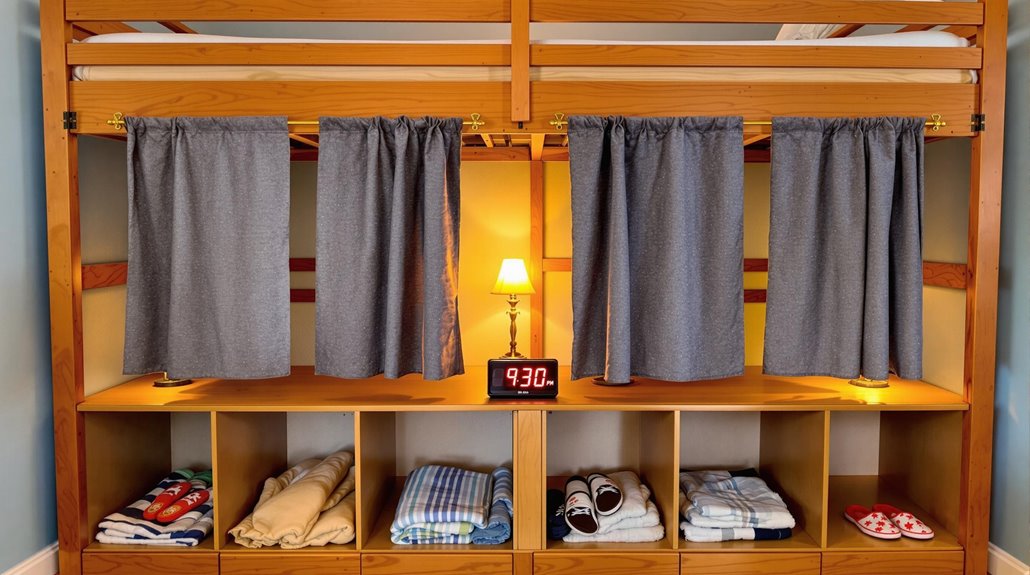
Strong bedtime boundaries serve as the foundation for peaceful shared sleeping arrangements. Through open communication and clear expectations, you'll help your children develop a sense of responsibility for their sleep habits. Sleep consultants often recommend establishing visual cues, like dimmed lights or sleep training clocks, to signal bedtime approaching. Create a neutral decor that promotes relaxation while maintaining consistent rules about noise levels and activities.
To effectively implement bedtime boundaries in shared rooms, consider these essential strategies:
- Set specific "lights out" times and stick to them consistently, helping children understand when quiet time begins
- Create individual wind-down routines that don't disturb siblings, such as reading with book lights or listening to soft music with headphones
- Teach children self-soothing techniques they can use independently when having trouble falling asleep
- Establish clear consequences for boundary violations while maintaining a supportive, understanding approach
- Use visual dividers or designated spaces within the room to help define personal sleep zones
Remember to adjust these boundaries as your children grow, always maintaining open dialogue about sleep needs and concerns. When everyone understands and respects these limits, shared rooms become peaceful spaces for rest.
Privacy Solutions That Work
Privacy converts shared bedrooms from potential conflict zones into harmonious living spaces. When you're working with a shared space, implementing physical barriers like strategically placed room dividers, curtains, or screens can instantly create distinct personal areas for each occupant. These simple solutions help maintain individual territories while respecting the room's overall flow.
Sharing a bedroom doesn't mean sacrificing personal comfort. You'll find that bunk beds or loft beds equipped with built-in storage and shelving give each child their own defined zone. To enhance the sense of privacy further, consider using noise-cancelling headphones or white noise machines to reduce auditory distractions between roommates.
Create designated areas for specific activities within the room. Set up separate study corners, sleeping spaces, and play zones to minimize interruptions and conflicts. This clear division helps establish natural boundaries that roommates can easily understand and respect. Remember to involve everyone in creating and maintaining privacy rules. Discuss acceptable noise levels, quiet hours, and personal space boundaries. When each person feels they have control over their individual space within the shared environment, they're more likely to respect others' privacy needs.
Organizing Shared Storage Space

Smart storage organization builds upon established privacy measures in shared bedrooms. When you're managing a room for multiple siblings, implementing effective storage solutions becomes crucial for maintaining harmony. Start by designating specific zones for each child's toys and belongings, using modular shelving units and labeled containers to create clear boundaries.
To maximize space efficiency in shared rooms while respecting individual needs, consider these essential storage strategies:
- Install adjustable shelving systems that can grow and adapt as your children's storage requirements change
- Use color-coded bins and baskets to help each child quickly identify their belongings
- Create personalized storage nooks with hanging organizers for frequently used items
- Implement a rotation system for shared storage spaces to ensure equal access
- Set up clear labeling systems that even younger siblings can understand
Encourage your children to participate in organizing their shared bedrooms by letting them choose storage accessories that reflect their personalities. Establish regular cleaning routines and teach them to maintain their designated spaces. This collaborative approach to storage management helps prevent conflicts while developing responsibility and respect for shared living spaces.
Addressing Common Sleep Disruptions
Four common sleep disruptions can markedly impact rest quality in shared rooms: snoring, tossing and turning, blanket hogging, and mismatched sleep schedules.
When one partner snores, it can greatly disrupt the other's sleep quality in your shared space. You can address this by trying anti-snoring devices or, if necessary, creating separate sleeping arrangements. For tossing and turning issues, invest in a mattress specifically designed to minimize motion transfer, which will help both partners maintain uninterrupted sleep throughout the night.
To solve blanket hogging problems, consider using separate blankets or duvets. This simple solution allows each person to control their temperature comfort without affecting their partner. If you're dealing with different sleep schedules, you might want to explore using an adjustable bed base, which lets one partner read or watch TV while the other sleeps.
Remember that finding effective solutions to these disruptions is vital for maintaining a harmonious sleeping environment. You can create a more peaceful bedroom atmosphere by addressing each issue promptly and being willing to adapt your sleeping arrangements as needed.
Fostering Healthy Sibling Dynamics

Creating a harmonious shared bedroom environment requires careful attention to sibling fluidity and relationships. When siblings share a room, you'll need to balance individual needs and preferences while cultivating positive interactions. Establishing clear guidelines for sleep schedules, personal space, and privacy needs helps minimize conflicts and creates a supportive atmosphere where both children can thrive.
To maintain peace between siblings sharing a room, consider implementing these essential strategies:
- Set up designated personal zones within the shared space, allowing each child to express their individuality
- Create a flexible routine that accommodates different sleep patterns while respecting both children's needs
- Encourage open dialogue about privacy needs and establish signals or systems for quiet time
- Involve both siblings in bedroom design decisions to promote ownership and mutual respect
- Schedule regular check-ins to address any emerging concerns before they escalate
Remember that sharing a bedroom can actually strengthen sibling bonds when managed thoughtfully. By maintaining consistent communication and showing empathy toward each child's preferences, you'll help your children develop meaningful conflict resolution skills while creating a peaceful sleeping environment that works for everyone.
Noise Management Strategies
Managing noise effectively is crucial when siblings share a bedroom, as sound disruptions can greatly impact sleep quality and next-day functioning. In a shared bedroom, especially one with bunk beds, implementing sound management strategies cultivates a sense of respect and consideration between siblings who may have different sleep schedules.
You'll find that white noise machines help create a consistent sound barrier, effectively masking disruptive noises that could wake your children. Establish clear quiet time rules after a designated hour, and help your children develop practical solutions like using headphones for personal entertainment. When siblings need to use shared devices like TVs or music players, create a fair rotating schedule to prevent conflicts and sleep interruptions.
Teaching your children self-soothing techniques and conflict resolution skills will equip them to handle noise-related issues independently. Encourage them to communicate their needs respectfully and work together to find compromises. By implementing these noise management strategies, you'll help create a peaceful sleeping environment where both siblings can rest undisturbed, leading to better sleep quality and improved sibling relationships.
Temperature and Lighting Balance

Inside a shared bedroom, balancing temperature and lighting preferences becomes a delicate yet essential task for harmonious sleep. You'll need to address both siblings' comfort levels while maintaining a sleep environment that works for everyone. By implementing adjustable solutions and encouraging open communication, you can create a space that meets each child's unique needs.
To effectively manage your shared space, consider these essential strategies:
- Install individual reading lamps and dimmable lighting to accommodate different lighting needs and bedtime schedules
- Use adjustable bedding, allowing each child to regulate their own temperature without affecting their sibling
- Position fans or space heaters strategically to create temperature zones that satisfy different temperature preferences
- Hang blackout curtains or provide sleep masks for light-sensitive children who need complete darkness
- Create a lighting schedule that includes designated quiet times and gradual dimming for bedtime routines
Remember that finding the right balance often requires experimentation and flexibility. When siblings actively participate in decisions about their sleep environment, they're more likely to respect each other's preferences and maintain a peaceful atmosphere that promotes restful sleep.
Establishing Morning Wake-Up Routines
Just as nighttime routines shape peaceful evenings, morning wake-up routines set the tone for successful days in shared bedrooms. When siblings share a room, mornings can present unique challenges that require thoughtful planning and consistent execution.
Start by investing in wake-up lights or gentle alarm clocks that'll rouse each child at staggered intervals within the room. This approach helps minimize disruptions and allows each child to express their independence as they begin their day. Sharing tips with your children about respecting others' wake-up times will cultivate a sense of consideration among siblings.
Create visual schedules that outline morning tasks, and provide each child with their own personalized checklist. These tools embolden children to track their progress and develop self-regulation skills. You'll find that when children can monitor their own morning routines, they're more likely to stay focused and complete tasks efficiently.
Consider implementing a reward system for consistent wake-ups and completed morning routines. This positive reinforcement helps establish lasting habits and encourages cooperation. Remember to adjust the schedule periodically as your children's needs evolve, ensuring the routine remains effective for everyone sharing the space.
Mediating Nighttime Conflicts
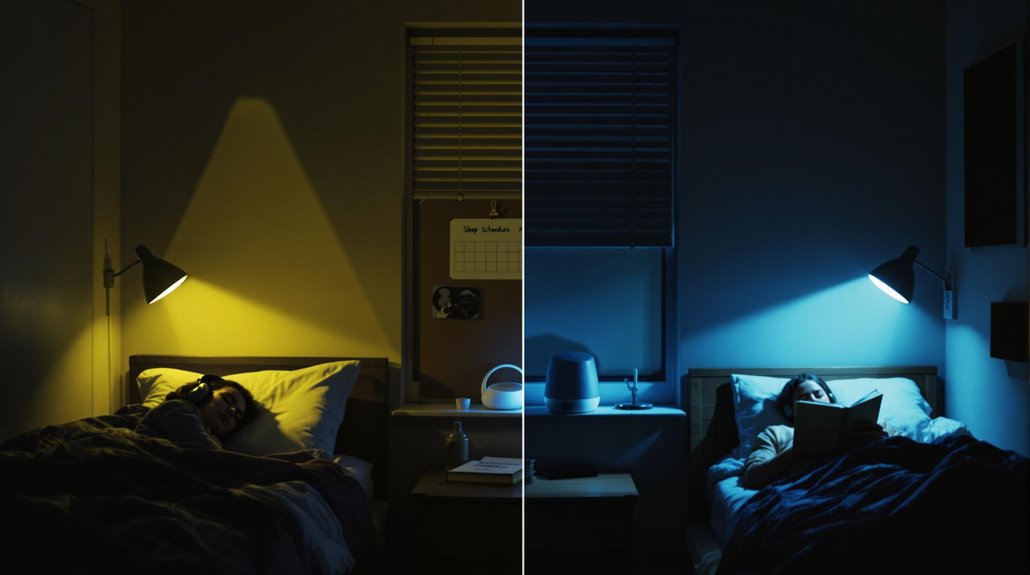
Nighttime harmony in shared bedrooms hinges on proactive conflict management and clear boundaries. While separate rooms might seem like an easy solution, creating a harmonious shared sleeping space is possible with the right strategies. Help them feel secure by implementing consistent rules and using visual aids like sleep training clocks to signal bedtime approaching.
To guarantee each child gets adequate rest, consider staggering bedtime schedules and designating one side of the room for each sibling. White noise machines can mask disruptive sounds and create peaceful sleeping environments for everyone.
- Use "quiet time" hand signals that siblings can use to communicate when they need less noise
- Set up individual reading corners with soft book lights for independent wind-down time
- Establish a rotating schedule for choosing bedtime stories to prevent arguments
- Create a reward system for following bedroom rules and respecting sleep boundaries
- Install dimming night lights that help shift from playtime to sleep time
When conflicts arise, stay calm and remind children of the established rules. Encourage them to practice conflict resolution skills, such as taking turns and using indoor voices during bedtime routines. These consistent approaches will help promote respect and understanding between siblings sharing sleeping quarters.
Building Positive Sleep Habits
Through consistent routines and clear expectations, building positive sleep habits in shared rooms becomes achievable for siblings. When you're establishing routines, start by setting fixed bedtimes and wake-up times that work for all children sharing a room. Visual sleep training clocks can help your children understand when it's appropriate to get out of bed, reducing early morning disruptions.
Setting boundaries is indispensable for peaceful coexistence. Implement clear rules about respecting others' sleep space and staying in bed during designated sleep times. Support these rules by providing comfort items like special blankets or stuffed animals that help each child self-soothe when it's time to rest. Additionally, incorporate calming bedtime activities such as quiet reading or gentle music to help your children wind down naturally.
Teaching conflict resolution skills plays a decisive role in maintaining positive sleep habits. Guide your children in addressing nighttime disturbances respectfully and finding solutions that work for everyone. When siblings understand how to handle disagreements and respect each other's sleep needs, they're more likely to maintain healthy sleep patterns and create a harmonious shared sleeping environment.