Sleep Nutrition: Foods That Help or Harm Your Sleep Quality
Your food choices can make or break your sleep quality. You'll sleep better when you eat foods rich in melatonin and tryptophan, like tart cherries, whole grains, and dairy products. Avoid alcohol, which fragments sleep and worsens sleep apnea symptoms. Skip caffeine, tyramine-rich foods, and heavy meals close to bedtime. Instead, opt for sleep-friendly snacks like whole-grain cereal with milk or crackers with cheese about 1-2 hours before bed. Time your last main meal at least 4 hours before sleeping. Understanding these nutritional choices will alter your nightly rest into the restorative experience you deserve.
Understanding Sleep-Friendly Foods
Three key nutrients - melatonin, serotonin, and tryptophan - work together to regulate your sleep-wake cycle. To optimize your sleep quality, you'll want to focus on foods that naturally contain or promote these essential compounds.
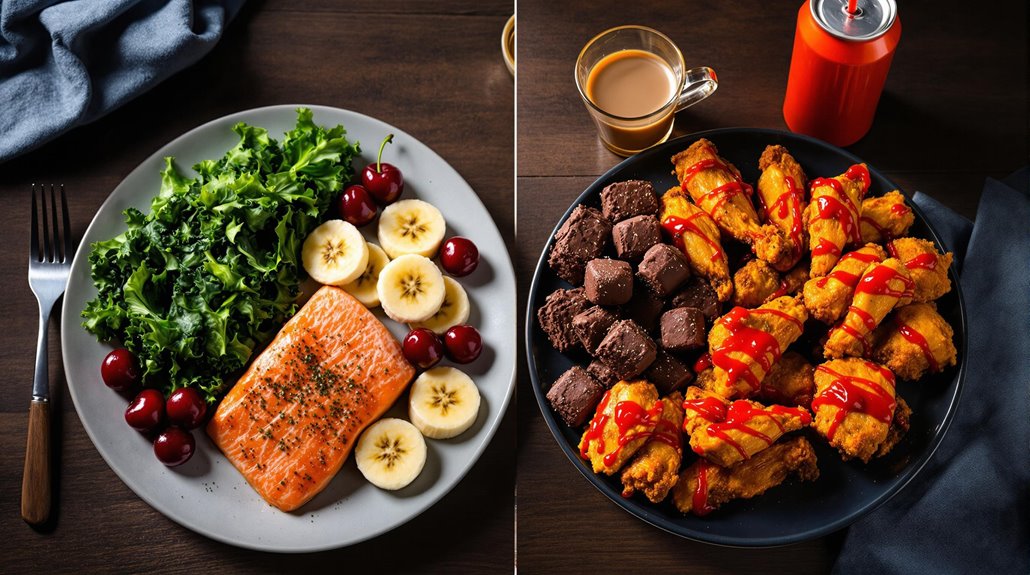
Tart cherry juice stands out as a powerful sleep aid because it's rich in melatonin, the hormone that signals your body it's time to rest. You can enhance your body's natural melatonin production by incorporating carbohydrate-rich foods like cereal, nuts, and crackers into your evening routine. These foods amplify both serotonin and melatonin levels, helping you fall asleep more easily.
Don't overlook the importance of fatty fish and dairy products in your sleep nutrition plan. These foods provide melatonin and other sleep-supporting nutrients that can improve your overall sleep quality. You'll also benefit from establishing consistent meal times and avoiding heavy meals before bed. Remember to steer clear of sleep disruptors like saturated fats, refined carbs, alcohol, and caffeine in the evening hours. By choosing the right foods and timing your meals appropriately, you're setting yourself up for better sleep quality and more restful nights.
Alcohol's Impact on Rest
While many people believe alcohol helps them sleep better, the reality is quite different. Although you might fall asleep quickly and experience deep sleep initially after drinking alcohol, its effects wear off during the night, disrupting your sleep quality. When alcohol leaves your system, it fragments your sleep and disturbs the natural sleep-wake cycle, leading to poor rest and daytime sleepiness.
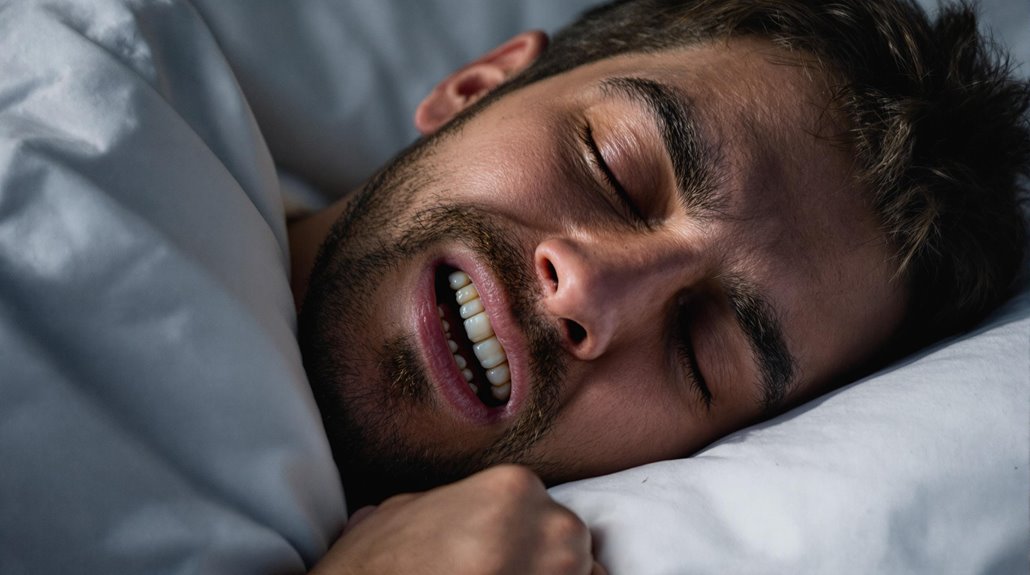
If you're dealing with sleep disorders, alcohol can make your situation worse. It's particularly problematic for people with sleep apnea, as drinking can intensify symptoms and create additional health risks. You might also experience increased instances of sleepwalking, sleep talking, and memory issues when drinking before bed.
Instead of reaching for alcohol to help you sleep, consider natural alternatives like tart cherries, which contain sleep-promoting melatonin. Regular alcohol consumption before bedtime creates a cycle of disrupted sleep that's hard to break. You might think you're getting good rest because you fall asleep quickly, but the overall quality of your sleep suffers enormously. To improve your sleep, it's best to avoid alcohol, especially in the hours leading up to bedtime.
When and What to Eat
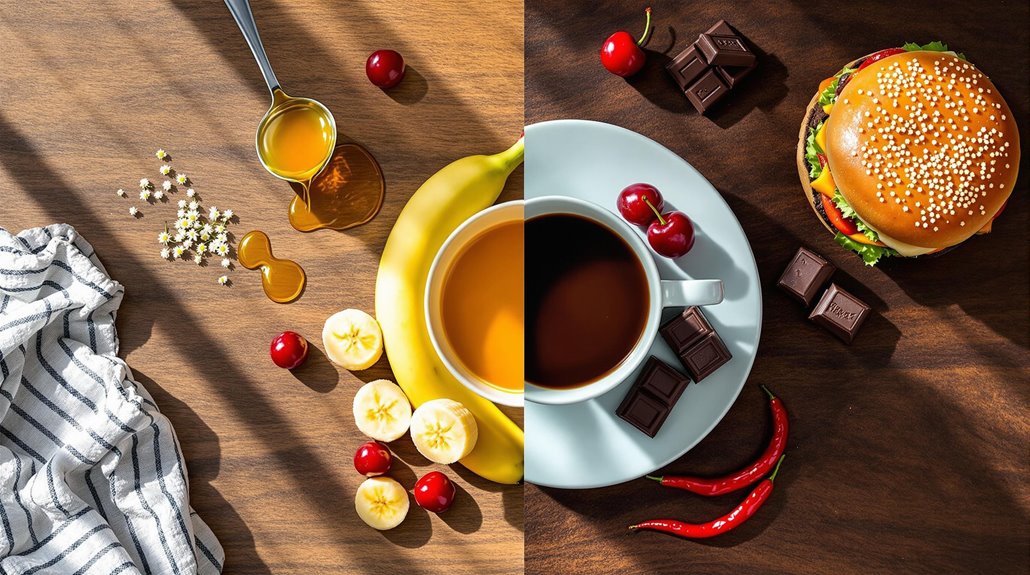
Beyond avoiding alcohol before bed, making smart choices about your meal timing and food selections plays a key role in sleep quality. Your eating schedule directly impacts your sleep patterns, so it's essential to finish your last main meal at least 4 hours before bedtime. If you're hungry closer to sleep, opt for a small, balanced snack instead of high-fat foods or spicy foods, which can trigger acid reflux and disrupt your natural sleep cycle.
To optimize the quality of your sleep, consider these dietary guidelines:
- Choose sleep-promoting foods like whole grains, oatmeal, and milk, which amplify your body's production of sleep-inducing hormones
- Avoid caffeine in any form during the latter part of your day, as even small amounts can interfere with falling asleep
- Skip heavy, protein-rich meals close to bedtime since they take longer to digest and may prevent restful sleep
Remember that what you eat is just as important as when you eat it. A light evening snack combining carbohydrates with modest amounts of protein and healthy fats can support better sleep, but timing is everything - don't wait until you're lying in bed to have that bedtime snack.
Hidden Sleep-Disrupting Ingredients
Many everyday foods and drinks harbor hidden ingredients that can sabotage your sleep without you realizing it. While you might avoid coffee before bed, caffeine can lurk in unexpected places like tea, sodas, and certain medications, disrupting your sleep patterns when consumed too close to bedtime.
You'll want to watch out for tyramine, a stimulating amino acid that's abundant in aged cheeses, cured meats, and fermented foods. This sneaky compound can keep you tossing and turning when you should be sleeping. While alcohol might make you feel drowsy initially, it's actually working against your sleep quality by fragmenting your rest and reducing essential REM sleep later in the night.
Your evening meal choices matter too. Spicy foods, acidic foods, and high-fat foods can trigger uncomfortable heartburn and acid reflux, making it difficult to fall asleep. Don't let refined carbohydrates fool you either - those seemingly innocent bedtime snacks and desserts can cause blood sugar fluctuations that interfere with your sleep cycle. To protect your rest, it's best to avoid these sleep-disrupting ingredients for several hours before bedtime.
Best Bedtime Snack Choices

From light nibbles to satisfying bites, choosing the right bedtime snack can actually help you drift off to sleep more easily. The key is selecting foods that naturally promote better sleep without disrupting your digestive system in the late hours. Unlike a cup of coffee that keeps you alert, certain snacks contain natural compounds that help you fall asleep faster.
Consider these sleep-supporting options in your evening diet:
- A small bowl of whole-grain cereal with milk combines sleep-promoting compounds that elevate both serotonin and melatonin production
- Whole-grain crackers paired with cheese offer the perfect balance of complex carbohydrates and protein to help you relax
- Tart cherry juice or a handful of nuts provide natural melatonin and tryptophan respectively
When planning your bedtime snack, timing matters as much as food choice. You'll want to eat these sleep-friendly foods about 1-2 hours before bedtime to allow for proper digestion. Remember to keep portions modest and avoid spicy or acidic foods that might cause discomfort. This strategic approach to nighttime nutrition can greatly improve your sleep quality without the drawbacks of going to bed too full or hungry.
Meal Timing Matters
While choosing the right bedtime snacks can support sleep, when you eat matters just as much as what you eat. Poor sleep often results from improper meal timing, which directly impacts your Sleep Hygiene. If you're eating large meals too close to bedtime, you're setting yourself up for potential sleep disruption, and in some cases, this habit may even worsen conditions like obstructive sleep apnea.
The relationship between Diet and Sleep is clear: you'll want to finish your last major meal at least 4 hours before heading to bed. This timing allows your digestive system to process food properly without interfering with your sleep cycles. While heavy, fatty meals can disrupt sleep when consumed late at night, you don't need to go to bed hungry. A small, carbohydrate-rich snack or warm milk about an hour before bedtime can actually promote better sleep quality. Remember that caffeine can be found in unexpected places - not just in coffee and energy drinks - so be mindful of hidden sources in your evening meals and snacks. By aligning your meal timing with your body's natural rhythms, you'll create ideal conditions for restful sleep.