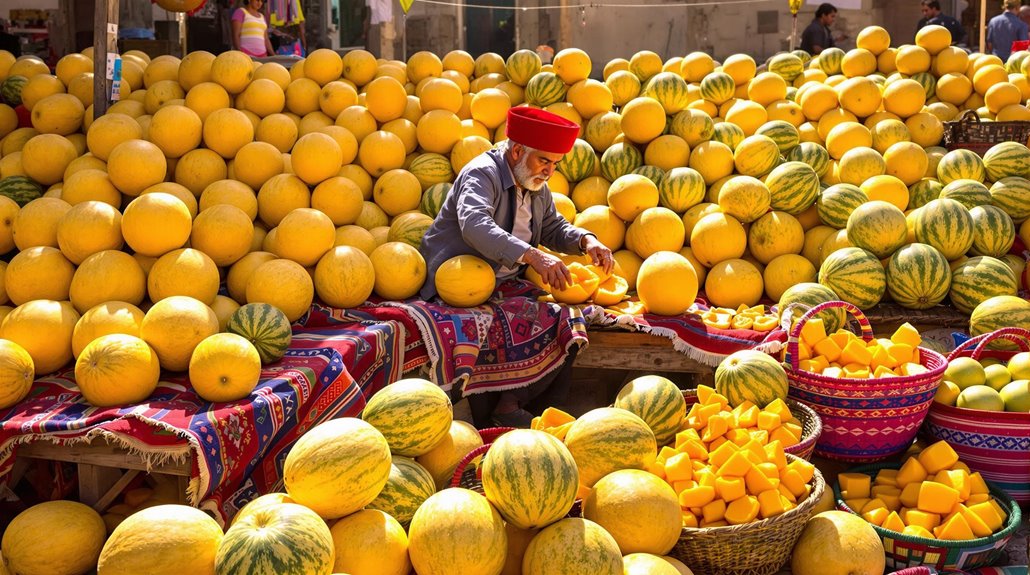
Observing Tabaski or Eid Al-Adha: a Celebration of Sacrifice and Unity
You'll find Tabaski, or Eid al-Adha, celebrated as Islam's most significant festival worldwide. This holy celebration commemorates Prophet Ibrahim's ultimate test of faith when God commanded him to sacrifice his son Ismail, only to provide a ram as a substitute at the final moment. Today, Muslims honor this devotion through the Qurbani ritual, where they sacrifice a halal animal and share the meat equally among family, friends, and those in need. From West African feasts to Middle Eastern traditions, diverse cultural practices infuse this celebration of sacrifice, unity, and charitable giving. Explore how this ancient story continues to inspire millions of believers in meaningful ways.
The Origins of Eid Al-Adha
Islam's most significant festival, Eid al-Adha, traces its roots to a deep test of faith that occurred thousands of years ago. When God commanded Prophet Ibrahim to sacrifice his son Ismail, it presented one of the most vital demonstrations of absolute submission to divine will in religious history.
You'll find this essential story documented across the three major Abrahamic religions. In the Islamic tradition, Prophet Ibrahim's unwavering obedience and Ismail's willing acceptance of their fate showcase the ultimate expression of faith. At the paramount moment, when Prophet Ibrahim was ready to fulfill God's command, the divine intervened by providing a ram as a substitute sacrifice.
Today, when you participate in Eid al-Adha celebrations, you're connecting with this ancient narrative of devotion and mercy. The festival coincides with the completion of the annual Hajj pilgrimage, where millions of Muslims retrace Prophet Ibrahim's footsteps. Through the symbolic act of sacrifice, you're reminded of the core values of submission, faith, and gratitude that define this sacred celebration. It's a time when you can reflect on the profound meaning behind Prophet Ibrahim's test and its lasting impact on Islamic spirituality.
Prophet Ibrahim's Divine Test
The deep test of faith that anchors Eid al-Adha's origins centers on Prophet Ibrahim's ultimate trial. In this significant moment of divine testing, God commanded him to sacrifice his beloved son, Ismail, putting his devotion and trust to the most challenging test imaginable.
You'll find that Prophet Ibrahim's response demonstrates the pinnacle of obedience and submission to God's will. Despite the immense personal anguish he must have felt, he didn't hesitate to follow the divine command. This willingness to sacrifice his most precious blessing - his own son - showcases the depth of his faith and complete trust in God's wisdom.
Just as Ibrahim prepared to carry out the sacrifice, God intervened. You can see how this divine intervention alters the narrative from a story of loss to one of mercy and reward. God provided a ram to be sacrificed instead, sparing Ismail's life while honoring Ibrahim's unwavering devotion. This powerful demonstration of faith and God's mercy continues to inspire believers today, reminding you that true sacrifice isn't just about the act itself but about your readiness to submit to divine will.
Qurbani Ritual and Significance
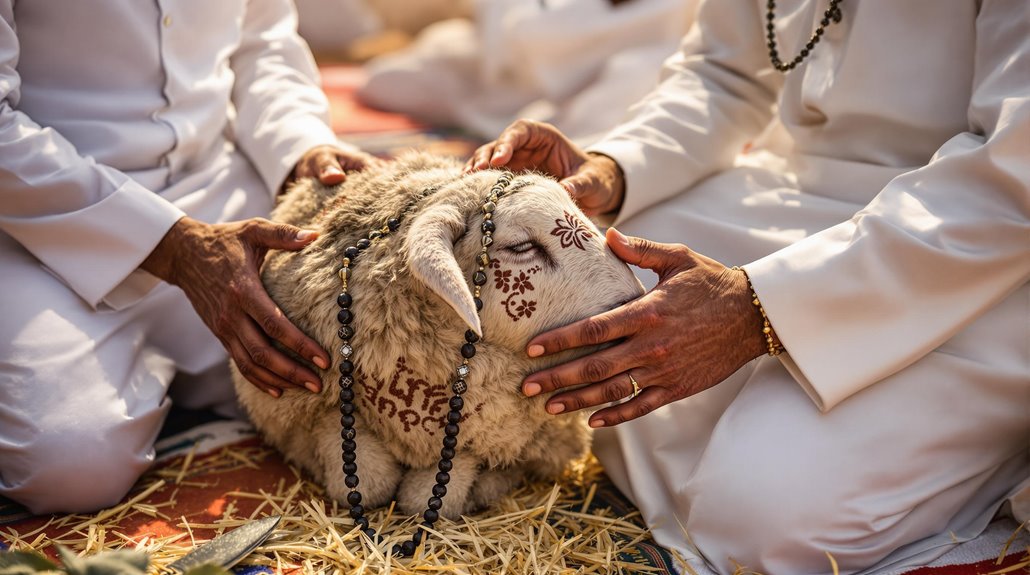
Centering on compassion and community spirit, Qurbani stands as a significant ritual that commemorates Prophet Ibrahim's ultimate test of faith. When you participate in this sacred sacrifice, you're not just performing a religious duty; you're engaging in an act that strengthens community bonds and supports those in need.
During Qurbani, you'll sacrifice a halal animal, typically choosing from lamb, goat, cow, or camel. This act isn't just about the sacrifice itself - it's about how the meat is shared. You'll divide it into three portions: one for your family, one for friends and relatives, and one for charity. This distribution system guarantees that the blessing of fresh meat reaches every corner of the community.
The ritual embodies essential Islamic values that you're encouraged to embrace. Through Qurbani, you'll learn the importance of selflessness and generosity while contributing to social welfare. It's a powerful reminder that we're all connected, and our actions can make a real difference in others' lives. By participating in this tradition, you're not only honoring Prophet Ibrahim's devotion but also cultivating unity and social responsibility within your community.
Global Customs and Traditions

While Qurbani forms the spiritual foundation of Eid al-Adha, diverse cultural practices across continents have submerged this celebration with unique local traditions. Muslims around the world immerse in this Celebration of Sacrifice through distinct regional customs that reflect their cultural heritage.
In West Africa, you'll find families gathering for elaborate feasts featuring traditional dishes like thieboudienne and mafe. The celebration brings communities together as they share meals and strengthen social bonds. When you travel to the Middle East, you'll observe the three-part distribution system of sacrificial meat, ensuring that families, friends, and those in need all receive their share.
Southeast Asian celebrations add another dimension with their gift-giving tradition of Duit Raya, where you'll see children and elders exchanging presents alongside special holiday sweets. Family and Community remain at the heart of these varied customs, as you'll notice how each region maintains the festival's core values of compassion and unity. Whether through shared meals, charitable giving, or communal prayers, you'll experience how these diverse practices create a mosaic of traditions while preserving the holiday's fundamental message of sacrifice and generosity.
Sharing Blessings Through Charitable Acts
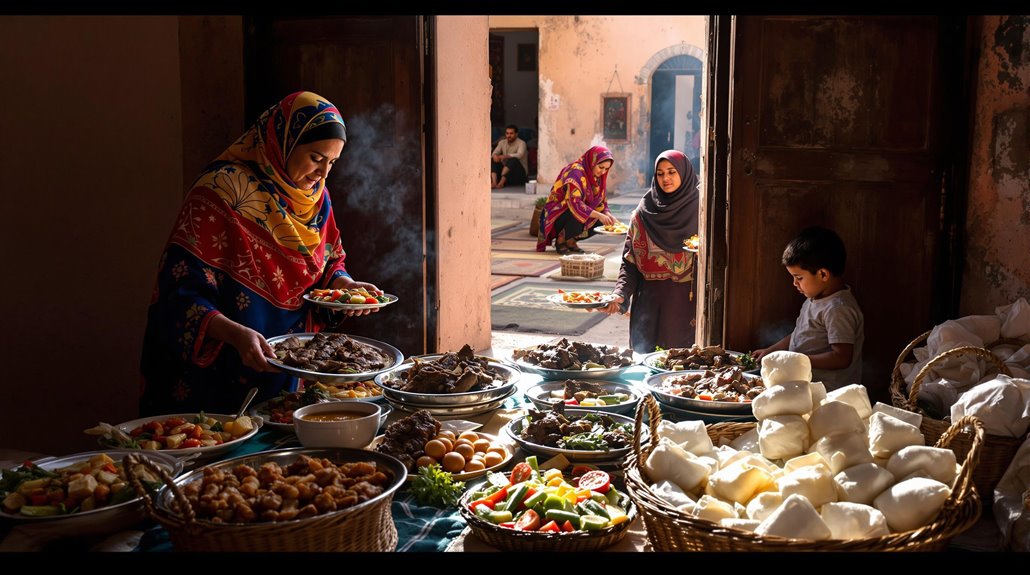
Outstretched hands symbolize the essence of Eid al-Adha's charitable spirit, where giving becomes a cornerstone of the celebration. As you participate in this sacred festival, you'll find that the act of sacrifice extends far beyond the ritual itself, converting into a powerful vehicle for charity and community support.
You'll notice how the distribution of meat follows a carefully considered system, with one-third specifically reserved for those in need. This practice guarantees that families experiencing hardship can join in the celebration and enjoy nourishing meals. The unity displayed during this time manifests through charitable organizations that step forward to amplify these efforts, coordinating the distribution of not just meat, but also essential supplies and clothing to underprivileged communities.
When you engage in Qurbani, you're participating in a tradition that emphasizes both personal devotion and social responsibility. The celebration encourages you to channel your resources into meaningful humanitarian initiatives, whether local or global. Through these acts of giving, you're helping to create a more equitable society while honoring the true spirit of Eid al-Adha's message of sacrifice and compassion.
Community Prayer and Reflection
The dawn of Eid al-Adha begins with a powerful display of unity as thousands of Muslims gather for the special Salat al-Eid prayer. You'll witness the extraordinary sight of your community coming together in mosques and open spaces, sharing in this sacred celebration that reinforces the bonds of faith and brotherhood.
During the prayer, you'll listen intently as the Imam delivers a meaningful sermon that highlights the day's significance. The message often centers on sacrifice, compassion, and the importance of charitable giving, helping you reflect on your own spiritual path and commitment to Islamic principles. It's a time when you're reminded of the deeper meaning behind this celebration and your role within the broader Muslim community.
As the prayer concludes, you'll experience the warmth of fellowship as community members exchange embraces and heartfelt greetings. This communal gathering isn't just about performing religious duties; it's an opportunity for you to strengthen relationships, seek Allah's forgiveness, and express gratitude. Through community prayer and reflection, you're able to renew your spiritual focus and deepen your connection with both your faith and fellow Muslims.
Traditional Feasts and Gatherings
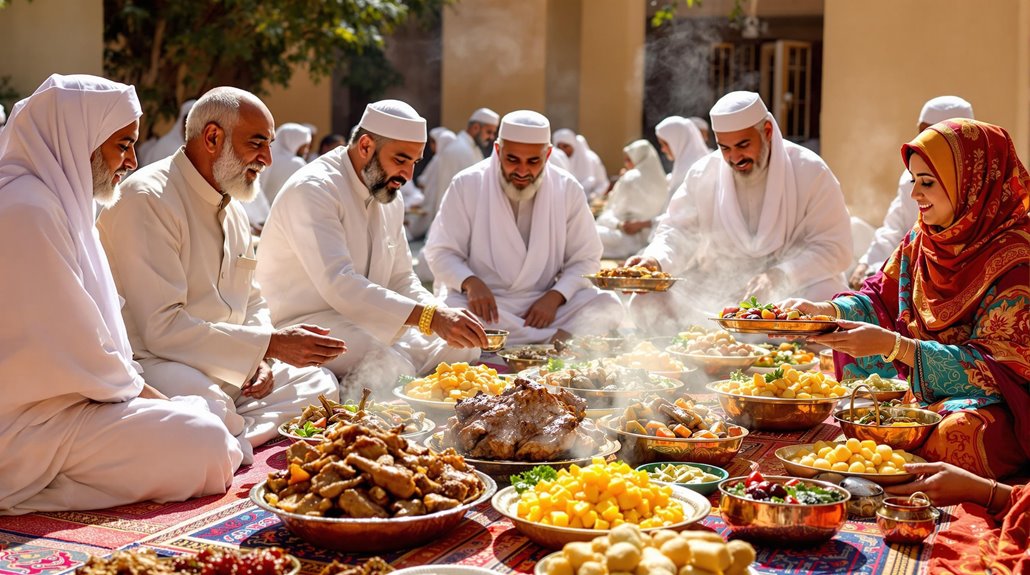
After the morning prayers, you'll experience one of Eid al-Adha's most cherished traditions: the gathering of family and friends for elaborate feasts that fill homes with enticing aromas and joyful conversation. During this special time, you'll find tables adorned with aromatic biryanis, succulent kebabs, and rich curries that reflect generations of culinary prowess.
The Festival brings communities together through the sacred practice of Qurbani, where you'll participate in divvying up sacrificial meat into three portions: one for your family, another for friends and relatives, and the third for those in need. You'll witness how this tradition embodies the spirit of sharing and compassion that defines Eid al-Adha.
As you move from house to house, you'll explore how each family adds their unique cultural touch to traditional dishes, showcasing the diversity of Muslim communities worldwide. You'll exchange gifts, share stories, and strengthen bonds with loved ones while savoring these meaningful moments. The communal feasting becomes more than just a meal - it's a powerful expression of unity, generosity, and gratitude that connects you with millions of Muslims celebrating across the globe.
Family Bonds During Eid
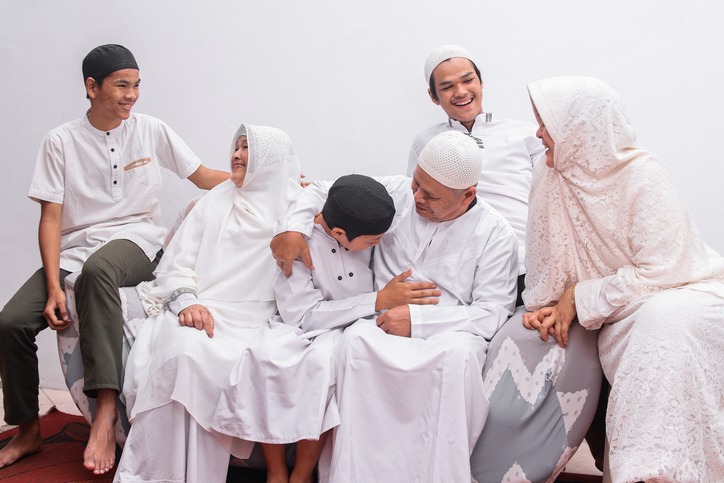
Beyond the feasting and communal gatherings, Eid al-Adha weaves its most meaningful moments through family bonds that span generations. You'll witness the true spirit of unity as relatives and friends come together to share meals, creating memories that last a lifetime.
During this special time, you'll find children's eyes lighting up as they receive their eagerly anticipated Eidi from elders, cultivating connections between different generations. It's a time when you can strengthen relationships with extended family members through heartfelt conversations and quality time spent together.
As you gather with your loved ones, you'll notice how the celebration naturally encourages healing and reconciliation. You might find yourself mending old rifts or rekindling relationships that may have grown distant throughout the year. The atmosphere of forgiveness and understanding permeates every home during Eid.
Throughout the celebration, you'll experience how family stories are shared, traditions are passed down, and future gatherings are planned. These moments create a powerful sense of belonging and continuity, reminding you that you're part of something greater than yourself.
Cultural Expressions Across Nations
Across the globe, you'll uncover how Eid al-Adha metamorphoses into a lively patchwork of unique cultural celebrations, each region adding its own distinct colors and flavors to this sacred festival. In West Africa, you'll experience the vivid Celebration of Faith known as Tabaski, where streets come alive with parades and the aroma of thieboudienne fills the air.
The act of obedience takes different forms as you travel eastward. In South Asia, you'll witness the deep Sacrifice and Unity through the distribution of meat to those in need, while homes sparkle with intricate rangoli patterns. Indonesian celebrations will enthrall you with their festive lanterns and generous gift-giving traditions, altering neighborhoods into magical displays of light and warmth.
In the Middle East, where the festival's roots run deep, you'll find extended families gathering to share traditional mamoul cookies after the ritual sacrifice. Each region's unique expression of this holy celebration showcases how a single religious observance can bloom into countless beautiful traditions, all while maintaining its core message of devotion and community.
Modern Day Observances
Technology has altered how Muslims worldwide celebrate Eid al-Adha while preserving its sacred essence. You'll find social media platforms buzzing with Eid greetings, live-streamed sermons, and virtual gatherings connecting families across continents. These digital tools help preserve the spirit of unity that's central to this celebration commemorating Prophet Ibrahim's devotion.
In Western nations, you'll explore Muslim communities organizing elaborate Eid fairs and fundraising events, combining traditional practices with modern approaches to acts of charity. Local mosques coordinate large prayer gatherings, while community centers host cultural programs that help younger generations understand their heritage.
The celebration, known as Tabaski in Senegal, continues to maintain its traditional elements. You'll see families performing the ritual sacrifice and distributing meat to those in need, but now they're also sharing these moments globally through digital platforms. In Muslim-majority countries, you'll observe thousands gathering for communal prayers, followed by festive meals and family visits. Modern observances have evolved to include organized parades, charitable drives, and community outreach programs, making Eid al-Adha's message of sacrifice and compassion more accessible to diverse communities worldwide.