
Night of the Radishes: A Creative Festival in Oaxaca, Mexico
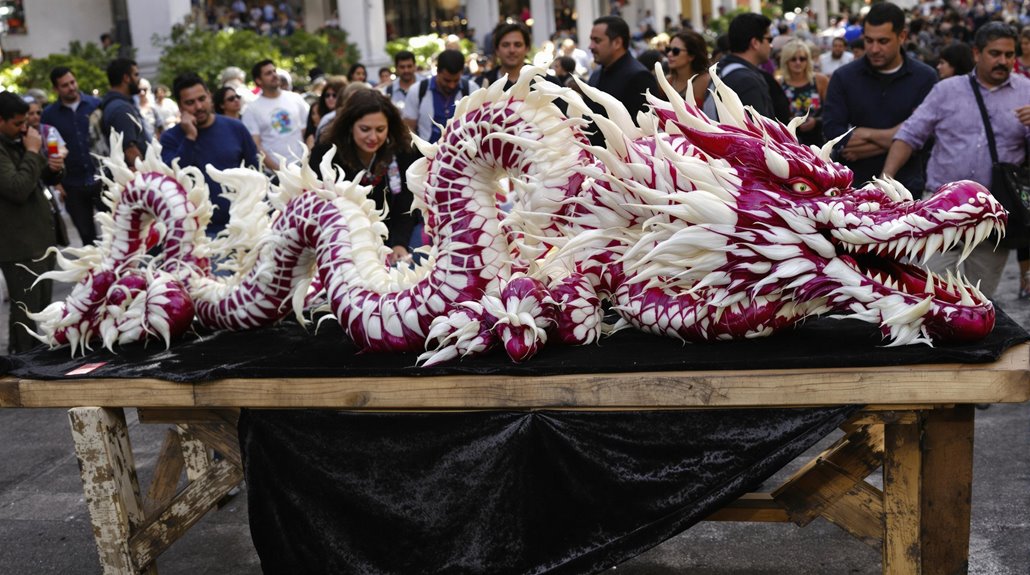
You'll find one of Mexico's most unique Christmas festivals in Oaxaca's central plaza each December 23rd - the Night of the Radishes (Noche de Rábanos). Dating back to the mid-18th century, this cherished tradition showcases oversized radishes carved into intricate sculptures depicting religious scenes, mythological figures, and architectural masterpieces. Local craftspeople spend months growing special criollo radishes, then alter them into elaborate artworks competing for coveted prizes in traditional and free-style categories. While the carved creations only last a few hours, they represent centuries of cultural heritage and artistic innovation that make this festival a must-see Oaxacan experience.
The Origins of Radish Night
If you've never heard of a festival dedicated to carved radishes, you're in for a fascinating story. The Night of the Radishes festival in Oaxaca traces its roots back to the mid-18th century, when Dominican monks introduced an unusual tradition. They encouraged local farmers to grow oversized radishes, which could reach lengths of 1.5 feet and weigh up to 7 pounds, to display at the Christmas Market near Oaxaca Cathedral.
What started as a simple market attraction was transformed into an extraordinary artistic celebration. The festival draws from the rich cultural heritage of the Zapotec and Mixtec peoples, who were already skilled in wood carving and other artisanal crafts. They began using radishes as a unique medium for their sculptures, creating increasingly complex designs. By 1897, the tradition had become so significant that Oaxaca's mayor officially established a radish carving competition as part of the Christmas Market festivities. The artisans' creations evolved from simple, natural forms to intricate sculptures depicting religious figures, architectural scenes, and mythical creatures, cementing the festival's place in Oaxaca's cultural landscape.
Carving Traditions and Techniques
Anyone witnessing Oaxaca's radish carvers at work can't help but marvel at their skillful techniques, passed down through generations of artisans. These experts transform oversized criollo radishes, some measured at up to 7 pounds, into stunning radish sculptures that capture both religious themes and scenes of Oaxacan life.
You'll find that the carving process resembles traditional wood carving, but requires even more precision due to the delicate nature of the vegetable. Artists work with the natural shapes of these specially cultivated radishes, which are grown over three months to achieve the perfect size and form for sculpting. In the traditional category, you'll see intricate nativity scenes and religious imagery that showcase the artists' devotion to cultural heritage. The free category allows for more contemporary interpretations, where artists express their creativity through modern scenes and innovative designs.
What's particularly inspiring is how this tradition continues to thrive, with experienced artisans teaching younger generations. You'll notice children participating in their own category, ensuring these unique carving techniques will continue to flourish in Oaxacan culture for years to come.
Competition Categories and Prizes

The Night of the Radishes competition showcases artists' talents across distinct categories, with the traditional and free style divisions drawing the most attention. At La Noche de Rábanos, you'll find expert carvers competing in the traditional category, where they make sculptures focusing on religious themes, while the free style division allows artists to explore contemporary and innovative designs.
In this radish festival, known locally as La Noche de los Rábanos, participants compete for prizes in various categories, including Best Traditional Sculpture, Best Free Style Design, and Best Children's Entry. When you attend the event, you'll see judges evaluating each piece based on artistic craftsmanship, creativity, and how well they align with the competition's themes. The main categories attract both experienced sculptors and emerging artists who carefully craft their entries to stand out among the competition.
Once the winners are announced, they receive cash prizes for their exceptional achievements, with the grand prize being particularly coveted. If you're planning to participate, you'll need to demonstrate exceptional skill and imagination to compete at this prestigious de Noche celebration.
Planning Your Festival Visit
Planning a visit to Oaxaca's Night of the Radishes requires strategic timing and preparation. You'll want to arrive at the Zócalo early on December 23rd to witness the radish sculptures in their freshest state and avoid the massive crowds that gather later in the day.
To make the most of your visit, consider these must-do activities around the festival:
- Wander through bustling Oaxacan markets, where colorful textiles and aromatic spices create a sensory feast
- Savor traditional home-cooked meals in local restaurants, complemented by smoky mezcal tastings
- Investigate quiet museum galleries and lush gardens away from the festival crowds
While the radish festival is the main attraction, you can augment your experience by visiting nearby cultural sites like the Rufino Tamayo Museum of Pre-Hispanic Art and the Ethnobotanical Garden. Consider booking a culinary and cultural tour to gain deeper understandings into Oaxaca City's traditions and flavors. Your visit planning should account for at least a few days to fully immerse yourself in the region's rich heritage, allowing time to explore both the festival and the city's year-round attractions.
Cultural Impact in Oaxaca

Deep within Oaxaca's cultural fabric, the Night of the Radishes represents far more than just an annual festival - it's a living embodiment of the region's artistic spirit and communal values.
When you visit the city of Oaxaca during Noche de Rabanos, you'll witness how this unique celebration strengthens family bonds and preserves cultural heritage. In the main square, artisans manipulate giant radishes into intricate sculptures that tell stories of local traditions, religious beliefs, and historical events. The radishes used in these masterpieces connect modern-day artists with their 19th-century predecessors, who first began carving these vegetables to attract customers to their market stalls.
To celebrate The Night of the Radishes, families in the state of Oaxaca work together, passing down techniques and stories from one generation to the next. This annual event has become a powerful symbol of cultural identity, drawing thousands of visitors who marvel at the creative expression achieved through this humble root vegetable. You'll find that the festival exemplifies how Oaxacans have skillfully converted a simple agricultural product into an extraordinary medium for artistic expression and community celebration.
Beyond the Radish Sculptures
View this post on Instagram
Along with its famous radish carvings, Noche de Rábanos delivers a diverse celebration that enhances every corner of Oaxaca. You'll find yourself immersed in concerts, fireworks, and light shows that transform the city into a vibrant canvas of cultural expression.
To fully embrace the festival's spirit, you can venture beyond the main event to explore the city's rich cultural heritage. The experience includes:
- Wandering through bustling Oaxacan markets, where you'll encounter local artisans showcasing their creativity through traditional crafts
- Sampling authentic mezcal and savoring home-cooked meals that reflect generations of culinary expertise
- Investigating cultural landmarks like the Rufino Tamayo Museum and the serene Ethnobotanical Garden
You'll find that joining a culinary and cultural tour offers deeper comprehension into Oaxacan identity and traditions. These guided experiences connect you with local communities while showcasing the region's artistry. The festival isn't just about sculptured vegetables - it's a comprehensive celebration that weaves together Oaxaca's past and present, inviting you to experience the full spectrum of this remarkable cultural heritage.