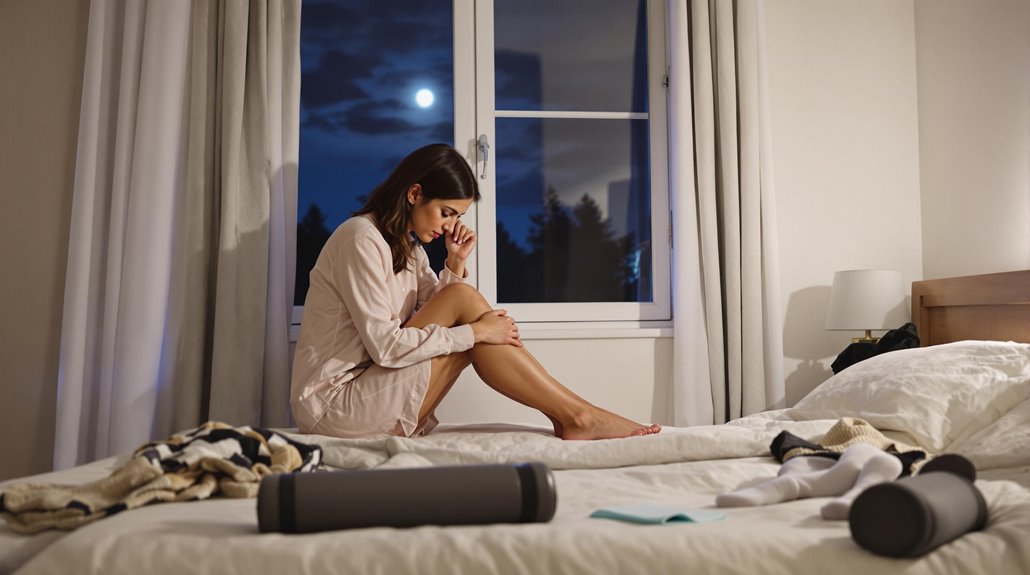
Natural Ways to Treat Sleeplessness Without Medication

You can combat sleeplessness naturally through several proven methods. Start by creating the right environment with a cool room temperature (65-72°F), blackout curtains, and white noise. Time your exercise at least three hours before bed, and establish calming pre-sleep rituals like meditation or yoga. Choose sleep-promoting beverages like warm milk, chamomile tea, or tart cherry juice instead of alcohol. Maintain consistent wake-up times, even on weekends, and avoid caffeine after lunch. Cut out daytime naps and remove electronics from your bedroom. These science-backed strategies will help you uncover your path to natural, restful sleep.
Calming Nighttime Beverages and Nutrition
Sipping on the right beverages before bedtime can make a significant difference in your sleep quality. When you're struggling with sleeplessness, warm milk can be your natural ally, as it helps stimulate tryptophan and serotonin production, which are essential for your sleep-wake cycle. You'll find similar benefits in chamomile tea, whose flavonoids work with your brain receptors to promote sleep without the disrupting effects of caffeine found in other teas.
If you're looking for a powerful sleep aid, consider adding tart cherry juice to your evening routine. It's particularly effective because it supports your body's natural melatonin production, helping regulate your sleep patterns. While you're choosing your evening drinks, remember to skip the alcohol - it might make you feel drowsy initially, but it'll disrupt your sleep quality later in the night.
To enhance the effectiveness of these beverages, time your exercise appropriately. While moderate aerobic exercise can improve your deep sleep, you'll want to avoid working out close to bedtime, as it can interfere with your ability to fall asleep naturally.
Exercise Timing for Better Sleep
Physical activity goes hand in hand with your nighttime beverage choices when it comes to achieving quality sleep. While regular exercise is essential for good sleep quality, timing your workouts correctly makes all the difference between a restful night and tossing and turning in bed.
When you engage in aerobic exercise, your body releases endorphins and raises your core body temperature, both of which can keep you alert and awake. That's why you'll want to complete your physical activity at least two hours before bedtime. This buffer allows your body temperature to cool down naturally, supporting your normal sleep-wake cycle.
If you're looking to maximize sleep benefits, schedule your exercise sessions earlier in the day. Moderate aerobic exercise can dramatically increase your deep sleep phases, but only when properly timed. You'll disrupt your sleep cycle if you work out too close to bedtime, as the alertness-promoting effects of exercise can override your body's natural wind-down process. By maintaining a consistent exercise routine with appropriate timing, you're setting yourself up for better sleep quality without relying on medications.
Creating Sleep-Friendly Room Conditions

Three key elements define an ideal sleeping environment: temperature, light, and sound. If you're struggling with insomnia or a sleep disorder, altering your bedroom into a sleep sanctuary can dramatically improve your sleep schedule and overall health. Your doctor would likely recommend maintaining a temperature between 65-72 degrees Fahrenheit, as this range promotes good sleep hygiene and helps regulate your body's natural sleep-wake cycle.
To make your bedroom comfortable and conducive to quality sleep hours, you'll need to control both light and sound exposure. Install blackout curtains or use an eye mask to create complete darkness, and consider using a white noise machine or earplugs to minimize disruptive sounds. Additionally, keep electronic devices out of your sleeping space, as their blue light can interfere with your natural sleep patterns.
For the best results, implement these essential practices:
- Set up your room temperature before bedtime to allow proper cooling
- Remove or cover all sources of artificial light, including LED displays and charging devices
- Establish a quiet zone by addressing any noise issues at their source rather than trying to mask them
Relaxation and Mindfulness Practices
Several powerful relaxation techniques can alter your nightly routine and promote better sleep naturally. Mindfulness meditation stands out as a proven method to reduce stress and improve your sleep quality while enhancing your immune system and concentration. You'll find particular success by incorporating this practice into your evening wind-down routine.
Try repeating a calming mantra throughout your day and before bedtime, as this simple practice has shown significant results in reducing insomnia. If you prefer movement-based relaxation, yoga can serve as a form of moving meditation, helping you destress while improving your physical function and sleep patterns.
Consider scheduling regular massage therapy sessions, which can effectively reduce pain, anxiety, and depression while boosting your sleep quality and daytime functioning. You can also complement these practices with natural sleep aids. Melatonin helps regulate your sleep-wake cycle, while herbs like lavender, chamomile, and valerian root promote relaxation. Adding magnesium supplements may further support your body's natural sleep mechanisms. By combining these relaxation approaches, you're creating a comprehensive strategy to combat sleeplessness without relying on prescription medications.
Morning and Evening Routine Adjustments

While relaxation practices lay the groundwork for better sleep, your daily schedule plays a defining role in sleep quality. To improve your sleep habits, you'll need to make consistent adjustments to both your morning and evening routines. By maintaining the same wake-up time every day, even on weekends, you'll help regulate your body's natural sleep-wake cycle and fall asleep more easily at night.
Your physical activity during the day decisively impacts how well you'll fall asleep and stay asleep at night. However, timing is imperative for establishing a good bedtime ritual. Here are key schedule adjustments to optimize your sleep:
- Cut off caffeine after lunch to prevent it from interfering with your natural sleep drive, as its effects can last up to 8 hours
- Complete your 30-minute exercise routine at least 3 hours before bedtime to allow your body temperature and energy levels to normalize
- Resist the urge to nap during the day, even when tired, as this can disrupt your evening sleep pattern and make it harder to maintain consistent sleep habits
These strategic adjustments will naturally enhance your sleep quality without relying on medication.