
Melon Day: A Sweet Celebration in Turkmenistan
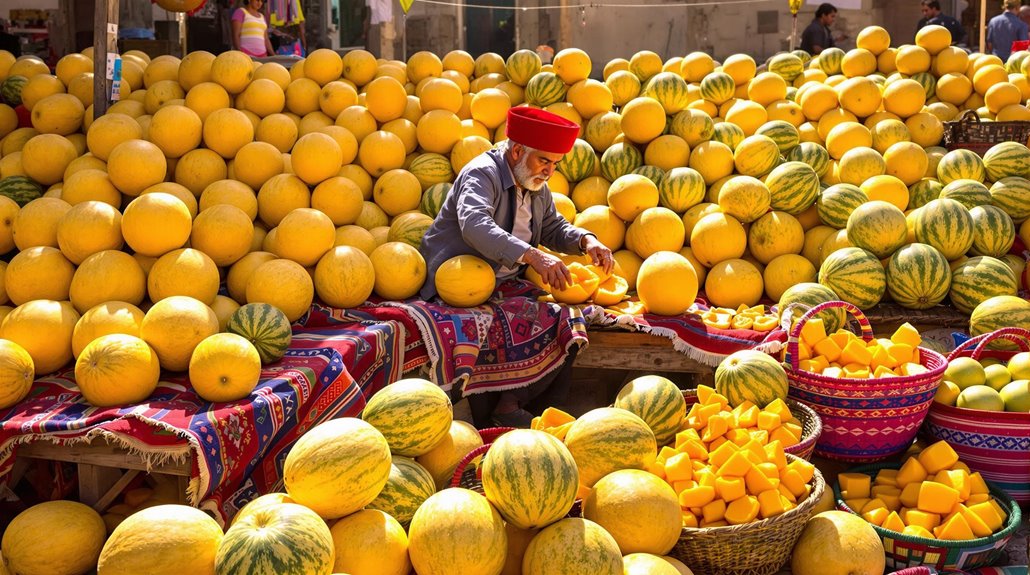
You'll find Melon Day celebrated every second Sunday in August across Turkmenistan, where over 400 varieties of sweet, aromatic melons have flourished since the Silk Road era. First President Saparmurat Niyazov established this unique holiday in 1994 to honor the nation's cherished fruit, with the prized Turkmenbashi melon recognized as a national treasure. The celebration showcases Turkmenistan's agricultural excellence through festive exhibitions, competitions, and traditional customs that bring communities together. The country's rich melon-growing heritage continues to shape its cultural identity and agricultural prowess, with countless stories waiting to be unearthed in every variety.
Origins of Melon Day
The creation of Melon Day in 1994 marked a significant milestone in Turkmenistan's cultural calendar. When Saparmurat Niyazov, the country's first president, established this national holiday, he formalized the nation's deep-rooted connection to this cherished fruit. You'll find that this celebration wasn't just a random choice - it was built upon centuries of melon cultivation and cultural significance in the region.
In establishing this holiday, Niyazov tapped into Turkmenistan's rich agricultural heritage, which includes an impressive array of over 400 melon varieties. You can trace the importance of melons in Turkmens culture back to the Silk Road era, when traders would exchange these prized fruits along their pilgrimage. The president's decision to honor melons with their own holiday reflected his understanding of their historical and cultural value.
Niyazov's deep appreciation for Turkmen melons was evident in his public statements, where he referred to them as the "fruit of paradise" and a source of national esteem. The Turkmenbashi melon, known for its exceptional qualities, stands as a legacy to why this fruit deserved its own national celebration.
The Turkmenbashi Legacy
Named after Turkmenistan's first president, the Turkmenbashi melon stands as a living embodiment of the country's agricultural excellence. You'll find this astonishing crossbreed showcasing impressive size, an enchanting sweet aroma, and a flavor profile that's earned international recognition.
The melon's significance deepened in 2004 when the president of Turkmenistan, Saparmurat Niyazov, elevated these fruits to national treasure status, declaring them "fruit of paradise." This wasn't just about the fruit itself - it represented a broader celebration of Turkmenistan's cultural heritage in agriculture. You can trace this rich history through approximately 400 distinct melon varieties that have flourished in Turkmen soil for generations.
When you explore the Turkmenbashi melon's legacy, you'll uncover it's more than just another variety in Turkmenistan's vast collection. It's a symbol that's caught the attention of notable figures throughout history, from medieval Arab travelers to Mughal Empire founders. Local growers continue to take immense delight in cultivating these melons, maintaining traditions that have earned Turkmen melons their reputation as some of the world's finest fruits.
Celebrating Four Hundred Varieties

Building upon this prestigious legacy, Turkmenistan's exceptional collection of 400 melon varieties stands as a living embodiment to generations of agricultural expertise. You'll find these Turkmen melons thriving in the country's arid climate and fertile soils, which create perfect conditions for developing their renowned sweetness and aromatic qualities.
The importance of melons in Turkmen culture runs deep, with historical figures like Ibn Battutah and Babur documenting their admiration for these prized fruits. Each variety tells its own story, from the celebrated Turkmenbashi melon to countless local cultivars that you won't find anywhere else in the world. These unique varieties have evolved to suit different growing conditions, harvest times, and culinary preferences.
When you immerse yourself in Turkmenistan's melon varieties, you're experiencing more than just fruit - you're connecting with centuries of agricultural innovation. The country's farmers have carefully selected and preserved these varieties, passing down their knowledge through generations. This unparalleled diversity represents not just agricultural achievement, but also serves as a living museum of Turkmenistan's cultural heritage and farming traditions.
National Pride and Identity
Anyone visiting Turkmenistan quickly uncovers that melons represent far more than just agricultural produce - they're a powerful symbol of national identity and cultural esteem. You'll find these cherished fruits woven into every aspect of Turkmen life, from traditional medicine to artistic expressions, reflecting centuries of cultural significance.
The Turkmenbashi variety, in particular, stands as a testament to the nation's melon-growing excellence, earning such high regard that a former president dubbed it the "fruit of paradise." This pride runs deep in Central Asian heritage, where Turkmenistan's expertise of melon cultivation sets it apart from its neighbors.
When you attend the national holiday in Turkmenistan dedicated to melons, you'll witness how these fruits unite the country in celebration. During this festive occasion, you'll see displays showcasing the remarkable diversity of local melons while experiencing time-honored traditions that keep this cultural legacy alive. The celebration serves as a reminder that melons aren't just part of Turkmenistan's agricultural triumph - they're an essential thread in the fabric of national identity, connecting past generations to present-day cultural pride.
Traditional Festivities and Customs

Each August, Turkmenistan bursts into a whirlwind of festive activity as communities gather for Melon Day celebrations across the country. You'll find vibrant fairs and market venues buzzing with excitement as locals showcase their finest melon varieties, including the celebrated Turkmenbashi melon, which competes for top honors in local and national contests.
As you investigate this unique holiday, you'll witness how Turkmen families preserve their cultural heritage through shared meals featuring traditional melon dishes. The festivities bring communities together at colorful market spaces where you can sample an impressive array of melon cultivars while enjoying traditional dance performances and musical entertainment.
You'll uncover that these celebrations aren't just about tasting sweet fruits - they're deeply woven into the fabric of Turkmen society. At every venue, you'll see competitions where proud farmers present their best melons for judging, carrying on a tradition that celebrates both agricultural excellence and cultural identity. The festival spaces alter into lively gathering spots where you can experience firsthand how Turkmen people honor their melon-growing heritage through a perfect blend of culinary tradition and festive entertainment.
Agricultural Excellence
Turkmenistan's prodigious collection of over 400 melon varieties stands as an enduring tribute to the country's agricultural know-how. You'll find that the nation's commitment to melon cultivation has positioned it as a global leader in this specialized field, with the Turkmenbashi melon serving as the crown jewel of their agricultural achievements.
The secret behind the exceptional quality of melons grown in Turkmenistan lies in the country's unique environmental conditions. The arid climate combines perfectly with fertile soil to create ideal growing conditions, resulting in golden melons renowned for their extraordinary sweetness and aromatic qualities. These natural advantages have been skillfully utilized by Turkmen farmers, who've inherited centuries of agricultural wisdom passed down since the Silk Road era.
Today, you'll see Turkmenistan's agricultural excellence reflected in its robust melon export industry. The country has transformed its historical know-how into a significant economic asset, shipping its prized melons to markets worldwide. This success story showcases how traditional agricultural knowledge, combined with modern farming techniques, has elevated Turkmenistan's status as a premier melon-producing nation.
Cultural Impact Through History

Beyond its agricultural achievements, the story of melons in Turkmen culture stretches back to the Bronze Age, weaving itself into every aspect of society. When you investigate Turkmen culture, you'll uncover that melons aren't just fruits - they're cultural symbols that have molded social interactions, art, and traditional practices for thousands of years.
You'll find melons' influence everywhere: from the warm hospitality of being offered a slice as a guest, to the intricate patterns inspired by their forms in textiles and ceramics. The fruit's significance extends beyond its role as food, as traditional medicine practitioners have long applied various parts of the melon plant for healing purposes, demonstrating the Turkmen people's comprehensive approach to health and wellness.
With nearly 400 varieties native to Turkmenistan - representing over a quarter of the world's known melon diversity - these fruits have become an inseparable part of the national identity. Whether you're admiring traditional artwork, participating in social gatherings, or learning about ancient medicinal practices, you'll encounter the profound impact melons have had on shaping Turkmen cultural heritage through the centuries.
Modern Economic Significance
Anyone exploring Turkmenistan's modern economy will quickly uncover the outsized role that melons play in driving national prosperity. You'll find melon growers across the country contributing significantly to both domestic food security and export revenue. The famous Turkmenbashi melon has become more than just a fruit - it's now a powerful symbol of national identity and agricultural excellence.
The economic impact of melons extends far beyond farming, creating a dynamic ecosystem of related industries:
- Direct employment opportunities in cultivation, harvesting, and processing
- Tourism revenue from annual Melon Day celebrations
- Export earnings from melon-related trade with neighboring countries
- Value-added products and processing industries
- Support services for melon transportation and storage
You'll see how Turkmenistan's position as one of the world's largest melon producers has shaped its economic landscape. The country's strategic location in Central Asia has helped establish strong trade relationships with neighboring nations, making melon exports a vital component of regional commerce. This agricultural success has created a ripple effect, benefiting local businesses and strengthening the country's overall economic standing.