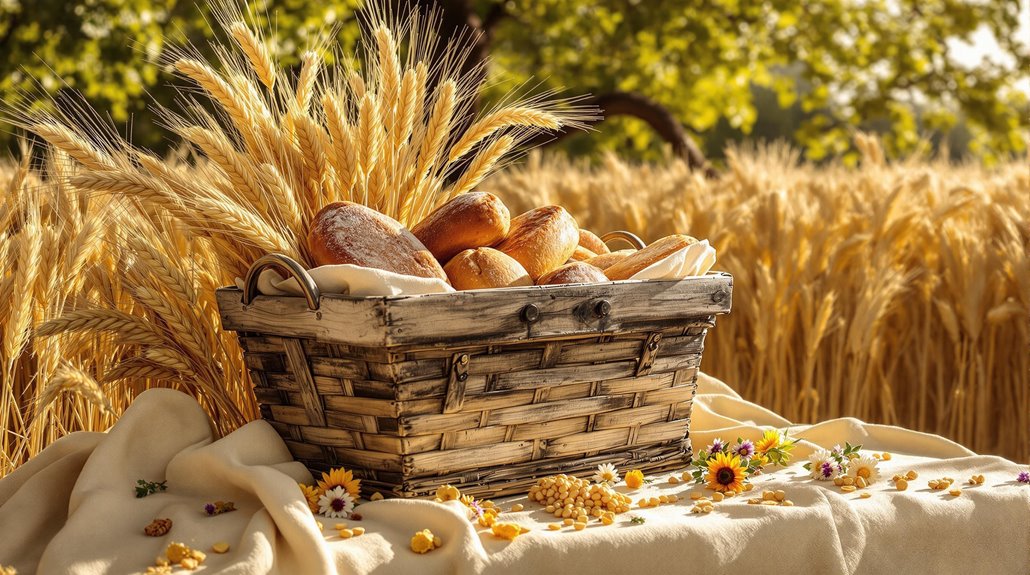
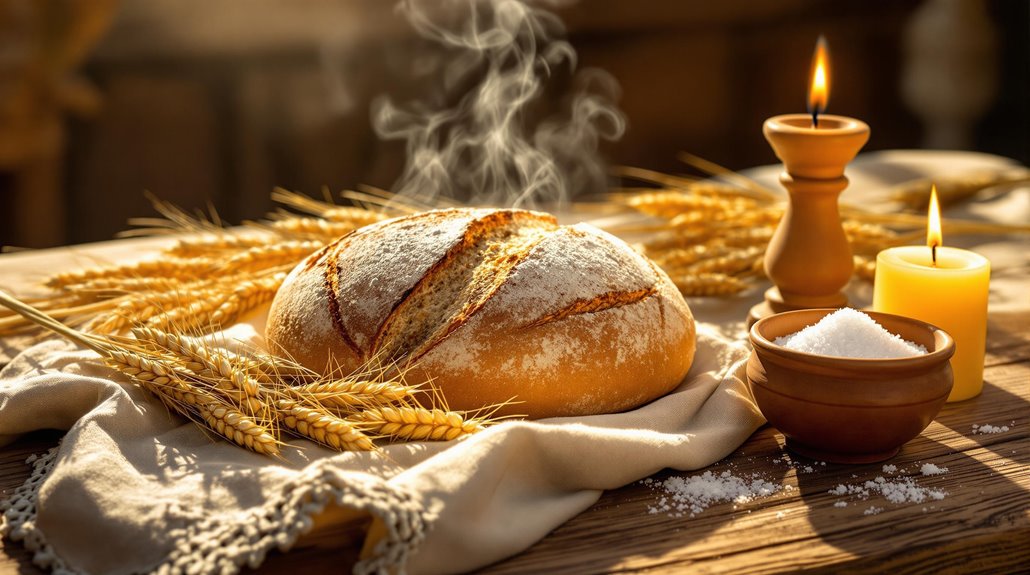
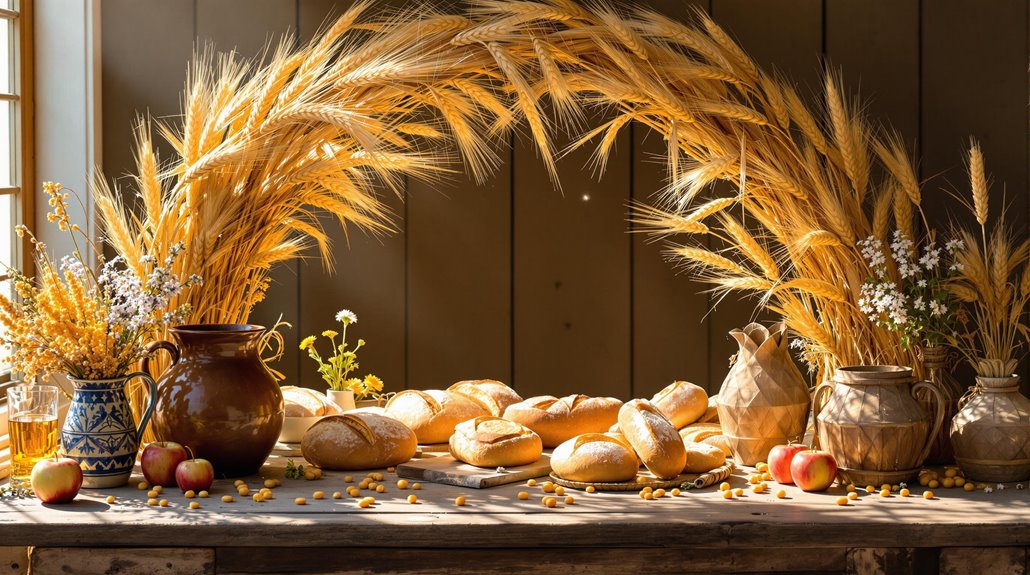
Lammas Day falls on August 1st, marking the year's first harvest celebration with deep roots in Celtic and Anglo-Saxon traditions. You'll find this ancient festival, derived from the Old English "hlaf-mas" (loaf mass), centers around bread-making and blessing ceremonies. As you gather with community, you're participating in age-old customs that honor both physical and spiritual sustenance. Through bread consecration, communal feasting, and gratitude rituals, you're connecting to centuries of harvest celebrations that bridge pagan and Christian traditions. From barn blessings to breaking the sacred Lammas loaf, each ritual opens a doorway to understanding humanity's timeless relationship with nature's cycles.
The Ancient Origins of Lammas
Many ancient cultures recognized Lammas as a vital celebration marking the year's first harvest. You'll find its deepest roots in the Celtic festival of Lughnasadh, where communities gathered to honor the bounty of their fields and celebrate the turning of the seasonal wheel.
If you're curious about the name's meaning, you'll uncover that "Lammas" comes from the Old English "hlaf-mas," which translates to "loaf mass." This name perfectly captures the celebration's essence, as you'd traditionally bake bread using the newly harvested wheat. In Anglo-Saxon England, this first harvest festival fell on August 1st, when communities would gather to give thanks for their crops.
You might be interested to know that Lammas wasn't just about celebration - it served practical purposes too. The traditional Lammas loaf played a pivotal role in protective rituals, with farmers placing pieces at their barn's four corners to ward off evil spirits. This period also marked the completion of the hay harvest that began after Midsummer, signaling the gradual shift from summer to autumn. This timing made Lammas an indispensable milestone in the agricultural calendar.
Sacred Harvest Traditions
Sacred harvest traditions at Lammas center on three core rituals: bread-making, blessing ceremonies, and communal gatherings. When you participate in these age-old customs, you're connecting with practices that have endured for generations, honoring the first harvest of the season.
The creation and blessing of the Lammas loaf stands as one of the most significant rituals. You'll find that historically, communities would take their first-baked bread to the local church for consecration, marking the shift from field to table. In pagan traditions, you'd witness the ceremonial breaking of the loaf into four pieces, with each quarter placed in barn corners to safeguard the harvest's protection.
Beyond bread rituals, you'll experience the communal aspect of Lammas as communities gather to celebrate the completion of the hay harvest that began after Midsummer. Today, you can participate in modern Lammas observances that maintain these sacred connections through ritualized feasting and harvest ceremonies. These celebrations continue to honor the cycle of growth and express gratitude for nature's abundance, connecting you to both ancient wisdom and contemporary spiritual practice.
Bread and Blessing Rituals
At the heart of Lammas celebrations, bread-making and blessing rituals form an essential bridge between earthly sustenance and spiritual devotion. When you participate in these ancient traditions, you'll find yourself connecting to practices that date back to Anglo-Saxon England, where the "feast of first fruits" marked the harvest's beginning.
You'll see how the loaf of bread, crafted from the season's first grains, takes center stage in these sacred ceremonies. As you bring your freshly baked bread to the church, you're following in the footsteps of countless generations who sought blessings for their harvest. The Christian clergy's blessing of these loaves represents the community's gratitude for nature's abundance.
If you look deeper into these practices, you'll uncover their pagan roots in Lughnasadh festivals, where the ritual breaking of the Lammas loaf held special significance. You might be interested to know that farmers would place these blessed bread pieces at their barn's four corners, believing this act would protect their precious grain stores. This ritual perfectly demonstrates how bread becomes both physical sustenance and spiritual symbol during Lammas celebrations.
Seasonal Significance
The deep significance of Lammas emerges out of summer's golden days, marking nature's vital shift toward autumn. As you observe the changing scenery, you'll notice how this first harvest season represents the cyclical nature of life, death, and rebirth that governs our world. You're witnessing an essential moment in the Wheel of the Year, when the earth's abundance reaches its peak and begins its gradual transition toward dormancy.This seasonal milestone carries profound meaning within modern pagan traditions, where you'll find Lammas celebrated as one of eight sacred sabbats. The festival's connection to the Celtic god Lugh reminds you of humanity's enduring relationship with the sun's power and the earth's fertility.Key aspects of Lammas's seasonal significance include:Through these observances, you're participating in an ancient tradition that honors the earth's rhythms and our place within them.Community Feast Gatherings

Building on these deep seasonal connections, community feast gatherings bring Lammas Day's spiritual significance into lively, shared experiences. On this first day of the traditional harvest festival, you'll find communities coming together to celebrate the first grain harvest with locally-sourced ingredients that showcase the season's bounty.At these feasts, you'll witness the culmination of farmers' hard work altered into delicious dishes, with freshly baked bread taking center stage. The aroma of new grain, shaped into warm loaves, fills the air as neighbors share meals that honor both the land's abundance and those who cultivate it. You're not just participating in a meal; you're joining a celebration that strengthens community bonds and reminds everyone of their interconnectedness.The festivities don't stop at food. You'll often find yourself swept up in the joyful atmosphere as music and dancing enhance the celebration. These gatherings create a space where you can fully appreciate the cyclical nature of seasons while building meaningful connections with fellow community members, all while savoring the fruits of the season's first harvest.Modern Celebrations Worldwide
Modern practitioners worldwide have breathed new life into Lammas celebrations, adapting ancient customs to reflect contemporary spiritual needs. You'll find diverse interpretations of this ancient harvest festival, from the Northern Hemisphere's August 1st gatherings to Southern Hemisphere celebrations on February 1st.The name Lammas, derived from Old English "Loaf Mass," continues to inspire celebrations that honor the first harvest of the season. You'll plumb communities gathering to share meals made from newly harvested ingredients, while paying tribute to the Celtic god Lugh through artistic expressions and creative workshops.Key elements of modern Lammas Day observances include:Whether you're in Australia, South Africa, or elsewhere, you'll note how local customs have merged with traditional Lammas practices. Today's celebrations often incorporate meditation, gratitude circles, and releasing ceremonies, making the festival relevant to contemporary spiritual seekers while maintaining its connection to ancient harvest traditions.Pagan and Christian Connections

Ancient grains tell a story of religious synthesis in Lammas Day celebrations, where pagan and Christian traditions have intertwined over centuries. You'll find that the festival's roots stretch back to the pagan celebration of Lughnasadh, marking the year's first harvest, while Christian customs later incorporated the blessing of bread made from newly harvested wheat and the feast of St. Peter's chains.The blending of these traditions is most evident in the central role of bread-making. Whether you're celebrating from a pagan or Christian viewpoint, you'll notice that bread from the season's first grains remains a powerful symbol of abundance and gratitude. Today's modern Pagans and Wiccans recognize Lammas as one of three significant harvest festivals in their Wheel of the Year, alongside Mabon and Samhain.This spiritual fusion demonstrates how agricultural celebrations can transcend religious boundaries. When you participate in Lammas festivities, you're taking part in a tradition that honors both the ancient pagan reverence for nature's cycles and the Christian practice of blessing the harvest's first fruits.Agricultural Heritage
The rich agricultural heritage of Lammas Day stems directly from humanity's deep connection to the seasonal rhythms of farming. When you explore the traditions surrounding this ancient celebration, you'll find that communities would gather to honor the first harvest, bringing freshly baked loaves made from newly reaped wheat. This practice reflects our ancestors' profound understanding of sustainable farming cycles and ecological restoration.The festival's agricultural significance is evident in its very name - "hlaf-mas" or "loaf mass" - highlighting the central role of grain harvesting in sustaining communities. You'll discover that this celebration marked a pivotal transition point in the farming calendar, as summer began yielding to autumn's approach.Key aspects of Lammas Day's agricultural heritage include:This agricultural foundation continues to resonate today, reminding you of the crucial connection between human survival and sustainable farming practices that have shaped civilizations for millennia.Symbols of the Season

Symbols richly woven into Lammas Day celebrations tell a story of abundance and gratitude. At the heart of these sacred traditions, you'll find grains like wheat and barley taking center stage, representing nature's generous gifts and humanity's connection to the land.The creation of the Lammas loaf holds deep spiritual significance in your spiritual awakening passage. When you bake this special bread using the first harvested grains, you're participating in an ancient protective ritual that honors the cycle of growth and sustenance. You'll often see harvest tools like scythes and sickles featured prominently in ceremonies, reminding you of the sacred relationship between human effort and Earth's bounty.As you celebrate, you'll encounter the mighty oak tree, standing as a powerful symbol of the season's metamorphosis. This sacred tree marks the subtle shift from summer's abundance to autumn's approaching whispers. The presence of Lugh, the skilled craftsperson deity, reminds you that creation and harvest are intrinsically linked. Through these meaningful symbols, you're invited to reflect on the delicate balance between human craft and natural abundance that Lammas Day celebrates.Nature's Abundance
Natural abundance bursts forth during Lammas, when the first harvest signals summer's climax. You'll find this ancient festival celebrating nature's renewable resources through various customs that honor the earth's generosity. The blessing of the Lammas loaf, crafted from newly harvested wheat, serves as a powerful reminder of the land's sustaining gifts and humanity's connection to the soil.As you observe the seasonal transitions, you'll notice how Lammas marks both an ending and a beginning. The hay harvest concludes its cycle that began after Midsummer, while Lammas leaves emerge as a second flourishing of growth, demonstrating nature's endless capacity for replenishment.Today's neopagan celebrations continue to recognize this abundant period through:You're witnessing a pivotal moment in nature's calendar when the landscape reveals its richest provisions, reminding you of the perpetual cycle of growth, harvest, and renewal that sustains all life.Harvest Games and Activities

Lively harvest games and activities bring Lammas celebrations to life, altering fields and festival grounds into playgrounds of seasonal merriment. You'll find yourself joining in traditional competitions like sack races, testing your strength in tug-of-war matches, or showing off your farming skills in hay bale stacking contests. These time-honored games connect you to the agricultural heritage that Lammas represents.For a more educational experience, you can participate in guided nature walks and eco-tours that showcase the season's first harvest. You'll uncover the abundance of local produce while joining community scavenger hunts, foraging for fresh fruits, vegetables, and herbs in nearby fields.The festivities continue with artisanal workshops where you'll learn insightful traditional skills. You can try your hand at bread baking, investigate the art of cider making, or delve into herbal crafting. As the day progresses, you're invited to join in harvest dances, including the spirited Morris dancing or the traditional maypole dancing. These activities not only entertain but also help preserve ancient customs that have celebrated the harvest season for generations.Cultural Practices Through Time
Through centuries of cultural evolution, Lammas has woven together diverse traditions that honor the first harvest of the season. You'll find its roots in pre-Christian Celtic celebrations of Lughnasadh, where communities gathered to mark the beginning of the harvest season. As religious identity shifted in Anglo-Saxon England, the celebration submerged into the "feast of first fruits" on August first, blending ancient customs with Christian practices.In medieval England, you'd witness communities coming together to participate in meaningful rituals that reflected their agricultural heritage. The centerpiece of these celebrations was the Lammas loaf, baked from newly harvested grain and blessed in the parish church.This interweaving of spiritual and agricultural practices demonstrates how Lammas served as a bridge between different cultural periods, preserving ancient wisdom while adapting to new religious structures.Seasonal Foods and Recipes

Three core elements define Lammas's seasonal cuisine: freshly harvested grains, late summer fruits, and foraged delicacies. You'll find these ingredients come together in traditional dishes that celebrate the season's abundance, particularly in the iconic Lammas loaf, which showcases the first grains of the harvest.When you're planning your Lammas feast, you'll want to incorporate the foraging bounty of late summer. Wild herbs, mushrooms, and berries you've gathered yourself add an authentic touch to your celebration. The season's fruits - particularly apples, plums, and blackberries - work wonderfully in both fresh dishes and preserves you can enjoy throughout the year.Don't forget to experiment with different grains in your cooking. Barley, rye, and wheat form the foundation of many Lammas dishes, and you can enhance them with seasonal dairy products. Try combining fresh cream with your foraged berries, or serve a cheese board featuring local varieties alongside your freshly baked bread. These combinations honor the traditional spirit of Lammas while making the most of nature's late summer provisions.Earth's Cycles and Rhythms
The natural rhythms that inspire Lammas's seasonal foods extend far beyond the kitchen, weaving into the very fabric of Earth's cycles. As you attune yourself to these patterns, you'll uncover how Lammas marks a crucial moment in the Wheel of the Year, when summer's abundance begins its gradual shift toward autumn's reflection.
Through spiritual synchronization with these natural cycles, you'll find yourself more aligned with the earth's energy. The Goddess and Green Man archetypes remind you of nature's perpetual dance between growth and rest, abundance and conservation. You're part of this ancient rhythm, whether you're harvesting crops or simply noticing the subtle changes in daylight.
Consider these key aspects of Earth's cycles during Lammas:
- The intersection of peak summer warmth with the first hints of autumn's approach
- The balance between the sun's waning strength and the earth's growing fullness
- The harmony between personal growth and community harvest celebrations
Gratitude and Giving Customs
Sacred traditions of gratitude and giving lie at the heart of Lammas celebrations, reflecting our ancestors' deep appreciation for nature's abundance. When you celebrate Lammas, you'll find that sharing your harvest with those in need isn't just an act of kindness - it's a practice that strengthens community bonds and honors the festival's spirit of shared responsibility.
You can witness this spirit in both Christian and Neopagan observances. In Anglo-Saxon England, you'd see farmers bringing their first grains to the local parish church for blessing, acknowledging divine grace in their harvest. The ritual of the Lammas loaf demonstrates how gratitude extends beyond human connections - when you place the blessed bread's quarters in the barn's corners, you're participating in an age-old tradition of giving thanks and seeking protection for future harvests.
Today's Neopagan celebrations continue these themes of interdependence and renewal. You'll find modern practitioners expressing gratitude through rituals that honor the land's generosity, while maintaining the traditional focus on community sharing and mutual support that has defined Lammas throughout its history.