Inti Raymi'Rata in Peru: Honoring the Sun God With Ancient Rituals
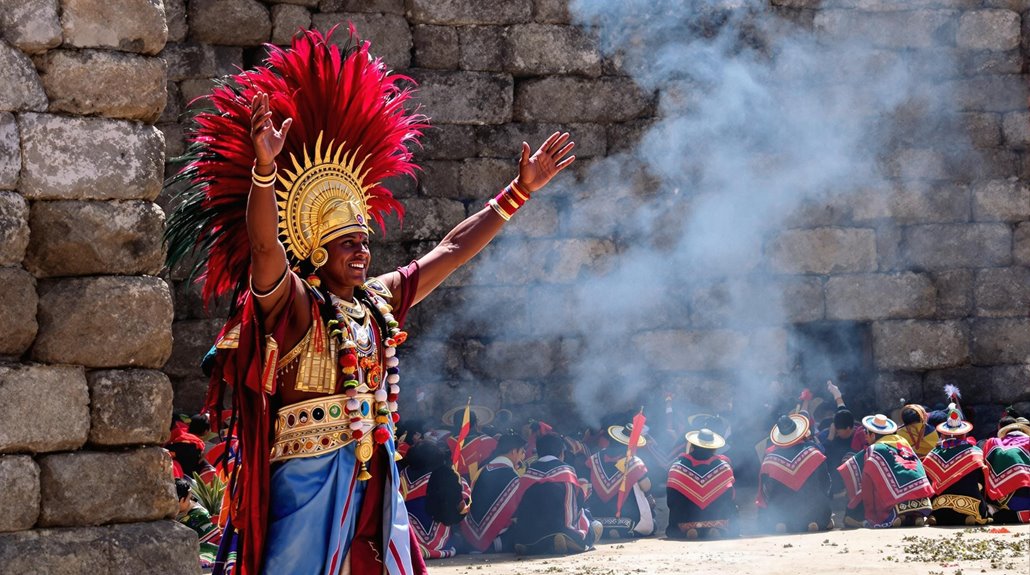
At Peru's grand Inti Raymi festival, you'll witness over 800 actors recreate the sacred rituals of the ancient Inca Empire. This spectacular celebration takes place each June 24th in Cusco, drawing more than 60,000 spectators to honor Inti, the Sun God. The ceremony follows a traditional route from the Qorikancha temple through Plaza de Armas, culminating at the majestic Sacsayhuaman fortress. You'll see authentic costumes, ceremonial processions, and symbolic tributes that bridge the ancient and modern worlds. This Cultural Heritage event offers a rare glimpse into the magnificence of Inca traditions that continue to shape Peru's identity.
Ancient Origins And Sacred Meaning
While many ancient traditions have faded into history, Peru's Inti Raymi stands as a witness to the Inca Empire's most sacred celebration. When you investigate this ancient Inca festival's origins, you'll uncover it began around 1430 AD as a significant tribute to the sun god Inti during the winter solstice.
You'll find that the Inti Raymi festival wasn't just any celebration - it was the Inca Empire's most significant religious ceremony. The festival's strict hierarchy allowed only the Inca ruler, his wife, priests, and nobility to participate in these sacred rituals. At its heart, you'll witness how the ceremony centered around a dramatic procession led by the Inca himself, moving from the Coricancha temple to the mighty Sacsayhuaman fortress.
At Sacsayhuaman, you'd have seen one of the most important moments of the festival: the lighting of the sacred fire using the sun's rays. This ritual, along with fasting, sacrifices, traditional dances, and a grand feast, created a powerful display of devotion. Though Spanish colonists later suppressed these practices, today's revival of Inti Raymi continues to honor these ancient traditions in Cusco.
Festival Timeline Through The Ages

The evolution of Inti Raymi tells a captivating story of cultural resilience across six centuries. You'll find the festival's roots in 1430 AD, when the Inca Empire established this grand ceremony to honor Inti, their Sun god. The celebration would traditionally begin at the Temple of the Sun, where the Sapa Inca led elaborate rituals that lasted for 15 days.
The festival's timeline took a dramatic turn in 1535, when colonial forces suppressed the last authentic Inti Raymi celebrated by an Inca emperor. For centuries, this sacred ceremony remained dormant, preserved only in historical accounts like those of Garcilaso de la Vega. But in 1944, you'd witness a striking revival when Cusco reintroduced Inti Raymi as a one-day cultural celebration, establishing June 24th as Cusco Day. Today's festival, while more condensed than its ancient predecessor, draws over 60,000 spectators to Plaza de Armas and surrounding sites. The ceremony's significance reached a new milestone in 2001 when Peru declared it a Cultural Heritage of the Nation, ensuring that you can experience this living exemplar to Inca traditions for generations to come.
Following The Sacred Route

Sacred footsteps trace an ancient path through Cusco during Inti Raymi, following a carefully choreographed route that connects three significant Inca sites. You'll witness the excursion begin at the Qorikancha temple, where the actor portraying the Inca emperor emerges with his entourage, all adorned in traditional Inca attire.
As you follow the procession to the Plaza de Armas, you'll observe a meaningful exchange between the Inca and the city's mayor. They share symbolic khipu representing three essential powers: desire, knowledge, and work. This exchange bridges the ancient and modern worlds in a powerful display of cultural continuity.
The route's culmination at Sacsayhuamán provides the festival's most dramatic moments. Here, on the fortress's esplanade, you'll join thousands of spectators watching the main ceremony unfold. The ritual includes ceremonial sitting, sacred tributes, and a simulated llama sacrifice - all performed with precise attention to historical detail. The esplanade of Sacsayhuamán serves as the perfect amphitheater for this grand spectacle, allowing you to experience the majesty of ancient Inca traditions in their full glory.
Modern Celebration Meets Tradition

Modern-day celebrations bridge ancient Incan traditions with contemporary spectacle during Inti Raymi, where over 800 actors don authentic costumes to recreate the festival's sacred rituals. You'll witness a stunning procession that weaves through Cusco's most significant historical sites, from the ancient Plaza de Armas to the majestic Sacsayhuaman fortress, following the path of the Inca Empire's original ceremonies.
While today's celebration has been condensed from its original 15-day duration, you'll still experience the core elements that define this winter solstice festival. As you watch the performers recreate ancient rituals, you'll see how the festival honors Inti, the Sun God, just as it did during the reign of Inca Pachacutec. The celebration's recognition as cultural heritage demonstrates its integral role in preserving Inca religion and traditions.
You'll join thousands of spectators, both locals and international visitors, who gather annually to witness this exceptional fusion of past and present. The festival not only keeps ancient customs alive but also supports Cusco's economy, proving that traditional ceremonies can thrive in the modern world while maintaining their sacred significance.
Planning Your Inti Raymi Experience

Successfully experiencing Inti Raymi requires careful advance planning, as this spectacular festival draws massive crowds to Cusco each year. You'll need to book accommodation months ahead to secure your stay during this popular celebration. To make the most of your experience, arrive early at each ceremonial location - from Qorikancha to the Plaza de Armas, and finally Sacsayhuamán.
For ideal viewing of the main ceremony, consider purchasing grandstand seating within Sacsayhuamán, which costs between $100-140 per person. Don't forget to wear layers of clothing and comfortable shoes, as you'll traverse through crowds while dealing with variable Andean weather conditions.
To guarantee a comfortable day of celebration, bring necessary supplies including:
- Water bottles to stay hydrated throughout the ceremonies
- Snacks and light meals for sustenance
- Sun protection, including sunscreen, hat, and sunglasses
- A small backpack to carry your essentials
Cultural Impact And Heritage
The enduring significance of Inti Raymi received formal recognition in 2001 when Peru's government declared it a Cultural Heritage of the Nation. This designation acknowledges the festival's pivotal role in preserving Andean cultural identity and ancient Inca traditions. As you investigate this celebration, you'll witness how the Inca religious ceremonies continue to captivate both locals and international visitors.
The Provincial Municipality of Cusco carefully oversees the festival's organization, guaranteeing that elements from the Inca period, including authentic Inca costumes and ceremonial practices, are faithfully represented. When you visit the former Inca Temple sites during the celebration, you'll experience firsthand how this cultural heritage event keeps the Inca Empire's legacy alive.
Beyond its cultural significance, you'll notice how Inti Raymi strengthens Cusco's economy through tourism while raising global awareness of Andean traditions. The festival's Cultural Heritage of the Nation status helps ensure that future generations will continue to experience and appreciate these ancient customs, making it more than just a tourist attraction – it's a living bridge between Peru's past and present.
Essential Festival Survival Guide

Preparing for Inti Raymi requires careful planning, as thousands of visitors converge on Cusco during the June solstice celebration. To fully experience the Festival of the Sun at the Sacsayhuaman archaeological site, you'll need to secure your spot during the early hours of June 24th. While official seating is available for purchase, many visitors opt for free vantage points around the ancient fortress.
For the best experience during this traditional Inca celebration in the Sacred Valley, follow these essential tips:
- Book your accommodations in Cusco at least 3-4 months in advance, as hotels fill up quickly during the winter solstice festivities
- Wear layers of clothing - mornings are cold, but temperatures rise considerably by midday
- Bring adequate sun protection, including sunscreen, hat, and sunglasses, as the altitude makes sun exposure more intense
- Pack water and snacks, as the ceremony lasts several hours with limited access to food vendors
Remember to respect local customs and dress codes while photographing the event. If you're planning to use the official seating area, purchase your tickets well in advance through authorized vendors or your hotel concierge.
Related posts