How Yom Kippur Is Observed in Israel: Traditions and Practices

On Yom Kippur, you'll witness Israel undergo a remarkable transition into a nation of profound stillness as the entire country observes this most sacred Jewish holiday. You'll see empty streets, closed businesses, and a complete halt to public transportation. Most Israelis dress in white, fast for 25 hours, and attend extensive synagogue services filled with prayer and reflection. The day begins with Kol Nidre prayers at sunset and concludes with the powerful blast of the shofar. Families and communities unite in this spiritual excursion of seeking forgiveness and renewal, creating an atmosphere of contemplation you won't experience anywhere else in the world.
The Significance of Yom Kippur
Anyone seeking to understand Jewish traditions must recognize Yom Kippur as the most sacred day in Judaism. Known as the Day of Atonement, it represents a pivotal moment when Jews worldwide engage in deep spiritual reflection and seek forgiveness from both God and their fellow humans.
You'll find that Yom Kippur arrives at the culmination of a profound ten-day journey that begins with Rosh Hashanah, the Jewish New Year. During this period, you're encouraged to examine your actions, acknowledge your mistakes, and actively work toward reconciliation with those you may have wronged. Jewish tradition teaches that your deeds for the coming year are inscribed in the Book of Life during this time, making it essential for personal transformation and spiritual growth.
What makes Yom Kippur especially meaningful is how it calls you to focus entirely on your spiritual needs. You'll observe that Jews mark this holy day by fasting, engaging in intensive prayer, and abstaining from physical pleasures. These practices aren't merely traditions; they're powerful tools that help you disconnect from worldly distractions and strengthen your connection with God, enabling genuine introspection and atonement.
National Shutdown and Quiet Streets
Tranquility descends upon Israel during Yom Kippur as the nation experiences a complete shutdown unlike any other day of the year. You'll find businesses, restaurants, and recreational venues all closed, while transportation networks, including Ben Gurion Airport, come to a standstill. This national shutdown transforms Israel's typically bustling urban landscapes into peaceful havens of quiet.
During this sacred time, you'll notice the usually busy streets become largely deserted, creating a unique atmosphere that's perfect for both introspection and spiritual contemplation. Families take advantage of the car-free roads, bringing out their bikes, scooters, and skateboards to enjoy the serene environment. If you're a Christian visitor in Israel during Yom Kippur, you can use this time to discover natural settings or visit historic religious sites in peaceful solitude.
You can also experience the essence of this holy day through the Artza subscription box, which brings Israel's Yom Kippur traditions to life with authentic locally sourced gifts, foods, and art. This allows you to connect with the profound quiet and contemplative nature of Israel's most sacred day, even from afar.
Traditional White Clothing
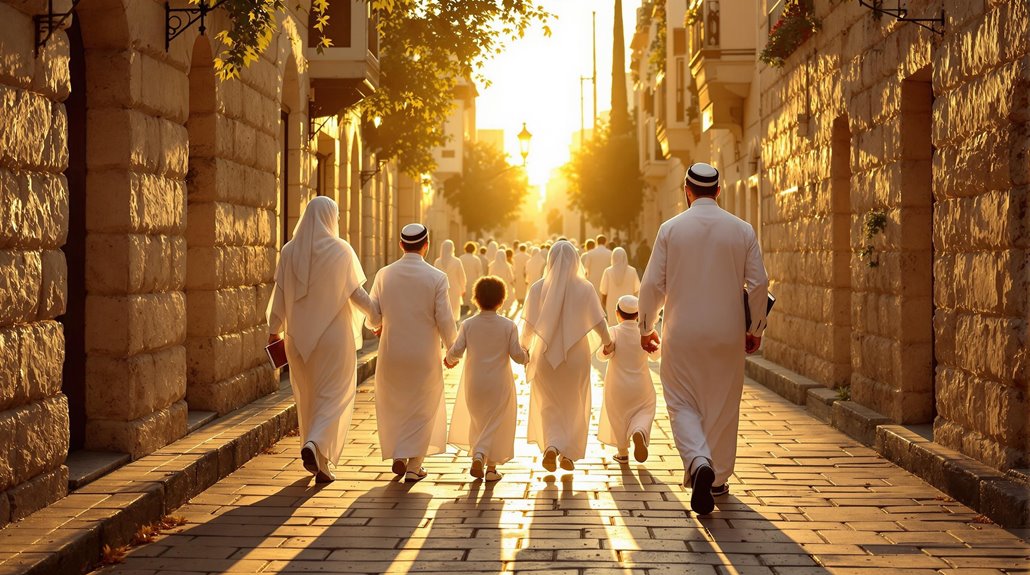
While observing Yom Kippur in Israel, you'll notice many worshippers dressed in pristine white clothing, particularly the traditional kittel worn by Orthodox Jewish men. This distinctive white garment isn't just a fashion choice - it's a powerful symbol of purity and humility that plays a pivotal role in the day's spiritual observances.
As you walk through synagogues and neighborhoods, you'll see how the white clothing creates a visual representation of the community's collective desire for atonement and spiritual cleansing. The kittel, worn by men during prayer services, serves as a physical reminder of their quest for repentance and renewal. You'll also observe many Jewish women participating in this tradition by wearing white dresses or blouses, contributing to the day's solemn atmosphere.
The choice of white clothing helps shift focus from material concerns to spiritual matters, emphasizing the sacred nature of Yom Kippur. When you're surrounded by a sea of white-clad worshippers, you'll understand how this simple yet momentous tradition helps create an environment where everyone can focus on spiritual reflection and the pursuit of divine forgiveness.
Fasting and Prayer Customs
Beyond the visual symbolism of white garments, the heart of Yom Kippur lies in its deep fasting and prayer customs. During this holiest day of the Jewish year, you'll observe a complete fast that lasts 25 hours, abstaining from both food and drink to focus your mind and spirit on repentance and reflection.
Throughout the day, you'll participate in several significant prayer services that mark different spiritual moments. The evening begins with Kol Nidre, a powerful service that sets the tone for the entire holiday. As the day progresses, you'll join the Yizkor memorial service to honor departed loved ones, and finally, you'll experience the intense closing prayers of Neilah. During these services, you'll focus on spiritual renewal and seeking forgiveness.
The fast isn't merely about physical deprivation - it's meant to help you concentrate on your spiritual undertaking and demonstrate your commitment to self-improvement. When you hear the shofar's blast at the day's termination, you'll know your period of fasting and prayer has ended. Many observers also emphasize charitable giving during this time as part of their path to atonement.
Synagogue Services and Rituals
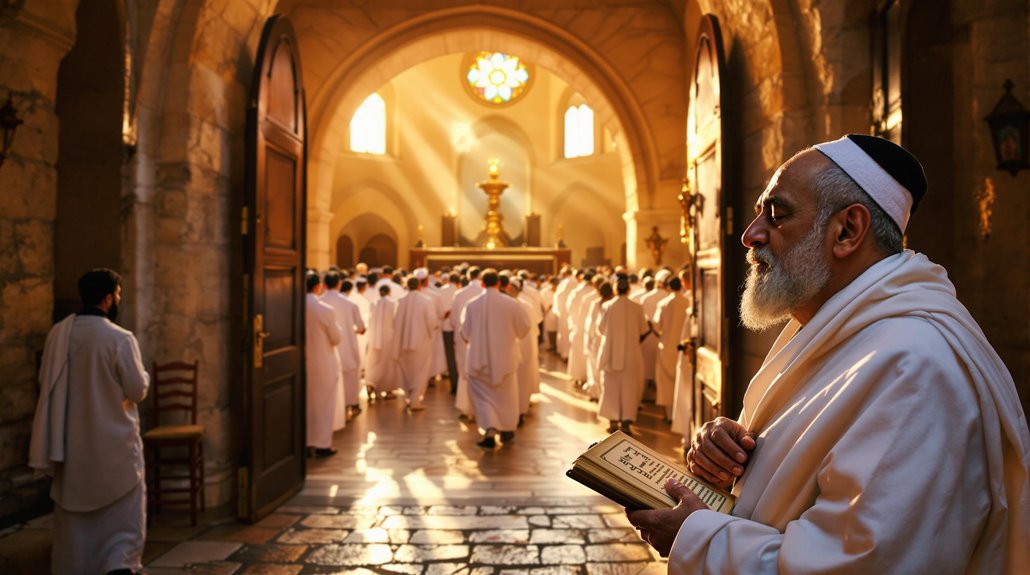
Prayer services form the spiritual backbone of Yom Kippur in Israeli synagogues, where congregants gather for multiple meaningful rituals throughout the day. During this Shabbat Shabbaton, you'll find worshippers dressed in white kittels, symbolizing purity as they participate in services that begin with Kol Nidre on the eve of the holiday.
Throughout the Day of Atonement, you'll experience extensive readings from the Torah, including the dramatic narrative of the Book of Jonah and passages describing the high priest's ancient Temple rituals. These readings connect you to centuries of Jewish tradition and emphasize the solemnity of the Days of Awe, which span from Rosh Hashanah to Yom Kippur. Services on Yom Kippur focus intensely on themes of repentance and spiritual renewal, with congregants engaging in communal prayer and personal reflection.
During the Yom Kippur service, you'll also participate in Yizkor, a powerful memorial prayer honoring departed loved ones. As the day draws to a close, you'll hear the shofar's resonant blast marking the end of Neilah, signaling the culmination of this most sacred day in the Jewish calendar.
Family and Community Gatherings
Yom Kippur's deep spiritual significance extends from synagogue walls into Israeli homes and neighborhoods, where family and community bonds take center stage. During the High Holidays, from Rosh Hashanah to Yom Kippur, you'll find Jewish communities across Israel embracing both private reflection and shared experiences through family gatherings and communal services.
The spirit of togetherness during Yom Kippur manifests in several meaningful ways:
- Pre-fast family meals bring relatives together to share traditional dishes and prepare spiritually for the day ahead
- Neighborhood prayer groups form spontaneously, creating intimate spaces for collective worship beyond formal synagogue settings
- Multi-generational family gatherings enable grandparents to pass down customs and traditions to younger members
- Community-wide charitable initiatives unite residents in pursuing acts of kindness and social responsibility
You'll notice how these gatherings create an intergenerational connection that strengthens family bonds while cultivating a deeper understanding of Jewish traditions. The combination of private family moments and broader community engagement creates a powerful sense of unity, as Israelis collectively participate in this sacred observance. This shared experience reinforces cultural identity and spiritual values across generations.
Breaking the Fast Together
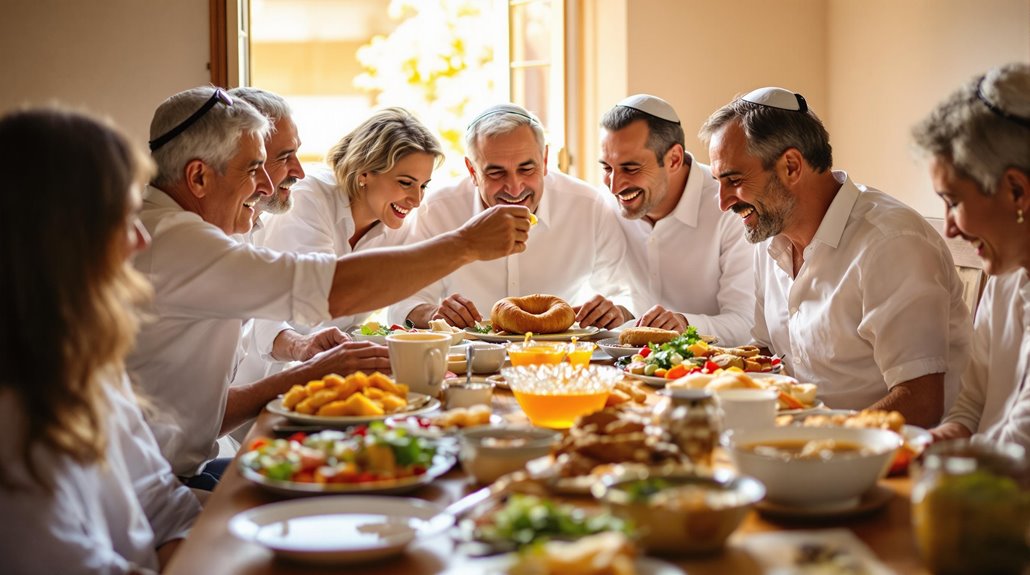
After 25 hours of fasting and reflection, Israelis keenly anticipate one of the most cherished moments of Yom Kippur - breaking the fast together.
As families and communities gather for this special occasion, you'll find a diverse array of traditional foods adorning tables across the country. The festive meal typically features comforting dairy dishes, sweet breads, and fresh fruits. You'll often spot steaming bowls of chicken soup, which help ease the body back into eating after the long fast.
What makes the break-fast particularly meaningful is how Jewish families maintain their unique cultural heritage through food. You might encounter Moroccan families serving aromatic skhug, while Persian families share their traditional rice and stew dishes. Each family often has their own special recipe that's been passed down through generations.
Beyond the food itself, breaking the fast together serves as a powerful moment of reconnection. You'll experience the joy of sharing this meal with loved ones as you move from the solemnity of Yom Kippur into the regular rhythms of the new year, marking a fresh beginning filled with hope and renewal.
Public Transportation Restrictions
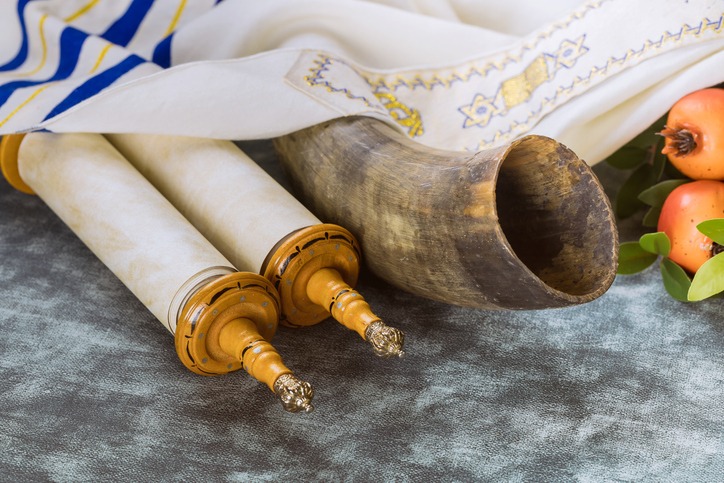
During this sacred holiday, Israel undergoes an astonishing change as the entire public transportation system comes to a complete standstill. As the most solemn Day in the Jewish religious calendar, Yom Kippur transforms Israel's lively streets into peaceful walkways, creating a unique atmosphere that you won't experience at any other time of the year.
If you're planning to visit Israel during the high holy days between Rosh Hashanah and Yom Kippur, you'll notice these extraordinary changes:
- All public buses, trains, and taxis cease operations completely throughout the country
- Private vehicles aren't allowed on the roads, except for emergency services
- Ben Gurion Airport shuts down entirely, with no incoming or outgoing flights
- Streets become pedestrian and cyclist havens, offering a rare car-free environment
This nationwide pause in transportation creates a distinctive sense of unity across Israel. You'll witness children riding bikes on major highways, families walking together in the middle of usually busy streets, and communities gathering without the usual background noise of traffic. It's a powerful reminder of how this sacred day brings the entire nation together in observance and reflection.
Youth Activities During Yom Kippur
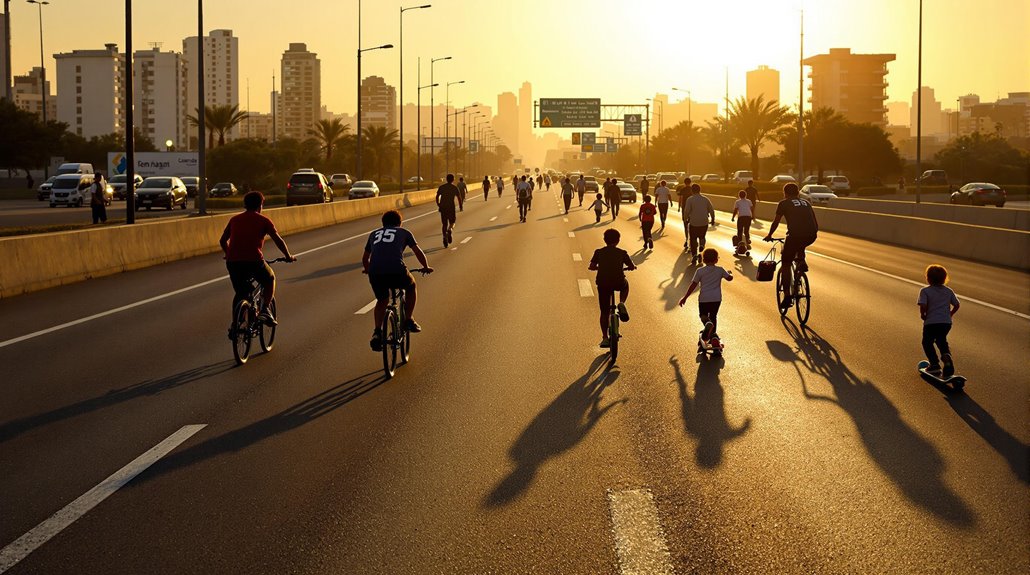
The empty streets of Israel create a unique playground for the nation's youth on this holy day. During Yom Kippur, you'll see children and teenagers taking advantage of the vehicle-free roads, riding their bicycles, skateboards, and scooters in a rare opportunity to claim the streets as their own.
As one of the most significant Jewish High Holy Days, Yom Kippur brings families together in unexpected ways. You'll find young people participating actively in synagogue services, with many bar and bat mitzvah celebrations scheduled to coincide with this meaningful occasion. The communal atmosphere extends beyond religious observance, as families gather in parks for leisurely walks and outdoor activities.
Schools play a vital role in engaging youth through educational programs and workshops that examine the significance of this solemn day. You'll notice an increasing emphasis on youth-led initiatives, particularly in philanthropic activities. Young people often organize visits to elder care facilities or coordinate food package preparation for those in need. These meaningful activities help connect the younger generation to the deeper spiritual and communal aspects of Yom Kippur while cultivating a sense of social responsibility.
Spiritual Reflection and Atonement
At the heart of Yom Kippur lies a deep expedition of spiritual contemplation and expiation. As you observe this sacred day in Israel, you'll find yourself immersed in an atmosphere of sincere repentance and reflective introspection. The 25-hour fast helps you disconnect from physical needs and focus entirely on seeking reconciliation with God.
During this holy period, you'll engage in several meaningful practices that facilitate your odyssey toward God's forgiveness:
- You'll begin with the powerful Kol Nidre service, where the annulment of vows sets the tone for your spiritual renewal
- You'll participate in the Vidui confessional prayers, acknowledging your wrongdoings with genuine remorse
- You'll join communal prayers that strengthen your connection with fellow worshippers as you seek forgiveness together
- You'll attend the Yizkor memorial service, honoring departed loved ones while finding comfort in your faith
As you traverse through these contemplative moments of Yom Kippur, you're participating in a timeless tradition of spiritual purification. This intentional focus on reconciliation with God metamorphoses the day into an opportunity for meaningful personal growth and renewed spiritual commitment.