
How to Tell If Your Baby Is Cold at Night: Signs and Solutions
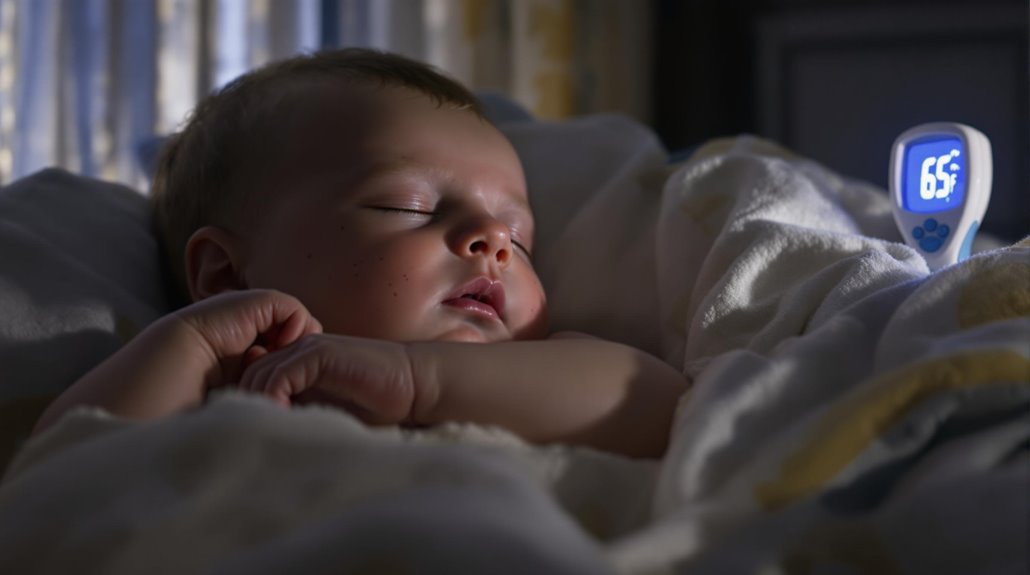
Your baby will show clear signs when they're cold at night, including tucked arms and legs, shivering, and restlessness. Don't rely on checking their hands or feet - instead, feel their chest or back, which should be warm but not sweaty. Keep the room temperature between 68-72°F (20-22°C) and dress them in one more layer than you'd wear. Use a well-fitted sleep sack or swaddle with the appropriate TOG rating for the season, and avoid loose blankets. Position the crib away from drafts and windows. Understanding your baby's temperature regulation needs will help you create the perfect sleep environment.
Understanding Baby Temperature Regulation
A baby's temperature regulation system works quite differently from an adult's. Your little one has a larger surface area compared to their body mass, which means they lose heat more quickly than you do. This unique characteristic, combined with their limited body fat insulation, makes it imperative to monitor your baby's comfort throughout the night.
While your baby's higher metabolism and muscle-to-fat ratio might make them feel warmer than adults in the same room temperature, don't let this mislead you. They still need help to regulate their body temperature effectively. Signs your baby might be struggling with temperature regulation include frequent night wakings and restlessness during sleep.
To keep your baby warm and comfortable, you'll need to compensate for their natural heat loss. Understanding that they rely heavily on external warmth sources is essential, as they can't adjust to temperature changes as efficiently as adults can. Despite their higher activity levels and metabolism, babies are more vulnerable to temperature fluctuations, which can profoundly impact their sleep quality. Being aware of these physiological differences will help you better maintain an appropriate room temperature for your baby's comfort.
Common Signs of Cold Babies
Parents should watch for clear physical and behavioral indicators that signal when their baby is too cold at night. One of the most obvious signs is when your baby sleeps with their arms and legs tucked underneath their body, trying to conserve warmth. You'll also notice changes in their sleeping patterns, such as difficulty settling after feedings or increased restlessness in their cot.
Physical signs of a cold baby include shivering and changes in skin color, particularly if they develop pale or bluish-tinted skin. To check your baby's comfort level, feel their chest or back rather than their hands or feet, as extremities naturally stay cooler. If your baby's chest feels cold to the touch, it's a reliable indicator that room temperature needs adjusting or additional layers are necessary.
Watch for changes in your baby's diapering patterns too. If you notice unusually wet diapers when this isn't typical for your baby, it could mean they're feeling cold, as their body works harder to maintain proper temperature. These signs together help you maintain your baby's comfort and keep them appropriately warm through the night.
Optimal Room Temperature Settings

Maintaining the right room temperature is essential for your baby's safety and comfort during sleep. The ideal room temperature for your little one should stay between 68-72°F (20-22°C). This range helps reduce the risk of sudden infant death syndrome (SIDS) and creates a safe sleep environment for your infant.
Since babies regulate their body temperature differently than adults, you'll need to monitor the temperature consistently. Installing a reliable room thermometer in your baby's nursery will help you maintain a comfortable and safe sleep space. Place it at baby's sleep level, away from windows or vents, to get the most accurate reading.
To guarantee your baby's room stays at the ideal temperature:
- Check the room thermometer regularly throughout the day and night
- Adjust your heating or cooling system as needed to stay within the recommended range
- Consider using a smart thermostat that can alert you to temperature changes
Don't rely on feeling the room temperature yourself, as adults and babies experience temperature differently. By keeping a close eye on these settings, you'll create the safest possible sleep environment for your little one.
Choosing the Right Sleepwear
Once you've established the right room temperature, proper sleepwear becomes your next line of defense in keeping your baby comfortable at night. Choose breathable fabric like cotton to help regulate your baby's body temperature and prevent overheating. You'll want to dress your little one in one more layer than what you'd wear to bed in the same room temperature.
For safer sleep options, use a snug-fitting sleep sack or sleep suit with legs. These alternatives eliminate the need for loose blankets, which can pose serious suffocation risks. If you have a younger baby who isn't rolling over yet, you can use a swaddle, making sure it's secure but not overly tight around their chest and hips.
Never place loose blankets, pillows, or soft bedding in your baby's crib. Instead, dress them appropriately and use a firm mattress with just a fitted sheet. A properly dressed baby will sleep soundly without the need for additional coverings. Remember to check that their sleepwear fits well - it shouldn't be too loose or restrictive, allowing for comfortable movement while maintaining warmth throughout the night.
Safe Swaddling Techniques

Properly swaddling your baby creates a secure, womb-like environment that helps them sleep better while staying warm. One of the most effective ways to keep your baby's temperature regulated at night is through safe swaddling techniques, especially when the Room temperature fluctuates.
To guarantee your baby's comfort and safety, choose breathable cotton layers for swaddling. The wrap should be snug but not restrictive, allowing enough Room for chest expansion and natural hip movement. Remember to always place your swaddled baby on their back to sleep, which is indispensable for reducing SIDS risk.
Monitor your baby's temperature by touching their chest or back, not hands or feet. The swaddle shouldn't be too tight around their chest or hips. Stop swaddling as soon as your baby shows signs of rolling over.
It's important to note that swaddling is just one of many layers of protection you can use to keep your baby comfortable at night. Once your baby starts showing signs of rolling, move to sleep sacks or wearable blankets to maintain their comfort and safety during sleep.
Layering Clothes for Nighttime
Dressing your baby in layers for nighttime sleep requires a thoughtful balance between warmth and safety. To guarantee your little one stays comfortable throughout the night, start with a lightweight cotton onesie as the base layer. Since babies need one extra layer compared to what you'd wear to bed, add a long-sleeved shirt and pants for additional warmth.
To keep your Baby Sleep safe and cozy, opt for a wearable blanket or sleep sack instead of loose bedding. These specially designed garments eliminate the risk of loose blankets while maintaining your baby's comfort. When you Dress Your Baby, choose breathable fabrics like cotton that help regulate temperature and prevent overheating.
If you're worried your Baby is Cold, monitor their neck and chest rather than their hands or feet. You'll need to adjust their clothing based on room temperature changes and your baby's signals. Remove or add layers accordingly, but always maintain safe sleep practices by avoiding loose items in the crib. Remember, proper layering helps prevent both overheating and chilling, supporting ideal sleep conditions for your little one.
Using Sleep Sacks Effectively
Sleep sacks serve as a safe and practical alternative to traditional blankets, providing consistent warmth throughout the night. When choosing a sleep sack, you'll want to examine the TOG rating, which tells you how much insulation it provides. The higher the TOG rating, the warmer your baby becomes, so match it to your room temperature using a room thermometer.
To guarantee your baby stays cozy and warm without overheating, follow these essential guidelines:
- Touch your baby's chest or back regularly - this area gives you the most accurate reading of their temperature
- Choose a sleep sack that fits snugly around the shoulders while allowing free leg movement
- Select the appropriate TOG rating based on your room's temperature and season
If you're moving from swaddling, start with a lighter TOG rating to prevent overheating. You'll know if your Baby is too Cold if their chest feels cool to the touch. Remember to size up as your baby grows to maintain proper fit around the shoulders and chest. When used correctly, sleep sacks eliminate the need for loose blankets while keeping your little one at a comfortable temperature throughout the night.
Monitoring Your Sleeping Baby
Your baby's nighttime comfort requires consistent monitoring to catch early signs of being too cold. Touch your baby's chest or back periodically throughout the night to verify their skin feels warm to the touch. If these areas feel cool, it's a clear indication that you need to add an extra layer to keep them warm.
Watch for behavioral signs that your baby is feeling uncomfortable. If they're restless, fussy, or constantly sucking their fingers, these could be signals they're too cold. Pay attention to how they position themselves - babies who sleep on their tummies with limbs tightly tucked are often trying to conserve body heat. Use a room thermometer to maintain the right temperature in their sleeping environment.
Monitor your baby's diaper changes, as increased wetness can indicate they're too cold. After night feedings, observe how easily they settle back to sleep. If they're having trouble getting comfortable, temperature might be the issue. To prevent your baby from getting cold, respond promptly to these signs by adjusting their clothing or room temperature. Regular monitoring helps guarantee your baby's skin stays at a comfortable temperature throughout the night.
Cold Weather Sleep Solutions

During cold weather months, keeping your baby comfortable at night requires a strategic approach to sleep preparation. Use a room thermometer to monitor the temperature, aiming to maintain it between 18°C and 22°C, as temperatures outside this range can increase the risk of sleep disruption.
To create a comfortable sleeping environment, consider these essential steps:
- Dress your baby in breathable, cotton layers - one more than you'd wear to bed
- Use a sleeping bag or sleep suit with legs for consistent warmth
- Place a humidifier in the room to prevent dry air from affecting your baby's skin
When preparing your baby's cot for colder nights, focus on using appropriate layers rather than loose blankets. A snug-fitting sleep sack provides warmth without the safety concerns of traditional bedding. While extra layers may be necessary on particularly cold nights, avoid overdressing your baby, as this can lead to overheating.
Trust your instincts when evaluating your baby's comfort level. Check their neck and chest regularly - these areas provide better temperature indicators than hands or feet. Adjust clothing and room temperature accordingly, remembering that every baby's comfort needs are unique.
Room Setup for Warm Sleep
A well-planned room setup forms the foundation of your baby's warm and cozy sleep environment. The room where your baby sleeps needs careful attention to temperature as well as overall comfort features to guarantee your baby is comfortable throughout the night.
Start by maintaining the temperature in your baby's room between 18°C and 22°C. This range helps your baby stay cozy without overheating. Check for drafts around windows and doors, and use draft stoppers to prevent cold air from disturbing your baby's sleep. You'll also want to position the cot away from air vents and windows to create a more stable temperature zone.
Keep in mind that your baby feels temperature differently than you do. Outfit the cot with a firm mattress and a well-fitted sheet that won't bunch up during sleep. When dressing your baby for bed, add one more layer than what you'd wear yourself, choosing breathable cotton fabrics that help regulate temperature. A sleep sack or sleep suit with legs can provide extra warmth while allowing freedom of movement. These simple adjustments to your baby's room setup can make a significant difference in how comfortable and warm your little one feels throughout the night.
Nighttime Temperature Checks
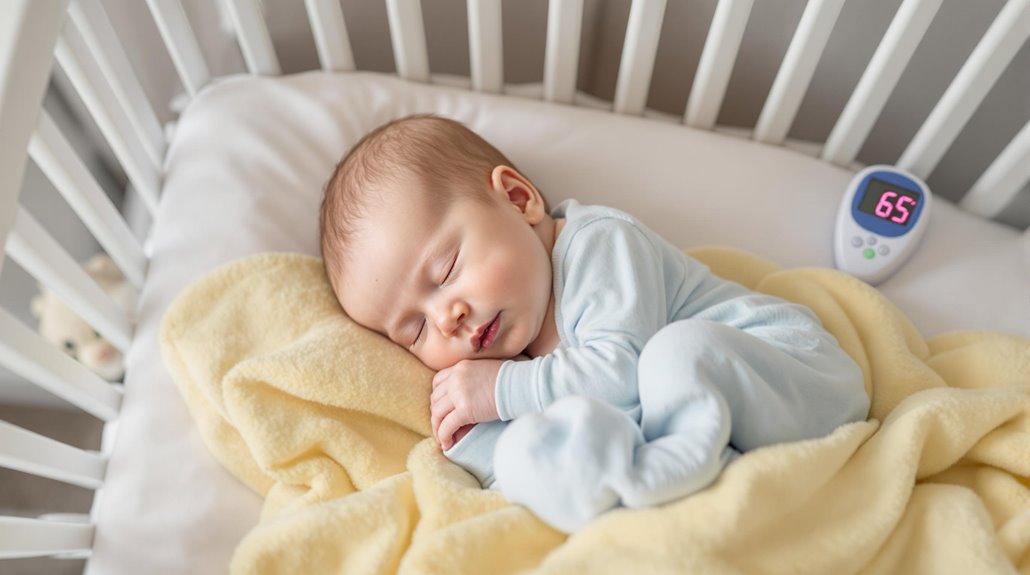
Regular temperature checks throughout the night play an essential role in ensuring your baby's comfort and safety. Touch your baby's chest or back periodically to gauge their temperature - it should feel warm but not sweaty. Since your baby's hands aren't a reliable indicator of their overall warmth, always check their torso instead.
Keep your baby in one more layer than you're wearing, but opt for lightweight layers rather than thick blankets. Don't use an electric blanket or heavy covers that could cause overheating. Monitor these key signs to determine if your baby's sleep environment needs adjustment:
- Restless movements and frequent waking could indicate temperature discomfort
- Shivering or rapid breathing may mean your baby feels cold
- Sweating or flushed skin suggests overheating
Use a reliable room thermometer to maintain the ideal temperature between 68-72°F (20-22°C). If your baby's sleep seems disturbed, check both the room temperature and their clothing layers. Remember that maintaining consistent temperature is important for safe and comfortable sleep, so regular monitoring throughout the night will help you make necessary adjustments promptly.
Emergency Warning Signs
While most cases of nighttime chilliness can be easily remedied, certain warning signs demand immediate medical attention. If your baby's body temperature drops below 95°F, you're dealing with a potential medical emergency that requires urgent care. This is especially critical for infants under 3 months old, who can't effectively regulate their temperature.
Don't wait to seek help if you notice severe signs of hypothermia, including uncontrolled shivering, labored breathing, or lethargy. Watch for signs that your baby is unresponsive or has bluish skin, as these symptoms could indicate dangerous levels of cold exposure that might lead to organ failure if left untreated. Call emergency services immediately if you observe these critical symptoms.
Be alert to other concerning behaviors such as persistent crying or an inability to feed normally. These symptoms, combined with decreased activity levels, could signal that your baby is dangerously cold. Remember that prolonged exposure to cold temperatures can result in serious complications like frostbite. Since babies are particularly vulnerable to temperature-related complications, it's better to err on the side of caution and seek professional medical evaluation when these warning signs appear.
Seasonal Sleep Adjustments
When the seasons shift throughout the year, your baby's sleep needs change too. You'll need to adjust their clothing and bedding to guarantee they stay warm and cosy without overheating. To check if your baby's cold at night, touch your baby's chest - it should feel warm, not hot or cold. Remember that your baby's head isn't a reliable indicator of their overall temperature.
As temperature changes occur, maintain your nursery between 68-72°F using heating or cooling systems as needed. Consider these essential seasonal adjustments:
- Switch between lightweight and heavier sleep sacks based on the season
- Add or remove layers of clothing depending on room temperature
- Use breathable cotton bedding that adapts to seasonal changes
If you notice your baby's sleep patterns becoming disrupted, they might feel cold or uncomfortable. Watch for signs like restlessness or cold extremities. You can use a space heater or humidifier to preserve consistent temperature levels, but always place them at a safe distance from the crib. Remember to dress your baby in one more layer than what you'd wear to bed, adjusting this rule according to seasonal demands.