
How to Stop Your Husband’s Snoring and Improve Your Rest

You can take several immediate steps to reduce your husband's snoring and improve your sleep quality. Start by having him sleep on his side instead of his back and raise the head of the bed slightly. Encourage lifestyle changes like weight loss, avoiding alcohol before bed, and maintaining a regular sleep schedule. For temporary relief, try using earplugs, white noise machines, or running a fan to mask the sound. If his snoring includes breathing pauses or gasping, he should see a doctor to check for sleep apnea. Understanding the root cause of his snoring will help you find the most effective long-term solution.
Understanding Different Types of Snoring
The first step in addressing your husband's snoring is recognizing which type he exhibits. Different types of snoring have various causes and require different solutions to effectively manage them.
Nasal snoring occurs when there's obstruction in the nasal passages, often due to allergies, a cold, or a deviated septum. You'll notice this type when your husband makes whistling or wheezing sounds during sleep. Mouth snoring happens when the soft palate and tissues at the back of the throat relax and vibrate, creating those familiar rumbling sounds.
The most serious type is obstructive sleep apnea (OSA), characterized by loud snoring followed by periods of silence where breathing temporarily stops. If you notice your husband gasping or choking during sleep, he may need a sleep study to diagnose this sleep disorder. Positional snoring occurs mainly when sleeping on the back, as gravity pulls the tongue and soft tissues backward, narrowing the airway.
Understanding these sleep-related breathing patterns will help you identify the root cause and seek appropriate treatment, whether it's lifestyle changes, medical devices, or professional intervention.
Identifying Sleep Apnea Warning Signs
Recognizing sleep apnea warning signs can mean the difference between getting proper treatment and risking serious health complications. If your partner snores loudly and you notice they stop breathing for 10 seconds or more during sleep, it's essential to seek medical attention, as these are classic signs of obstructive sleep apnea (OSA).
Watch for other warning signs that suggest your husband's snoring might be more than just a nuisance. Excessive daytime sleepiness, difficulty concentrating, and frequent morning headaches can all indicate poor sleep quality due to sleep apnea. While changing sleep position might help with regular snoring, these symptoms warrant professional evaluation.
If your husband has risk factors like obesity, diabetes, or high blood pressure, he's more likely to develop serious sleep disorders. Don't ignore these warning signs just because they seem normal - many people dismiss sleep apnea symptoms until they become severe. Remember that helping your partner stop snoring isn't just about helping you sleep well; it's about protecting their health. Even if they're reluctant to acknowledge the problem, encourage them to get checked, as untreated sleep apnea can lead to serious health issues.
Medical Solutions and Treatment Options
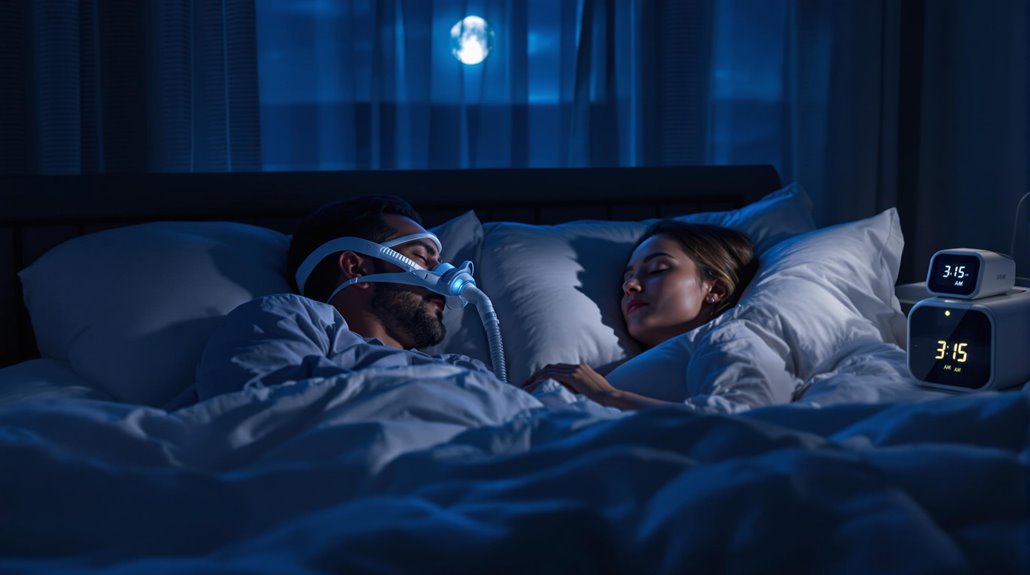
For those seeking medical intervention, several proven treatments can effectively address both snoring and sleep apnea. If your husband has been diagnosed with obstructive sleep apnea (OSA), his doctor may recommend continuous positive airway pressure therapy, which helps prevent complications like high blood pressure and heart disease.
A certified specialist in Clinical Sleep Medicine can evaluate your husband's nose and throat anatomy to determine the best treatment approach. Common medical solutions include oral appliances that reposition the jaw, surgical procedures to remove excess tissue, or the innovative Pillar Procedure, which stiffens the soft palate to reduce vibration during sleep.
Don't rely on sleeping pills, as they can worsen sleep apnea symptoms and increase the risk of heart problems. Instead, work with healthcare providers who'll properly diagnose the underlying cause and provide medical advice customized to your husband's condition. Some insurance plans cover sleep studies and treatment devices, so check your coverage before proceeding with any medical interventions. Remember that treating sleep disorders isn't just about stopping snoring - it's about protecting your husband's long-term health and ensuring you both get the restful sleep you need.
Lifestyle Changes for Better Sleep
While medical treatments offer effective solutions, simple lifestyle changes can dramatically reduce your husband's snoring without requiring professional intervention. If your partner struggles with obstructive sleep apnea (OSA) or general snoring, encouraging weight loss and regular exercise can significantly improve his upper airway function and breathing during sleep.
You'll want to help establish a consistent sleep schedule and discourage habits that worsen snoring. Suggest avoiding alcohol and heavy meals within three hours of bedtime. Adjusting his sleeping position is essential - sleeping on his side rather than his back prevents the tongue and jaw from blocking the airway. While positive airway pressure (CPAP) machines are effective, starting with simpler solutions like nasal strips or a humidifier can help keep nasal passages clear and reduce congestion-related snoring.
Consider introducing throat exercises to strengthen the muscles that control breathing during sleep. If these lifestyle changes don't provide enough relief, using white noise machines can help mask the sound. As a last resort, sleeping in separate bedrooms temporarily might help you both get the rest you need while working on long-term solutions.
Sleep Position Adjustment Techniques
Sleep position modification stands as one of the most effective and immediate solutions for reducing nighttime snoring. When your husband sleeps on his back, the tongue can fall backward and block the airway, making snoring often worse. Encouraging him to sleep on his side instead can substantially prevent snoring by keeping his airways clear.
You can try the tennis ball technique, which involves attaching a tennis ball to the back of his sleepwear. This simple solution makes back-sleeping uncomfortable, naturally prompting him to roll onto his side during sleep. Another effective approach is using an adjustable bed that allows you to raise his head, helping maintain open airways throughout the night.
Proper sleep positioning can also be achieved through specialized anti-snore pillows. These pillows are specifically designed to support the head and neck in an ideal position that promotes better airflow. Unlike medication or invasive procedures, adjusting sleep position is a natural, risk-free approach to managing snoring. By implementing these positioning techniques consistently, you'll help your husband develop better sleeping habits while creating a quieter, more restful environment for both of you.
Sound Management During Sleep
Beyond adjusting sleep positions, managing the actual sound of snoring can markedly improve your rest quality. While your partner might need to investigate Health solutions like positive airway pressure (CPAP) therapy to stop snoring completely, you can take immediate steps to minimize its impact on your sleep.
Noise-cancelling headphones or comfortable earplugs can be your first line of defense, effectively blocking out disruptive sounds while you rest your head on your pillow. A white noise machine offers another reliable solution, creating a consistent sound backdrop that helps mask your partner's snoring. Many people find that running a fan or air purifier serves a dual purpose - providing both air circulation and soothing background noise.
If these methods don't provide adequate relief, don't hesitate to consider sleeping in separate rooms. While this might seem drastic, it's a common solution that many couples adopt to guarantee quality rest. You can also establish a bedtime routine that includes relaxation techniques, helping you mentally prepare for sleep despite the noise. Remember, managing snoring sounds is essential for your well-being, and it's perfectly acceptable to prioritize your sleep needs.
Separate Sleeping Arrangements
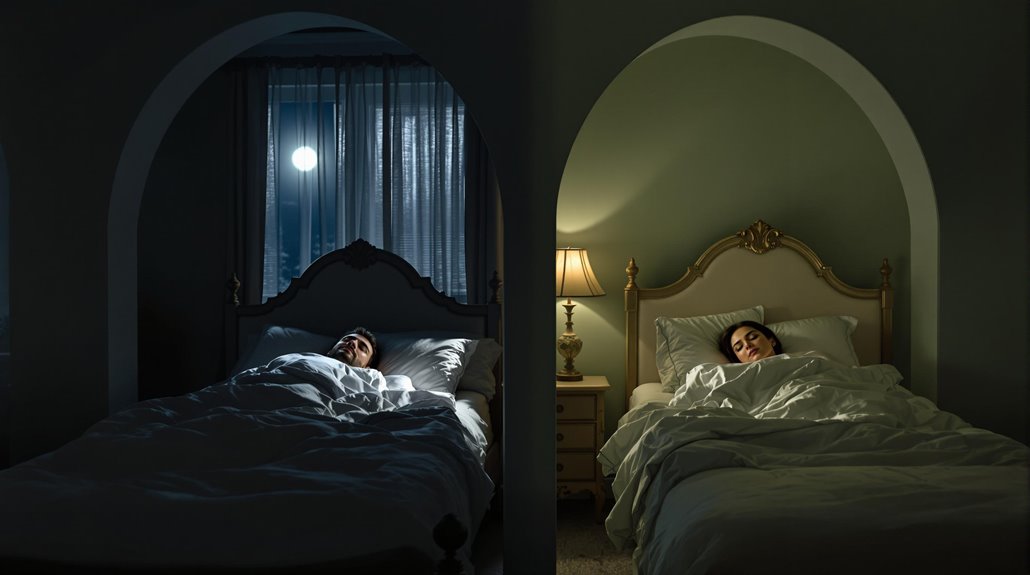
A temporary shift to separate sleeping arrangements might feel like a drastic step, but it's often necessary when other solutions fail to address severe snoring issues. When your snoring partner keeps you awake in the middle of the night, and methods like white noise machines aren't helping, separate rooms can considerably improve the quality of your sleep.
Before making this decision, consider these important steps:
- Have an honest conversation with your partner about how their snoring affects your rest and discuss potential serious health implications of poor sleep for both of you
- Agree on a trial period for separate sleeping arrangements while exploring medical solutions that may help block the airway issues that causes snoring
- Create a plan to maintain intimacy and connection despite sleeping apart, such as spending quality time together before bedtime
Remember that sleeping separately doesn't mean your relationship is struggling - it's a practical solution to guarantee both partners get the rest they need. While your partner's mouth open snoring might drive you to another room, consider this arrangement temporary while working together to find long-term solutions for better sleep.
Building Support and Communication
Dealing with snoring issues requires more than just physical solutions - it demands strong emotional support and open dialogue between partners. Let your partner know how their snoring affects your sleep quality while remaining sensitive to their feelings, as they might feel embarrassed or defensive about the situation.
Encourage your partner to seek medical help and attend sleep studies if necessary. Working together to find a solution shows that you're committed to resolving the issue as a team. When you can't sleep due to snoring, avoid showing frustration or anger. Instead, ask your partner to collaborate with you in finding the right combination of remedies and lifestyle changes.
Have your partner try different sleeping positions and spend time discussing what works best for both of you. Consider establishing a pre-bedtime routine that helps both of you fall asleep more comfortably. Remember that addressing snoring isn't about blame - it's about improving both partners' quality of life. Keep communication channels open, share your progress, and celebrate small victories together as you work toward better sleep for both of you.