How to Sleep Comfortably on an Airplane: Expert Tips

To sleep comfortably on an airplane, you'll need to create an ideal rest environment. Start by selecting a window seat and reclining to a 135-degree angle for better spinal alignment. Wear light, removable layers and bed socks to maintain an optimal sleep temperature of 60-67°F. Pack essential accessories like a quality neck pillow, noise-canceling headphones, and a light-blocking eye mask to combat disruptions. Stay hydrated but avoid alcohol and caffeine. Position your body strategically with straight legs, supported lower back, and proper arm placement. These expert-backed techniques are just the beginning of reshaping your in-flight rest experience.
Creating Your Perfect Sleep Environment
Getting quality sleep on a plane starts with controlling your immediate environment. Since cabin temperatures can vary dramatically by up to 50°F, you'll need to prepare for these fluctuations to maintain the ideal sleep temperature of 60-67°F. Dress in light, removable layers and consider bringing a cooling cap to regulate your body temperature effectively throughout your flight time.
Secure a window seat if possible, as it gives you more control over your sleep environment and provides a surface to lean against. Don't forget to wear socks, which can considerably improve your sleep efficiency by 7.6% and add 32 precious minutes to your rest time. Make sure to pack a light-blocking eye mask to maintain your natural sleep-wake cycle, especially on long-haul flights.
To create the preferred sleeping conditions, shield yourself from blue light by avoiding screens before you plan to rest. Instead, try listening to pink noise through your headphones - it's more effective than white noise at masking plane sounds and helping you drift off. Bring a supportive neck pillow to prevent discomfort and maintain proper alignment while sleeping upright.
Essential Travel Accessories for Rest
Just a few well-chosen travel accessories can alter your in-flight sleep experience from frustrating to revitalizing. A high-quality neck pillow should be at the top of your list, as it'll provide pivotal support for your head and neck, preventing the dreaded head-bob that often disrupts sleep. Pair this with noise-canceling headphones to block out engine noise and crying babies - you can even use them to play white noise for added relaxation.
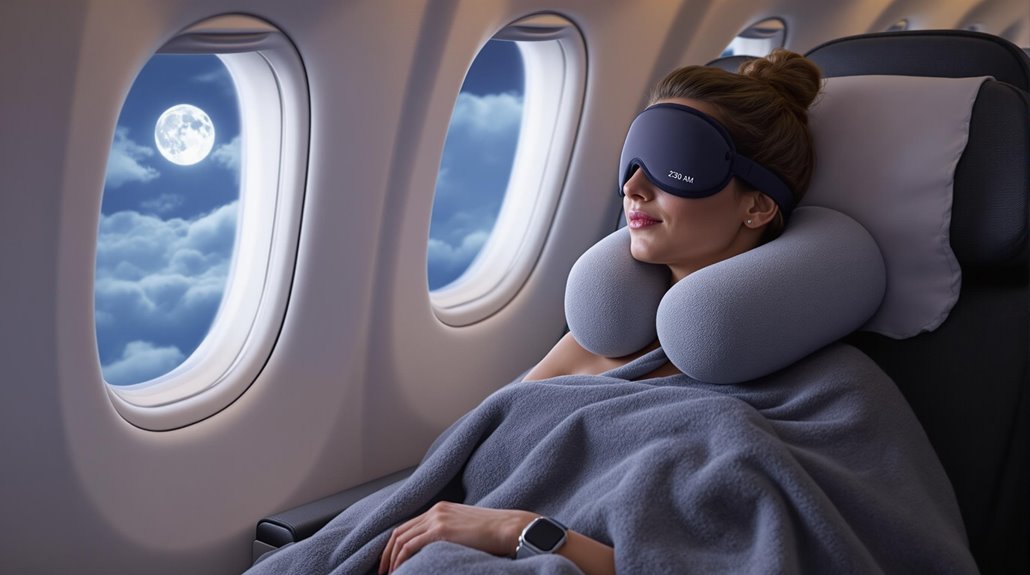
Don't underestimate the power of a good eye mask or sleep mask. By blocking out cabin lights and your seatmate's reading light, you'll help maintain your body's natural melatonin production, which is essential for quality rest. For long-haul flights, compression socks aren't just a safety measure - they'll improve blood flow and help you stay comfortable while sleeping upright.
Finally, consider bringing a small travel pillow or rolling up a sweater to place behind your lower back. This lumbar support can remarkably reduce back strain and discomfort during extended periods of sitting. When used together, these accessories create an ideal environment for achieving better sleep quality, even in cramped airplane seats.
Body Positioning and Comfort Tips
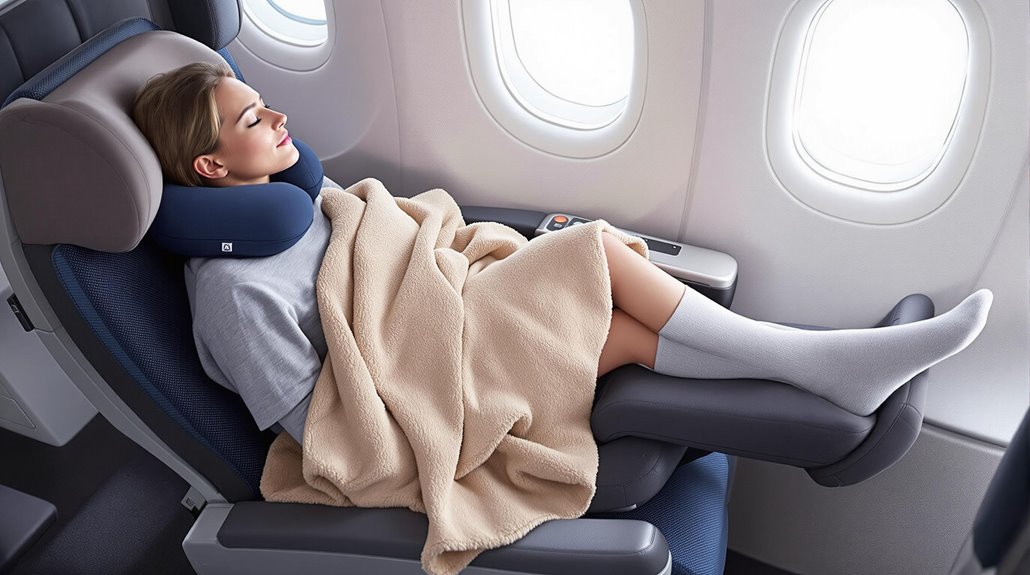
Once you've settled into your seat, proper body positioning becomes essential for achieving restful sleep during your flight. Whether you're in a window seat or aisle seat, lean your seat back to a 135-degree angle, which research shows is the safest sleep position and reduces pressure on your body.
To maintain proper spinal alignment, place a rolled-up jacket or small pillow in the curve of your lower seat back. This supports your spine's natural S-curve and prevents discomfort during sleep. Keep your legs straight with a slight bend at the knees instead of crossing them - this improves circulation and reduces the risk of blood clots. If available, use a footrest for additional support.
Make the most of your personal space by properly positioning your arms on the armrests, which helps distribute weight and reduces back strain. A U-shaped neck pillow is important for head and neck support - ensure it cradles both your head and chin to minimize movement during sleep. If you need extra lumbar support, add another small pillow or rolled item to your lower back for ideal comfort during your trip.
Temperature and Hydration Management
During air travel, managing your temperature and hydration can make or break your in-flight sleep quality. Cabin temperatures can fluctuate dramatically by up to 50°F, making it essential to maintain a suitable sleep temperature between 60-67°F for better sleep cycles. To enhance your sleep hygiene and stay comfortable throughout your flight, wear light, removable layers that you can adjust as needed.
Consider these science-backed strategies for better sleep on a plane:
- Wear bed socks to improve your sleep routine - they increase sleep efficiency by 7.6%, reduce awakenings by 7.5 times, and add 32 minutes to your sleep
- Use a cooling cap to create an ideal sleep temperature while helping you stay warm where needed
- Stay hydrated with water or herbal teas instead of alcohol or caffeine
Your hydration choices considerably impact your sleep quality during air travel. While it's tempting to indulge in alcoholic beverages or coffee, these can disrupt your sleep patterns. Instead, maintain proper hydration with water or calming herbal teas throughout your flight. This approach helps regulate your body temperature and promotes more restful sleep while traveling.
Pre-Flight Sleep Schedule Adjustments
Preparation is key to minimizing jet lag and maximizing your in-flight sleep quality. When traveling across multiple time zones, you'll want to adjust your sleep schedule before departure to align with your destination's time zone. Start making these adjustments 2-3 days before your flight, gradually shifting your bedtime and wake-up times in small increments.
Tips for sleeping better during this shift include avoiding naps on your travel day, which can disrupt your natural sleep patterns. Instead, focus on maintaining a consistent schedule that matches your destination's time zone. If you're heading east, try going to bed slightly earlier each night before your trip. If you're traveling west, stay up a bit later each evening to ease the adjustment.
Once you arrive, expose yourself to natural light at appropriate times to help reset your circadian rhythm. While it might be tempting to use a sleep aid, allowing your body to adjust naturally will lead to better deep sleep in the long run. Remember that falling asleep in a new time zone takes patience - your body typically needs about a day per time zone crossed to fully acclimate.
Noise and Light Control
Creating the right environment for sleep starts with managing two essential factors: noise and light exposure. To optimize your sleep quality during flights, you'll need to control these elements that can greatly impact your sleep-wake cycle.
When it comes to noise control, noise-canceling headphones are your best ally. They effectively block out disruptive airplane sounds that could cause sleep disturbances. For an even better experience, play pink noise through your headphones - it's proven to help you fall asleep 38% faster than white noise. Think of steady rainfall or beach waves as your natural sleep aid.
To manage light exposure effectively:
- Choose your seat away from blue light sources, like window seats during daytime flights
- Wear a light-blocking eye mask to counter the effects of cabin lights, which can reduce melatonin duration by 90 minutes
- Request flight attendants to dim cabin lights in your seating area when possible
Sleep Medicine experts emphasize that creating a dark environment is essential for maintaining your body's natural sleep rhythm. By implementing these noise and light control strategies, you'll dramatically improve your chances of getting quality rest during your flight.
Mindfulness and Relaxation Techniques
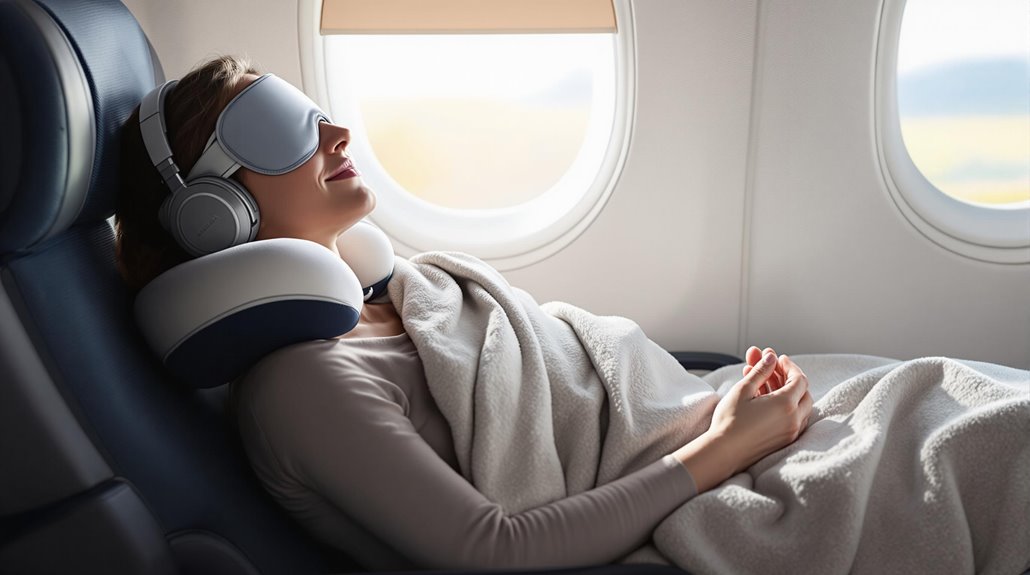
A calm mind is your most powerful tool for achieving restful sleep at 35,000 feet. Practicing mindfulness meditation during your flight can considerably reduce travel stress and improve your sleep quality. Focus on deep breathing exercises and present-moment awareness to help quiet your racing thoughts and prepare your body for rest.
Research supports that mindfulness techniques can effectively combat insomnia and reduce fatigue. You'll want to incorporate relaxation techniques like progressive muscle relaxation, which involves systematically tensing and releasing different muscle groups to release physical tension. This practice helps signal to your body that it's time to unwind and rest.
To optimize your sleep-wake cycle while flying, avoid exposure to blue light from phones, tablets, or laptops before attempting to sleep. Instead, create a peaceful environment by listening to pink noise through your headphones, which can mask disruptive cabin sounds. Don't forget to support your physical comfort with a quality neck pillow. When combined with mindfulness practices, these tools can help you achieve more restorative sleep during your flight. Remember that consistency with these techniques will lead to better results over time.