How to Sleep Better and Be Healthier Naturally

You'll sleep better and feel healthier by sticking to a consistent 7-9 hour sleep schedule, even on weekends. Keep your bedroom cool, dark, and quiet, using blackout curtains and white noise if needed. Avoid caffeine after lunch, skip late-night heavy meals, and try calming drinks like chamomile tea before bed. Regular exercise, especially in the morning or afternoon, can substantially improve your sleep quality. Take short 20-30 minute naps before 3 PM if needed, and establish relaxing bedtime rituals. These natural adjustments to your daily routine are just the beginning of your expedition toward better sleep.
Building Your Ideal Sleep Schedule
Setting up a consistent sleep schedule ranks among the most powerful ways to improve your sleep quality naturally. To optimize your body's internal clock, you'll need to commit to sleeping 7-9 hours each night while maintaining the same bedtime and wake up time every day—including weekends. This consistency helps regulate your circadian rhythm, making it easier to fall asleep and wake up naturally.
While you're building your sleep schedule, pay attention to daytime habits that affect your rest. Limit daytime naps to 20-30 minutes in the early afternoon to avoid disrupting your nighttime sleep. Exposure to natural light during the day plays a pivotal role in maintaining your body's sleep-wake cycle, so try to spend time outdoors or near windows.
Create a relaxing routine that signals bedtime to your body. Your pre-bedtime routine might include activities like reading, gentle stretching, or meditation about 30-60 minutes before sleep. By following these patterns consistently, you're training your body's internal clock to recognize when it's time to wind down and when it's time to be alert.
Smart Food and Drink Choices
Along with maintaining a consistent sleep schedule, what you eat and drink dramatically affects your sleep quality. Your nighttime routine should carefully consider food and drink consumption, as certain choices can either promote or disrupt your sleep. Natural sleep-promoting hormones can be stimulated by drinking warm milk, chamomile tea, or tart cherry juice before bed.
To optimize your sleep through smart dietary choices:
- Avoid caffeine in the afternoon and evening, as it acts as a stimulant and disrupts your circadian rhythm, making it harder to find/locate/uncover sleep naturally
- Skip alcoholic beverages close to bedtime - while they might make you drowsy initially, they'll fragment your sleep and reduce overall sleep quality
- Time your meals properly by avoiding heavy eating close to bedtime, which can cause physical discomfort and interfere with restful sleep
Pay attention to how different foods and drinks affect your personal sleep patterns. You might find that warm milk helps you drift off easily, while chamomile tea doesn't have the same effect. By monitoring these responses, you'll unearth/uncover/reveal the ideal combination that works best for your body and supports healthy sleep habits.
Creating Your Sleep Sanctuary

Your bedroom environment plays an essential role in achieving restful sleep each night. To create your ideal sleep sanctuary, start by controlling light exposure using blackout curtains, which help maintain darkness and support natural melatonin production. Keep your room dark and quiet by using earplugs or white noise machines to block disruptive sounds.
Invest in a comfortable bed with a supportive mattress and pillows that properly align your spine. Maintain a comfortable temperature throughout the night to prevent sleep disruptions. These physical elements directly impact your sleep quality and help regulate your circadian rhythms.
Establish pre-bedtime rituals that promote relaxation techniques, such as gentle stretching, reading, or meditation. These activities signal your brain that it's time to wind down. Avoid blue light from phones, tablets, or computers before bed, as this can interfere with your natural sleep-wake cycle.
Create a consistent sleep routine by going to bed and waking up at the same times daily, including weekends. This consistency helps your body maintain its natural rhythm and improves overall sleep quality. Your bedroom should become a dedicated space for rest, making it easier to fall asleep naturally.
Managing Daily Rest Periods
Throughout the day, managing your rest periods strategically can greatly impact your nighttime sleep quality. If you're having trouble sleeping at night, your daytime rest habits might need adjustment. While short naps can be beneficial, particularly if you exercise enhances your energy expenditure, it's essential to maintain proper timing and duration.
For healthy sleep habits, follow these key guidelines:
- Limit naps to 20-30 minutes to avoid disrupting your natural sleep-wake cycle
- Schedule rest periods before 3 PM to prevent interference with nighttime melatonin production
- Practice deep breathing during rest periods to maximize relaxation without falling into deep sleep
Keep in mind that maintaining an ideal temperature and consistent schedule is just as important for daytime rest as it is for nighttime sleep. If you find yourself frequently needing naps, consider adjusting your nighttime routine before turning to melatonin supplements. Monitor how your daytime rest affects your evening sleep patterns, as individual responses can vary noticeably. Remember that the goal isn't to eliminate rest periods entirely but to optimize them for better overall sleep quality and daytime alertness.
Exercise for Better Sleep
Regular exercise stands as one of the most effective natural ways to improve your sleep quality. When you engage in physical activity consistently, you'll notice improvements in both your sleep duration and the restorative nature of your rest. Your body responds particularly well to aerobic activities like brisk walking, jogging, or swimming, which help regulate your sleep-wake cycle.
Timing your exercise correctly plays a vital role in maximizing sleep benefits. You'll get the best results by working out in the morning or afternoon, as evening exercise can stimulate your body and make it harder to fall asleep. Don't forget to include strength training in your fitness routine - it's proven to increase slow-wave sleep, the deepest and most rejuvenating phase of your sleep cycle.
To optimize your sleep through exercise, you'll need to maintain a consistent routine that fits your schedule and preferences. Start with activities you enjoy and gradually increase their intensity. Whether you choose morning jogs, afternoon swims, or midday weight training sessions, your commitment to regular physical activity will lead to noticeable improvements in your sleep quality over time.
Handling Nighttime Stress
Nighttime stress can sabotage even the best sleep intentions, making it crucial to develop effective coping strategies. When you're stressed, it's harder to fall asleep, leading to poor sleep quality and a cycle of anxiety. To help break this pattern and get a good night's sleep, you'll need to actively manage your pre-bedtime mindset.
To sleep well, implement these proven stress-reduction techniques:
- Make journaling part of your bedtime routine - writing down your worries helps clear your mind before bed
- Try relaxation exercises like deep breathing or progressive muscle relaxation to calm your nervous system
- Practice mindfulness to stay focused on the present moment rather than tomorrow's concerns
Creating a healthy wind-down routine is indispensable. Try to avoid stimulating activities like work emails or social media scrolling at least an hour before bed. Instead, engage in calming activities that help your mind transition to sleep mode. Maintaining a consistent sleep schedule reinforces your body's natural sleep-wake cycle, making it easier to fall asleep naturally. Remember, managing nighttime stress isn't just about the moments before bed - it's about cultivating habits that promote relaxation throughout your evening routine.
Natural Sleep Aid Options

While managing stress helps promote better sleep, natural remedies can provide additional support for those seeking a gentler approach to rest. If you're looking to improve your sleep cycle naturally, several evidence-based options are worth considering.
Melatonin supplements can enhance your body's natural sleep-wake rhythm, making it easier to fall asleep at night. You might also benefit from drinking chamomile tea before bedtime, as its flavonoids interact with brain receptors to promote relaxation. Another beneficial drink is tart cherry juice, which contains natural melatonin and supports healthy sleep patterns.
Essential nutrients play a vital role in sleep quality. You can improve your rest by incorporating magnesium, omega-3 fatty acids, and zinc into your daily routine. These supplements work together to support relaxation and overall sleep health when taken consistently.
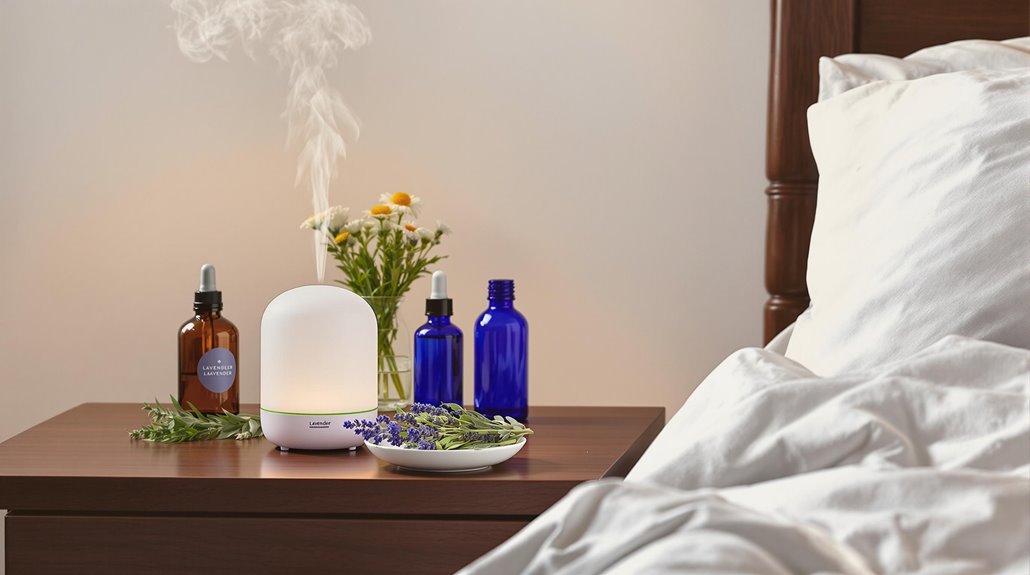
For those interested in herbal natural sleep aids, valerian root and lavender oil show promise in supporting better sleep. However, you should note that while these options have been studied, researchers are still investigating their long-term effectiveness and safety. It's wise to consult with a healthcare provider before starting any new supplement regimen.
Light Exposure Strategies
Light plays an essential role in regulating your sleep-wake cycle, making proper exposure critical for quality rest. Your body's internal clock responds strongly to light exposure throughout the day, and managing it properly can significantly improve your sleep quality. Research from 2022 confirms that daytime bright light exposure helps you sleep better and longer, while reducing nighttime blue light prevents disruption to your natural melatonin production.
To optimize your circadian rhythm through light exposure strategies, follow these key practices:
- Get plenty of bright light during daytime hours, either through natural sunlight or a therapeutic bright light device
- Wear blue light-blocking glasses when using electronic devices in the evening
- Stop using all electronic devices at least 2 hours before bedtime to minimize exposure to sleep-disrupting blue light