How to Make Your Cat Sleep at Night and Stay Active During the Day

To help your cat sleep at night and stay active during the day, start by aligning with their natural crepuscular patterns. Schedule interactive playtime during daylight hours using toys like laser pointers and feather wands. Set up consistent feeding times, including a small meal before bedtime, and create a dedicated sleep space with cozy beds and minimal light exposure. Provide environmental augmentation with cat trees, window perches, and puzzle feeders to keep them engaged throughout the day. Consider automatic feeders for early morning meals to prevent wake-up calls. Don't reward nighttime activity with attention. These foundational steps will lead you to a more thorough solution for peaceful nights.
Understanding Your Cat's Natural Schedule
While many cat owners expect their pets to follow human sleep patterns, cats actually operate on a unique biological schedule that's quite different from ours. Your cat's natural rhythm is crepuscular, meaning they're most active during dawn and dusk - times when their wild ancestors would hunt prey most successfully.
Understanding this natural schedule is essential for managing your cat's behavior. Unlike humans who sleep for 7-8 continuous hours at night, cats sleep for about 18 hours throughout the day and night in short bursts, typically lasting 7-8 minutes each. This explains why your cat might be racing around the house at 3 AM while you're trying to sleep.
Your cat's active periods during twilight hours directly conflict with typical human schedules, where most people are either preparing for bed or still sleeping. This misalignment between your schedule and your cat's natural rhythm can lead to disrupted sleep for both of you. By recognizing these fundamental differences in sleep patterns, you'll be better equipped to develop strategies that help align your cat's schedule more closely with yours.
Health Checks First
Before attempting to change your cat's sleep patterns, a thorough veterinary checkup is essential to rule out any medical causes for nighttime activity. Cats Sleep differently when they're experiencing health problems, and what you might perceive as behavioral issues could actually stem from underlying health conditions. When you check with your vet, they can investigate whether conditions like thyroid disease, chronic pain, or cognitive decline are affecting your Cat to Sleep schedule.
If your cat's suddenly become more active at night and prefers to sleep during the day, don't immediately assume it's just being difficult. Medical issues can disrupt their natural circadian rhythms, making it challenging for them to maintain a normal sleep schedule. Your veterinarian can perform necessary diagnostic tests to identify any physical problems that might be causing the disruption. Once they've diagnosed any underlying health concerns, proper treatment can help regulate your cat's sleep-wake cycle naturally.
Strategic Feeding Times Matter
Strategic meal timing plays a pivotal role in regulating your cat's sleep-wake cycle. Cats prefer routine, and you can use this to your advantage by establishing consistent feeding times that align with their natural body clocks. It's a good idea to feed your cat a small evening meal close to your bedtime, as cats tend to feel sleepy after eating.
To maintain your cats schedule throughout the night, consider investing in an automatic pet feeder that dispenses food in the early morning hours. This prevents your cat from waking you up for food and helps establish a more natural feeding pattern. When your cat demands food during nighttime hours, it's essential not to give in, as this only reinforces disruptive behavior and makes it harder to break the cycle.
Creating the Perfect Sleep Space
Beyond feeding schedules, your cat needs a designated sleeping sanctuary to support healthy nighttime habits. To manage night sleep/wake cycles effectively, you'll need to establish a dedicated space that encourages rest while keeping your cat comfortable and secure.
To create the perfect sleep environment and train your cat to use it:
- Close your bedroom door at night to minimize disruptions and maintain a consistent routine that supports both your rest and your cat's.
- Provide your cat with a separate room equipped with comfortable bedding, essential resources, and minimal light exposure.
- Set up multiple resting spots with cozy beds, cat toys, and elevated perches to give your cat options for feeling secure.
- Guarantee easy access to fresh water, food, and a clean litter box within the designated sleep area.
- Use positive reinforcement to help your cat associate the new space with comfort and relaxation.
Remember to introduce these changes gradually, allowing your cat time to adjust to the new sleeping arrangements. A well-designed sleep space will help regulate your cat's nocturnal tendencies and promote better rest for both of you.
Daytime Entertainment Solutions
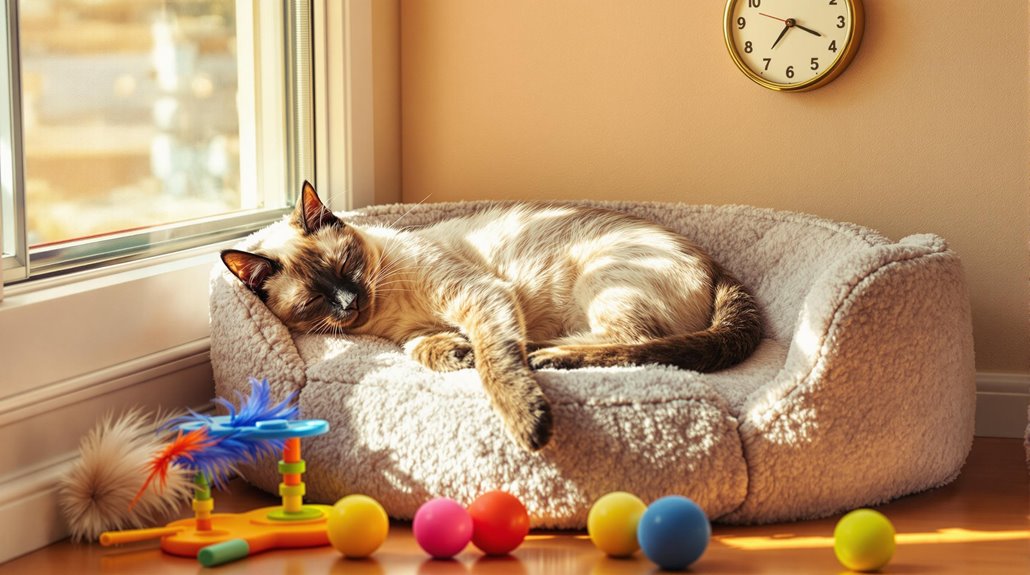
Keeping your cat active during daylight hours is crucial for establishing healthy sleep patterns at night. By engaging your feline friend with interactive toys like laser pointers and feather teasers, you'll help reduce night time activity while satisfying their natural instinct to hunt and play.
To keep your cats mentally stimulated throughout the day, invest in puzzle feeders and treat-dispensing toys. These enrichment tools encourage natural foraging behaviors and help maintain their interest when you're away. Place these items strategically around your home, creating an engaging environment that promotes activity during daylight hours.
Consider dedicating specific play time sessions during the day to establish a routine. You can enhance these sessions by incorporating cat trees and window perches, which provide both physical exercise and environmental enrichment. If your schedule allows, adopting a second cat can provide a constant playmate, ensuring continuous daytime engagement and reducing nocturnal behavior.
Remember to distribute food puzzles and interactive toys throughout your home. This strategy helps cats keep busy during the day, making them more likely to rest at night when you do.
Evening Activity Planning
Winding down your cat's day through planned evening activities sets the stage for a peaceful night's sleep. Cats often display bursts of energy during twilight hours, so it is crucial to channel this natural behavior into structured play sessions that'll prevent your cat from becoming active in the middle of the night.
To effectively plan your cat's evening routine, make sure to include these essential activities:
- Schedule 30-45 minutes of interactive playtime using engaging toys like laser pointers and feather wands
- Set up food-dispensing puzzles or scatter treats around your home to encourage natural hunting behaviors
- Time your cat's final meal close to your bedtime to promote post-meal drowsiness
- Create a calming environment with soft lighting and peaceful music
- Provide both mental and physical stimulation through varied activities
Breaking Nighttime Attention Habits
After establishing a solid evening routine, you'll need to address any lingering nighttime attention-seeking behaviors. If your cat's active at night and won't let you sleep, you'll need to commit to ignoring these disruptions completely for 10-14 days. This might be challenging, especially when you have work or school the next day, but imperative for success.
When your cat awake during late night hours starts meowing or pouncing on you, resist the urge to respond - either positively or negatively. Any attention, including pushing them away or saying "no," only reinforces the nocturnal activity. Remember that this behavior isn't your cat trying to manipulate you; it's simply following natural instincts.
Stay committed to the process, even if your cat becomes more persistent initially. Don't give in by feeding, playing, or acknowledging them during nighttime hours. While the first few nights might be particularly challenging, maintaining this approach consistently will help break the cycle. Understanding that this is a temporary phase can help you stay focused on your goal of establishing healthier sleep patterns for both you and your cat.
Environmental Enrichment Techniques
A stimulating home environment plays an integral role in regulating your cat's sleep-wake cycle. Environmental enhancement helps encourage your cat to stay active during daylight hours, making them more likely to rest at night. You'll need to spend time creating engaging spaces that satisfy your cat's natural instincts to climb, hunt, and investigate.
Place cat trees and perches near windows, giving your cat a safe space to watch birds and outdoor activities. Set up interactive toys like puzzle feeders and motion-activated balls to provide mental stimulation throughout the day. Create hiding spots using boxes, tunnels, or cat furniture to encourage exploration and form of social play. Rotate toys regularly to maintain interest and prevent boredom, as variety is essential for environmental enhancement. Install scratching posts in multiple locations to satisfy your cat's territorial marking needs.
Remember that every cat needs different levels of stimulation, so finding the right balance will take time and patience. Pay attention to which activities your cat enjoys most and adjust their environment accordingly. The goal is to keep them physically and mentally engaged during daytime hours, naturally leading to better sleep patterns at night.
Consistency in Training Methods
Building upon your environmental augment efforts, success in adjusting your cat's sleep schedule depends heavily on maintaining steadfast training methods. When your cat's needy at night, it's vital to resist giving in to attention-seeking behaviors, as this reinforces undesired patterns. To keep your cat on a proper schedule, you'll need to commit to consistent feeding times and play sessions during day time hours.
For good nights of uninterrupted sleep, establish a rigid nighttime routine and stick to it religiously. This is particularly important for older cats or those who spend time home alone during the day. Don't falter in your approach - if you've decided not to let your cat into the bedroom at night, maintain this boundary every single night. When your cat tries to wake you up, remain firm in ignoring the behavior.
Remember that consistency extends to daytime activities as well. Keep regular play sessions, feeding times, and stimulating activities throughout the day. This helps regulate your cat's internal clock and ensures they'll naturally fall asleep when you do. Success comes from unwavering dedication to your chosen training methods, regardless of which techniques you implement.