
How to Get Sleep When Caring for Infant Twins

You'll get more sleep with twins by synchronizing their schedules and creating consistent routines. Start by feeding both babies at the same time, even if one is sleeping, to align their natural rhythms. Set up a safe sleep environment with proper temperature (68-72°F) and use sleep sacks instead of loose blankets. Implement white noise and blackout curtains to minimize wake-ups, and alternate nighttime feeding duties with your partner. Keep detailed sleep and feeding logs to identify patterns and adjust your strategy. Consider dream feeds and evening cluster feedings to extend sleep periods. The right sleep training approach can alter your twins' sleep habits - and yours.
Creating a Safe Sleep Environment
For safe sleep, skip the blankets and opt for sleep sacks instead. These wearable blankets keep your twins at the right temperature throughout the night without the risks associated with loose bedding. Consider investing in Snuggy Buddy sleep sacks with attached loveys, which give your babies a safe way to self-soothe without introducing separate comfort objects into their cribs. These built-in loveys provide comfort while maintaining a safe sleep environment for your twins.
Establishing Synchronized Sleep Schedules
When caring for twins, synchronizing their sleep schedules becomes your most powerful tool for maintaining sanity and getting much-needed rest yourself. Start by feeding both babies at the same time, even if one wakes up first. This practice helps align their natural sleep-wake cycles and creates predictable patterns throughout the day.
Establish a consistent bedtime routine that you'll follow with both babies simultaneously. Include calming activities like bathing, changing, and gentle rocking. Set up an optimal sleep environment using white noise machines to mask disruptions and blackout curtains to control light exposure. Maintain a comfortable room temperature that promotes quality sleep for both infants.
Keep a detailed sleep log to track when each baby sleeps, helping you identify patterns and adjust schedules accordingly. As your twins become more mobile, consider shifting them to separate cribs to prevent them from waking each other. Don't worry if it takes time to achieve perfect synchronization - consistency is key. Remember that sleep training twins requires patience, but the payoff of having both babies sleeping simultaneously makes the effort worthwhile.
Managing Nighttime Feedings
Commanding nighttime feedings with twins builds upon their synchronized sleep schedules. When one baby wakes for feeding, it's vital to establish a system that guarantees both twins get proper nutrition while allowing you and your partner to rest. Alternating overnight feeding duties between parents helps maintain your sanity and energy levels.
Keep a detailed feeding log to track when each baby eats, preventing confusion during those sleepy midnight hours. This system becomes particularly imperative when both twins are sleeping at different intervals. Consider implementing dream feeds before your bedtime routine, gently rousing each baby for a final feeding that may extend their sleep duration.
Evening cluster feedings can be particularly effective in promoting longer stretches of uninterrupted sleep. Offer multiple feedings closer together during the evening hours to help fill their tiny tummies before bedtime. As your twins grow older and their nutritional needs evolve, you'll gradually reduce nighttime feedings. Watch for signs that they're ready to sleep through the night without feeding, and adjust your schedule accordingly. Remember that consistency in your approach will help establish predictable patterns for both you and your twins.
Sleep Training for Twins
Sleep training twins requires a strategic approach that differs from single-baby methods. While it may take longer than training one baby, you can successfully establish healthy sleep habits for both infants through consistent effort and well-planned techniques.
Start by synchronizing your twins' daily schedules, including naps, feedings, and bedtime routines. This alignment helps create predictable patterns that make sleep training more manageable. Implement the wake-and-sleep method, where you put your twins down drowsy but awake, allowing them to develop self-soothing skills. Using white noise can help mask the sounds of one twin from disturbing the other during sleep shifts.
Keep detailed sleep logs to track your twins' patterns and progress. Note their sleep times, wake periods, and any factors that might affect their rest. This data will help you identify trends and adjust your sleep training strategy accordingly. If you're struggling to make progress, don't hesitate to consult a sleep expert who specializes in multiples. They can provide customized guidance based on your twins' specific needs and help troubleshoot any challenges you're experiencing during the sleep training process.
Optimal Room Temperature and Lighting
A properly controlled sleep environment plays an essential role in helping your twins get quality rest. You'll want to keep babies at an ideal temperature between 68-72°F (20-22°C) to prevent them from getting too hot or too cold during their sleep cycles.
Install blackout curtains or blinds to create complete darkness in the room, which helps prevent your twins from waking up too early with the morning sun. You'll also benefit from using white noise at a moderate volume to mask household sounds and street noise that might disturb their sleep.
When it comes to lighting, avoid bright overhead lights in your twins' room. Instead, set up a dim nightlight for those inevitable middle-of-the-night feedings and diaper changes. This helps maintain their sleep environment without fully waking them during necessary care routines.
Dress your twins appropriately for the room temperature using light, breathable clothing. Rather than loose blankets, which can pose safety risks, use sleep sacks to keep them at a comfortable temperature throughout the night. This combination of controlled temperature, darkness, and appropriate clothing will create the perfect sleep environment your twins need.
White Noise and Soothing Techniques
Creating a soothing environment with white noise machines can markedly improve your twins' sleep quality. For ideal results, consider using double white noise sources, such as combining a white noise machine with a fan, to help block out both environmental disturbances and sounds from your babies themselves. This strategy proves particularly effective when one twin's crying might otherwise wake the other.
To maximize your twins' sleep success, combine white noise with other proven soothing techniques. Start by swaddling each baby securely, as it's a key component of Dr. Harvey Karp's renowned 5 S's method. Before bedtime, establish a calming routine that might include gentle rocking or singing to both babies. You'll find that white noise serves as a consistent background element that ties these soothing activities together.
Don't limit white noise use to just nighttime sleep - it's equally beneficial during daytime naps and fussy periods. By maintaining this consistent sound environment throughout all sleep sessions, you're helping your twins develop healthy sleep associations while reducing their stress levels. Remember to keep the white noise playing continuously throughout their sleep periods to maintain its effectiveness.
Preventing Twin Sleep Disruptions
While white noise forms a strong foundation for twin sleep, preventing disruptions requires strategic setup and routines. Start by placing your twins in separate cribs, which not only reduces SIDS risk but also guarantees one baby's movements won't wake the other. Using white noise consistently helps mask the sounds of stirring siblings while creating a familiar sleep cue.
Babies need a carefully controlled sleep environment to minimize wake-ups. Keep the nursery at a comfortable temperature, use blackout curtains to block disruptive light, and maintain a consistent atmosphere. When one twin wakes for feeding, wake the other shortly after to synchronize their schedules. This helps them go longer stretches between nighttime feedings and establishes predictable patterns.
Work on gradually removing sleep associations that require your presence. Instead of feeding your twins to sleep, place them in their cribs drowsy but awake. This teaches them to self-soothe and prevents them from fully waking when shifting between sleep cycles. Stick to a consistent bedtime routine that includes calming activities like a warm bath, story time, or gentle lullabies to signal it's time for sleep.
Bedtime Routines That Work
Successful bedtime routines for twins require both structure and flexibility. When you're managing two babies simultaneously, establishing a consistent 30-45 minute routine helps them learn to sleep more predictably, even during periods of sleep regression.
Create a soothing sequence that includes bath time, changing into pajamas, feeding, and gentle rocking while playing lullabies. If you have a partner, implement a "four hands" approach where you each focus on one twin, making the process more efficient. As you settle one baby after feeding, briefly wake the other to maintain a synchronized schedule that promotes self-soothing skills.
Your routine should adapt to each twin's individual sleep needs while maintaining core elements that signal bedtime. Set up their sleep environment with consistent cues like white noise and darkness, which help both babies associate their space with rest. While following your established routine, remain flexible enough to adjust timing or activities based on their development. This balance between structure and adaptability helps prevent overtiredness and supports healthier sleep patterns, making bedtime manageable for both you and your twins.
Nap Strategies for Twins
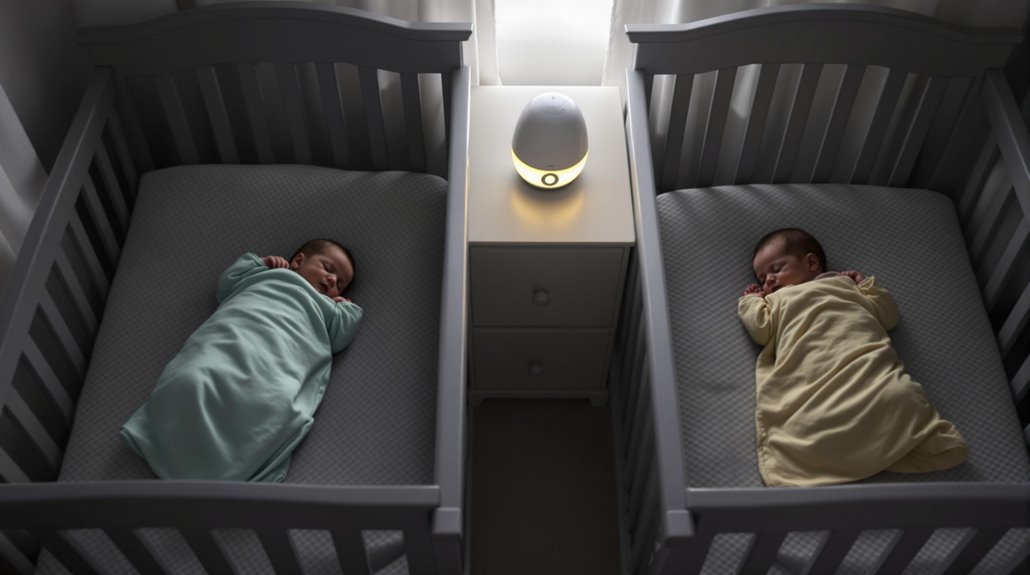
Nap management for twins requires a strategic balance between synchronized and staggered sleep schedules. You'll need to decide whether to place your little ones side by side in the same room or in separate rooms, depending on how they influence each other's sleep patterns. While synchronized naps can give you precious time to rest or tackle household tasks, maintaining their sleep times guarantees you'll always have one baby sleeping, reducing overall fussiness throughout the day.
Create an environment conducive to quality naps by using white noise machines and blackout curtains in their sleeping spaces. These tools help block out distractions and signal that it's time to rest. Focus on developing your twins' self-soothing abilities by putting them down drowsy but awake, which helps them learn to fall asleep independently and return to sleep when they wake between sleep cycles.
Pay attention to each twin's individual sleep needs and adjust nap lengths accordingly. Some babies naturally take longer naps, while others prefer shorter rest periods. Monitor their sleep patterns and adapt their schedule to prevent overtiredness while maintaining a routine that works for your family.
Separate Cribs Versus Co-Sleeping
The decision between separate cribs and co-sleeping for twins isn't just about convenience - it's fundamentally about safety. While co-bedding might seem natural for twin babies who shared the womb, you'll need to make sure you follow safe sleep guidelines as they grow.
For newborns, co-bedding in a single crib can help regulate their body temperature and sleep cycles. However, as your twins become more mobile, it's essential to shift them to separate cribs. This change helps prevent SIDS and gives each baby the freedom to move without risking involvement with their sibling.
When you're getting your babies to sleep, separate cribs offer distinct advantages. Each twin can develop their own sleep patterns without disturbing the other, and you won't have to worry about them rolling into each other during the night. While some twins might initially resist the separation, establishing individual sleeping spaces early on supports their safety and development.
Remember that though co-sleeping might work temporarily for very young twins, separate cribs are the recommended long-term solution for ensuring safe and restful sleep for both babies.
Parent Sleep Rotation System
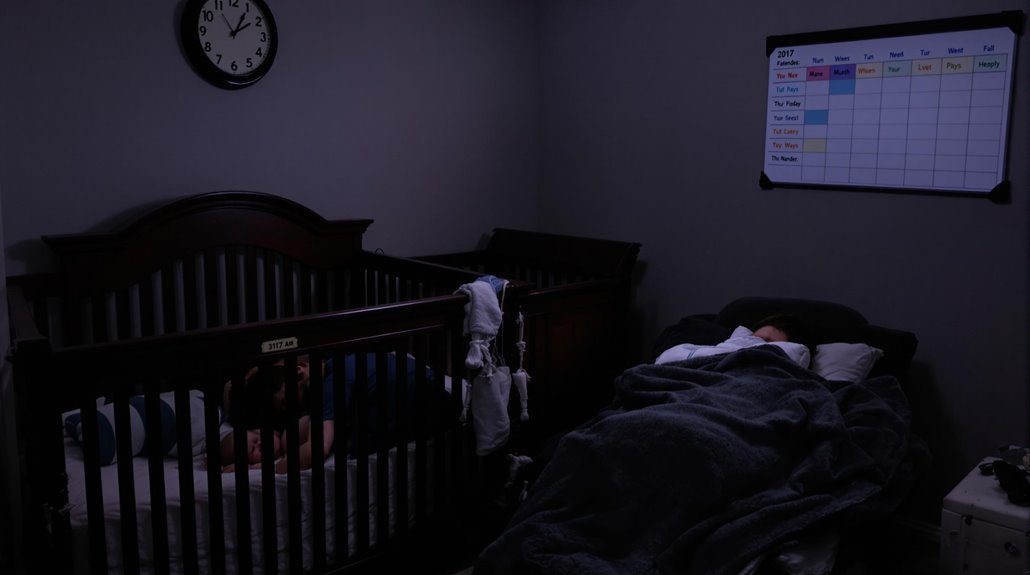
Once you've set up your twins' sleeping arrangements, implementing a parent sleep rotation system can alter your nighttime experience. This organized approach guarantees both parents get adequate rest while sharing the responsibilities of nighttime care for your twins.
To establish an effective sleep rotation, create a schedule where you and your partner alternate nights caring for the babies. On your designated "off" nights, you'll have the opportunity to get uninterrupted sleep, helping maintain your energy and mental well-being. Clear communication with your partner is essential to ensure the rotation feels fair and manageable for both parents.
Consider enlisting trusted family members or friends to provide additional support during nighttime duties. Their assistance can give both parents occasional breaks and help prevent burnout. Keep track of your sleep rotation schedule using a shared calendar or app, noting any patterns in your twins' sleep habits that might require adjustments.
Remember to remain flexible with your rotation system. As your twins' sleep patterns evolve, you'll need to modify the schedule accordingly. Regular check-ins with your partner about the effectiveness of your sleep rotation will help maintain a sustainable caregiving rhythm.
Signs of Sleep Readiness
Recognizing sleep readiness in infant twins requires careful observation of their behavioral cues. When your twins begin showing signs like yawning, eye rubbing, and increased fussiness, it's time to prepare them for sleep. These signals often appear simultaneously in both babies, as twins frequently develop synchronized sleep-wake patterns.
Watch for a decrease in your twins' activity levels and their reduced interest in surrounding stimuli. You'll notice they become less engaged with toys, people, or their environment. Pay attention to feeding patterns, particularly cluster feeding, where your twins want to nurse or bottle-feed close together. This behavior often indicates they're getting ready for a longer sleep period.
Look for subtle physical cues such as rooting or making sucking motions without actually feeding. These actions suggest your babies are moving into a drowsy state. When you spot these signs, it's essential to act promptly by starting your sleep routine. Responding to these early indicators helps prevent overtiredness, which can make it harder for your twins to fall asleep. By learning to read these sleep signals effectively, you'll be better equipped to time their sleep schedule and maintain a more predictable routine.
Supporting Self-Soothing Skills
Building on your ability to recognize sleep cues, teaching twins to self-soothe marks an important step toward better sleep for everyone. You'll want to introduce calming elements like pacifiers, soft music, and gentle rocking while your babies are still awake but drowsy. This helps them associate these comfort items with falling asleep independently, rather than relying solely on you.
Start phasing out sleep dependencies gradually by implementing these proven techniques:
- Establish a consistent bedtime routine that includes calming activities like reading, singing, or gentle massage
- Use the "wake to sleep" method by briefly rousing your twins before placing them in their cribs
- Allow brief periods of fussing to help them develop self-soothing skills
- Gradually reduce the time spent rocking or feeding to sleep
Remember that teaching self-soothing isn't about leaving your twins to cry extensively. Instead, you're helping them develop the skills to fall asleep independently. When they wake during the night, give them a few moments to practice these self-soothing techniques before intervening. This patience will pay off as your twins become more confident in their ability to settle themselves.