How Teenagers Can Learn Good Sleeping Habits Early On

You'll need 8-10 hours of quality sleep each night during your teenage years to support growth, learning, and emotional well-being. Start by setting a consistent bedtime and wake-up schedule, even on weekends. Create an ideal sleep environment by keeping your room cool, dark, and free from electronic devices. Put away screens at least an hour before bed to minimize blue light exposure that disrupts your sleep cycle. Stay active during the day, but avoid intense exercise close to bedtime. Making small adjustments to your daily routine now can help you develop sleep habits that benefit you throughout your life.
Understanding Your Sleep Needs
Getting to know your sleep needs is essential during your teenage years. As your body and mind develop, you'll need between 8-10 hours of sleep each night to function at your best. During puberty, your internal sleep clock naturally shifts, making you feel more alert at night and tired in the morning. This biological change can make it challenging to balance your sleep schedule with early school start times.
You might notice that lack of sleep affects your performance at school, making it harder to concentrate and retain information. If you're consistently getting less than the recommended hours of sleep, you're likely not operating at your full potential. That's why it's important to recognize your individual sleep patterns and adjust your schedule accordingly.
Pay attention to how you feel after different amounts of sleep. If you're experiencing persistent tiredness, difficulty waking up, or trouble staying awake during the day, you might need to reassess your sleep habits. Don't ignore ongoing sleep problems - they could indicate a sleep disorder that requires professional attention. Remember, the sleep patterns you establish as a teen can influence your health habits well into adulthood.
Setting a Consistent Sleep Schedule
Creating a reliable sleep schedule is one of the most powerful ways to improve your sleep quality. When you stick to consistent bedtime and wake-up time routines, you're helping your body's circadian rhythm function ideally. This internal clock affects everything from your focus and mood to your academic performance.
To establish healthy sleep habits, you'll want to keep your sleep and wake times within a two-hour window, even on weekends. While it might be tempting to sleep in on Saturday morning, maintaining consistency helps your body know when it's time for sleep. If you're naturally a night owl, work with your tendency rather than against it, but still aim for regularity in your schedule.
To protect your new sleep schedule, avoid factors that could disrupt it. Skip daytime naps, as they can interfere with your nighttime rest, and watch your caffeine consumption, especially in the afternoon and evening. Remember, the key isn't just choosing any schedule - it's about finding one that aligns with your daily responsibilities and sticking to it consistently. Your body will respond best when you maintain these patterns day after day.
Creating Your Sleep Environment
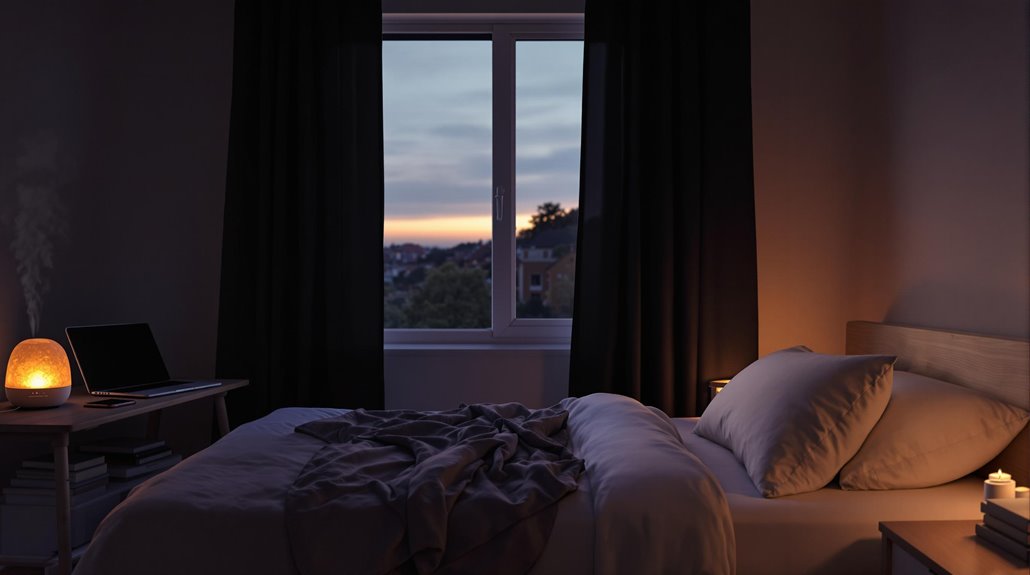
With your sleep schedule in place, your bedroom's setup plays a major role in how well you'll rest each night. Creating the right environment isn't just about having a comfortable bed - it's about designing a space that signals to your body it's time to sleep. Your bedroom should be your sanctuary for getting enough sleep, free from distractions and conducive to rest.
To convert your bedroom into the perfect sleep environment, follow these essential steps:
- Keep your room cool, dark, and quiet - use blackout curtains if needed and maintain a temperature between 60-67°F
- Remove electronic devices from your bedroom, or at least keep them far from your bed, as their blue light can seriously disrupt your sleep patterns
- Choose relaxing activities for your wind-down routine, like reading a physical book or practicing gentle stretches
- Set up your room to minimize evening light exposure - consider using dimmer switches or warm-toned lamps
Managing Screen Time Effectively
Technology's grip on teenage life presents one of the biggest challenges to maintaining healthy sleep habits. If you're having trouble sleeping, your screen time might be the culprit. The blue light emitted from cell phones, tablets, and computers can considerably disrupt sleep by interfering with your body's natural sleep-wake cycle.
To help keep your sleep schedule on track, you'll need to make some adjustments to your evening routine. Start by putting away all electronic devices at least an hour before you go to bed. If you must use your devices in the evening, activate the blue light filter settings or install filtering apps to reduce harmful light exposure. Better yet, make your bedroom a technology-free zone entirely.
Replace your late-night scrolling with more sleep-friendly activities. Try reading a physical book, practicing relaxation exercises, or taking a warm bath. If you're finding it difficult to manage your device use, work with your parents to set up reasonable limits on your screen time, especially during school nights. These boundaries will help you develop healthy sleep habits that'll benefit you well into adulthood.
Physical Activity and Sleep
A teenager's sleep quality often depends on how much they move during the day. Getting enough physical activity isn't just about staying fit - it's a pivotal factor in helping you sleep well and avoiding sleep problems. When you engage in regular exercise, especially during daylight hours, you're setting yourself up for better sleep quality and reducing the risk of sleep deprivation.
To maximize the connection between exercise and sleep, try following these practical guidelines:
- Schedule your intense workouts at least 2-3 hours before bedtime to give your body time to wind down
- Aim for at least 60 minutes of daily physical activity to reduce the likelihood of sleep disturbances
- Mix different types of exercise, including aerobic activities, strength training, and flexibility work
- Join sports teams or group activities, which can help regulate your sleep schedule naturally
Remember that timing matters when it comes to exercise. While moderate activity in the afternoon can improve your sleep quality, intense workouts too close to bedtime might leave you feeling too energized to rest. By maintaining consistent physical activity throughout your day, you'll notice improvements in both your sleep duration and quality.
Bedtime Routines That Work
Creating effective bedtime routines stands as one of the most powerful tools in a teenager's sleep arsenal. When you follow the same steps every night before you go to sleep, you're training your body to recognize when it's time to wind down. Start by setting a consistent schedule where you go to bed at the same time every day, which helps regulate your internal clock.
To get quality sleep each night, put away your phone, tablet, and other electronic devices at least an hour before bedtime. Instead, try calming activities like reading a book, taking a warm bath, or practicing relaxation exercises. You'll also want to make your bedroom an ideal environment for sleeping by keeping it cool, dark, and quiet. Consider using dimmer lights or bedside lamps that you can gradually turn down as your bedtime approaches.
Watch what you eat and drink in the evening hours. Avoid caffeine and heavy meals close to your bedtime, as they can interfere with your ability to fall asleep. By following these routines consistently every night, you'll find it easier to shift from your busy day into a restful night of sleep.
Nutrition and Sleep Health

Building on good bedtime routines, what you eat and drink plays a major role in your sleep quality. As a teen, your amount of sleep directly affects your physical and mental well-being. When you maintain a balanced diet and establish regular eating patterns, you'll find it easier to fall asleep and stay asleep throughout the night.
Lack of sleep often stems from poor dietary choices, especially close to bedtime. Teens need to be mindful of their eating habits to guarantee they're not sabotaging their rest. Here are essential nutrition tips for better sleep:
- Skip caffeine and sugary drinks after 2 PM - they'll make you stay awake when you should be winding down
- Choose foods rich in sleep-promoting nutrients like turkey, nuts, and bananas, which contain tryptophan and magnesium
- Keep yourself hydrated throughout the day, but limit fluids two hours before bed
- Maintain consistent mealtimes and never skip dinner - irregular eating patterns can disrupt your sleep cycle
Stress Management Before Bed
During the teenage years, managing stress before bedtime becomes essential for quality sleep. As a high school student, you might find yourself tossing and turning because you cannot fall asleep, often due to racing thoughts about assignments, social pressures, or next day's challenges.
To overcome these problems falling asleep, start by practicing relaxation techniques that calm your mind and body. Deep breathing exercises, meditation, or progressive muscle relaxation can significantly reduce your anxiety levels before bed. If you're experiencing persistent sleep challenges, try keeping a worry journal where you can write down your concerns earlier in the evening, preventing them from surfacing when you're trying to drift off.
Create a calming pre-sleep routine that includes activities like reading a book, listening to soft music, or taking a warm bath. It's also crucial to manage your academic workload and extracurricular activities well before bedtime to avoid mental stimulation when you should be winding down. Remember to shift your mindset about sleep - instead of worrying about falling asleep, focus on the peaceful aspects of rest and relaxation. This positive approach can help you transition more seamlessly into sleep.
Weekend Sleep Strategies

While good stress management helps you sleep better on school nights, the real challenge often lies in maintaining healthy sleep habits on weekends. If you're sleeping in more than two hours later than usual on Saturdays and Sundays, you're disrupting your body's internal clock, which can lead to poor sleep when Monday arrives. To Help Teens maintain consistent hours of sleep throughout the week, it's vital to develop smart weekend strategies.
- Set your weekend wake-up time within 2 hours of your usual school day alarm to maintain your body's natural rhythm
- Replace afternoon caffeine with a quick 30-minute power nap if you need an energy surge
- Choose calming, screen-free activities before bed instead of high-energy social events or gaming
- Avoid large meals and sugary snacks close to bedtime
Dealing With Sleep Disruptions
Sleep disruptions can hit teenagers especially hard as their bodies naturally resist earlier bedtimes during puberty. When you're dealing with disrupted sleep, you're at a higher risk for daytime fatigue and poor academic performance. To minimize these disruptions, you'll need to manage both internal and external factors affecting your rest.
Start by limiting your exposure to blue light from phones, tablets, and computers in the evening hours, as this can interfere with your body's natural melatonin production. If you're experiencing stress or anxiety that's keeping you awake, try relaxation techniques especially in the afternoon and early evening. You can also help improve your chances of getting better sleep by maintaining a consistent schedule, even when you're tempted to stay up late.
If you're consistently struggling to get Much Sleep due to your local school district's early start times, consider discussing this with your parents and school administrators. For persistent sleep problems that don't improve with lifestyle changes, don't hesitate to seek professional help - you might have an underlying sleep disorder that requires proper evaluation and treatment.
School and Sleep Balance
Finding the right balance between school demands and healthy sleep patterns presents a major challenge for today's high school students. With over 70% of teens reporting insufficient sleep on school nights, it's fundamental to develop strategies that prioritize rest while managing academic responsibilities. The American Academy of Sleep Medicine and the American Academy of Pediatrics strongly advocate for later school start times to align with teenagers' natural tendency to fall asleep later at night.
- Maintain consistent sleep and wake times, even on weekends, to regulate your body's internal clock and improve overall sleep quality
- Work with your parents to set reasonable limits on extracurricular activities that might interfere with getting 8-10 hours of nightly sleep
- Create a homework schedule that allows you to complete assignments earlier in the evening rather than burning the midnight oil
- Communicate with teachers and counselors about your workload if you're consistently sacrificing sleep for academic demands
Remember that quality sleep directly impacts your academic performance, so prioritizing rest isn't just about feeling better - it's essential for your success in school.
Building Long-Term Sleep Habits
Developing lifelong sleep habits during your teenage years can considerably impact your future well-being. While you might feel like a natural night owl, establishing consistent sleep and wake times will help regulate your body's internal clock, securing you get the sleep they need for optimal academic performance.
Start by creating a calming bedtime routine that doesn't involve screens. The blue light from your devices can interfere with your body's natural reason for sleep - melatonin production. Instead of reaching for energy drinks to stay alert, focus on getting regular exercise during the day, but not too close to bedtime. This will help prevent sleep issues like pauses in breathing and ensure more restful nights.
Make your bedroom a sleep sanctuary by keeping it cool, dark, and quiet. Before bed, try relaxation techniques like deep breathing or meditation to signal to your body that it's time to wind down. These practices aren't just temporary solutions - they're investments in your long-term health. By implementing these habits now, you're building a foundation for healthy sleep patterns that will serve you well beyond your teenage years.