How Sleep Specialists Analyze Your Sleep Patterns in Clinics
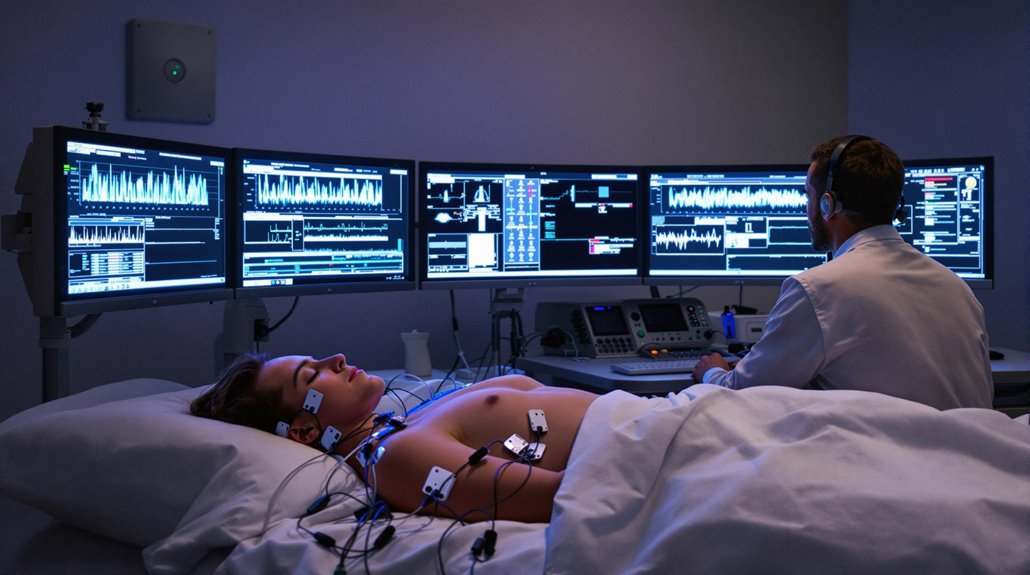
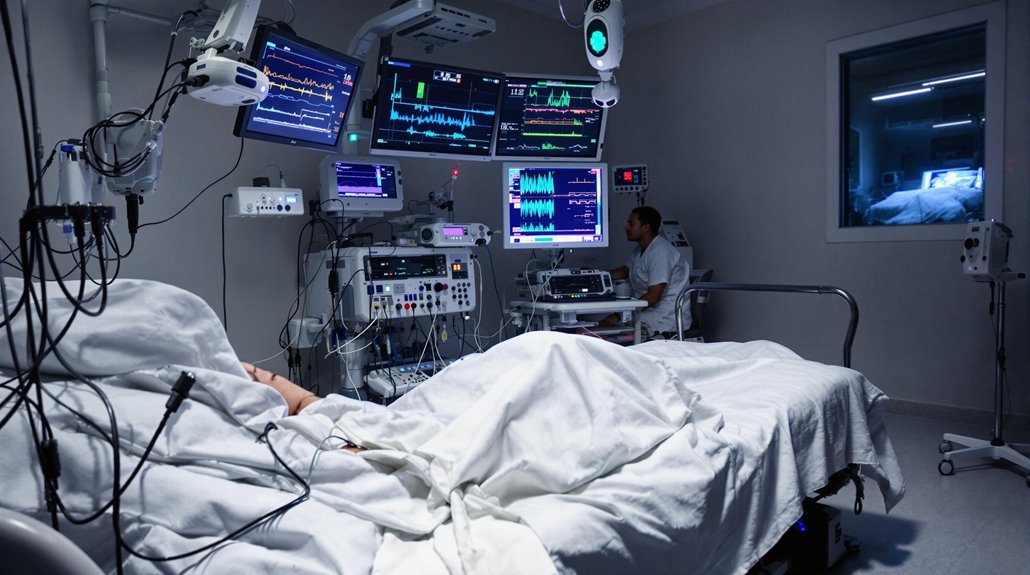
During your overnight sleep study, specialists monitor your brain waves, heart activity, and breathing patterns using sophisticated equipment. You'll have EEG electrodes attached to track your brain's electrical signals, EKG sensors to measure heart function, and breathing monitors to assess oxygen levels. The lab's polysomnography devices create a thorough map of your sleep architecture by recording how you progress through different sleep stages. Video and audio recordings capture physical movements and behaviors while specialized sensors detect leg movements and muscle activity. This detailed analysis helps specialists pinpoint specific sleep disorders and develop customized treatment plans - just the beginning of understanding your unique sleep patterns.
Sleep Study Equipment and Technology
Dozens of sophisticated monitoring devices work together during a professional sleep study to create an extensive analysis of your sleep patterns. During the thorough test known as Polysomnography, you'll be connected to various sensors that monitor multiple aspects of your body's functions while you sleep. EEG electrodes attached to your scalp track your brain waves, helping specialists identify different sleep stages and potential abnormalities in your sleep cycle.
Your heart's electrical activity is measured through EKG sensors, while EMG electrodes monitor your muscle movements throughout the night. Breathing sensors track your respiratory patterns, including airflow, chest movements, and oxygen levels in your blood. This combination of equipment allows sleep specialists to detect issues like sleep apnea, irregular heart rhythms, or unusual muscle activity during rest.
Whether you're participating in a laboratory sleep study or using a home sleep apnea test, these monitoring devices provide essential data that helps specialists diagnose sleep disorders accurately. The technology's precision enables your sleep team to develop targeted treatment plans based on your specific sleep patterns and symptoms.
Understanding Brain Wave Patterns
Monitoring your brain wave patterns during sleep reveals a complex map of your mind's trek through different sleep stages. During a sleep study, specialists use EEG sensors placed strategically on your scalp to capture the electrical signals your brain produces throughout the night. These signals create distinctive patterns that help identify whether you're in light sleep, deep sleep, or REM sleep.
As you progress through each sleep stage, your brain activity changes noticeably, creating unique wave frequencies that specialists can analyze. This detailed analysis helps them understand your sleep patterns and identify potential disruptions that might be affecting your rest. If you're experiencing issues like sleep apnea, the brain wave data, combined with other measurements like oxygen levels, provides pivotal information about when and how your sleep is disturbed.
Your brain's electrical activity tells a comprehensive story about your sleep quality. Sleep specialists use this information to diagnose various sleep disorders, from insomnia to narcolepsy. By understanding these patterns, they can develop a targeted treatment plan that addresses your specific sleep challenges, helping you achieve more restorative rest.
Monitoring Vital Body Functions
Beyond tracking brain activity, sleep specialists observe an orchestration of essential functions throughout your body during a sleep study. During your overnight stay, they'll attach various sensors to monitor your important signs and collect detailed data about your sleep quality. These sensors track your heart rate and breathing patterns, providing vital information about how your body functions during different sleep stages.
A key component of your sleep study involves monitoring blood oxygen levels and airflow. You'll wear sensors that measure oxygen saturation in your blood, which helps identify potential breathing disorders like sleep apnea. If your oxygen levels drop substantially during sleep, it could indicate that you're experiencing interruptions in your breathing pattern. The specialists will also track your leg movements throughout the night, as these can indicate conditions that might be disrupting your sleep.
The comprehensive monitoring system includes video and audio recording equipment that captures your physical behaviors during sleep. This helps specialists correlate any unusual movements or sounds with the physiological data they're collecting, leading to more accurate diagnoses and targeted treatment plans for your specific sleep issues.
Sleep Stage Analysis Methods
Through sophisticated monitoring equipment, sleep specialists break down your night's rest into distinct stages using polysomnography, the most extensive type of sleep study. During your sleep test, they'll analyze your brain waves, eye movements, and muscle activity to identify when you're experiencing REM and non-REM sleep stages. These measurements come from three main sensors: EEG for brain activity, EOG for eye movements, and EMG for muscle tone.
Your sleep architecture, which shows how you progress through different sleep stages throughout the night, provides insightful observations into potential sleep disorders. While you sleep, respiratory monitoring devices track your breathing patterns using nasal sensors and strain gauges around your chest and abdomen. These tools help detect conditions like sleep apnea, where your breathing repeatedly stops and starts. Additionally, limb movement sensors attached to your legs identify periodic movements that might be disrupting your sleep quality. By combining all these measurements, sleep specialists can create a comprehensive depiction of your sleep patterns and identify any underlying issues that may be preventing you from getting restful sleep.
Common Sleep Disorder Indicators
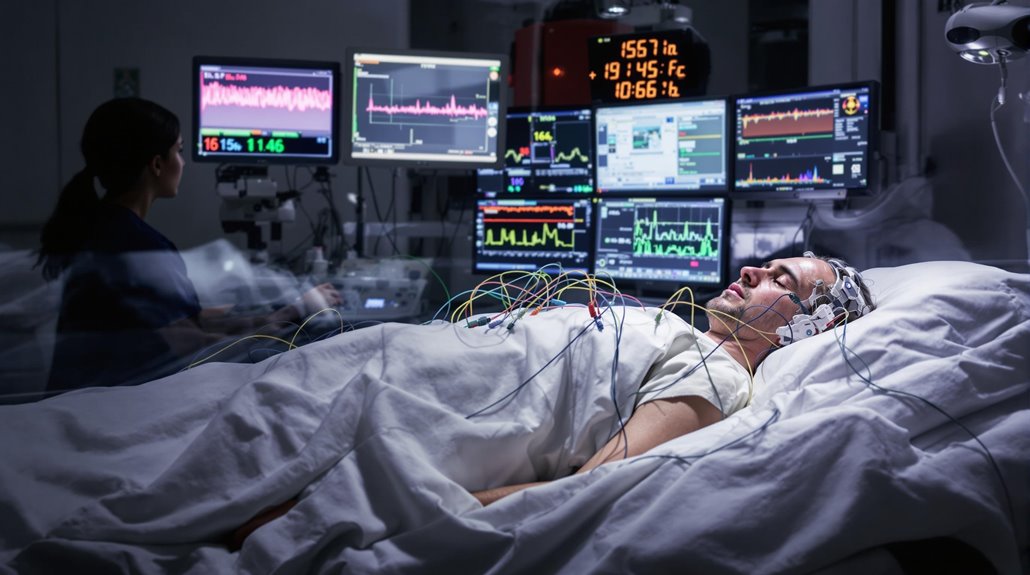
Sleep specialists identify distinct indicators that point to various sleep disorders during clinical evaluations. When you undergo a sleep study, these experts look for specific patterns that help diagnose different conditions. For instance, if you have sleep apnea, they'll detect repeated pauses in your breathing pattern throughout the night, while insomnia leaves distinct markers of prolonged wakefulness or frequent night-time disruptions.
During your sleep study, specialists will carefully monitor these key indicators:
- Brain wave patterns that might suggest narcolepsy or circadian rhythm disorders
- Leg movements and muscle activity that could indicate restless leg syndrome
- Breathing patterns and oxygen levels to diagnose sleep apnea
Your sleep specialist will analyze multiple data points to help determine the exact nature of your sleep disorder. They'll look for signs of excessive daytime sleepiness, which might point to narcolepsy, or disruptions in your sleep-wake cycle that suggest a circadian rhythm disorder. This extensive approach guarantees accurate diagnosis and helps create an effective treatment plan customized to your specific sleep disorder.
Respiratory Pattern Assessment
During respiratory pattern assessment, specialists employ sophisticated monitoring equipment to track your breathing while you sleep. Using polysomnography, they'll observe your breathing patterns, oxygen levels, and airflow throughout the night. Respiratory sensors placed on your chest and abdomen monitor your movements, helping detect any irregularities in your breathing cycle.
A primary focus of this assessment is identifying sleep apnea, a condition where you experience pauses or shallow breathing during sleep. The continuous monitoring of your respiratory parameters allows specialists to determine both the type and severity of any sleep-disordered breathing you may have. They'll analyze how often your breathing is interrupted, how much your oxygen levels fluctuate, and how your airflow changes throughout different sleep stages.
This detailed respiratory data becomes pivotal for your treatment plan. If you're diagnosed with sleep apnea, the information gathered during your sleep study will help specialists recommend the most effective treatment approach. The extensive evaluation of your breathing patterns ensures they can address any sleep-disordered breathing issues with precision and develop a targeted solution for your specific condition.
Data Collection During Sleep
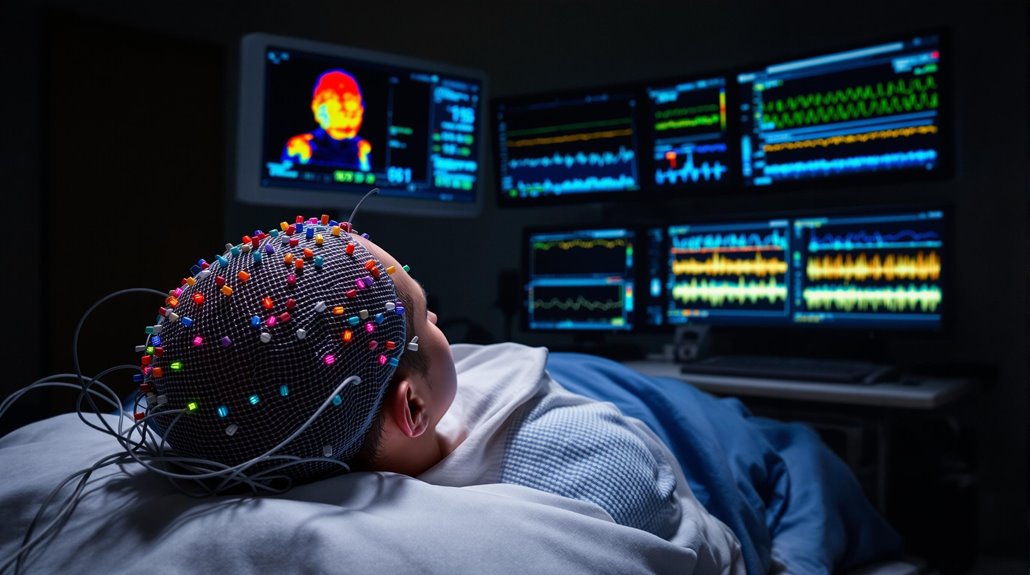
At the heart of clinical sleep analysis lies extensive data collection, which captures multiple aspects of your nighttime physiology. During your overnight stay in a sleep lab, specialists monitor your sleep cycles through a comprehensive sleep study called polysomnography. You'll be connected to various sensors that track essential physiological functions while you sleep.
The sleep study captures detailed data through:
- Advanced monitoring equipment that records your brain waves, eye movements, and muscle activity throughout different sleep stages
- Specialized sensors that measure your heart rate, breathing patterns, and blood oxygen levels continuously
- Synchronized video and audio recordings that document any unusual movements or sounds during your sleep
If you're not comfortable with monitoring your sleep in a lab setting, you might qualify for a home sleep apnea test. This portable alternative focuses specifically on tracking your breathing, airflow, and oxygen levels in your natural sleep environment. While less expansive than a full polysomnography, it still provides meaningful data for sleep specialists to evaluate potential breathing-related sleep disorders. The collected information helps your sleep specialist develop a customized treatment plan based on your specific sleep patterns and symptoms.
Treatment Plan Development Process
After collecting and analyzing your sleep study data, specialists commence on creating a customized treatment strategy that addresses your particular sleep concerns. The thorough information gathered from your sleep studies is used to evaluate various aspects of your sleep patterns and help determine the most effective treatment approach for your specific condition.
If you're diagnosed with sleep apnea, your specialist might recommend a CPAP machine or oral appliance therapy. These devices are used to attach to your airway and maintain proper breathing throughout the night. For other sleep disorders, your treatment plan may include specific medications, lifestyle modifications, or a combination of different approaches. Your sleep specialist will work closely with your primary care physician, dentist, and other healthcare providers to guarantee a well-coordinated treatment strategy.
During your follow-up visit, your specialist will assess how well you're responding to the prescribed treatment. They'll make necessary adjustments to optimize your results and address any concerns you might have. This ongoing monitoring and fine-tuning of your treatment plan helps certify you're getting the maximum benefit and experiencing improved sleep quality.
Professional Sleep Lab Environment
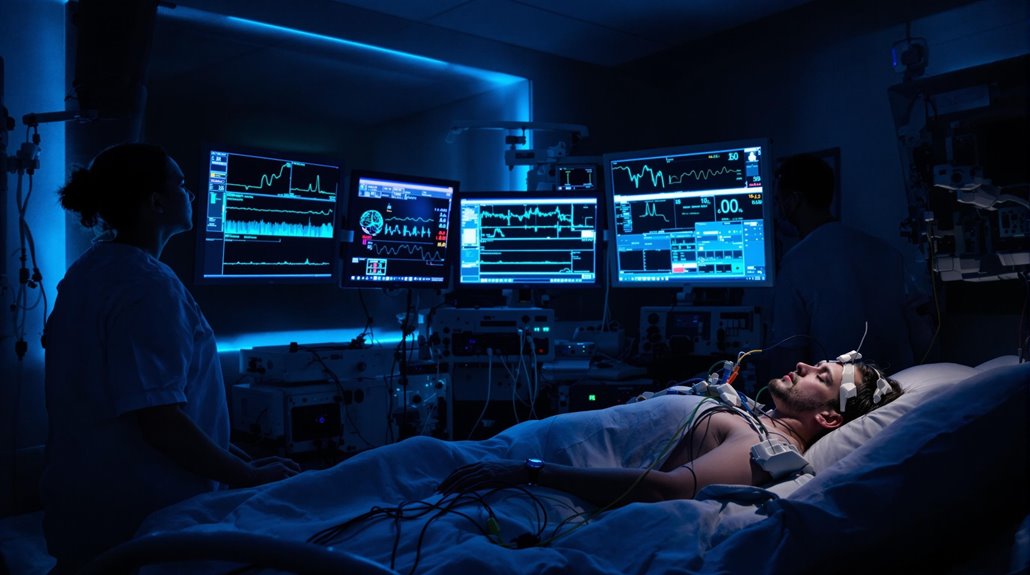
Professional sleep labs are set up to create a comfortable, hotel-like environment where you'll spend the night under careful observation. Sleep centers prioritize your comfort while ensuring they can collect accurate data about your sleep patterns and potential health issues. You'll notice that while the room resembles a hotel room, it's equipped with sophisticated monitoring equipment that helps your sleep specialist gather crucial information.
During your stay, you'll be connected to various sensors that monitor essential body functions:
- Brain activity and eye movements through electrodes on your scalp and temples
- Heart rate and breathing patterns via chest sensors
- Muscle activity and movement through leg sensors
- Blood oxygen levels using non-invasive monitors
If your sleep studies indicate breathing difficulties, your technologist might have you try a positive airway pressure (CPAP) device during the night to assess its effectiveness. This extensive monitoring setup allows for a much more detailed analysis than at-home testing options. After your night at the sleep lab, the staff will remove all sensors, and you'll schedule a follow-up appointment to review your results with your sleep specialist and discuss any necessary treatment plans.
Overnight Monitoring Procedures
Throughout your overnight sleep study, trained technologists monitor your sleep patterns in real-time from a separate control room. Unlike an at-home sleep study, this professional setting allows for extensive data collection through multiple sensors attached to your body. These sensors track your brain waves, eye movements, muscle activity, heart rate, breathing patterns, and level of oxygen while you sleep.
On the day of your sleep study, you'll want to maintain your regular routine and avoid substances that could affect your sleep, such as caffeine and alcohol. When you arrive at the clinic, technicians will attach the monitoring equipment and make sure you're comfortable in your private room. As you sleep, the advanced monitoring systems collect detailed information that's vital to diagnose sleep disorders, particularly conditions like Obstructive sleep apnea.
The audio and video recordings supplement the sensor data, providing sleep specialists with a complete depiction of your night's rest. This thorough monitoring process helps identify specific sleep disturbances, breathing irregularities, and movement patterns. Your sleep specialist will use this wealth of information to develop a personalized treatment plan that addresses your specific sleep concerns.
Results Interpretation and Diagnosis
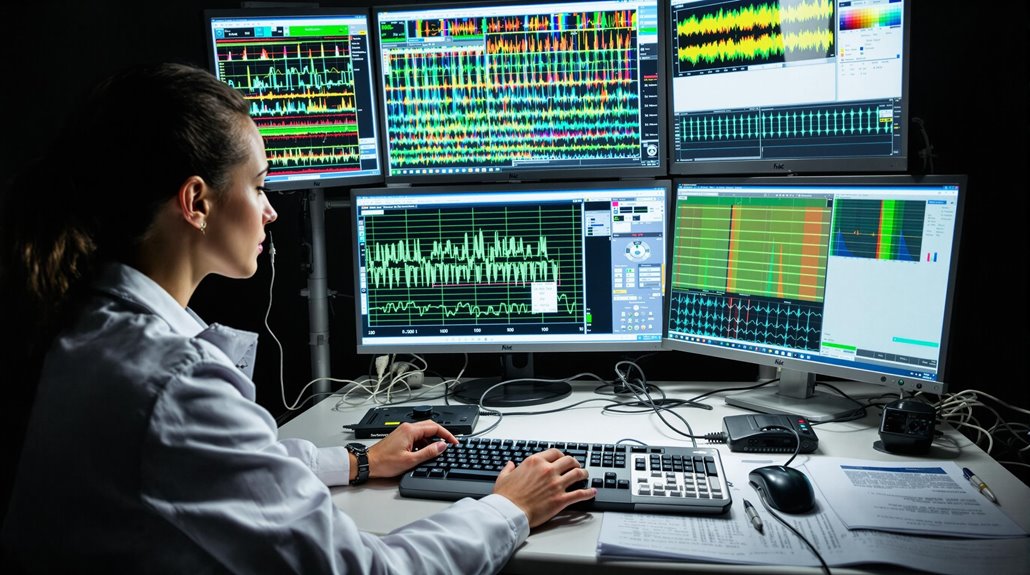
The collected data from your overnight sleep study requires expert analysis and interpretation to reach an accurate diagnosis. Sleep specialists diligently review your polysomnography results, examining various parameters including sleep stages, breathing patterns, and any disruptions during your sleep. They'll correlate these findings with your medical history to form a thorough understanding of your sleep health.
During the analysis process, specialists focus on:
- The distribution and duration of your sleep stages throughout the night
- The presence and severity of any respiratory events or unusual movements
- The frequency and duration of your waking episodes
Your sleep study results help identify specific sleep disorders such as sleep apnea, insomnia, or narcolepsy. Based on these findings, your specialist will develop a customized treatment plan designed to address your specific condition. They'll explain the results in detail and discuss the most effective treatment options for your situation. If needed, they may recommend follow-up sleep studies to monitor your progress and adjust your treatment plan accordingly. This systematic approach ensures you receive the most appropriate care for optimal sleep health improvement.