How Natural Sleep Aids Can Help You Get Better Rest

Natural sleep aids can help you achieve more restful sleep through various gentle, effective methods. You'll find relief through supplements like melatonin, which regulates your sleep-wake cycle, and herbs such as chamomile and valerian root that promote relaxation. Essential minerals like magnesium and calcium support your body's natural sleep processes, while aromatherapy using lavender or bergamot can create a calming environment. You can maximize these benefits by combining different natural aids and following proper dosage guidelines. For those seeking better sleep without prescription medications, understanding these natural solutions opens the door to peaceful, restorative rest.
Understanding Common Natural Sleep Aids
Five widely recognized natural sleep aids offer alternatives to prescription medications for those struggling with sleep issues. If you're looking to improve your sleep quality naturally, understanding these options can help you make informed choices for better rest.
Melatonin, your body's natural sleep hormone, can effectively regulate circadian rhythms and combat jet lag. When taken as a supplement, it helps signal to your body that it's time to sleep. Valerian root has shown promise in reducing sleep latency and enhancing overall sleep quality, making it a viable option for short-term use. If you're dealing with sleep difficulties, magnesium supplementation might help, especially if you're older, as it plays an essential role in your sleep-wake cycle.
For those seeking aromatherapy solutions, lavender can promote relaxation and improve sleep quality through its calming properties. Passionflower is another powerful option that works by calming your nervous system, and studies suggest it can be as effective as some prescription sleep medications. These natural aids provide you with various approaches to addressing sleep issues, whether you prefer supplements, aromatherapy, or herbal remedies.
Melatonin and Sleep Regulation
In the quest for better sleep, melatonin stands out as nature's own sleep regulator. This powerful hormone, produced by your pineal gland, plays a vital role in managing your sleep-wake cycle. As darkness falls, your melatonin levels naturally rise, signaling your body that it's time to rest, while they decrease in the morning to help you wake up.
If you're struggling with sleep issues, melatonin supplements can help reset your circadian rhythms and improve sleep quality. They're particularly effective for:
- Adjusting to new time zones and combating jet lag
- Regulating sleep patterns when working night shifts
- Supporting better sleep quality for those with occasional insomnia
When considering melatonin supplements, start with a dosage between 0.5-5 mg, taken about 30 minutes before bedtime. While they're generally safe for short-term use in healthy adults, you should be aware of potential interactions with certain medications. It's always wise to consult your healthcare provider before starting any new supplement regimen, especially if you're taking other medications or have underlying health conditions.
Herbal Remedies for Better Sleep

Nature's medicine cabinet offers several proven herbal remedies that can help you achieve restful sleep without prescription medications. Among these natural sleep aids, chamomile tea stands out for its flavonoids that work with your brain's sleep-wake cycle receptors, making it an excellent choice before bedtime.
If you're looking to enhance your body's natural melatonin production, tart cherry juice can be particularly effective. It supports healthy sleep cycles and works well as part of your nighttime routine. Valerian root, another powerful home remedy, has a long history of treating insomnia and improving overall sleep quality.
For those seeking alternatives to prescription sleep medications, passionflower proves to be remarkably effective. Studies show it matches the sleep-inducing properties of oxazepam, making it a viable natural option. You can also enhance your sleep environment with lavender aromatherapy, which has been scientifically proven to reduce anxiety and improve sleep quality.
Consider combining these natural sleep aids for ideal results. You might try sipping chamomile tea while using lavender aromatherapy, or pair tart cherry juice with passionflower tea before bed. These natural solutions offer gentle yet effective support for better sleep.
Essential Minerals Supporting Sleep Quality
Beyond herbal remedies, your body relies on specific minerals to maintain healthy sleep patterns. When you're struggling with sleep disorders, understanding these essential minerals can help you make informed choices about sleep supplements. Magnesium is particularly pivotal, as it helps regulate your sleep-wake cycle and can reduce the time it takes to fall asleep, especially if you're among older adults seeking better rest.
- Magnesium and calcium create a powerful duo that enhances melatonin production, your body's natural sleep hormone
- Zinc helps synthesize melatonin while improving overall sleep quality, making it an important mineral for your nightly rest
- Potassium deficiency can lead to insomnia, so maintaining proper levels helps prevent sleep disruptions
You'll find these minerals work synergistically to promote better sleep. For instance, while magnesium helps you fall asleep faster, calcium helps maintain that sleep throughout the night. If you're considering mineral supplementation for sleep support, focus on these essential nutrients that naturally regulate your sleep patterns and promote restorative rest.
Aromatherapy Options for Peaceful Rest
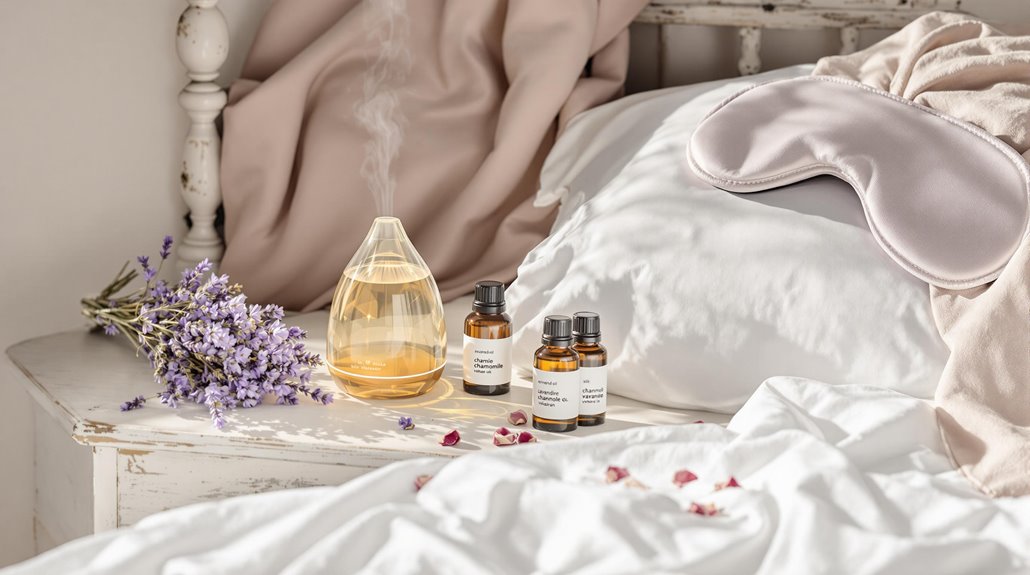
Several powerful aromatherapy options can alter your nightly routine into a peaceful ritual for better sleep. When you're looking to improve your sleep quality through natural means, essential oils offer scientifically-backed solutions that can help you relax and unwind before bedtime.
Lavender leads the pack as one of the most effective essential oils for sleep, as it's proven to promote relaxation when you inhale it or apply it topically. You'll find similar calming benefits with bergamot, which can reduce anxiety levels and prepare your mind for rest. If you're dealing with physical tension, ylang-ylang essential oil can help by lowering your blood pressure and heart rate, making it easier to soothe your body before sleep.
Don't overlook clary sage, which works with your body's natural processes by potentially elevating melatonin production while reducing stress-inducing cortisol levels. You can also complement your aromatherapy routine with chamomile tea, whose flavonoids interact with your brain's sleep-wake cycle. Try diffusing these oils in your bedroom or adding a few drops to your pillow to create a sleep-friendly environment.
Safe Usage and Dosage Guidelines
Safe supplementation requires understanding proper dosages and timing for maximum effectiveness while minimizing potential risks. When you're considering natural sleep aids, it's essential to follow recommended guidelines and start with the lowest effective dose.
For best results, follow these key dosage recommendations:
- Take melatonin supplements at 0.5-5 mg about 30 minutes before bedtime - you'll want to start with the lowest dose and adjust as needed to improve your sleep quality without experiencing side effects.
- If you're using valerian root for insomnia, consume 300-900 mg approximately 2 hours before bed to give it time to work effectively in your system.
- Combine magnesium supplements with other natural sleep aids, as they're particularly effective for older adults who have trouble falling asleep.
While passionflower supplements can be as effective as prescription medications for sleep issues, you should always consult your healthcare provider before starting any new supplement regimen. For lavender aromatherapy, stick to external use through diffusion or pillow sprays rather than oral consumption, as internal use may cause unwanted side effects. Remember that natural doesn't always mean risk-free, so careful attention to dosage guidelines is essential.
Combining Natural Sleep Solutions
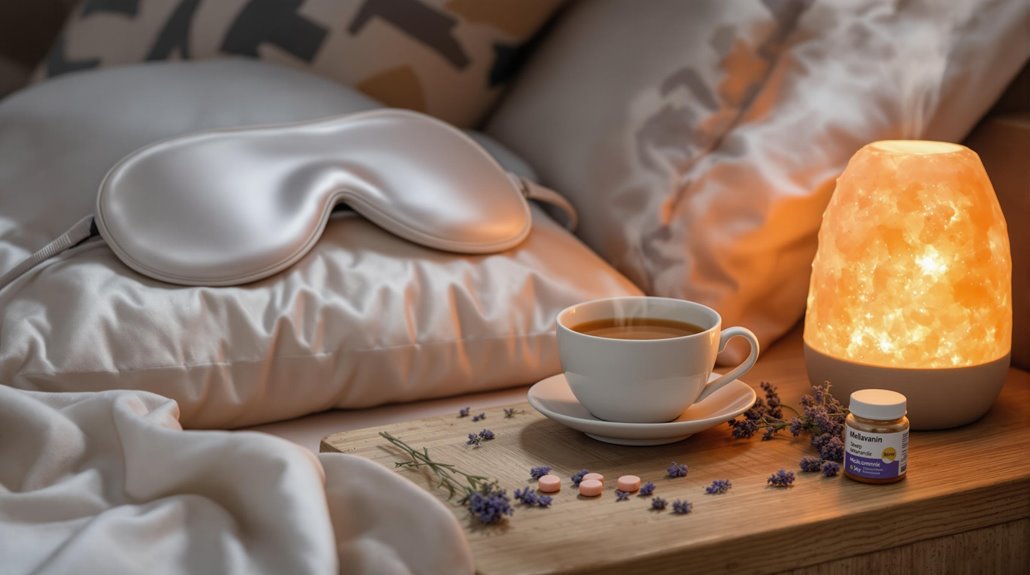
The power of natural sleep aids multiplies when you combine them strategically. Research shows that using multiple sleep supplements together can create a more effective solution for improving sleep quality than relying on just one ingredient. For example, combining melatonin with magnesium and B vitamins has proven particularly beneficial for people struggling with insomnia.
When you're considering combination therapy, you'll find several effective pairings. Valerian and chamomile work well together, while magnesium can enhance the effectiveness of most other sleep aids. However, before you start mixing different natural sleep solutions, it's essential to consult your healthcare provider. They can help you determine safe combinations and appropriate dosages for your specific needs.
To maximize the benefits of combined sleep aids, you'll want to integrate them into a comprehensive sleep hygiene routine. This means maintaining consistent bedtime hours, creating a relaxing evening ritual, and ensuring your sleeping environment is conducive to rest. By pairing these lifestyle practices with carefully selected combinations of natural sleep supplements, you're more likely to achieve the deep, restorative sleep you're seeking.