
How Married Couples Can Thrive Despite Sleeping Problems

Your sleep struggles don't have to harm your marriage when you understand how to balance personal rest needs with relationship intimacy. If snoring, tossing and turning, or different schedules disrupt your sleep, consider practical solutions like separate bedrooms - a choice that 62% of married couples now view as acceptable. You can maintain a strong connection through intentional quality time, physical touch, and open communication about sleep challenges. Focus on creating personalized sleep environments while nurturing your relationship with designated couple time and flexible arrangements. The path to better rest and a thriving marriage begins with honest conversations about your unique needs.
Understanding Common Sleep Disruption Patterns
Sleep disruption remains one of the most challenging aspects of sharing a bed with your partner. Studies show that you're not alone if you're struggling to maintain good sleep quality while sharing your bed. Nearly one in ten married Americans choose to sleep alone, with even higher rates among couples over 55.
You'll find that women are particularly affected by common sleep disturbances. They're more likely to wake up from partners tossing and turning, with 44% reporting sensitivity compared to 34% of men. Snoring presents another significant challenge, disturbing 42% of women versus 20% of men during their sleep.
Your age and life stage can influence the types of sleep disruptions you face. If you're an older couple, you're more likely to deal with snoring issues, while younger pairs often struggle with mismatched sleep schedules. Having children in the house also plays a role, as over 82% of couples who sleep separately are parents. This suggests that the need for uninterrupted rest or limited bedroom space might influence your sleeping arrangements more than you realize.
Separate Bedrooms Without Relationship Strain
The bedroom door doesn't have to create an emotional barrier between you and your partner. Research shows that sleeping apart is becoming increasingly common, particularly among couples aged 55 and above, with 16% opting for separate bedrooms compared to just 3% of younger couples.
If you're considering this sleeping arrangement, you're not alone. In fact, 62% of married individuals view separate bedrooms as an acceptable solution to sleep-related conflicts. This arrangement can actually strengthen your relationship by improving sleep quality and reducing tensions that arise from disrupted sleep patterns.
Don't worry about your intimate life suffering - couples who sleep separately can maintain a healthy connection through open communication and intentional intimacy. It's worth noting that most couples who choose separate bedrooms see it as a temporary solution, with the majority planning to share a bed again in the future. You can make this arrangement work by establishing clear expectations, maintaining regular physical affection, and viewing it as a practical compromise rather than a relationship setback. Remember, quality sleep often leads to better moods, increased patience, and ultimately, a stronger marriage.
Creating Individual Sleep Sanctuaries
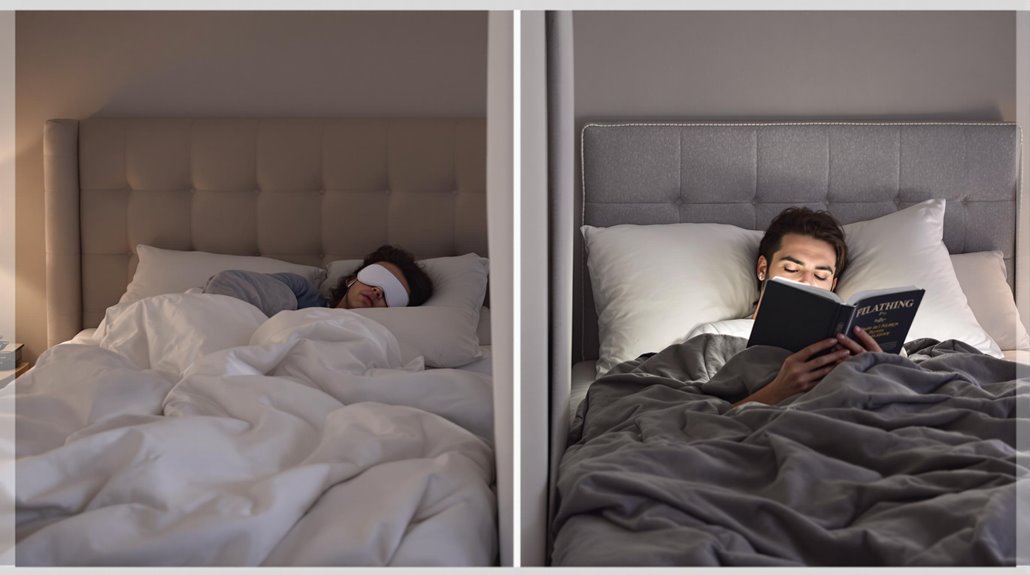
Creating your own sleep sanctuary can alter nightly rest from a source of conflict into a personalized haven. When you and your partner establish separate sleeping spaces, you're joining a growing number of couples who've uncovered the benefits of customized sleep environments. You'll have the freedom to adjust room temperature, lighting, and noise levels to match your individual preferences without compromising your partner's comfort.
While younger couples might hesitate to embrace separate beds, the data shows that this arrangement often leads to higher relationship satisfaction and improved sleep quality. You can transform your individual space into a true sanctuary by choosing bedding, mattress firmness, and sleep accessories that work best for you. This personalization eliminates common nighttime frustrations like different schedules or snoring issues.
Don't let social stigma prevent you from exploring this practical solution - 62% of married couples already recognize its value. When you maintain separate sleep environments, you're not diminishing intimacy; instead, you're creating opportunities for more meaningful connection when you choose to share a bed. Consider designating one bedroom as a child-free zone to preserve it as a special space for couple time.
Maintaining Intimacy While Sleeping Apart
Building intimacy doesn't require sharing the same bed every night. When couples choose sleeping in separate beds, they can maintain and even strengthen their connection through intentional actions and meaningful rituals. Whether you're dealing with relationship issues or simply need better sleep, it's crucial to prioritize both rest and togetherness.
Create dedicated moments for connection before heading to your separate sleeping spaces:
- Share quality time before bed by reading together, having heart-to-heart conversations, or enjoying a relaxing bedtime routine
- Schedule regular physical touch throughout the day to compensate for nighttime separation
- Plan intimate moments during times when you're both well-rested and energetic
- Make your shared bedroom time special, even if you don't share a bed all night
If you're struggling to balance sleep needs with intimacy, don't hesitate to seek Couples Therapy. A professional can help you maneuver this adjustment and address any underlying concerns. Remember that sleeping arrangements should remain flexible - some nights together, others apart - based on what works best for both partners' well-being while maintaining your emotional connection.
Communication Strategies for Better Rest

Successfully managing sleep-related challenges requires open, honest communication between partners. When you're experiencing Sleep Disorders or difficulties getting quality sleep due to your spouse's habits, it's indispensable to address these concerns without blame or judgment. Since women are particularly affected by partner disturbances - with 44% sensitive to movement and 42% to snoring - it's vital to discuss these issues proactively.
To Sleep Better, start by sharing your specific sleep challenges and listening to your partner's viewpoint. If you're considering separate sleeping arrangements, which 62% of married couples are willing to try, discuss this option openly. You'll need to investigate practical solutions together, such as trying the Scandinavian sleep method with individual blankets or adjusting room temperature and white noise levels for Better rest.
Remember that good communication extends beyond discussing sleep problems. When you're sleeping apart, maintain connection through meaningful conversations and positive interactions throughout the day. Be specific about your needs and remain solution-focused, whether you're addressing snoring concerns or temperature preferences, to confirm both partners achieve excellent quality of sleep.
Finding Middle Ground Together
Through careful negotiation and mutual understanding, couples can uncover effective compromises for their sleep challenges. While sharing a bed remains ideal for many couples' intimacy, different sleep preferences don't have to create conflict. The data shows that sleeping together isn't always the best solution, especially when 60% of couples who sleep separately report better rest.
When couples find themselves struggling with sleep issues, consider these practical solutions:
- Invest in dual-temperature bedding or separate blankets to accommodate different temperature preferences
- Create a shift in schedule that aligns both partners' sleep patterns gradually
- Use white noise machines or earplugs to minimize disturbances
- Set up a dedicated intimate time to maintain connection, as couples who share a bed report higher satisfaction in their relationships
If you're among the 80% of separate sleepers with children, remember that quality rest benefits the whole family. Focus on finding arrangements that work for both partners while maintaining open communication. Whether you choose to sleep separately or together, the key is creating a solution that promotes better sleep while preserving your relationship's intimacy and connection.
Alternative Sleep Arrangements That Work

Uncovering the right sleep arrangement can alter a couple's nighttime experience. While sleeping together remains traditional, research shows that 9% of married couples have found success in choosing to sleep in separate beds, with this number rising to 16% among those over 55.
You don't need to feel guilty about considering different sleeping arrangements. In fact, 62% of married individuals acknowledge that sleeping separately isn't a sign of relationship trouble. The key is finding what works for both partners. Some couples maintain separate bedrooms while others alternate between sleeping together and apart, depending on their schedules or sleep needs.
If you're considering separate sleeping spaces, focus on open communication to maintain intimacy. Couples who sleep separately report 60% less stress and better sleep quality, but they also emphasize the importance of creating intentional connection time. You can establish rituals like spending time together before bed, sharing morning coffee, or scheduling regular intimate moments. Remember that good sleep doesn't mean sacrificing closeness - it's about finding the balance that allows both partners to thrive physically and emotionally in their relationship.
Managing Different Sleep Schedules
Maneuvering different sleep schedules remains one of the biggest challenges for married couples trying to maintain healthy sleep habits. With over half of couples citing sleep schedule conflicts as a reason for sleeping separately, and even higher percentages among younger generations, it's imperative to find effective solutions when working different shifts or having mismatched natural rhythms.
Research suggests that when one partner needs to go to bed earlier, it's beneficial for the other to adjust their schedule accordingly. This synchronization can strengthen your relationship and improve marital satisfaction. Instead of letting different schedules create distance, consider these practical strategies:
- Align your bedtime with the earlier-sleeping spouse, even if you're not immediately falling asleep
- Create a shared wind-down routine that helps both partners move to sleep mode
- Schedule quality time during overlapping wake hours to maintain connection
- Compromise on weekend schedules to maximize time together
When managing different sleep schedules, remember that prioritizing shared sleep times isn't just about rest—it's about maintaining intimacy and communication in your marriage. While it may require adjustment, the benefits to your relationship make the effort worthwhile.
Physical Solutions for Sleep Challenges

Simple physical adjustments to your sleep environment can dramatically improve sleep quality for couples facing incompatible sleep needs. While some couples sleep in separate rooms as a last resort, you can try several practical solutions first. Installing an adjustable bed lets you customize positions for getting a good night's comfort, especially if one partner snores or has acid reflux.
White noise machines effectively mask disruptive sounds while creating a consistent audio environment that can help both partners drift off peacefully. For temperature differences, consider adopting the Scandinavian method of using separate blankets while sharing the same bed. This approach helps you maintain intimacy while ensuring your best night's sleep.
Upgrade to a larger mattress to minimize movement transfer and create personal space. Add blackout curtains to control light exposure, and use earplugs or sleep masks to address individual sensitivities. Remember that implementing these solutions isn't a sign of relationship trouble - it's a practical approach to protecting both your sleep quality and relationship health. Like any health-related decision, consult your privacy policy and healthcare provider when considering sleep aids or adjustable bed purchases.
Building Bedtime Rituals as Couples
Intimacy thrives on shared routines, and bedtime rituals can become a cornerstone of relationship health. According to one study endorsed by the American Academy of Pediatrics, couples who establish consistent bedtime practices report higher satisfaction and better sleep quality. Creating intentional routines before bed isn't just about getting a good night's sleep - it's about nurturing your connection.
To build meaningful bedtime rituals that enhance your relationship, consider these proven practices:
- Set a consistent bedtime and stick to it, allowing for 15-20 minutes of shared wind-down time
- Keep phones and tablets outside the bedroom to focus on face-to-face interaction
- Engage in calming activities together, like reading or practicing gratitude
- Share gentle physical affection through massage or cuddling
Read our editorial on Better Sleep habits to learn more about optimizing your evening routine. By prioritizing these shared moments before sleep, you'll create a sacred space for connection that can strengthen your bond over time. Remember, it's not just about falling asleep - it's about falling asleep together in a way that nurtures your relationship.
Supporting Your Sleep-Deprived Partner
Sleep deprivation affects nearly one-third of married couples, creating ripple effects that impact both partners' well-being. When your partner struggles to get quality rest, it's paramount to approach the situation with understanding and practical solutions, especially since research shows women are particularly sensitive to sleep disruptions from their partner's movements and snoring.
If you're dealing with sleep challenges in your long-term relationships, consider seeking medical advice to address underlying issues like snoring or restlessness. Many People Sleep separately these days - nearly 10% of married Americans choose this arrangement, with even higher rates among couples over 55. While sleeping apart might feel unconventional, it doesn't have to harm your Sex Life or emotional connection.
Support your sleep-deprived partner by creating alternative ways to stay connected throughout the day and night. If you have an infant, acknowledge that temporary sleep separation might benefit everyone's rest quality. Remember that good sleep isn't just about the night hours - it affects mood, health, and relationship satisfaction. Be open to trying different solutions, whether it's upgrading your mattress, using white noise machines, or temporarily sleeping in separate rooms.
Strengthening Bonds Despite Sleep Issues
Many couples worry that addressing sleep issues through separate sleeping arrangements will weaken their bond, but research suggests the opposite can be true. When you start sleeping apart for various reasons, maintaining connection requires intentional effort and open communication. Mental health professionals emphasize that quality time before bed and throughout the day matters more than physical proximity while sleeping.
To strengthen your relationship while managing sleep challenges, consider these proven strategies:
- Share "high-low" conversations each evening to stay emotionally connected, even if you say good night in separate rooms
- Schedule regular intimate moments and physical connection times, rather than relying on middle of the night spontaneity
- Express gratitude to each other daily, focusing on specific actions or qualities you appreciate
- Create bedtime rituals that work for both partners, whether together or apart
If sharing a bed isn't working, remember that customizable solutions exist. You might try adjustable mattresses or environmental modifications before considering separate rooms. The key is maintaining emotional intimacy and honest communication about your needs, ensuring both partners feel valued and understood regardless of sleeping arrangements.