How Did Medieval Peasants Sleep? A Glimpse Into Historical Rest Habits
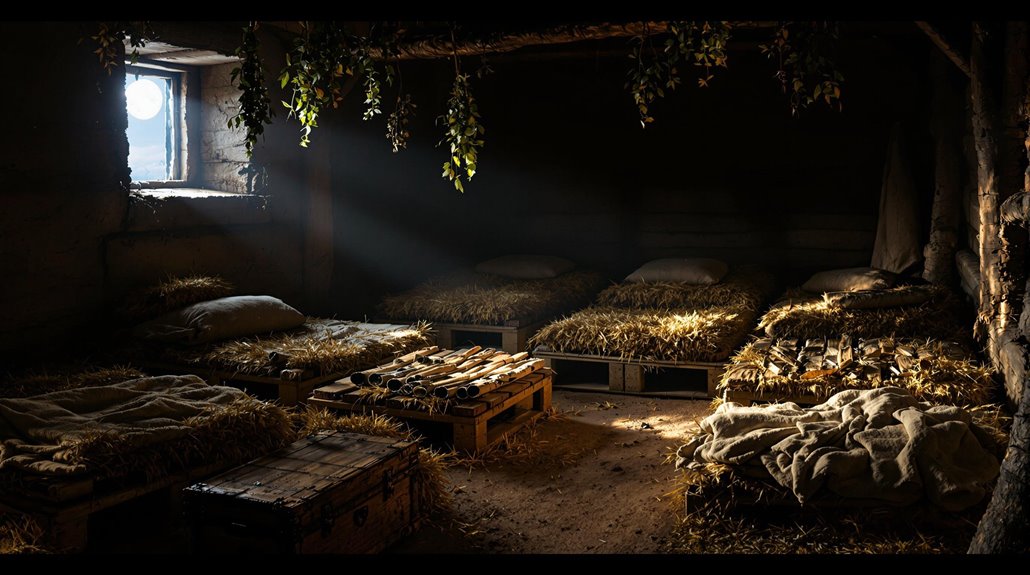
Medieval peasants slept very differently than you do today. You'd find them resting on simple straw or rush mats laid directly on the floor, often sharing their sleeping space with family members, servants, and even strangers. They followed a unique two-sleep pattern, with their first rest beginning at sunset and lasting until midnight, followed by a wakeful period of activities like prayer or socializing, before entering their second sleep until dawn. While nobles enjoyed raised beds with fine linens and comfortable mattresses, peasants made do with basic materials like wool and animal hides. The deeper you investigate medieval sleeping habits, the more fascinating details you'll uncover about daily life in this era.
Sleeping Quarters and Bedding Materials
Finding comfort at bedtime looked quite different for medieval peasants compared to their wealthier counterparts. If you were a peasant, you'd likely find yourself sleeping on basic straw or rush mats laid directly on the floor. You wouldn't have had the luxury of elevated bed frames that wealthy medieval residents enjoyed with their comfortable mattresses filled with wool, straw, or even feathers.
The quality of your rest would've largely depended on your social status. While you'd see affluent households changing their mattress fillings up to four times yearly, peasants made do with what they had. Wealthy homes also featured raised cushions, or hovedpole, as bed accessories. These cushions, stuffed with materials ranging from hay to down and hair, often displayed decorative patterns and tasseled corners for aesthetic appeal.
Regardless of social class, you'd find that pest control and hygiene were important considerations. Linen sheets, when available, were thoroughly washed at high temperatures to maintain cleanliness. Various methods were employed to keep annoying pests like flies and mosquitoes at bay during sleep time.
The Two-Sleep Pattern
While modern people typically sleep in a single block of time, medieval peasants followed a markedly different pattern known as biphasic sleep. You might find it fascinating that they divided their rest into two distinct periods, with the first sleep beginning at sunset and lasting until around midnight.
During the period of wakefulness between sleeps, medieval people engaged in various activities:
- Prayer and meditation in the quiet hours
- Intimate moments with their partners
- Reading, studying, or conversing with family members
The second sleep would then commence and continue until dawn. This two-sleep pattern wasn't just a random habit - it was deeply ingrained in medieval culture and documented extensively in historical texts. You'll find references to this practice in medical guides, literature, and personal accounts from the time.
What's particularly interesting is that this sleep pattern persisted throughout medieval Europe until the advent of artificial lighting in the 19th century. The industrial revolution's demands eventually forced people to abandon this natural rhythm in favor of our modern consolidated sleep schedule. Understanding this historical sleep pattern helps you appreciate how dramatically our rest habits have changed over the centuries.
Shared Sleeping Arrangements

Unlike our modern preference for private bedrooms, medieval peasants adopted a radically different approach to sleeping spaces. In the Middle Ages, you'd find entire families, servants, and even traveling strangers sharing not just rooms but often the same bed. When it was time to go to bed, people would arrange themselves according to strict social rules that governed who slept where and in what position.
The sleeping arrangements weren't just about conserving space - they reflected the deeply communal nature of medieval life. You'd typically find a large bed filled with straw or rags, where people slept shoulder to shoulder through both first sleep and second sleep periods. During the night, it wasn't unusual to share your resting space with up to half a dozen people, all trying to stay warm and safe together.
These shared arrangements meant that privacy as one understands it today simply didn't exist. Whether you were a household servant or a family member, you'd participate in this intimate communal experience, where people sleep together as a matter of necessity and social custom during the early medieval period.
Nighttime Challenges and Disturbances
Throughout the darkest hours, medieval peasants faced numerous disruptions that made peaceful sleep a constant challenge. You'd find your fyrste slepe turne interrupted by all sorts of night disturbances, from barking dogs that woke people to noisy neighbors who couldn't keep quiet. Even nobles weren't immune to sleep disruptions - take Pierre de Béarn, who'd terrorize his household by swinging a sword while sleepwalking.
The medieval period's practice of two periods of sleep made people particularly vulnerable to disturbances, as awakening naturally between sleep cycles became complicated by external factors. You might've struggled with:
- Fear of demons of hell and supernatural forces believed to prey on sleepers
- Seasonal changes affecting sleep patterns, with longer nights introducing more opportunities for disruption
- Religious obligations, like Benedictine monks having to wake for midnight prayers
These challenges weren't just inconveniences - they fundamentally shaped how medieval people approached their rest. Whether you were a peasant dealing with noisy animals or a monk fighting the urge to stay in bed, nighttime disturbances were an unavoidable part of medieval life.
Daily Rest and Social Status
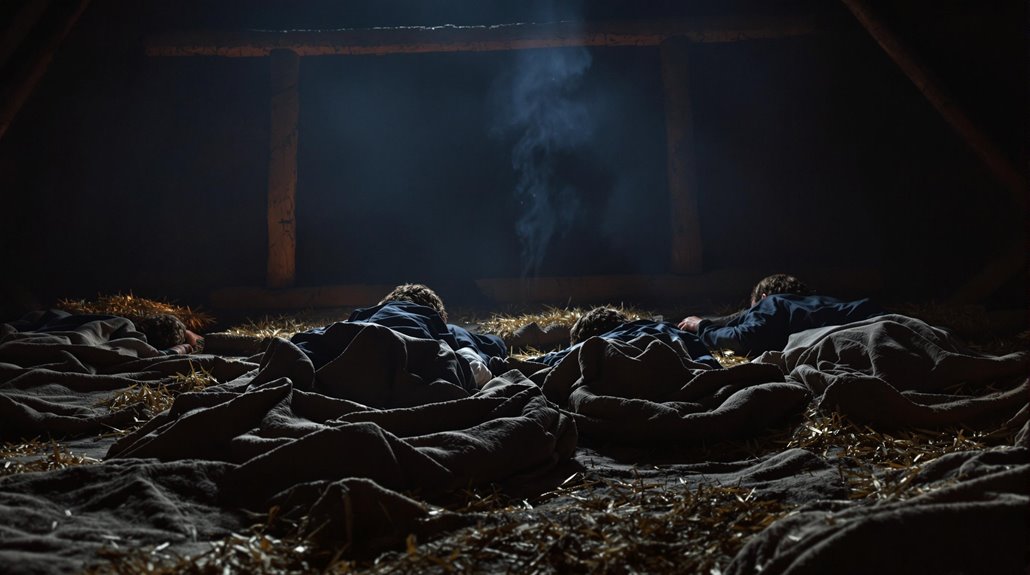
The stark differences in sleeping arrangements between medieval social classes highlighted the deep divisions in society. While nobles would rest in elevated beds with fine linens, you'd find peasants sleeping on simple straw mats spread across dirt or wooden floors. Even the most basic comforts of sleep marked your social standing in the Middle Ages.
You might go to bed with your entire family and, in some cases, strangers sharing your sleeping space. Unlike the nobility, who enjoyed artificial lighting allowed us to stay up later, your rest would be governed by natural daylight and agricultural demands. Getting up before morning light was common, as farm work demanded early starts.
Your sleeping pattern would typically follow what's known as first sleep and second sleep, a common practice where you'd wake briefly in the middle of the night before returning to rest. During second sleep, the person might use basic bedding materials like wool or animal hides for warmth, a far cry from the luxurious furnishings of the upper class. Your rest would often be interrupted by livestock noises or the activities of nearby neighbors, reinforcing the communal nature of peasant life.