How Did Early Egyptians Sleep? Ancient Practices Revealed
Ancient Egyptians approached sleep as both a practical and spiritual experience. You'd find their beds constructed with wooden frames and woven linen surfaces, while ornate headrests cradled their necks during slumber. They didn't just crawl into bed - they protected themselves with amulets and spells to ward off nightmares and evil spirits. The god Tutu served as their divine sleep guardian, while dream interpretation held significant importance in their culture. Royal beds featured luxury materials and symbolic elements, showcasing their belief that sleep connected them to divine domains. The fascinating blend of comfort and ritual in Egyptian sleep practices reveals an intricate world of ancient wisdom.
Ancient Egyptian Bed Construction
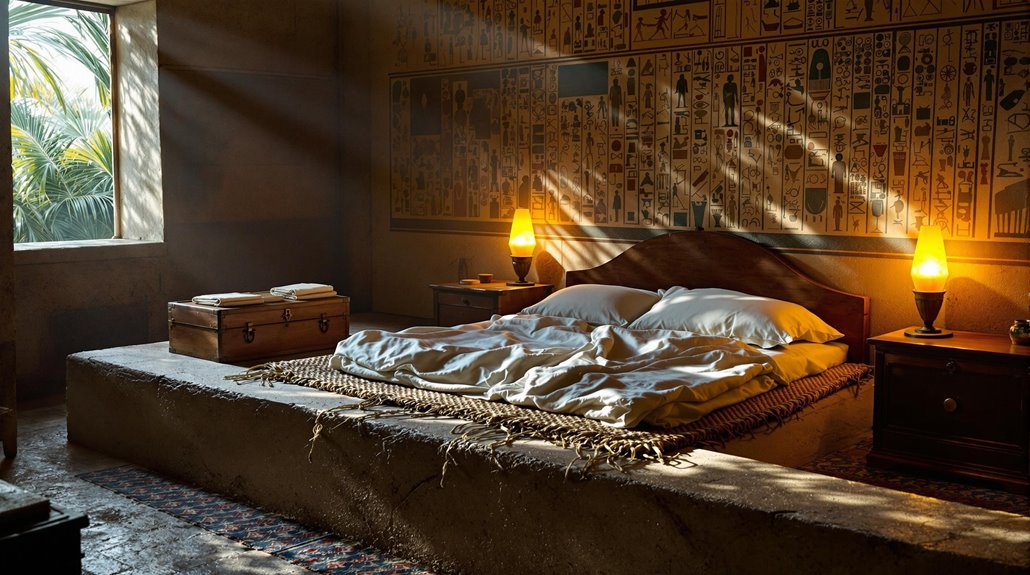
Ancient Egyptian bed craftsmanship showcased astonishing sophistication in both design and functionality. Unlike the basic sleeping arrangements of early humans, Ancient Egyptians developed beds that combined practical comfort with artistic expression. You'll find that these beds typically featured a wooden frame with four legs, carefully designed to incorporate symbolic animal elements, particularly those of cattle and lions.
The construction process reflected an in-depth comprehension of both aesthetics and durability. When you examine these beds closely, you'll notice they weren't equipped with modern mattress materials - instead, the Ancient Egyptians used woven linen and various textiles to create comfortable sleeping surfaces. What's particularly interesting is how they approached head support: rather than using soft pillows, they opted for specialized headrests, though their exact purpose remains somewhat mysterious to modern researchers.
These beds weren't just for sleeping - they served multiple purposes, especially in upper-class households. You'll find two distinct categories in Egyptian bed construction: everyday beds for practical use and more elaborate versions designed for ceremonial and social functions, highlighting the sophisticated nature of Egyptian furniture craftsmanship.
Sacred Sleep Rituals
Many sacred rituals surrounded sleep in Egyptian culture, reflecting a deep connection between rest, spirituality, and protection. From the Old Kingdom onwards, you'd find elaborate practices designed to safeguard peaceful slumber and safe passage through the dream state. When preparing for sleep, ancient Egyptians would often rely on protective amulets and recite specific spells to ward off unwanted nightmares and malevolent spirits.
The god Tutu played an essential role in these rituals, serving as a divine guardian who'd protect sleepers from nocturnal demons. You'll find evidence of this protective relationship in the headrests discovered in tombs, which were inscribed with blessings seeking "good sleep" and divine protection from Amon. This connection between sleep and spirituality extended into burial practices, where you'd see bodies carefully positioned as if sleeping, often in a fetal position.
What's particularly fascinating is how Egyptians viewed sleep as a vulnerable state requiring supernatural defense, much like they viewed death. You can see this parallel in their use of protective symbols and religious imagery in both sleeping quarters and tomb decorations, highlighting their belief in the sacred nature of rest.
Dream Interpretation and Protection
The interpretation of dreams held deep significance in Egyptian daily life, building upon their spiritual sleep practices. You'll find evidence of this in history's oldest recorded nightmare from 4,000 years ago, where a servant's haunting stare disturbed the dreamer's sleep. Ancient Egyptians didn't view dreams as mere subconscious wanderings - they saw them as gateways to hidden domains and prophetic visions.
Dream interpretation became so important that pharaohs used divine dreams to strengthen their authority. Leaders like Senusret I and Amenhotep II carefully documented their celestial visions to validate their right to rule. The practice became formalized in 1220 B.C. with The Dream Manual, which cataloged 139 positive and 83 negative dream omens for reference.
To guarantee peaceful sleep, you'd have found Egyptians employing various dream protection methods. During the tumultuous Third Intermediate Period, they relied heavily on protective spells, amulets, and blessings to ward off nightmares. These safeguards weren't just superstition - they represented a sophisticated system of psychological comfort in a culture where dreams bridged the physical and spiritual worlds.
Royal Sleeping Arrangements
In accordance with their divine status, royal Egyptians slept on beds that showcased both luxury and symbolism. You'll find some of the earliest known examples of these magnificent pieces in the Egyptian Museum in Turin, where beds from the New Kingdom period demonstrate the intricate craftsmanship of ancient Egyptian furniture makers. The beds' legs were masterfully carved to represent powerful animals like lions and cattle, symbolizing strength and divine safeguard.
Unlike today's modern mattresses, you'd have found royal beds equipped with woven linen mattresses and textile padding, often supported by an intricate network of supporting nets. What's particularly fascinating is that instead of using soft pillows, royalty rested their heads on carved headrests. These weren't just practical items - they held deep spiritual significance, connecting the sleeper to the concept of the horizon and the sun's daily rebirth.
You'd discover many of these royal beds in tomb contexts, where they served as eternal resting places. The headrests often bore inscriptions asking the deities for peaceful sleep and protection, reflecting the Egyptian belief that even in sleep, royalty maintained their connection to the divine domain.
Headrests and Symbolic Meanings
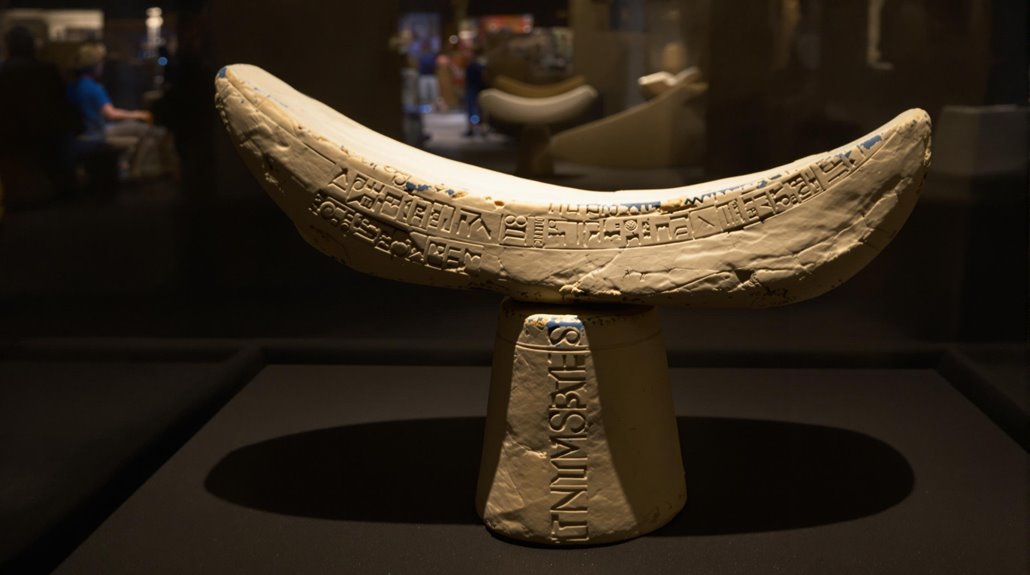
Among the most intriguing elements of ancient Egyptian sleeping customs, headrests stand out as powerful symbols connecting the physical and spiritual domains. You'll find these fascinating objects were far more than mere pillows - they served as guardians of both sleep and the afterlife. Archaeological evidence, including the ornate bed of Queen Hetepheres, reveals that Egyptians typically slept on their sides with their cheeks cradled in padded headrests.
The significance of these headrests extends deep into Egyptian spirituality. They're among the first known sleep accessories to feature protective hieroglyphic inscriptions, with many bearing the phrase "sleep-well" to invoke divine safeguarding. You'll notice how the hieroglyphic symbol for "horizon" mirrors the headrest's contoured shape, emphasizing the Egyptian belief in elevated sleep posture.
The protective nature of headrests wasn't limited to physical comfort - they were believed to prevent decapitation in the afterlife. This connection between sleep and spiritual protection is further reinforced by the god Tutu, whose lion-like legs match those found on ancient bed frames, highlighting the Egyptian view of sleep as a passage through the otherworld.
Nighttime Guardians and Deities
While drifting off to sleep, ancient Egyptians surrounded themselves with an array of supernatural guardians to ward off evil spirits and nightmares. You'd find protective amulets carefully placed around sleeping areas, each one serving as a spiritual shield against nocturnal threats. The corners of bedrooms featured rearing cobra statuettes, creating an invisible barrier that evil forces couldn't penetrate.
Two key deities played pivotal roles in protecting sleepers. Taweret, the fierce hippopotamus goddess who stood upright like two mountains, watched over sleeping individuals while also serving as a symbol of fertility and children's protection. The dwarf god Bes, despite his intimidating appearance with a squat body and grotesque features, proved to be a powerful ally against sleep disturbances and bad dreams.
To strengthen these divine safeguards, you'd uncover carefully inscribed prayers and blessings on headrests, each word crafted to invoke celestial protection. This extensive system of spiritual defense reflected the Egyptians' deep belief that peaceful sleep required more than just physical comfort - it demanded supernatural protection from the domain of gods and spirits.
Sleep Materials and Daily Practices
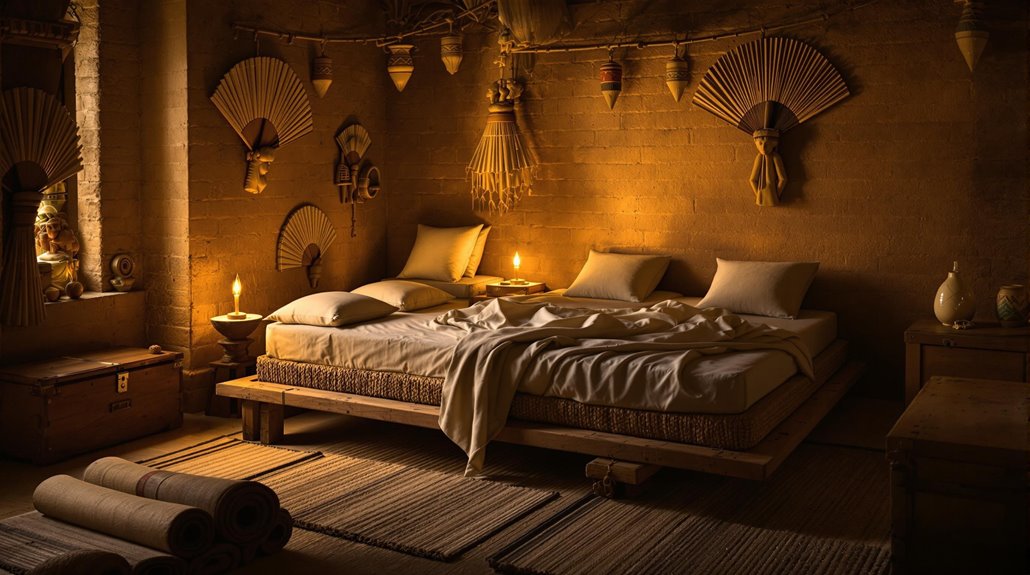
Beyond spiritual protection, ancient Egyptians created practical solutions for their nightly slumber. Throughout Ancient Egyptian history, people improvised sleeping arrangements using readily available materials from their environment. They typically made basic mattresses from palm leaves, reeds, and wool, weaving these materials together to create comfortable sleeping surfaces.
While you might envision elaborate beds in every ancient Egyptian home, the reality was quite different. For most of the population over several thousand years, sleeping happened right on the floor or on raised platforms built into their homes. The fancy wooden bed frames with four legs that archaeologists have uncovered were primarily reserved for the elite, often found in tombs and wealthy households.
If you'd visited an ancient Egyptian home, you'd notice they used their sleeping spaces for multiple purposes. These areas weren't just for rest - they served as places for healing the sick, helping women give birth, and hosting social gatherings. Instead of the soft pillows you're used to, they relied on headrests, though we're still not entirely sure why they preferred these firm supports for their heads.