
Hei Neak Ta: Exploring Cambodia's Parade of the Spirits
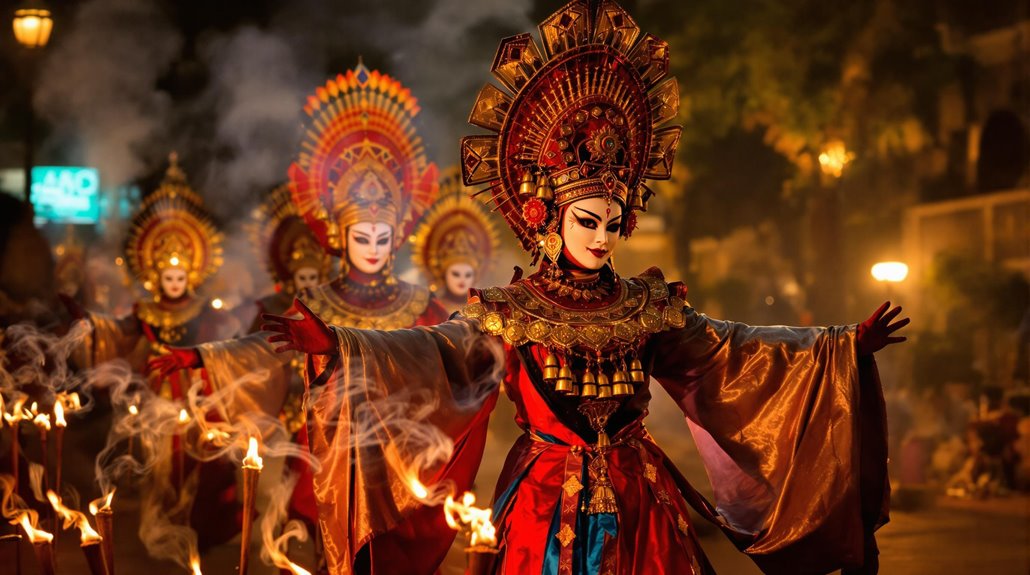
In Cambodia's dramatic Hei Neak Ta festival, you'll witness spirit mediums channeling ancient guardian spirits known as neak ta. During this intense celebration, mediums don ornate costumes and perform dramatic acts of devotion, including cheek piercing and tongue cutting. They use their own blood to create sacred diagrams called yantras, which serve as powerful talismans for protection and prosperity. This unique festival blends Cambodia's indigenous animistic traditions with Buddhist and Hindu influences, while local families and businesses avidly seek blessings from the spirit-possessed mediums. The deeper you venture into this mystical parade, the more its ancient secrets reveal themselves.
Origins of Hei Neak Ta
Three distinct spiritual traditions - Hindu, Buddhist, and indigenous animism - converged to create Cambodia's Hei Neak Ta festival during the pre-Angkorian and Angkorian periods. As you explore the festival's roots, you'll discover how local folk traditions seamlessly blended with formalized religions to create a unique celebration that continues to define Cambodian spirituality.
At its core, the festival centers on the Neak Ta - powerful spirit entities that serve as guardians of Cambodia's communities. Unlike Chinese or other Asian spirit mediums, the Neak Ta are deeply rooted in Cambodia's indigenous belief system, predating both Hindu and Buddhist influences. You'll find their shrines in countless Cambodian homes, where they're believed to bridge the gap between the physical and spiritual domains.
The festival's evolution reflects Cambodia's exceptional ability to preserve ancient animistic practices while embracing newer religious influences. When you participate in Hei Neak Ta, you're not just witnessing a cultural event - you're experiencing centuries of spiritual syncretism that has shaped Cambodia's religious identity through tributes, rituals, and community gatherings.
Spirit Mediums and Sacred Rituals
Spirit mediums step into the spotlight during Cambodia's Hei Neak Ta festival, leading lively processions through city streets in their ornate costumes and headdresses. You'll witness these dedicated practitioners performing intense physical rituals that demonstrate their connection to the spirit world. As they enter deep states of possession, they'll pierce their cheeks with sharp needles and cut their tongues with ceremonial knives.
The blood from these ritual acts serves a sacred purpose. You'll see the spirit-possessed mediums carefully using their blood to create yantras - mystical diagrams drawn on paper slips that are believed to carry powerful blessings and protective properties. This practice reflects the unique fusion of Chinese ceremonial traditions with Cambodia's deeply rooted folk beliefs.
If you're fortunate enough to observe the festival, you'll notice how local families and businesses eagerly welcome these mediums into their spaces. Each visit is considered highly auspicious, as the mediums' presence is believed to invoke prosperity and happiness for the coming year. Their rituals create a bridge between the physical world and the domain of spirits, reinforcing the community's spiritual connections.
Blood Offerings and Mystical Diagrams
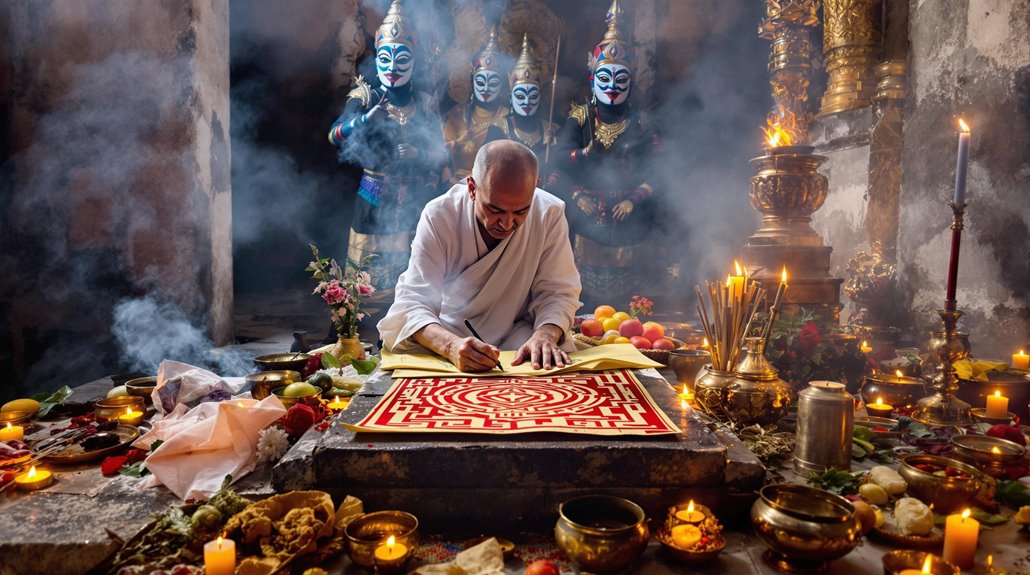
The sacred blood rituals form the heart of the Hei Neak Ta festival's most powerful moments. You'll witness spirit mediums performing intense acts of devotion as they pierce their cheeks with needles and slice their tongues in a dramatic display of their connection to the spiritual domain.
These mediums use their own blood to create mystical diagrams called yantras on paper slips, demonstrating their ability to bridge the physical and spiritual worlds. As they carefully draw these sacred symbols, you'll see how each stroke carries deep spiritual significance, blending Chinese ritual practices with Cambodian folk traditions.
You'll find yourself among the crowd as these blood-inscribed diagrams are distributed, each slip believed to carry powerful protective properties. If you're fortunate enough to receive one, you'll be holding what many consider a potent talisman against illness and misfortune. The entire practice showcases the mediums' dedication to their spiritual calling, as they transform their blood into vessels of blessing for the community. This ritual represents more than just spectacle - it's a profound expression of faith that continues to awe festival attendees year after year.
Traditional Beliefs and Cultural Heritage
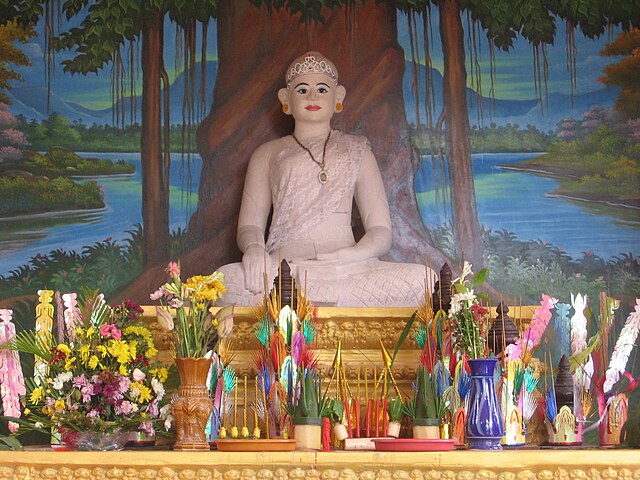
Throughout Cambodia's rich history, neak ta land spirits have remained powerful forces shaping local beliefs and community life. You'll find these guardian spirits dwelling in natural landmarks, where they bridge the physical world and spirit world through sacred shrines and ritual spaces. Their influence runs deep in Cambodian culture, weaving together Buddhist, Hindu, and animistic traditions into a unique spiritual textile.
When you visit Cambodia's countryside, you'll notice how locals haven't cut down certain trees or disturbed specific rocks, as these are believed to house powerful neak ta. Communities seek their bless-ings through carefully maintained shrines, where tributes of incense, fruit, and traditional yantras (mystical diagrams) demonstrate continuing reverence for these ancient protectors.
You're witnessing a living heritage that's survived centuries of cultural change. The neak ta tradition reflects Cambodia's complex religious identity, where supernatural guardians remain relevant in modern life. From village ceremonies to urban development projects, these spirits continue to influence social relationships, political decisions, and economic activities, demonstrating their enduring significance in Cambodian society.
The Annual Spirit Procession
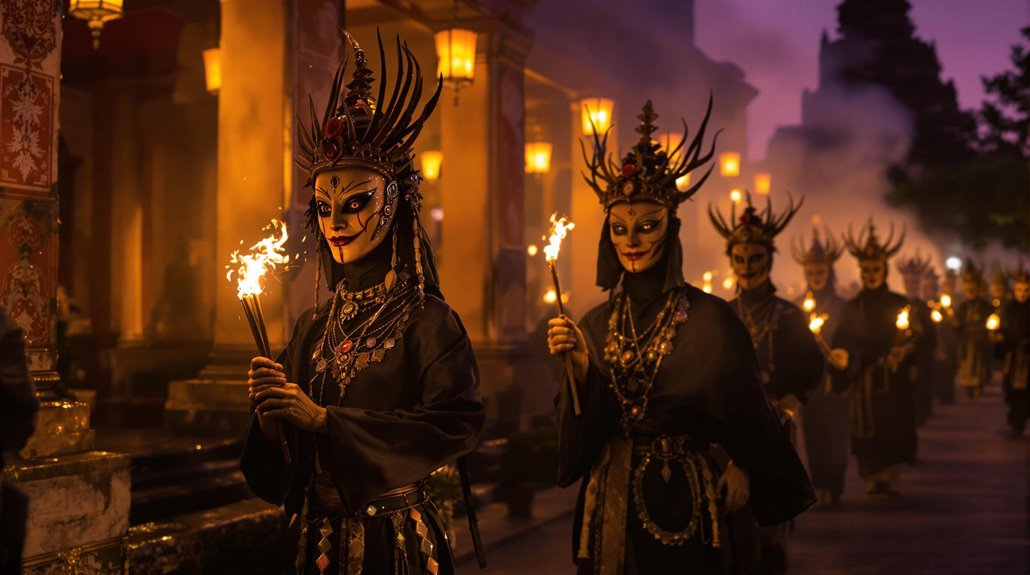
Each year, Phnom Penh's streets come alive during the Hei Neak Ta parade, where spirit mediums honor these ancient guardians in dramatic fashion. You'll witness an extraordinary display of devotion as mediums, adorned in elaborate costumes, perform intense rituals that include tongue cutting and cheek piercing. These acts demonstrate their connection to the spirit world and their role as vessels for supernatural forces.
As you follow the colorful procession through the city, you'll see spirit-possessed mediums blessing local businesses and residents. They create powerful talismans using their own blood, which believers consider sacred protection. The parade marks the grand finale of Lunar New Year celebrations, drawing hundreds of spectators keen to receive blessings from these spiritual intermediaries.
What makes this festival particularly fascinating is how it blends Chinese ritual practices with Cambodian folk traditions. When you attend the Hei Neak Ta, you're not just watching a parade - you're experiencing a living chronicle to Cambodia's rich spiritual heritage. This annual event powerfully demonstrates the ongoing relationship between the physical and spiritual domains that's deeply woven into Cambodian culture.
Blessings for Prosperity
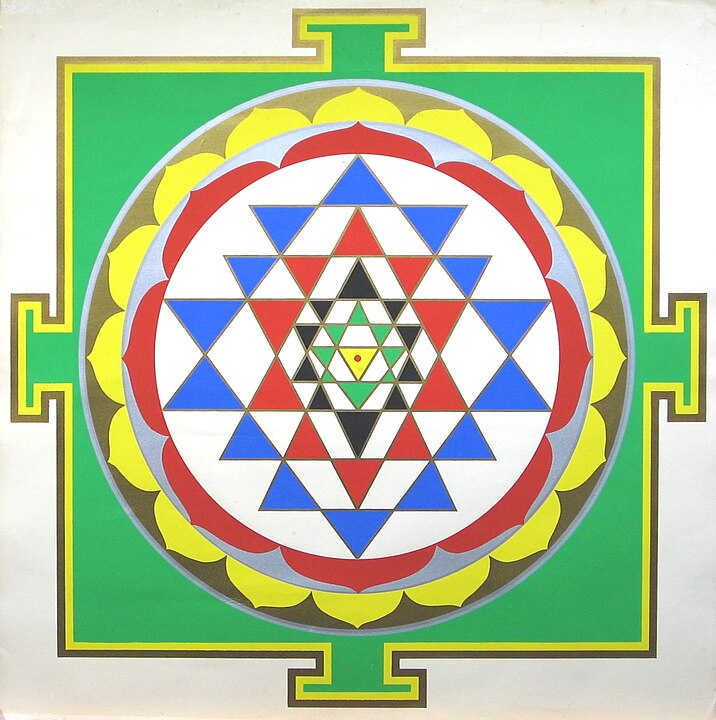
Sacred blessings flow abundantly during this spiritual gathering as mediums create powerful talismans using their own blood. As you witness the ceremony, you'll see these spirit vessels write mystical diagrams known as yantras on paper slips, carefully crafting each sacred symbol. They use their own blood to write mystical inscriptions, which they believe channels divine energy into these protective charms.
The mediums prepare these paper slips before distributing them to enthusiastic participants who seek prosperity and protection. You'll notice how local businesses and families actively participate by inviting these spirit-possessed mediums into their establishments and homes. During these intimate blessings, the mediums demonstrate their connection to the spiritual domain through intense physical rituals, including tongue-cutting and cheek-piercing with needles and spears.
This unique blend of Chinese and Cambodian spiritual traditions showcases the deep-rooted belief in neak ta, the guardian spirits who oversee community welfare. When you receive these blood-inscribed blessings, you're participating in a centuries-old tradition that continues to unite the community in their quest for fortune and spiritual protection.
Chinese and Khmer Spiritual Fusion
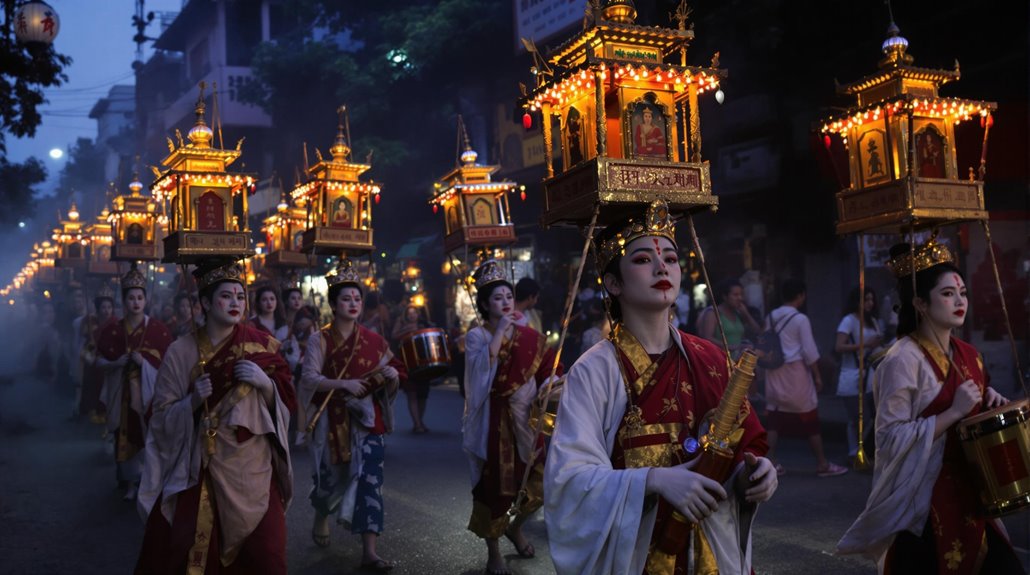
The rich fabric of Cambodia's spiritual terrain comes alive in the Hei Neak Ta festival, where Chinese ritual traditions interweave seamlessly with Khmer folk beliefs. You'll witness a remarkable spirit world run where mediums, deeply connected to both Chinese ritual and local customs, perform extraordinary acts of devotion that bridge two distinct cultural traditions.
As you observe the parade, you'll see how the fusion manifests through the mediums' dramatic displays. They pierce their bodies with needles and cut their tongues, practices rooted in Chinese spiritual traditions, while simultaneously plunging into Khmer mystical elements. The mediums create sacred diagrams known as yantras using their own blood, distributing these powerful talismans to fervent onlookers. This unique blend of practices typically coincides with Chinese New Year celebrations, highlighting the harmonious integration of both spiritual traditions.
This cultural amalgamation reflects Cambodia's ability to embrace and adapt diverse religious influences while maintaining its distinct identity. The festival showcases how two spiritual traditions can merge to create powerful ceremonies that serve a common purpose: bringing prosperity and warding off misfortune for the community.
Modern Celebrations in Phnom Penh
Throughout the lively streets of Phnom Penh, modern celebrations of Hei Neak Ta energize the city into an animated spectacle of spiritual devotion. You'll witness spirit mediums adorned in vibrant costumes and ornate headdresses, demonstrating their supernatural connections through dramatic displays of body piercing and tongue cutting.
As you follow the parade route, you'll notice how local shops and homes welcome these mediums into their shops, seeking blessings and protection. The mediums create intricate yantras - mystical diagrams drawn on paper slips - which they distribute to eager crowds. These sacred tokens represent a new way for contemporary Cambodians to maintain their deep-rooted beliefs in the spirit world while adapting to modern urban life.
The festival draws diverse crowds, from devoted followers to curious onlookers, all gathering to experience this unique spiritual celebration. You'll find yourself immersed in a fascinating blend of Chinese ritual practices and traditional Khmer spirituality, showcasing how Cambodia's cultural heritage continues to thrive in today's bustling capital. The celebration serves as a living chronicle to how ancient customs can remain relevant and meaningful in contemporary society.
Guardian Spirits of Cambodia
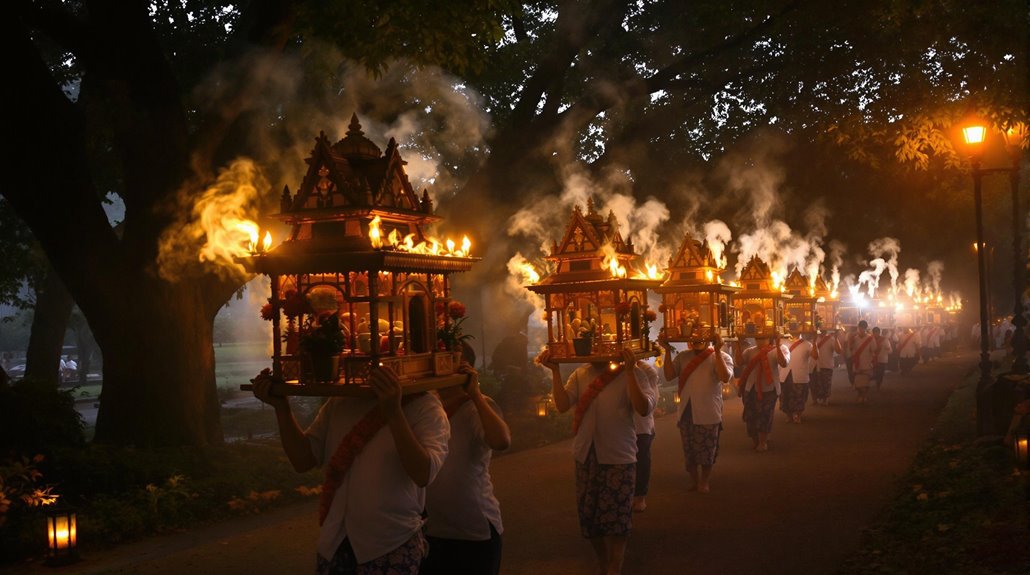
Powerful guardian spirits, known as Neak Ta, form the spiritual backbone of Cambodian culture and beliefs. You'll find these revered entities in every village, where they're believed to protect the community and maintain harmony between the physical and spiritual worlds. They're often represented by simple stone sculptures or wooden posts, marking sacred spaces where locals gather to make presentations.
During important ceremonies, you'll witness spirit-possessed mediums channeling these guardian spirits, creating a direct link between the community and their supernatural protectors. These mediums play an indispensable role in ritual and local folk practices, interpreting messages and providing guidance to those seeking help. You'll see villagers consulting them for everything from health issues to business decisions.
You'll notice Neak Ta shrines near homes to bless and protect families, usually accompanied by incense, fruits, and small gifts. Many Cambodians believe these presentations bring good luck and ward off misfortune. While Buddhism remains Cambodia's primary religion, these guardian spirits continue to hold significant influence, representing a unique blend of animistic beliefs that have survived centuries of cultural change.
Related posts