Hadaka Matsuri: Japan’s Barely-Clothed Festival of Good Fortune
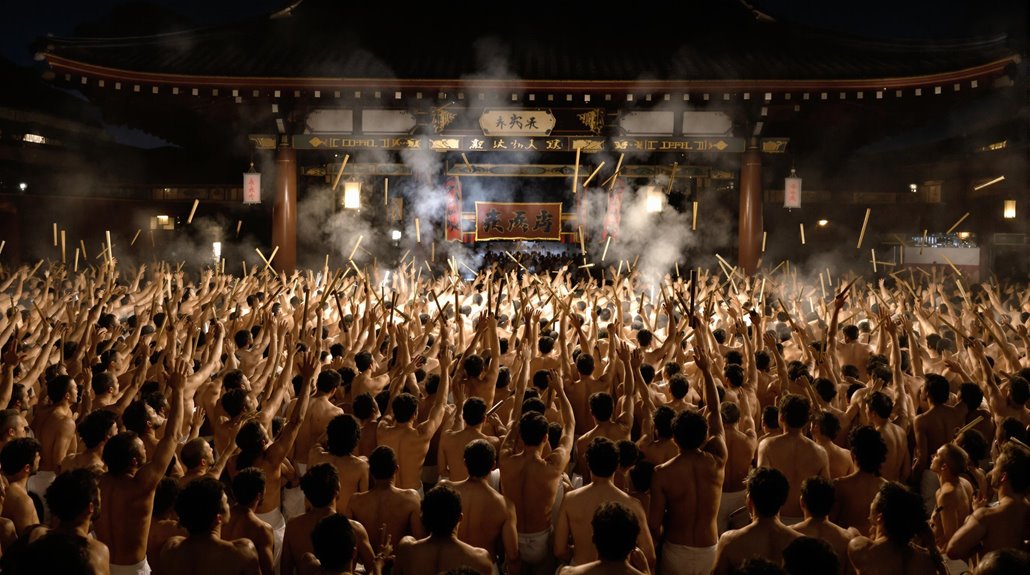
At Japan's legendary Hadaka Matsuri, you'll witness thousands of men clad only in loincloths braving the winter cold at Saidaiji Temple. This 500-year-old festival blends Shinto and Buddhist traditions, where participants undergo purification rituals before competing at midnight for sacred shingi sticks. You'll see the chief priest toss these coveted sticks into the crowd, sparking an intense battle among contestants seeking the title of "fuku-otoko" (lucky man). While the festival showcases raw physical strength, it's equally about spiritual devotion and strategic positioning. The fascinating traditions behind this barely-clothed pursuit of fortune run deeper than meets the eye.
Origins and Sacred Traditions
Deep in the heart of Okayama City, the Hadaka Matsuri stands as one of Japan's most distinctive religious festivals, tracing its roots back more than 500 years at the historic Saidaiji Temple. This sacred celebration intertwines both Shinto and Buddhist beliefs, creating a unique spiritual experience that's survived generations.
You'll find participants engaging in ancient purification rituals that form the festival's core traditions. They'll cleanse themselves in cold water and make contributions, practices that have shaped the event's identity as a "naked festival." Wearing only a minimal loincloth (fundoshi) and traditional socks (tabi), participants adopt a state of spiritual purity as they seek to rid themselves of misfortune.
At the heart of the celebration, you'll witness the dramatic pursuit of good luck through the shingi ritual. These sacred wooden sticks, when thrown into the crowd, become the focus of an intense scramble. The men who manage to capture these prized objects aren't just winners of a contest - they're believed to receive divine blessings for the year ahead. This pursuit of fortune through the "shin-otoko" or lucky man tradition remains a cornerstone of the festival's enduring spiritual significance.
The Battle for Divine Fortune

As midnight approaches, thousands of men surge forward in a chaotic tide of bodies, all fixated on catching the sacred shingi sticks thrown by the temple's chief priest. The Naked men, clad only in traditional white loincloths and socks, create one of Japan's most intense festivals as they wrestle and push through the crowd, each hoping to emerge as a lucky winner.
If you're brave enough to join this fierce competition, you'll need to strategically position yourself away from dangerous spots near pillars and edges. The battle for these blessed sticks isn't just about brute strength - it's about survival and smart maneuvering through the sea of participants. Once thrown, the shingi become the center of a powerful scramble that can quickly turn dangerous.
Should you manage to grab one of these coveted sticks, you'll need to protect it fiercely until officials can verify your win. Upon confirmation, you'll earn the prestigious title of "fuku-otoko" (lucky man), marking you as one of the chosen few destined for a year of good fortune and happiness.
Preparing for the Sacred Challenge
Before diving into this intense spiritual battle, you'll need to meet several key requirements and take important safety precautions. To participate, you must be at least of junior high school age, and you can't have any visible tattoos or be under the influence of alcohol during the festival.
When it comes to the traditional attire, there's no need to worry about bringing your own gear. You can wear a traditional loincloth and tabi socks that are available for purchase right at the festival grounds. The provided changing facilities will give you space to get properly dressed for the event.
For your safety, you'll want to be strategic about your positioning during the festival. Stay away from the crowd's edges and avoid areas near pillars, as these locations can increase your risk of injuries during the intense jostling. Given the physical nature of the festival and the potential for accidents, it's highly recommended that you secure overseas travel insurance before participating. This coverage will protect you financially if you need medical attention during this sacred but physically demanding celebration.
Inside the Temple Grounds
Thousands of enthusiastic participants fill the historic grounds of Saidaiji Temple, converting the sacred space into a pulsating hub of spiritual energy. As you enter the grounds of this revered temple in Okayama, you'll witness participants engaging in a vital ritual - purifying their bodies by dousing themselves with cold spring water, a practice believed to cleanse both body and spirit before seeking luck in the festival.
The atmosphere intensifies as the evening progresses. By 10 PM, you'll notice steam rising from the temple's main hall, created by the collective body heat of countless semi-naked men packed inside. The rhythmic beats of the Eyo Taiko, performed by skilled women drummers, echo throughout the grounds, their traditional percussion driving the crowd's excitement to new heights.
The sacred space comes alive with bursting fireworks illuminating the night sky, casting an ethereal glow over the temple grounds. You're now part of an ancient tradition where spiritual devotion meets raw human determination, all unfolding within the hallowed confines of Saidaiji Temple's historic grounds.
Rules of Engagement

Clear safety guidelines govern participation in the Hadaka Matsuri festival, protecting both participants and spectators alike. If you're planning to join this unique Japanese celebration, you'll need to meet specific requirements: you must be at least junior high school age, have no visible tattoos, and remain completely sober throughout the event.
When you arrive, you'll receive traditional "hadaka" attire - simple loincloths and white tabi socks - at the venue. While changing facilities are available, don't forget to bring your own protective gear. Knee and elbow pads are strongly recommended to prevent injuries during the intense physical contact that's characteristic of this festival.
Your safety depends largely on your positioning during the event. You'll want to stay away from edges and pillars where the risk of being crushed increases considerably. To ensure international visitors are protected, securing overseas travel insurance before participating is crucial. The festival's competitive nature can lead to unexpected incidents, and having proper coverage will enable you to fully immerse yourself in this centuries-old tradition of Japan without worry.
The Lucky Shingi Sticks
At the heart of Hadaka Matsuri lies the sacred shingi sticks, objects that carry the promise of good fortune for lucky winners. When you're among the barely-clothed participants, you'll witness the chief priest's dramatic toss of these coveted items into the packed temple hall, marking the festival's pinnacle moment.
Before the main event, you'll experience the throwing of 100 kushigo sticks, which builds anticipation and sets the stage for the fierce competition ahead. If you're fortunate enough to grab one of these sacred shingi sticks, you'll earn the honored title of fuku-otoko, designating you as one of the year's "lucky men."
Here's what makes the shingi stick competition unique:
- Officials thoroughly inspect each stick to validate legitimate wins
- Participants wear only traditional white loincloths and tabi socks
- The initial kushigo stick toss involves 100 smaller sticks
- Successfully catching a shingi grants good fortune for the entire year
As you compete alongside other determined participants, you'll understand why these simple wooden objects hold such significance. The promise of becoming a fuku-otoko drives the passionate pursuit of these sacred tokens of prosperity.
Safety and Medical Precautions

Safety measures form the backbone of Hadaka Matsuri, where paramedics and police maintain vigilant watch throughout the festival grounds. Each year, thousands of participants engage in intense physical contact, making medical attention a pivotal aspect of the event's organization.
You'll need to follow strict safety guidelines if you're planning to participate. Don't wear jewelry, display tattoos, or consume alcohol before the event. These restrictions help minimize the risk of injuries during the vigorous competition for shingi sticks. If you're attending as a spectator, keep away from edges and pillars to avoid getting caught in the surge of participants.
Given the high probability of injuries during the scramble, you'll want to secure overseas travel insurance before attending. The festival organizers provide changing facilities, but they can't guarantee your safety in the midst of such chaos. While medical teams are ready to respond to emergencies, prevention remains your best defense. The combination of thousands of bodies, intense pushing, and confined spaces creates a potentially dangerous environment that requires your constant awareness and adherence to safety protocols.
Women and Children Events
While the main Hadaka Matsuri centers on adult male participants, two engaging alternatives welcome women and children into this centuries-old tradition. Throughout Japan, these inclusive festivals are held to guarantee everyone can experience the cultural significance of this historic celebration.
The Shonen Hadaka Matsuri offers young elementary school boys their first taste of the festival's excitement. During this modified version, participants wear appropriate clothing while competing to capture treasure tubes, making it both safe and entertaining for the younger generation.
Before the evening's spectacular fireworks display, you'll witness the powerful Eyo Taiko women drummers warming up the crowd with their lively performances. These events showcase how the festival embraces diversity while maintaining its traditional roots.
Key aspects of the women and children events include:
- Age-appropriate competitions designed specifically for young boys
- Female drumming performances that electrify the atmosphere
- Special viewing areas for families to safely enjoy the festivities
- Modified dress codes that respect both tradition and comfort
You'll find these inclusive events create memorable experiences for all attendees while preserving the festival's cultural heritage.
Festival Entertainment and Atmosphere

The electric energy of Hadaka Matsuri peaks during its main festivities, building from the thunderous Eyo taiko drums into a euphoric crescendo of celebration. You'll be enthralled by the powerful rhythms performed by female drummers, their beats echoing through the grounds and setting the tone for the night's excitement.
As you make your way through the festival, you'll notice the main hall becoming increasingly steam-filled by 9 pm, as the body heat from nearly 10,000 participants creates a mystical atmosphere. The real excitement begins at 10 pm when you'll witness the throwing of 100 kushigo sticks, followed by the dramatic moment when the chief priest launches the sacred shingi amulets into the ardent crowd.
Whether you're participating or watching, you'll find yourself swept up in the festival's infectious energy. The grounds come alive with the inviting aromas from food stalls, while spectacular fireworks displays illuminate the night sky. It's an immersive experience that combines traditional ritual with modern celebration, creating an unforgettable atmosphere that captures the essence of Japanese festival culture.
Global Recognition and Tourism
Over the years, Hadaka Matsuri has evolved from a local religious celebration into a globally recognized spectacle, drawing more than 10,000 spectators annually to Okayama City. If you're lucky enough to attend, you'll witness one of Japan's most eccentric cultural events, where thousands of men clad only in loincloths compete for sacred good-luck sticks called shingi.
The Japan National Tourism Organization has actively promoted this unique festival, leading to its increased international exposure. Social media buzz and extensive media coverage have metamorphosed the event into a must-see attraction for cultural enthusiasts worldwide. Last year's attendance numbers showed a significant surge in foreign visitors, prompting organizers to enhance the viewing experience with various ticket options.
If you're planning to attend, here's what you need to know about securing the best festival experience:
- Standard admission costs 1,000 yen
- Premium bleacher seats are available for 5,000 yen
- Early booking is essential due to high demand
- Photography is permitted from designated viewing areas
The festival's growing popularity has cemented its position as one of Japan's most internationally recognized cultural celebrations, attracting visitors passionate to experience this centuries-old tradition.
Sacred Rituals and Prayers

Sacred traditions form the spiritual backbone of Hadaka Matsuri, encompassing complex rituals that honor ancient agricultural customs and divine connections. At festivals like the Hayama-gomori in Fukushima, you'll witness participants performing sacred rituals and prayers that recreate rice farming traditions and mochi-making ceremonies as contributions to the deities.
During the Yama-gake Ceremony, you'll see participants dressed in distinctive white costumes and head coverings, resembling ritual dolls. An oracle, possessed by the gods, delivers essential predictions about weather patterns and harvest outcomes. To transfer their bad luck, participants create a unique charcoal-colored giant mochi using ashes from burned omamori, which is then secretly buried near the Temple in Okayama City.
At the Nakada Hadaka Matsuri, celebrated around New Years, you'll observe the shin-otoko (god man) performing necessary duties, including the burial of misfortune and the placement of rice cakes. Participants carry bamboo poles inscribed with wishes and names, which they'll eventually break and dedicate to the Nakada Daikoku Shrine, completing the cycle of purification and blessing.
Spiritual Significance Today

Despite modern influences, spiritual devotion remains at the heart of Hadaka Matsuri, where you'll witness thousands of participants seeking divine blessings and purification. The festival serves as a powerful link to Japan's rich spiritual heritage, connecting modern participants with traditions that span over five centuries.
When you investigate the festival's deeper meaning, you'll uncover four key spiritual elements that continue to draw participants:
- The ritual purification process that cleanses participants of their misfortunes and transfers negative energy to the designated "god man"
- The intense competition for sacred shingi sticks, which you'll see as a physical manifestation of the quest for good luck
- The test of endurance in minimal clothing, which you'll recognize as a demonstration of spiritual dedication and courage
- The collective spiritual experience that strengthens both personal faith and community bonds
Today's participants embrace these ancient practices while maintaining their cultural heritage, showing how traditional beliefs continue to resonate in contemporary Japan. You'll find that even as society evolves, the festival's core spiritual significance remains deeply meaningful to those seeking divine blessings for the year ahead.
Related posts