Do Puppies Dream When They Sleep? The Fascinating Science of Canine Rest
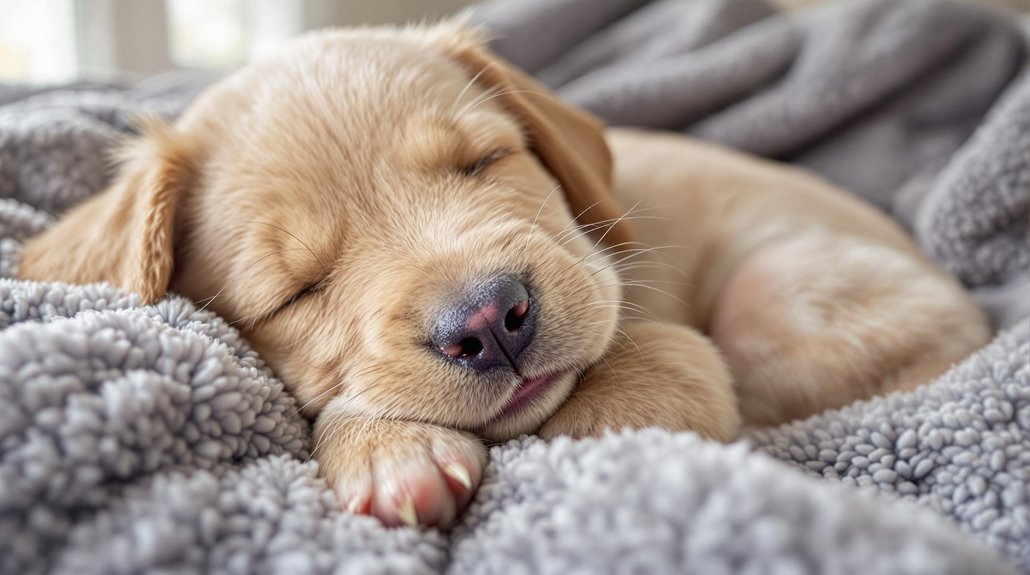
Yes, puppies dream when they sleep, and they do it more frequently than adult dogs. You'll notice signs like twitching paws, soft whimpers, and rapid eye movements during their REM sleep cycles, which can last up to 20 hours daily. During these dreams, your puppy's brain actively processes and replays their daily experiences, from playtime to training sessions. Smaller breeds tend to dream more often than larger ones, while all puppies experience shorter but more frequent dreams compared to grown dogs. Understanding your puppy's sleep patterns can reveal fascinating perspectives into their mental development and emotional well-being.
Understanding Puppy Sleep Cycles
During their earliest months of life, puppies spend an astonishing amount of time sleeping - up to 20 hours each day. This extensive rest period isn't just idle time; it's essential for their development and growth. Your puppy's sleep patterns are quite different from adult dogs, featuring frequent changes between various sleep stages throughout the day and night.
When you watch your puppy sleep, you'll notice they cycle through different phases of canine sleep more rapidly than older dogs. They'll quickly move from being awake to non-REM sleep, and then into REM sleep, where dreams occur. During REM sleep, which happens more frequently in puppies than adult dogs, your little one may experience brief dream sequences lasting 2-3 minutes. You might see their paws twitching, hear soft whimpers, or notice rapid eye movements under their closed lids.
These puppy dreams often reflect their daily experiences, from nursing to playing with littermates. As your puppy grows older, you'll notice their sleep patterns become more organized, with longer periods of uninterrupted rest replacing the frequent sleep-wake cycles of early puppyhood.
Signs Your Puppy Is Dreaming
You've probably noticed your sleeping puppy twitching, whimpering, or making paddling motions with their paws - these are telltale signs that they're experiencing a dream. Just like humans, your Dog goes through different sleep stages, including REM (Rapid Eye Movement), when most dreams occur.
During this dreaming phase, you'll notice your puppy's eyes move beneath their closed eyelids, a clear indicator that they're in REM sleep. Unlike adult Sleeping Dogs, puppies tend to have more frequent dreams, though these episodes are typically shorter in duration. You might observe your puppy making small running movements, as if they're chasing something in their sleep, or hear soft yips and whimpers that suggest they're actively engaged in a dream scenario.
If you notice sudden jerks or vocalizations during your puppy's sleep, they may be experiencing an intense dream or even a nightmare. While it's natural to want to comfort them, it's best to let them sleep through these episodes unless they appear genuinely distressed. These sleep behaviors offer fascinating glimpses into your puppy's dream world and are completely normal parts of their rest cycle.
The Science Behind Puppy Dreams
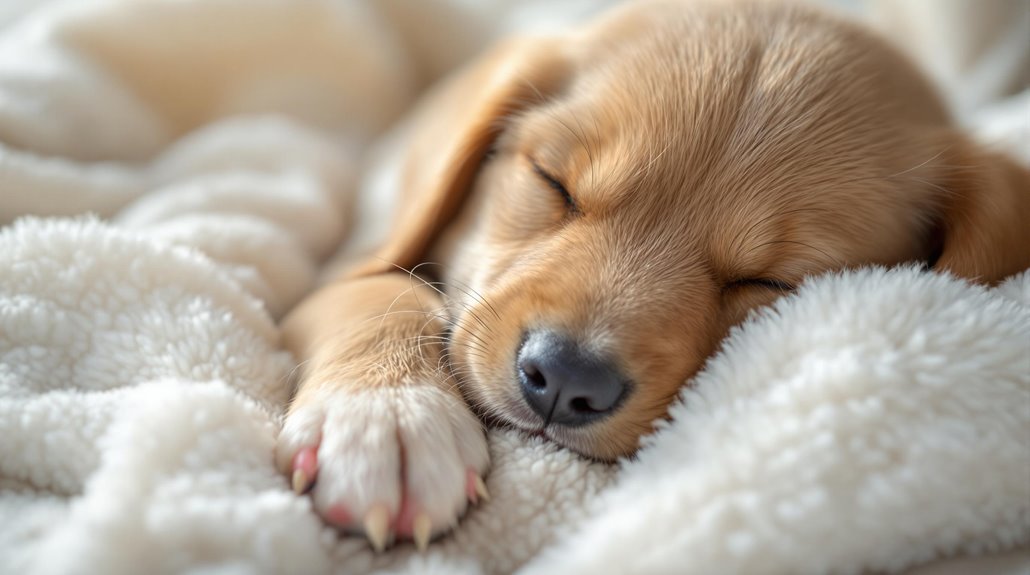
The astonishing science of puppy dreams reveals a complex neurological process that begins exceptionally early in a dog's life. Your puppy's ability to dream starts when they're just 2-3 weeks old, during the essential REM sleep phase, also known as Rapid Eye Movement Sleep. During this stage, their brain activity closely mirrors that of adult dogs, suggesting they're experiencing vivid mental imagery.
When your puppy enters REM sleep, their breathing becomes irregular while their brain processes and consolidates the day's experiences. These dreams often reflect their daily activities, from nursing sessions to playful encounters. You'll notice that smaller dogs tend to dream more frequently than their larger counterparts, though their dreams don't last as long. This difference is directly related to their higher metabolic rates, which influence their sleep patterns.
Scientists have observed that puppy dreams typically involve replaying their recent experiences, much like a mental rehearsal of their daily escapades. The physical manifestations of these dreams - twitching, whimpering, and leg movements - correspond to the specific activities they're likely reliving in their sleep, offering a fascinating glimpse into their developing minds.
Puppy Nightmares and Sleep Behaviors
Sleep-time disturbances affect puppies differently than adult dogs, with young pups experiencing more frequent but shorter nightmares as their developing brains process new experiences. During their sleep cycle, you'll notice more pronounced dream-related behaviors, including whimpering, leg twitching, and barking, as puppies work through their daily encounters while falling asleep.
If you observe your puppy having nightmares, it's essential not to wake them suddenly. Dogs sleep in a way that makes abrupt awakening potentially dangerous, as they might react defensively or aggressively when startled from their dream state. Instead, focus on creating a secure sleeping environment that helps minimize distressing dreams. You can achieve this by providing a quiet, comfortable space where your puppy feels safe and protected.
Monitoring your puppy's sleep patterns is vital for supporting their emotional development and overall health. While puppy nightmares often stem from fearful memories or unfamiliar situations, they're a normal part of growth. By understanding these patterns and responding appropriately, you'll help your puppy develop healthy sleep habits that will benefit them throughout their life.
Healthy Sleep Patterns for Puppies
Growing puppies require considerably more sleep than their adult counterparts, with most needing 18-20 hours of rest daily to support their rapid development. During these extended rest periods, your puppy's sleep cycles alternate between non-REM sleep and REM sleep more frequently than adult dogs dream patterns. You'll notice that your puppy spends more time in REM sleep, with episodes lasting up to 10 minutes compared to the brief 2-3 minute periods in mature dogs.
To guarantee your puppy gets enough sleep, you'll need to establish a consistent sleep schedule that accommodates their increased rest requirements. Watch for signs of deep sleep, such as regular breathing patterns and occasional muscle twitches. During REM sleep, when Canine dreams occur, you might observe more pronounced physical reactions, including leg movements and whimpering. While these behaviors are normal, be alert for any breathing problems or unusual sleep patterns that might require veterinary attention.
Creating a quiet, comfortable sleeping environment helps support healthy sleep patterns, which are essential for your puppy's physical growth, brain development, and emotional well-being.
Dream Differences Between Dog Breeds
Different dog breeds experience unique dreaming patterns that reflect their size, physical characteristics, and historical purposes. Scientists believe that you'll see variations in dream frequency and duration based on your dog's breed size. Small dogs tend to have more frequent but shorter dreams, while larger breeds like Great Danes experience longer, less frequent dream episodes.
Your dog's breed purpose also influences their dream content. You'll find that herding dogs tend to dream about their instinctive behaviors, like chasing and corralling, while hunting breeds might relive their retrieving experiences during sleep. If you have a sighthound, they're likely experiencing high-speed chases in their dreams, matching their natural athleticism.
Physical characteristics can affect different sleep patterns too. Flat-faced breeds may have more disrupted sleep cycles due to their unique facial structure, which can impact their dreaming patterns. Meanwhile, toy breeds display more frequent dream activity, which you can often observe through their eye movements and twitching during sleep. These variations show how evolution and breeding have shaped not just your dog's appearance and behavior, but also their dream experiences.
Creating Ideal Sleeping Environments
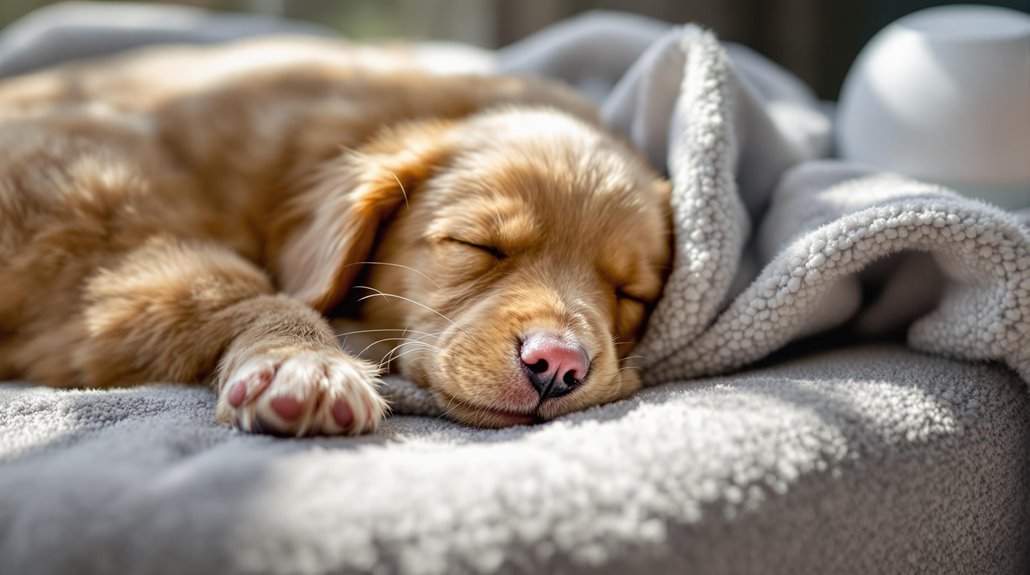
Creating a comfortable sleeping environment for your puppy involves three essential elements: darkness, quietness, and temperature control. When you tend to these factors appropriately, you'll help your furry friend achieve the deep, restorative sleep they need for up to 18 hours a day.
To create the perfect place to rest, start by selecting a cool, quiet corner of your home away from household traffic. Add soft, cozy bedding that carries familiar scents, which will help your puppy feel secure and fall asleep more easily. Keep the area dark, as this promotes healthy sleep patterns and proper melatonin production. You'll also want to minimize exposure to blue light from TVs, phones, or tablets before bedtime.
Establish a consistent bedtime routine to help regulate your puppy's natural sleep cycles. This might include a final potty break, gentle petting, or quiet time together. The next time you see your puppy twitching or whimpering during sleep, you'll know they're experiencing quality REM sleep in their ideal environment. Following these guidelines will help facilitate your puppy's happy and healthy rest.
Common Puppy Sleep Positions
From curled-up balls to sprawled-out bellies, puppies adopt various sleep positions that reveal their comfort level, body temperature needs, and alertness state. As you observe your sleeping puppy, you'll notice they frequently shift between different positions throughout their rest experience.
When puppies curl into a tight ball, they're conserving body heat and protecting their crucial organs - a position that's particularly common during REM sleep when dogs are deep in their dream state. You might also catch your puppy sleeping on their side, which allows their limbs to move freely while they dream and promotes healthy circulation.
Some puppies prefer to sprawl out flat on their stomachs, a position that lets them spring into action quickly when they hear exciting sounds. The paws-tucked-under position provides both warmth and security, while the sphinx-like pose, with head raised and alert, indicates your puppy is ready to shift from sleep to play at a moment's notice.
These sleep positions aren't just cute - they're essential indicators of how your puppy feels in their environment and their current state of relaxation or readiness.
When Sleep Habits Signal Problems
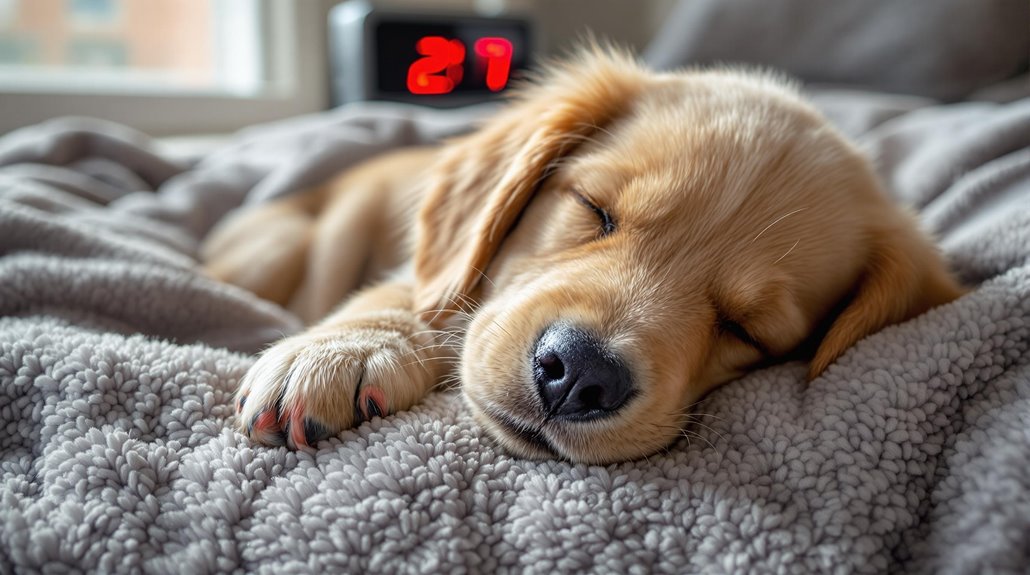
While most puppy sleep habits are perfectly normal, certain changes in their rest patterns can signal underlying health concerns that shouldn't be ignored. If you notice your puppy experiencing disrupted sleep or showing excessive daytime drowsiness, these could be indicators of deeper health issues that require veterinary attention.
Pay close attention to your puppy's nighttime behavior. Unusual vocalization, restlessness, or difficulty finding a comfortable position might suggest pain or illness. During sleep cycles, including REM sleep, watch for concerning signs like persistent pacing, circling, or signs of distress that could point to psychological or neurological problems.
You'll want to monitor any significant deviations from your puppy's established sleep-wake routine. If they're suddenly unable to settle down, experiencing what appear to be frequent nightmares, or showing changes in their typical rest patterns, don't wait to seek professional help. Early intervention can be indispensable for addressing potential health issues. Your veterinarian can properly evaluate these symptoms and determine whether they're part of normal puppy development or signs of an underlying condition requiring treatment.