Different Types of Snoring Sleep Aids: What Works Best?
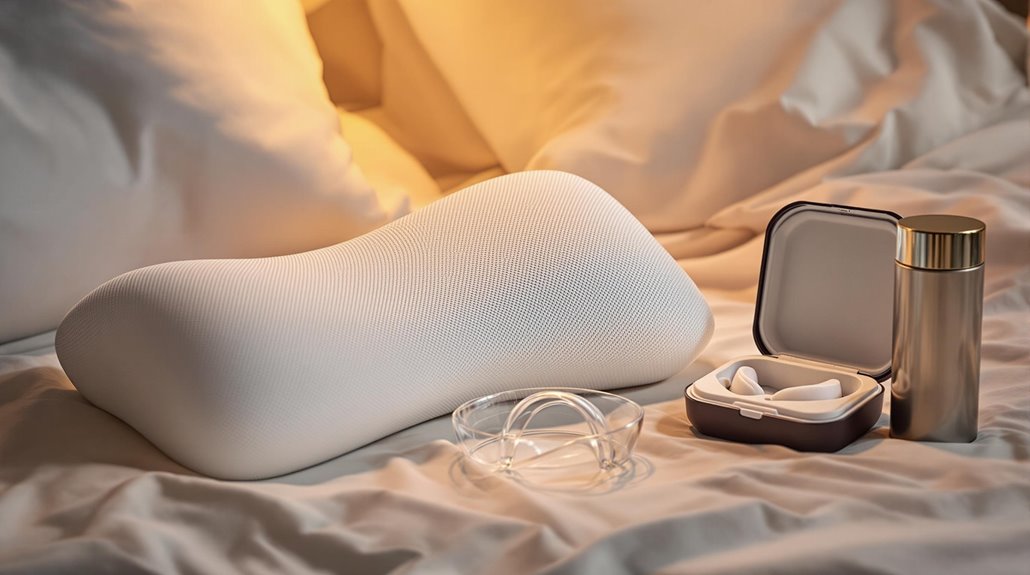
Your snoring solution depends on what's causing your nighttime noise. For nasal congestion, try affordable nasal strips or dilators that can augment airflow up to 31%. If you're a back sleeper, position-based devices like wedge pillows or smart technology solutions can help keep you on your side. Natural approaches include using a humidifier, doing throat exercises, and maintaining a healthy weight. For more severe cases, medical devices like CPAP machines or oral appliances might be necessary. Understanding your specific snoring pattern and triggers will guide you to the most effective solution for peaceful nights ahead.
Understanding Snoring and Sleep Quality
Throughout history, snoring has affected millions of people's sleep quality and overall well-being. When you snore, you're experiencing a partial blockage of your upper airway, causing the vibration of tissues in your throat as air passes through. This common occurrence can profoundly impact both your sleep and your partner's rest.
Understanding the mechanics of snoring is essential for finding effective solutions. Your snoring might be linked to various factors, including sleep disorders like sleep apnea, which causes brief pauses in breathing during sleep. The position you sleep in, your weight, and even anatomical features like the structure of your soft palate can contribute to snoring.
Poor sleep quality resulting from snoring isn't just about noise - it can lead to daytime fatigue, irritability, and decreased cognitive function. When your breathing during sleep is compromised, you might experience frequent micro-awakenings throughout the night, even if you don't remember them. This disruption prevents you from achieving the deep, restorative sleep phases your body needs. By recognizing these patterns and understanding the underlying causes of your snoring, you can better identify which sleep aids might work best for your situation.
Types of Anti-Snoring Devices
A wide range of anti-snoring devices offers targeted solutions for different types of snoring problems. For those dealing with nasal congestion, you'll find options like Breathe Right Nasal Strips, which can enhance your airflow by up to 31% while reducing snoring noise. If you prefer an internal solution, SnorePin Anti-Snoring Nasal Vents use medical-grade silicone to keep your nostrils open throughout the night.
For positional snoring or mild Obstructive Sleep Apnea, you might consider devices that focus on sleep position. The Zzoma Positional Sleep Device, an FDA-cleared CPAP alternative, prevents back sleeping to minimize snoring. The Smart Nora Pillow Insert takes a high-tech approach by detecting snoring sounds and automatically adjusting your head position to keep airways open.
If you're a back sleeper, the Sleep Number Wedge Pillow could be your solution. By elevating your head, it prevents your throat tissues from relaxing and your tongue from falling backward during sleep. Each device targets specific snoring causes, so you'll want to identify your particular snoring pattern before choosing the most effective solution for your needs.
Nasal Strips and Dilators
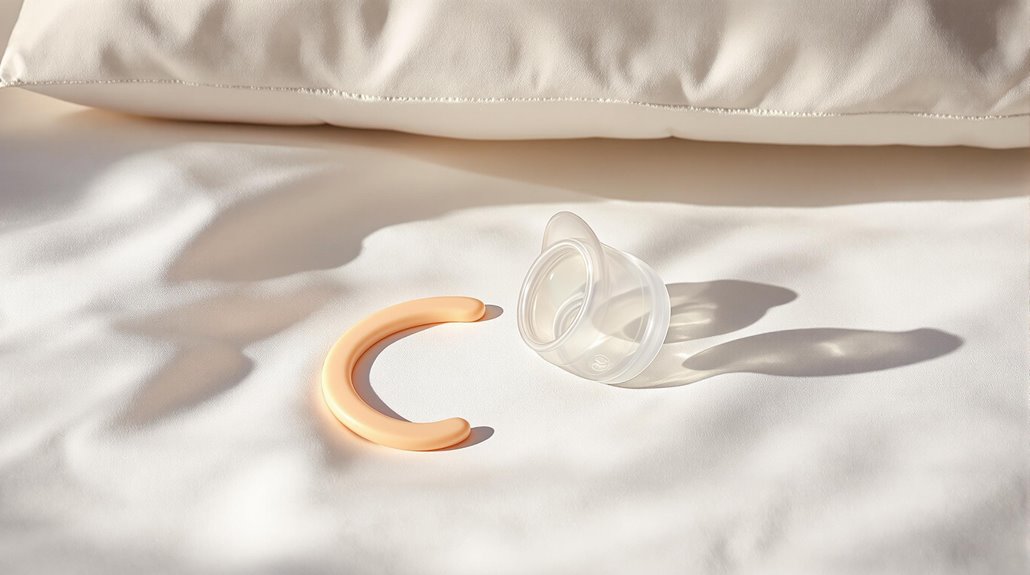
Nasal strips and dilators stand out as popular first-line treatments for snoring caused by nasal congestion. These simple devices work by physically opening your nasal passages, making it easier to breathe through your nose while you sleep. For example, Breathe Right nasal strips can enhance your nasal airflow by up to 31%, which may considerably reduce your snoring intensity.
If you're looking for the best solution to nasal obstruction, you've got options. While adhesive strips work from the outside, nasal dilators like SnorePin use soft silicone tubes that fit inside your nostrils to keep your airway open. These devices are particularly helpful because when you can't breathe properly through your nose, your jaw and tongue tend to fall backward, creating additional airflow restrictions.
While nasal dilators and strips are affordable and easy to use, it's important to understand their limitations. They work well for snoring caused by nasal congestion or anatomical issues in your nasal passages, but they might not be sufficient if you have sleep apnea. For this more serious condition, you'll need to consult a healthcare provider for proper treatment options.
Position-Based Sleep Solutions
While nasal devices target breathing passages directly, your sleeping position plays a major role in managing snoring issues. Unlike strips that help you breathe through your nose, position-based solutions focus on keeping your airway open through ideal body alignment during sleep.
Sleeping on your side is one of the most effective natural remedies for snoring. This position prevents your tongue from falling backward and blocking your airway, helping you breathe more quietly throughout the night. If you're a back sleeper, consider using a bed wedge pillow or an adjustable bed that raises your upper body. These solutions can shift your jaw forward and maintain an open airway, making them particularly effective for sleep medicine practitioners to recommend.
For those who need extra help staying on their side, wearable devices with adjustable velcro straps can restrict back sleeping. These positioning aids are especially helpful if your bed partner complains about your snoring. They're considered a first-line treatment for primary snoring when sleep apnea isn't present. By combining positional therapy with other snoring remedies, you'll have a thorough approach to managing nighttime noise.
Smart Technology for Snoring
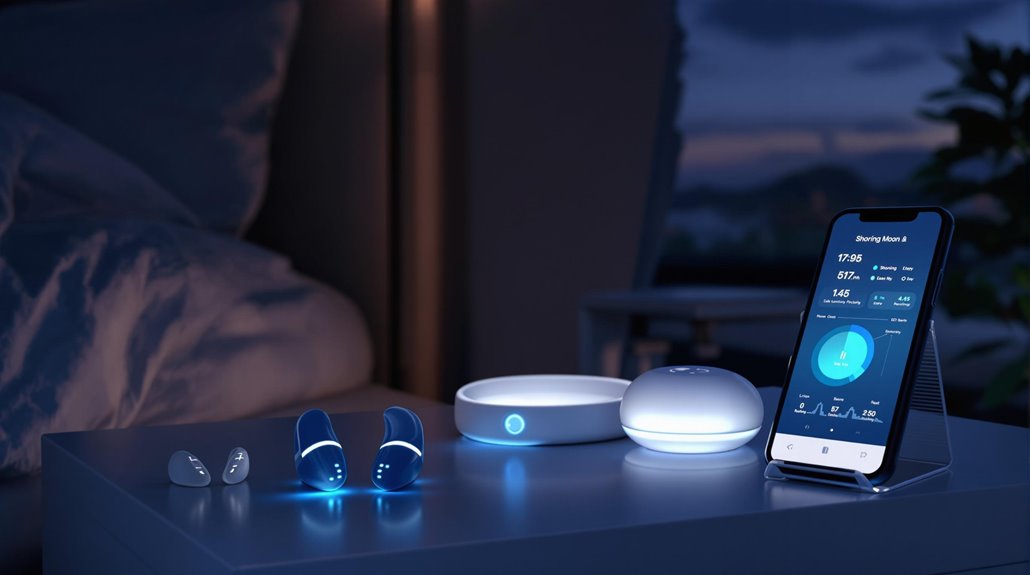
Smart devices have revolutionized snoring solutions by combining traditional remedies with modern technology. While CPAP machines and oral appliance therapy remain popular treatments recommended by sleep specialists, newer smart devices offer less intrusive alternatives that don't require a formal sleep study.
The Smart Nora Pillow Insert exemplifies this innovation, using intelligent sensors to detect snoring patterns and automatically adjust your head position without disrupting your sleep. You'll find similar technology in smartphone apps like Snore Circle, which can track your snoring patterns and provide meaningful data for your sleep specialist to evaluate the effectiveness of your current treatment, whether it's continuous positive airway pressure or appliance therapy.
For an all-encompassing approach, you can pair these smart devices with other technology-enhanced solutions. The Jisulife Portable Humidifier intelligently maintains ideal air moisture levels, while the Sleep Number Wedge Pillow offers customizable elevation settings. These smart solutions work particularly well when combined with position-training devices like the FDA-cleared Zzoma, which prevents back sleeping. By integrating these technologies, you're creating a modern, multi-faceted approach to managing your snoring concerns.
Pillows and Bedding Options
Choosing the right pillow or bedding solution can significantly impact your snoring patterns and sleep quality. When you're looking for the best pillow to address snoring, consider the Coop Home Goods Original Loft Pillow, which lets you customize the height and firmness to keep your soft palate properly aligned, ensuring you get enough air while sleeping.
If you're dealing with nasal congestion that contributes to snoring, you might benefit from the Sleep Number Wedge Pillow. Its adjustable foam inserts raise your head, which can reduce snoring better than taking an over-the-counter decongestant alone. For persistent snorers, especially those whose sleep partner reports loud snoring, the Zzoma Positional Sleep Device prevents back sleeping, often reducing snoring intensity.
The Smart Nora Pillow Insert offers a high-tech solution by automatically adjusting when it detects snoring sounds, though it requires an electrical outlet. If dry air aggravates your snoring, pair your pillow choice with the Jisulife Portable Humidifier. This quiet device adds moisture to the air around your bed, potentially relieving sinus-related snoring issues with its automatic shut-off feature for safety.
Environmental Factors and Remedies
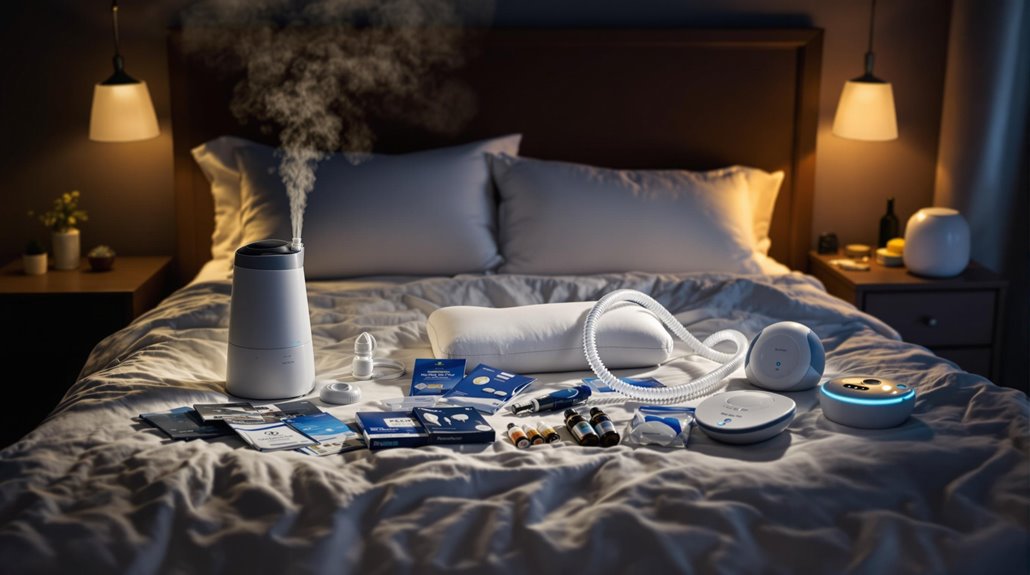
Beyond specialized devices and pillows, your sleep environment plays a key role in managing snoring effectively. If you're looking to stop snoring and improve your sleep quality, several environmental adjustments can make a noteworthy difference.
Your sleeping position substantially impacts your tendency to snore. When you sleep on your back, you're more likely to experience mouth breathing and snoring due to your tongue falling backward. Switch to side sleeping to help reduce airway obstruction. If you must sleep on your back, consider elevating your head 4-6 inches with a wedge pillow to promote better airflow.
For those dealing with this common sleep disorder, maintaining ideal air quality is necessary. If you're treating snoring related to nasal congestion, use appropriate nasal sprays or decongestants before bedtime. Additionally, watch your evening habits - avoid alcohol close to bedtime as it relaxes throat muscles and worsens snoring. Making lifestyle changes, such as maintaining a healthy weight through regular exercise, can greatly help reduce snoring by minimizing excess throat tissue. These environmental and behavioral modifications often work best when implemented consistently as part of your nightly routine.
Medical Devices and Prescriptions
Medical devices and prescription solutions consistently provide the most effective treatments for chronic snoring and sleep apnea. If you've been diagnosed with moderate to severe sleep apnea, your doctor will likely recommend a CPAP machine, which delivers continuous air pressure through a mask to keep your airways open while you sleep.
For mild to moderate cases, you might benefit from visiting a dental specialist who can fit you with a custom oral appliance made from medical-grade silicone. These devices reposition your jaw or tongue to prevent airway collapse during sleep. Another FDA-cleared device called a hypoglossal nerve stimulator can be surgically implanted to activate your tongue muscles and maintain airway patency throughout the night.
If these options don't suit you, your doctor might suggest surgical procedures like UPPP or MMA to permanently modify your airway structure. You can also complement these treatments with simple solutions like adhesive strips that help open your nasal passages. Remember that your healthcare provider might recommend combining multiple approaches, including lifestyle changes like weight loss and avoiding alcohol before bedtime, to achieve the best results for your specific condition.
Natural and Alternative Approaches

While medical devices offer proven solutions, many people prefer to start with natural approaches to address their snoring issues. You'll find several effective methods that don't require any device made of plastic or fitted by a doctor.
Consider these natural remedies that can help you breathe easier:
- Try sleeping on your side to prevent your tongue from blocking your airway
- Use a humidifier in your bedroom to keep your nasal passage moist
- Practice throat exercises before bed to strengthen your airway muscles
Beyond these basic steps, you can improve your breathing by performing nasal irrigation with soap and warm water or saline solution. This simple practice helps clear congestion from the bridge of the nose and surrounding passages. If you're looking for a gentle alternative to internal nasal dilators, try avoiding alcohol before bedtime, as it can relax throat muscles and worsen snoring.
Remember that combining multiple natural approaches often yields better results. For instance, pairing proper sleep position with regular nasal cleaning and throat exercises can considerably reduce snoring intensity for many people.
Lifestyle Changes for Better Sleep
Making targeted lifestyle adjustments can dramatically reduce your snoring and improve sleep quality. For informational purposes, you should know that maintaining a healthy weight through regular exercise and proper diet is pivotal, as excess throat tissue can make breathing more difficult during sleep. If you have a deviated septum or chronic congestion, ask your doctor about using nasal decongestants or saline rinses to improve airflow.
Your sleep position matters exceptionally. Try sleeping on your side rather than your back to prevent your tongue from blocking your airway. Additionally, it's vital to avoid alcohol and sedatives before bedtime, as they can relax your throat muscles excessively and worsen snoring. Work with your doctor to find the most effective combination of lifestyle changes for your specific situation.
For additional health benefits, consider incorporating oropharyngeal exercises into your daily routine. These specialized exercises can strengthen your throat and mouth muscles, potentially reducing snoring intensity. While these lifestyle modifications may take time to show results, they're often more sustainable than relying solely on anti-snoring devices or medications.
When to Seek Professional Help
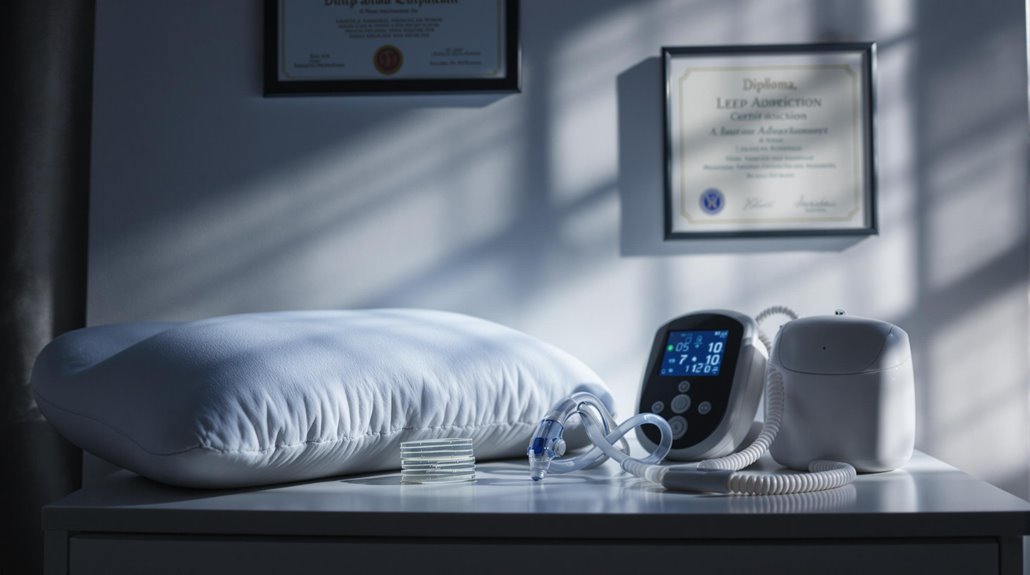
Understanding when to seek professional help for snoring is essential for protecting your long-term health. While over-the-counter snoring remedies might help in mild cases, certain symptoms indicate you should consult a healthcare provider to properly diagnose and treat the severity of your snoring.
You should schedule a medical consultation if you experience:
- Frequent pauses in breathing throughout the night, followed by gasping or choking sounds
- Persistent daytime fatigue, even after what seems like a full night's sleep
- Snoring that's loud enough to consistently disrupt your partner's rest
If these symptoms sound familiar, your doctor may recommend a sleep study to determine if you have sleep apnea or other underlying conditions. While you might be tempted to continue trying to reduce snoring through over-the-counter solutions, professional medical guidance is pivotal when basic remedies aren't enough to eliminate snoring. An ENT specialist or sleep medicine physician can prescribe more effective treatments, such as CPAP machines or custom oral appliances, that address the root cause of your snoring. Remember, severe snoring isn't just a nuisance - it could signal a serious health condition that requires proper medical attention.