Dangers of Sleeping With Curlers: What You Need to Know
Sleeping with curlers can seriously damage your hair and disrupt your sleep quality. You'll experience mechanical stress from the constant tension, which leads to breakage, split ends, and potential hair loss. The pressure points created by curlers against your scalp can cause inflammation, irritation, and persistent headaches. You might also notice neck and shoulder pain, especially if you're a side sleeper. Poor sleep quality compounds these issues, as you'll toss and turn trying to find a comfortable position. While curlers can create beautiful styles, there are safer alternatives that won't compromise your hair health and comfort.
Understanding Hair Stress From Curlers
In addition to discomfort during sleep, curlers can impose significant stress on your hair that leads to various forms of damage. When you wrap your hair around curlers for extended periods, particularly overnight, you're subjecting your strands to mechanical stress that can weaken their structure. This continuous pressure and tension on hair can result in hair breakage, split ends, and overall deterioration of your hair's health.
The most concerning aspect of sleeping with curlers is the excessive tension they create at your hair roots. You're risking hair loss and thinning when curlers are wrapped too tightly, as they pull constantly on your hair follicles throughout the night. Additionally, the friction between your hair and the curlers causes significant hair stress, leading to tangling and matting that's difficult to manage in the morning. You'll often notice unwanted indentations and creases in your hair, which can alter its natural texture. If your curlers are too large or made of rough materials, they'll catch and snag your hair strands, causing additional hair damage. This combination of factors creates a cycle of ongoing damage that can have lasting effects on your hair's appearance and health.
Physical Discomfort While Sleeping
The physical discomfort of sleeping with curlers extends far beyond mere annoyance, often causing tremendous pain and sleep disruption. When you sleep in rollers, you're subjecting your head and body to multiple pressure points that can lead to various types of discomfort throughout the night.
As you try to sleep in rollers, you'll likely experience scalp pain from the constant pressure against your head. The weight of the curlers can trigger headaches and create uncomfortable pressure points that make it difficult to find a comfortable sleeping position. You'll also notice neck pain, shoulder pain, and back pain as your body tries to accommodate these unusual objects while sleeping.
The situation becomes particularly challenging if you're a side sleeper, as the curlers can press against your ears and jaw, causing additional discomfort. Throughout the night, the rollers may shift and poke into your skin, leading to irritation and interrupted sleep. This physical discomfort doesn't just affect your comfort level - it enormously impacts your sleep quality and duration, potentially leaving you tired and sore the next morning.
Scalp Health Concerns
Beyond physical discomfort, sleeping with curlers poses significant risks to your scalp's health and integrity. The continuous pressure and friction from curlers against your scalp throughout the night can lead to various skin-related issues that shouldn't be ignored.
When you sleep with curlers, you're subjecting your scalp to prolonged compression that can trigger inflammation and irritation. The constant rubbing motion disrupts your skin's protective barrier, making it more vulnerable to infection. You'll likely notice warning signs such as redness, itching, and general discomfort in areas where the curlers make contact with your scalp.
If you're someone with sensitive skin or existing scalp conditions, you're particularly at risk. The improper placement of curlers can create pressure points on your scalp, leading to localized inflammation and pain. Even if you're careful with placement, the natural movement that occurs during sleep can cause the curlers to shift, creating new areas of irritation.
Your scalp's health directly impacts your overall hair wellness, so it's pivotal to recognize these risks and consider alternative styling methods that won't compromise your scalp's integrity.
Proper Roller Placement Techniques
Becoming proficient in proper roller positioning can greatly diminish the discomfort and risks linked with overnight styling. When using heatless curlers, you'll want to focus on strategic placement that promotes both your hair's health and your comfort while sleeping.
For optimal results with hair in curlers overnight, consider placing them in a mohawk pattern along the center of your head. This technique keeps curling tools away from pressure points around your ears, reducing discomfort when you're lying down. You'll need to adjust the tightness of each roller carefully - they should be secure but not pulling at your scalp. The curler trend has evolved to accommodate different hair types, so choose roller sizes that work best for your potential hair goals.
To protect your style and improve comfort, wrap your hair with a satin bonnet or scarf. This extra layer not only secures your hair styling tools but also reduces friction that could disturb your sleep or damage your hair's health. Remember to position rollers strategically, avoiding areas where your head makes direct contact with your pillow, and maintain consistent tension in each section.
Hair Breakage Warning Signs
While proper roller placement helps prevent damage, recognizing early warning signs of hair breakage can save your locks from long-term harm. If you're noticing excessive shedding or finding more hair than usual in your brush or shower drain, your curlers may be causing potential breakage to your hair follicles.
Pay close attention to changes in your hair's texture. When curlers cause hair damage, you'll likely notice increased dryness, frizziness, or a rougher feel to your strands. These changes often indicate that your styling routine is causing breakage and damage to your hair's structure. Watch out for persistent knots and tangles, as they're clear indicators that your curlers are stressing your hair.
Your scalp's health is equally important. If you're experiencing scalp irritation, inflammation, or tenderness while using curlers overnight, it's your body's way of warning you about excessive heat and pressure. Don't ignore these signs - they're essential indicators that your current routine may be too harsh. Making adjustments to your curling method or taking breaks from overnight styling can help prevent further damage to your hair and scalp.
Selecting Safe Curler Materials
Choosing the right curler materials can make or break your overnight styling routine. When selecting heatless curlers for sleeping, you'll want to prioritize your hair health by avoiding materials that can cause unnecessary damage. Sharp or rigid curlers can snag your hair, leading to breakage and split ends that compromise your hair care efforts.
Instead, focus on curlers specifically designed for overnight use. Look for options featuring soft, flexible materials that work with different hair types while minimizing tension on your scalp. Satin or silk-coated curlers are particularly beneficial, as they reduce friction and prevent the tangling that often occurs during sleep. These materials provide a smooth surface for your hair to rest against, unlike traditional plastic or metal alternatives that can rough up your hair cuticles.
You'll also want to evaluate the weight of your curlers. Heavy options can create uncomfortable pressure points while you sleep and strain your hair follicles. Opt for lightweight, breathable materials that won't weigh down your head or cause scalp discomfort. This approach allows you to achieve beautiful curls without compromising your hair's integrity or your sleep quality.
Overnight Hair Protection Methods
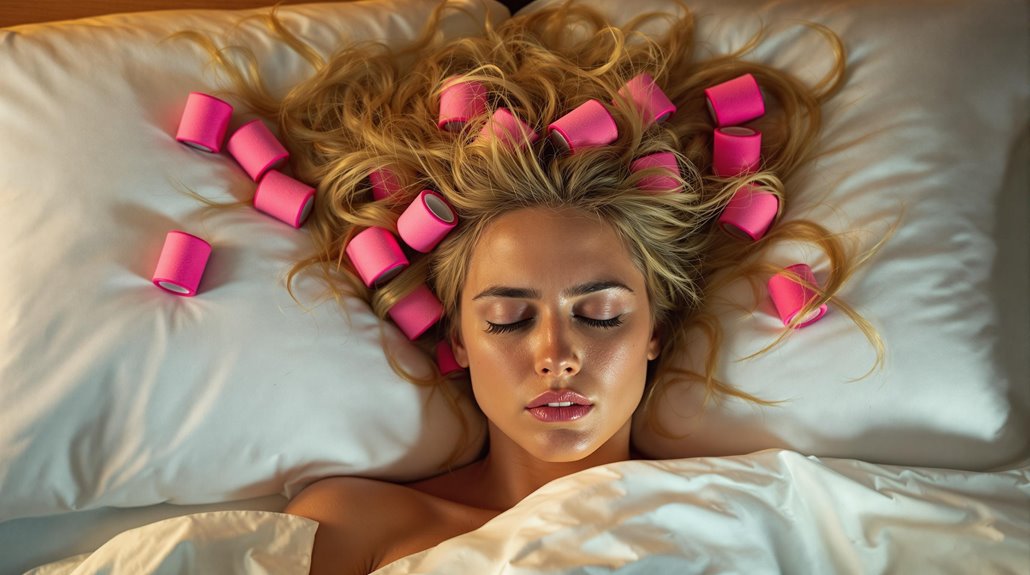
Strategic protection of your hair while sleeping with curlers makes a significant difference in the outcome of your overnight styling. When using heatless curlers or rollers, you'll want to guarantee your hair stays protected throughout the night to prevent damage and achieve better results.
Start by switching to a satin or silk pillowcase, which reduces friction between your hair and bedding while you're curling overnight. If you're using heatless curling techniques, consider wearing a satin bonnet over your rollers - this extra layer helps maintain your heatless curls while safeguarding your hair from unnecessary stress. Before applying your heatless curlers, apply a lightweight hair oil or serum to nourish your strands during the curling process.
For sections of hair that aren't in rollers, secure them in a loose, protective style to prevent tangling. You can enhance your heatless curling routine by incorporating an overnight hair mask or deep conditioning treatment. This not only protects your hair while you sleep but also ensures your curls will be bouncy and well-hydrated when you remove the rollers in the morning.
Common Curler Mistakes
Many people unknowingly make critical mistakes when using curlers that can damage their hair or compromise their styling results. One of the most common curler mistakes is rolling your hair too tightly, which can lead to unnecessary tension and breakage, especially when sleeping with curlers overnight.
You're probably using the wrong size curlers for your hair length, which can cause uneven curls and potential damage. If you're practicing overnight curling, you might be putting them in while your hair is too wet, leading to incomplete drying and potential fungal growth. Safe curling techniques involve using the right-sized curlers and ensuring your hair is about 80% dry before styling.
Another critical error is not protecting your hair properly during the curling process. You'll need to use a heat protectant if you're using heated curlers, and a silk or satin scarf when sleeping with curlers to maintain hair health. Many people also leave curlers in for too long, thinking it'll enhance results, but this hair styling method can actually cause more harm than good. Instead, follow the recommended time for your specific hair type and texture.
Alternatives To Sleeping With Rollers
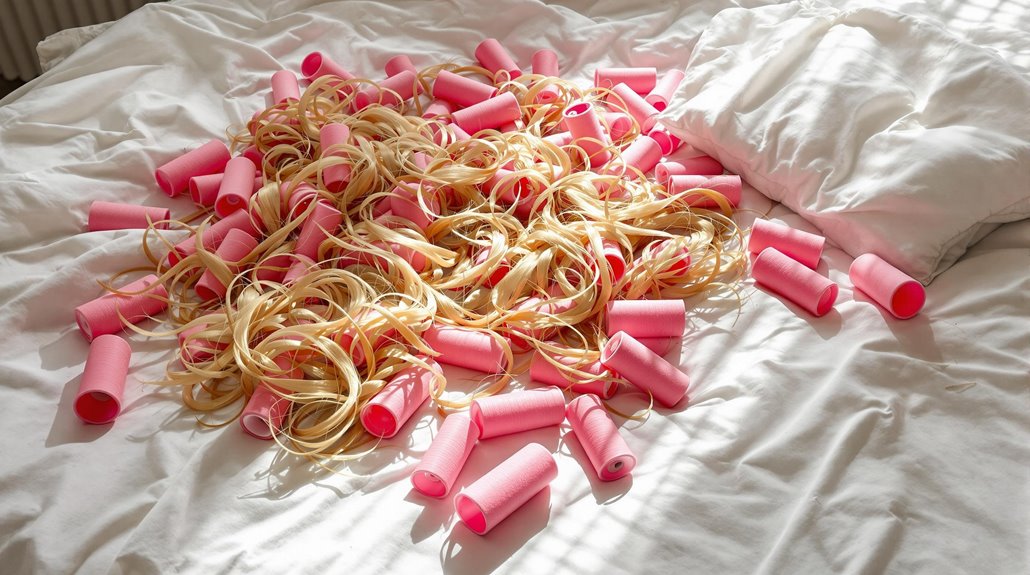
Fortunately, numerous safe and comfortable alternatives exist for achieving beautiful curls without sleeping in traditional rollers. The Benefits of Heatless Curling techniques offer you multiple options that are gentler on your hair and more comfortable during sleep.
Using braiding as your go-to heatless curling method, you can create Gorgeous Curls Without any discomfort. Simply section your hair and braid it before bed - you'll wake up to natural-looking waves. If you're wondering "Do Heatless Curlers Really work?" try foam or sponge rollers, which provide a softer surface against your head while sleeping. The Pros And Cons of these methods lean heavily toward the positive, as they eliminate both heat damage and sleeping discomfort.
For even more options, try styling your hair into buns, twists, or scrunches. These heatless curling rods alternatives work effectively while being completely comfortable. Consider investing in a silk or satin pillowcase to enhance these methods - it reduces friction and prevents tangling. You can also apply a curl-enhancing product instead of heat protectant spray, allowing your hair to air-dry naturally for effortless waves.
Long-Term Effects On Hair
Regular sleeping with curlers can take a toll on your hair's health over time, leading to several concerning issues. When you consistently use curlers overnight, you're subjecting your hair to constant tension that can result in significant hair breakage and hair thinning. Even without applying heat, the prolonged stress on your strands will gradually weaken them, making them more susceptible to damage.
You'll likely notice increased dryness and brittleness in your hair, along with a noticeable loss of shine, even when using heatless curling methods. The continuous pressure on your scalp and hair follicles while you sleep can trigger temporary shedding, which may progress to more permanent hair loss if the practice continues. What's more concerning is that your hair can develop stubborn wave patterns or permanent creases that become increasingly difficult to style.
If you're using poor-quality curlers or aren't wrapping your hair properly, you'll face additional problems like persistent tangling and matting. These issues compound over time, making your daily hair care routine more challenging and potentially causing lasting damage to your hair's structure and appearance.
Safe Curling Time Limits
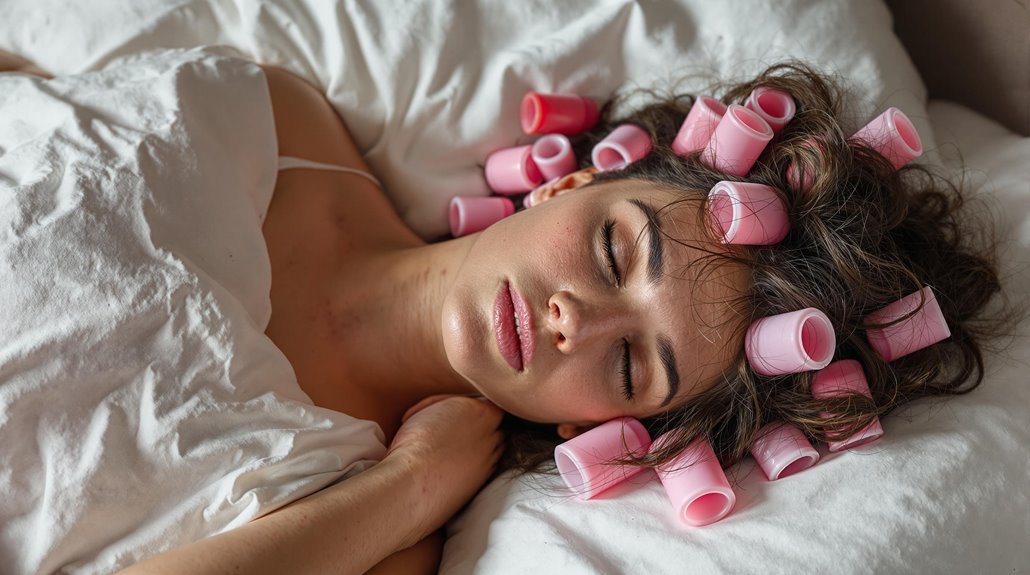
When it comes to using hair curlers during sleep, understanding safe time limits is indispensable for maintaining healthy hair. Most experts strongly advise against leaving curlers in for more than 8-10 hours, as prolonged tension on the hair can lead to significant damage.
If you're using curlers as a hair styling method, you'll want to be particularly mindful of overnight curler use. Keeping them in for longer than 10-12 hours puts you at risk for hair tangling, matting, and even hair loss due to extended pressure on the scalp. This is especially pivotal if you have fine or fragile hair, where the maximum recommended time drops to 6-8 hours to prevent breakage.
While you might be tempted to leave your curlers in until you're ready to style your hair, it's important to remove them as soon as you wake up. Instead of making overnight curling a regular habit, consider limiting it to special occasions. This approach helps minimize potential damage while still allowing you to achieve the curled look you desire when needed.