
Create a Vacuum Day: Exploring the Science Behind the Phenomenon

Create a Vacuum Day invites you to investigate one of nature's most fascinating states - the absence of matter. Though a perfect vacuum remains impossible, you'll uncover how scientists like Democritus, Torricelli, and Pascal pioneered our understanding of this phenomenon. Today, vacuum technology powers everything from your household appliances to advanced scientific instruments. You can experience vacuum principles firsthand through simple home experiments, like observing atmospheric pressure with an inverted glass of water. From ancient Greek theories to modern industrial applications, the science of vacuums continues to shape our world in surprising ways. This expedition into nothingness holds more secrets than you'd expect.
Understanding Vacuums
Nature's most elusive state, a vacuum represents the absence of matter in a given space. When you create a vacuum, you're essentially removing particles from an area, causing the pressure inside to become lower than its surroundings. While achieving a perfect vacuum might seem straightforward, it's actually impossible due to the peculiar behavior of virtual particles that can pop in and out of existence.
You'll find the closest example of a vacuum in outer space, though even this vast expanse isn't completely empty. It contains trace amounts of matter and various forms of radiation, making it an imperfect vacuum. Despite this limitation, science has found numerous ways to utilize partial vacuums for practical applications. In your household, you'll encounter vacuum technology in everyday items like your vacuum cleaner, which uses pressure differences to remove dirt, and in light bulbs that protect the filament from oxidation. Beyond domestic use, vacuums are critical in advanced scientific instruments and industrial processes. Understanding how vacuums work has revolutionized various fields, from food preservation to automotive systems, making them an indispensable part of modern life.
The Origins of Create a Vacuum
The origins of Create a Vacuum Day remain shrouded in mystery, with no clear record of its founder or establishment date. While you might assume this holiday emerged from modern scientific circles, the concept of a vacuum itself dates back to ancient Greece, where philosopher Democritus first proposed the idea of empty space between particles of matter.
The scientific study of vacuum gained momentum in the 17th century when pioneering scientists like Torricelli and Pascal conducted seminal experiments on pressure and space. Their work laid the foundation for our modern understanding of vacuums, from the vast emptiness of outer space to your household cleaner.
Some speculate that a passionate science educator created this day to spark interest in vacuum physics among students. Others have developed humorous theories about its origins, suggesting that perhaps the holiday was established in a moment when someone desperately needed to create a vacuum but couldn't find their cleaner. While we may never know the true story behind Create a Vacuum Day, it serves as an engaging reminder of the fascinating science that surrounds us in both natural and manufactured vacuums.
Fun Home Vacuum Experiments
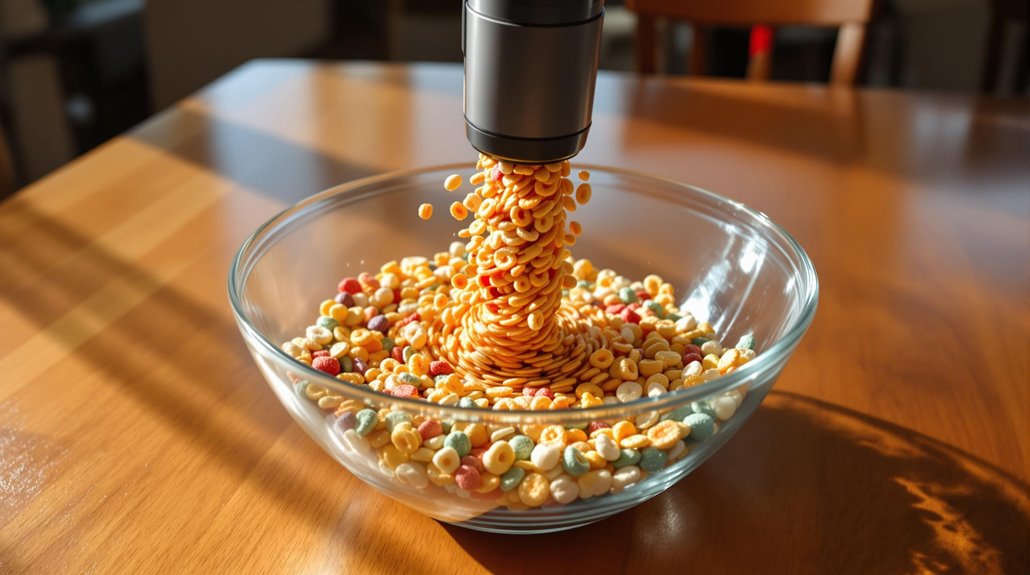
Moving from historical foundations to hands-on learning, you'll find several fascinating vacuum experiments you can conduct right in your kitchen. You can create simple vacuums using everyday items to demonstrate the power of air pressure and space without air.
Start with a clean syringe without a needle: Pull back the plunger while blocking the tip with your finger. You'll feel resistance as you've created a partial vacuum inside. When you release your finger, air rushes in to fill the space. Another experiment involves a plastic bottle: Heat water until it steams, pour a small amount into the bottle, empty it, and quickly seal the cap. As the steam cools, you'll watch the bottle collapse inward.
Try this at home: Place a vacuum cleaner hose against a flat surface and observe how it sticks due to the pressure difference. For a dramatic demonstration, fill a glass with water, cover it with paper, and invert it – atmospheric pressure holds the water in place. These experiments help you understand how vacuums work in everyday applications, from drinking straws to space technology.
Ancient Vacuum Discoveries
Deep within ancient Greek philosophy, the concept of a vacuum emerged through Democritus's pioneering proposal in 460 B.C. The Greek philosopher's early observations laid the foundation for what would become a revolutionary scientific understanding centuries later.
You'll find the most significant breakthroughs in vacuum science occurred during the 17th century, when brilliant minds pushed the boundaries of our comprehension. Here's how these discoveries unfolded:

- Galileo Galilei made history by providing the first scientific proof of vacuums, challenging the long-held belief that nature abhors a void
- Evangelista Torricelli conducted his groundbreaking mercury experiment in 1644, offering conclusive evidence of the vacuum's existence
- Blaise Pascal expanded on Torricelli's work, performing additional experiments that deepened our perception of vacuum principles
- These combined discoveries sparked a scientific revolution that influenced countless future innovations
The vacuum experiments of the 17th century weren't just isolated scientific achievements - they represented a fundamental shift in how we apprehend the physical world. You can trace many modern technologies, from household appliances to advanced industrial systems, back to these pioneering discoveries.
Modern Vacuum Technology Applications
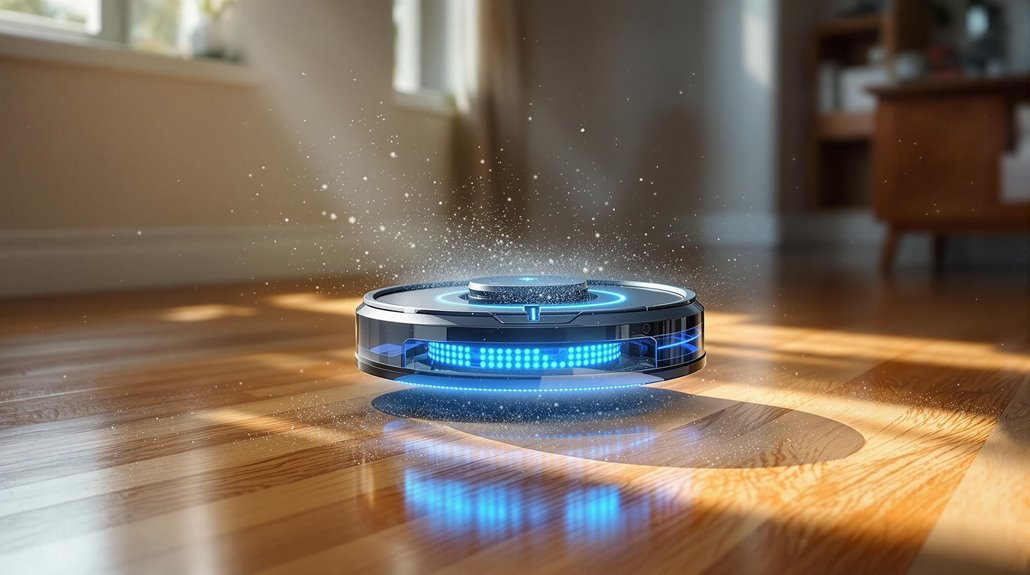
Utilizing vacuum technology has revolutionized countless aspects of modern life, from the smartphone in your pocket to the food in your pantry. You'll find vacuum-based systems working silently in the background of many devices you use daily, including your television and advanced scientific instruments like electron microscopes.
In industrial processes, vacuum pumps play a vital role in various applications. You'll see them at work in dehydration facilities, freeze-drying operations, and chemical vapor deposition systems that create specialized materials. When you're preserving food at home or buying vacuum-sealed products at the store, you're benefiting from this same technology that extends shelf life by removing air and preventing spoilage.
The impact of vacuum technology extends to energy efficiency as well. You'll find vacuum insulation panels in modern buildings and appliances, where they create an excellent barrier against heat transfer. In semiconductor manufacturing, vacuum systems are indispensable for producing the chips that power your electronic devices. They remove impurities and contaminants during the manufacturing process, ensuring the high-quality components that make your digital world possible.
Creating Vacuums at Home
Despite the advanced technology behind commercial vacuum systems, you can safely experiment with basic vacuum principles right in your kitchen. You don't need expensive equipment to create fascinating demonstrations of how matter behaves when air pressure changes in an enclosed space. With simple household items from your closet or kitchen, you'll discover how particles respond when you remove surrounding air.
- Convert a marshmallow into an expanding foam by placing it in a sealed container and removing air with a syringe, watching it grow as pressure decreases
- Demonstrate pressure differential by making a hard-boiled egg squeeze through a bottle neck when you create a vacuum inside
- Experience vacuum force with rubber suction cups on smooth surfaces, showing how removing air creates a strong seal
- Use a sealed plastic bag to compress objects by trapping air and creating a partial vacuum through compression
These simple demonstrations help you understand the principles behind vacuum technology while using everyday materials. You'll see firsthand how objects react when you manipulate the air pressure around them, making Create a Vacuum Day an educational and entertaining experience.
Vacuum Science Through History

Our understanding of vacuums stretches back over two millennia, beginning with Greek philosopher Democritus's pioneering proposal in 460 B.C. His early theories about the absence of matter laid the groundwork for future scientists to investigate the concept of empty space and the behavior of particles within it.
You'll find that vacuum science took a giant leap forward in the 17th century when scientists like Torricelli and Pascal conducted groundbreaking experiments on pressure and empty space. Their work helped establish the fundamental principles that you still see applied in modern household vacuum devices. The real breakthrough came in 1879 when Thomas Edison harnessed vacuum technology to create the incandescent light bulb, forever changing how you illuminate your world.
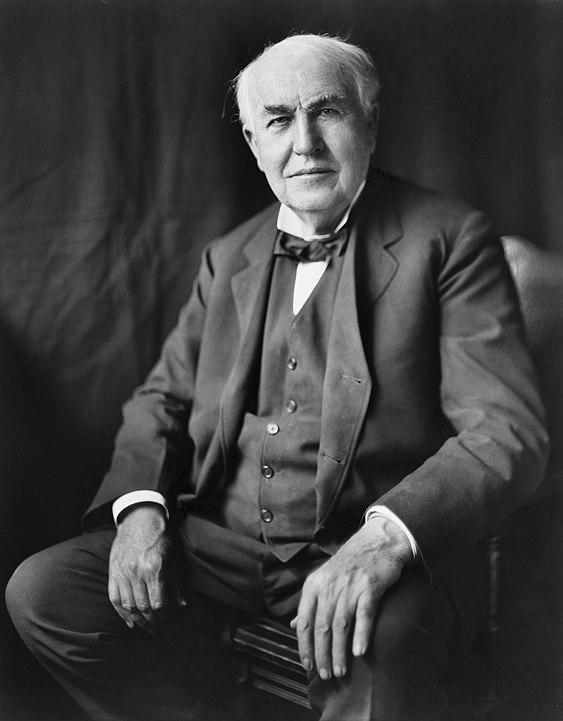
As vacuum technology advanced, it became essential in developing electronic devices and scientific instruments. Today, you can find vacuum applications everywhere, from your home appliances to sophisticated laboratory equipment. The most perfect vacuum you'll ever encounter exists in outer space, where only scattered atoms and radiation persist, demonstrating nature's closest approximation to absolute emptiness. This ongoing quest of discovery continues to shape our modern understanding of vacuum science.
Celebrating With Vacuum Activities
When Create a Vacuum Day arrives, you'll find countless hands-on ways to investigate the fascinating world of vacuum science. You can create partial vacuums using common household items, demonstrating how pressure and particles behave when you remove matter from a confined space.
To celebrate this scientific occasion, you can engage in these educational activities:
- Conduct simple experiments using syringes or balloons to demonstrate vacuum principles, observing how pressure changes affect everyday matter
- Host a science-themed party featuring DIY vacuum cleaner challenges and interactive demonstrations that showcase the removal of particles from confined spaces
- Visit local science museums to study exhibits highlighting vacuum technology and its applications throughout history
- Connect with fellow enthusiasts by sharing your vacuum experiments on social media using #CreateAVacuumDay
Whether you're participating in virtual events or organizing hands-on demonstrations, these activities help you understand the fundamental principles of vacuum science. You'll examine how removing matter from a space creates fascinating effects that have practical applications in modern technology. Through these engaging celebrations, you'll gain a deeper appreciation for the role of vacuum science in our daily lives.
Space and Perfect Vacuums

Exploring the concept of a perfect vacuum leads us directly to outer space, nature's closest approximation of complete emptiness. When you look into the vast expanse beyond our atmosphere, you'll find an environment characterized by a near-total lack of matter, containing only sparse gases and radiation. This makes outer space the closest thing we've found to achieving a perfect vacuum.
You might be surprised to learn that even our most advanced vacuum technology can't fully replicate the extreme conditions found in space. The absence of air pressure in this harsh environment creates unique physical phenomena that you won't see on Earth, such as liquids boiling at unexpectedly low temperatures. This is why spacecraft must be carefully designed to maintain their internal pressure and protect astronauts from the deadly vacuum outside.
If you were to venture into space without protection, you'd quickly discover why a pressurized environment is essential for survival. The vacuum's intensity is so extreme that it poses immediate dangers to human life, making the development of proper spacecraft technology indispensable for space exploration and astronaut safety.
Everyday Uses of Vacuum Technology
While space represents the most extreme vacuum environment, the principles of vacuum technology shape many aspects of your daily life. From your morning coffee to your evening smartphone scrolling, you're interacting with vacuum-enhanced products throughout the day.
You'll find vacuum technology working hard in these common applications:
- Your household appliances rely on vacuum principles, including your vacuum cleaner that creates suction to remove particles, and light bulbs that need a vacuum to prevent filament oxidation
- Your car's braking system uses vacuum pressure to enhance stopping power and improve safety
- Your smartphone's microprocessor operates more efficiently thanks to vacuum technology that reduces energy consumption
- Your food stays fresher longer through vacuum packing, which removes air to prevent spoilage
Beyond these everyday uses, vacuum technology enables innovative scientific research through electron microscopes, which create particle-free environments for detailed imaging. You'll also benefit from this technology in healthcare, where vaccines are produced and preserved in vacuum conditions to maintain their effectiveness. As you go about your day, you're constantly surrounded by applications that leverage the power of vacuum technology to make your life easier and safer.
Notable Vacuum Pioneers
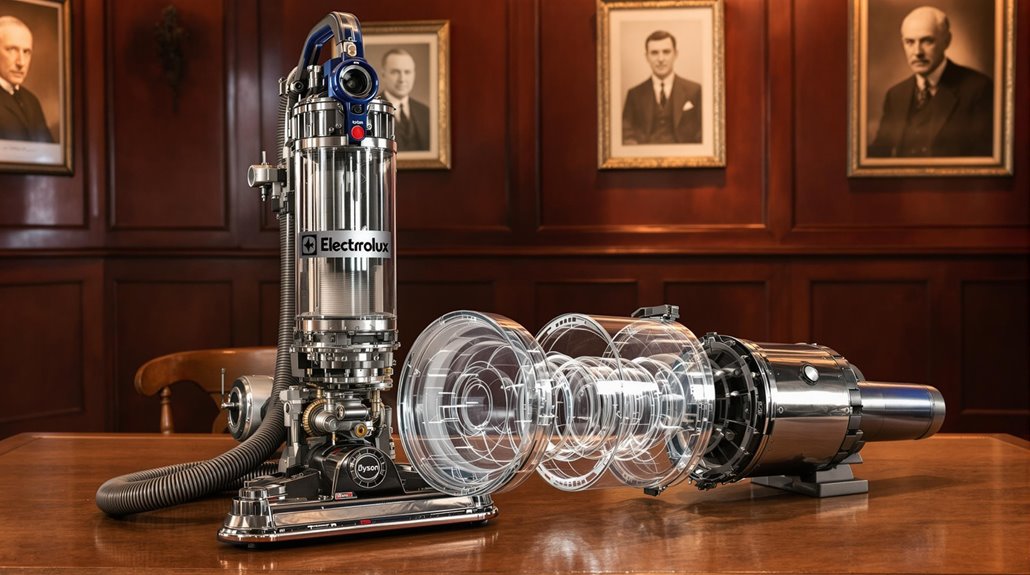
Throughout history, pioneering scientists and philosophers have shaped our understanding of vacuums and their properties. When you trace the evolution of vacuum science, you'll find that Democritus first introduced the revolutionary concept back in 460 B.C., laying the groundwork for future explorations.

The 17th century marked a crucial era in vacuum research. You can credit Evangelista Torricelli with creating the first barometric vacuum in 1643, which demonstrated the existence of atmospheric pressure. Building on this breakthrough, Blaise Pascal conducted extensive experiments that expanded our scientific understanding of vacuum behavior. Galileo Galilei's methodical research during this same period helped establish fundamental vacuum properties that we still rely on today.
The practical application of vacuum technology reached new heights in the 19th century when Thomas Edison incorporated it into his influential invention - the incandescent light bulb. In 1879, Edison's innovation demonstrated how vacuum science could be utilized for everyday use, transforming the way we live and work. These pioneers' collective contributions have made vacuum technology an indispensable part of modern science and industry.
Vacuum Science Made Simple
The basic principles of vacuum science aren't as complex as you might think. When you create a space with less matter and lower pressure than its surroundings, you've created a vacuum. While a perfect vacuum is practically impossible due to the presence of virtual particles, you can still achieve varying degrees of vacuum that prove useful in both science and everyday life.
You'll find vacuum technology all around you, from household cleaners to light bulbs. To understand how vacuums work, consider these fundamental principles:
- Pressure difference - A vacuum exists when there's less pressure inside a contained space than outside
- Matter removal - The more matter (usually air) you remove from a space, the stronger the vacuum becomes
- Space consistency - The closest example to a perfect vacuum is outer space, containing only sparse atoms and radiation
- Particle behavior - Even in the strongest vacuum, some particles still exist due to quantum effects
Understanding these concepts helps you appreciate how vacuum science impacts your daily life, from the brakes in your car to the preservation of sensitive materials like vaccines. It's a demonstration to how fundamental physics principles can lead to practical applications.
Sharing the Vacuum Experience
Building on these vacuum science basics, you'll find that sharing the experience with others can spark curiosity and learning. You can organize engaging demonstrations using household items to create partial vacuum conditions, showing how matter behaves differently under reduced pressure. When you demonstrate these scientific principles, you're helping others understand the fundamental concepts that shape our universe.
Start with simple experiments like using a syringe to compress and release air, or show how particles behave differently in a vacuum by creating a basic demonstration with a straw and water. These hands-on activities help visualize the connection between everyday experiences and the vast emptiness of space, where near-perfect vacuum conditions exist naturally.
You'll uncover that people are fascinated when you explain how vacuum technology helps keep their lives running smoothly, from keeping their food fresh to ensuring their electronic devices stay clean and functional. By sharing these experiments on Create a Vacuum Day, you're not just demonstrating scientific principles – you're helping others understand how this seemingly abstract concept plays an indispensable role in modern technology and our understanding of the physical world.