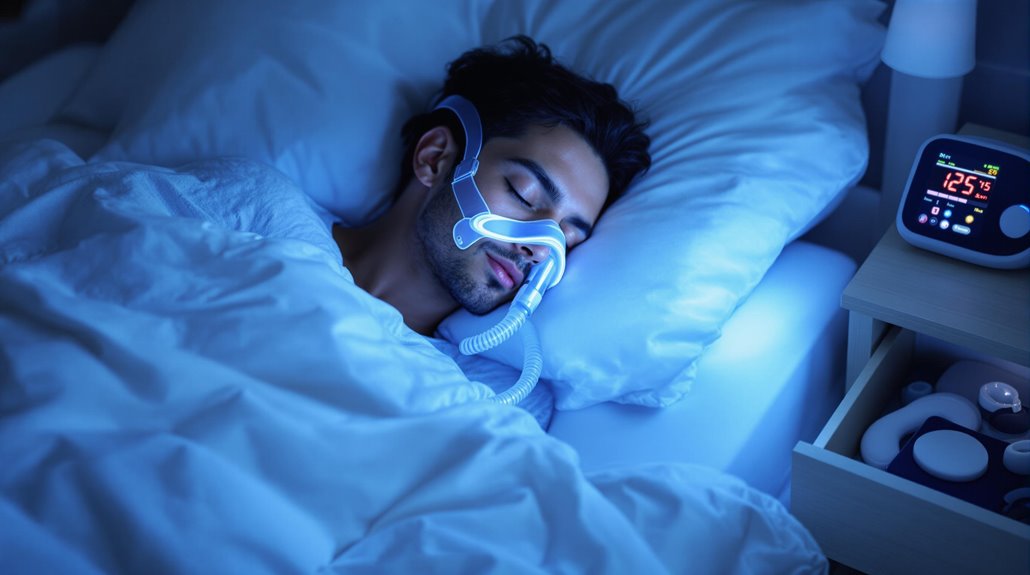
Cooling the Brain to Chill Out: A Unique Approach to Insomnia Treatment
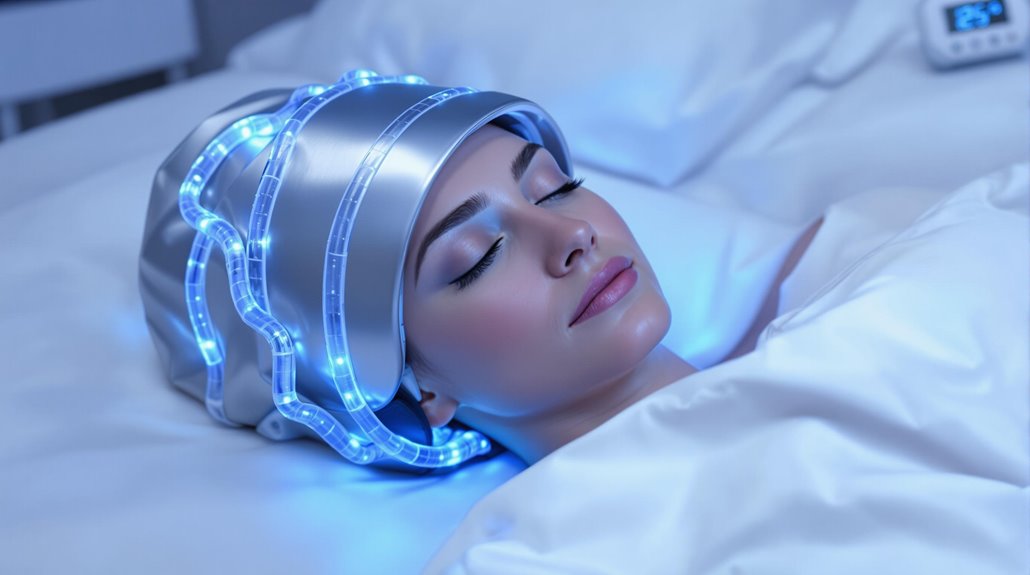
Your struggle with insomnia might find relief through an innovative solution: cooling your brain's frontal cortex. Scientists have uncovered that insomnia often stems from an overactive frontal cortex, leading to excessive brain metabolism during sleep hours. A breakthrough cooling cap technology directly targets this issue by safely lowering brain temperature and metabolic activity, helping you achieve natural sleep without medication. Early research shows impressive success rates, with many patients experiencing significant improvements in both sleep quality and duration. This non-pharmaceutical approach represents a promising shift in sleep science, opening new doors to understanding and addressing sleeplessness.
Understanding Modern Sleep Struggles
In recent decades, insomnia has emerged as a widespread health concern that's far more complex than just counting sheep. You're not alone if you're tossing and turning at night - this sleep disorder affects roughly one in ten adults, often intertwining with other health conditions that complicate the path to restful sleep.
What makes insomnia particularly challenging is its connection to your brain's activity. When you should be drifging off to sleep, your frontal cortex - the brain's command center - remains unusually active. Think of it as a computer that won't shut down, continuously processing thoughts and worries when it should be in rest mode. This state of hyperarousal explains why you might lie awake with racing thoughts and endless mental chatter.
Current treatment options, primarily prescription sleep medications, aren't meeting everyone's needs. Only a quarter of patients report satisfaction with these solutions, leaving many still searching for effective relief. If you're struggling with sleep, understanding that insomnia isn't just about being tired - it's a complex condition affecting your brain's ability to shift into sleep mode - can help you approach treatment with realistic expectations.
The Science Behind Insomnia
Like a high-performance engine that won't idle down, an insomniac's brain remains stubbornly active when it should be powering down for sleep. Research shows that your frontal cortex, the brain's command center, maintains an unusually high metabolism during sleep if you're experiencing insomnia. This hyperactivity creates a frustrating cycle where your mind can't embark on the restorative sleep you desperately need.
Scientists have uncovered that Cooling the brain can effectively lower this overactive metabolism, much like applying a coolant to an overheated engine. By using a specialized cooling cap, researchers found they could reduce frontal cortex activity to levels similar to those seen in normal sleepers. This breakthrough explains why just 25% of patients find relief through traditional sleep medications.
Here's what happens in an insomniac's brain:
- Your frontal cortex remains in high-energy mode, burning through resources like a car idling at high RPMs
- Normal sleep signals get overwhelmed by persistent neural activity
- Your brain's natural sleep-inducing processes can't surmount the elevated metabolism
This understanding has led to innovative thermal treatments that could revolutionize how we approach insomnia therapy.
Breaking Down Brain Activity

Three key patterns emerge when examining brain activity in insomnia patients. First, you'll notice heightened metabolism in the frontal cortex during what should be restful sleep. This increased activity prevents your brain from entering the restorative sleep phase that healthy sleepers experience. Second, while normal sleepers show reduced metabolic activity in their frontal cortex during sleep, insomnia patients maintain elevated levels throughout the night.
The third pattern reveals how cerebral cooling can effectively bridge this gap between insomnia patients and healthy sleepers. When researchers applied controlled cooling to the frontal cortex, they discovered a direct relationship between temperature reduction and sleep improvement. At maximum cooling levels, insomnia patients experienced sleep patterns remarkably similar to those of healthy individuals, both in how quickly they fell asleep and how efficiently they stayed asleep.
These findings explain why your brain's metabolic activity plays such a vital role in sleep quality. By targeting and reducing frontal cortex metabolism through cooling techniques, you're fundamentally helping your brain achieve the natural state of diminished activity that's indispensable for restorative sleep.
Current Treatment Limitations
Despite significant medical advances, current insomnia treatments fall short of meeting patient needs, with only 25% reporting satisfaction from prescription sleep medications. You're likely aware that many patients actively seek natural treatment options, driven by valid concerns about medication side effects and potential dependency issues. The existing pharmaceutical approach hasn't effectively addressed the complex neurobiological factors that contribute to your sleep difficulties.
When you're struggling with insomnia, you'll notice these common limitations in current treatments:
- Prescription medications often mask symptoms without targeting the root cause of your sleep disruption
- Traditional therapies frequently create a cycle of dependence, making it harder to achieve natural sleep patterns
- Standard treatments don't adequately address the unique brain activity patterns that characterize your insomnia
You deserve better options than the limited solutions currently available. While prescription hypnotics remain the primary treatment method, they've failed to provide the robust relief you need. The gap between patient expectations and treatment outcomes highlights the urgent need for innovative, non-pharmaceutical approaches that can help you achieve truly restorative sleep naturally.
The Cooling Cap Solution
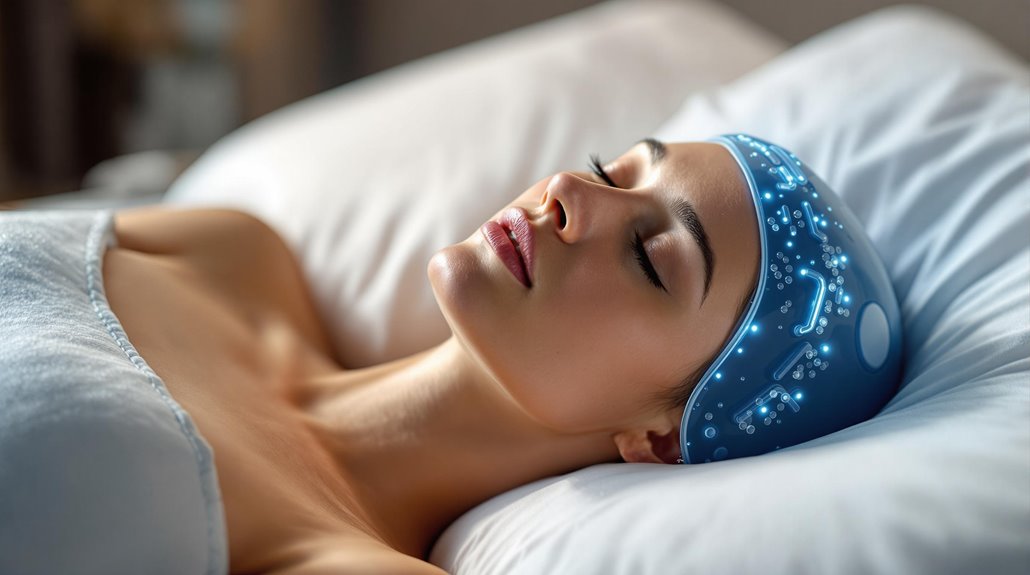
A breakthrough cooling cap technology offers new hope for your battle against insomnia. This innovative treatment uses a soft plastic cap equipped with water-circulating tubes that work to lower metabolic activity in your frontal cortex while you sleep. You'll find this approach particularly promising because it's both non-pharmaceutical and remarkably effective.
The cooling cap's performance is impressive, with a 75% success rate among insomnia patients. When you wear the cap during sleep, you'll experience improvements in both how quickly you fall asleep and how efficiently you stay asleep. These benefits increase linearly with the cooling intensity, and at maximum cooling, you can achieve sleep patterns similar to those of people without insomnia.
You're looking at a potential transformative development in insomnia treatment. While researchers still need to fully understand how brain cooling improves sleep, the cap's simplicity and effectiveness make it a compelling alternative to current therapies. If you're struggling with traditional insomnia treatments, this cooling cap technology might offer the solution you've been seeking, though ongoing research continues to optimize the therapy for even better results.
How Cerebral Hypothermia Works
Cerebral hypothermia works by targeting your brain's metabolic activity, specifically in the frontal cortex where insomnia often originates. When you're experiencing insomnia, your frontal cortex shows heightened activity, making it difficult to shift into sleep. By applying controlled cooling through a specialized cap, you're essentially helping your brain "power down" to its normal operating temperature.
The process relies on a network of water-filled tubes that create precise cooling effects:
- The soft plastic cap sits comfortably on your head, supplying controlled temperature reduction to your frontal cortex
- The circulating water maintains consistent cooling, gradually lowering your brain's metabolic activity
- Your overactive thought patterns begin to slow as the cerebral hypothermia takes effect
This targeted cooling approach helps normalize your sleep patterns by reducing the hyperactivity that keeps you awake. As research shows, when the cooling reaches ideal levels, you'll likely experience improvements in both how quickly you fall asleep and how efficiently you stay asleep. The beauty of this treatment lies in its simplicity - it's working with your brain's natural processes rather than relying on medications.
Research Methods and Design
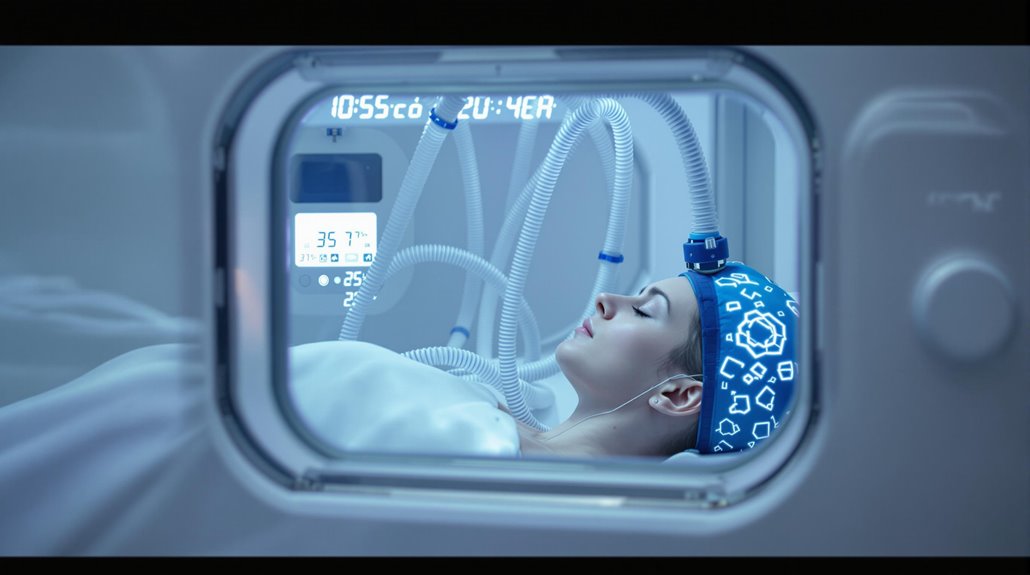
Scientists conducted a carefully controlled study involving 24 participants to evaluate the effectiveness of cerebral cooling on sleep patterns. The research team recruited 12 insomnia patients and 12 healthy controls from an initial screening pool of 110 people. Among the insomnia group, women made up the majority, with 9 female participants, and the average age was 45 years.
The research protocol required participants to wear a specialized cooling cap during overnight sleep monitoring sessions. This innovative cap, made of soft plastic, contained a network of water-circulating tubes designed to cool the frontal cortex region of the brain. To thoroughly assess the impact of different temperature levels, you'll find that the study implemented multiple cooling conditions. These included a control setting with no cooling, neutral temperature, moderate cooling, and maximal cooling intensities. The researchers focused their analysis on two primary metrics: how long it took participants to fall asleep (sleep latency) and how effectively they maintained sleep throughout the night (sleep efficiency). This methodical approach allowed them to precisely measure the impact of cerebral cooling on sleep patterns.
Clinical Trial Results
Through rigorous analysis of the clinical data, researchers uncovered that maximal cooling generated exceptional improvements in sleep patterns among insomnia patients. The all-night frontal cerebral thermal treatment demonstrated a clear dose-dependent relationship, where higher cooling intensities led to better sleep outcomes. You'll be intrigued to know that when participants used the cooling cap at maximum settings, insomnia patients achieved sleep patterns remarkably similar to those of healthy individuals.
The clinical trial revealed three distinct visual markers of success:
- Insomnia patients falling asleep faster with the cooling cap, matching healthy participants' sleep onset times
- Participants experiencing more consistent sleep throughout the night, with fewer interruptions
- Sleep efficiency metrics improving proportionally with increased cooling intensity
This impactful study marks a significant advancement in insomnia treatment options. You're witnessing the emergence of a natural, non-pharmaceutical approach that directly addresses the neurobiological aspects of sleep disorders. The cooling cap's effectiveness in normalizing sleep patterns suggests it could become a useful tool in your healthcare provider's arsenal for treating insomnia.
Patient Success Stories

Real-world success stories demonstrate the restorative influence of the cooling cap technology for chronic insomnia sufferers. You'll find compelling evidence in cases like Susan's, who achieved dramatic sleep improvements after just one week of use, following unsuccessful attempts with various prescription medications.
The cooling cap's effectiveness spans diverse age groups and situations. Consider John, who finally broke free from a decade-long battle with insomnia, achieving uninterrupted sleep for the first time in years. Emily, a stressed graduate student, explored a natural path to restorative sleep without the burden of medication side effects. For shift worker Steve, the device proved valuable in managing irregular sleep schedules, leading to enhanced daytime performance and energy levels.
Perhaps most remarkably, you'll see the cooling cap's impact in Patricia's case. At age 72, after struggling with insomnia throughout her life, she finally experienced consistent, quality sleep. These success stories highlight how this innovative technology offers hope to those who've exhausted traditional treatment options, proving that restorative sleep is achievable through this non-invasive approach.
Beyond Traditional Sleep Medicine
A model change in sleep medicine is emerging as the cooling cap technology challenges conventional treatment approaches. You'll find this innovative thermal transfer method offers a stark contrast to traditional sleep medications, providing a natural solution for your insomnia struggles. Leading University researchers have demonstrated that by targeting the prefrontal cortex's hyperactivity, this breakthrough treatment works with your body's natural sleep mechanisms rather than forcing sleep through chemical means.
The conversion of sleep medicine through cooling cap technology represents three key shifts:
- Moving from symptom suppression to addressing root causes through precise thermal transfer to the brain
- Shifting from pill-dependent solutions to non-pharmaceutical, adjustable treatments
- Transitioning from standardized prescriptions to personalized, dose-dependent approaches
With over 2,200 accredited sleep centers across the nation, you're seeing a healthcare system that's increasingly ready to adopt alternative treatments. This accessibility, combined with the cooling cap's proven effectiveness, marks a significant departure from conventional insomnia treatments. As research expands into other sleep disorders, you're witnessing the evolution of sleep medicine beyond its traditional boundaries.
Safety and Side Effects
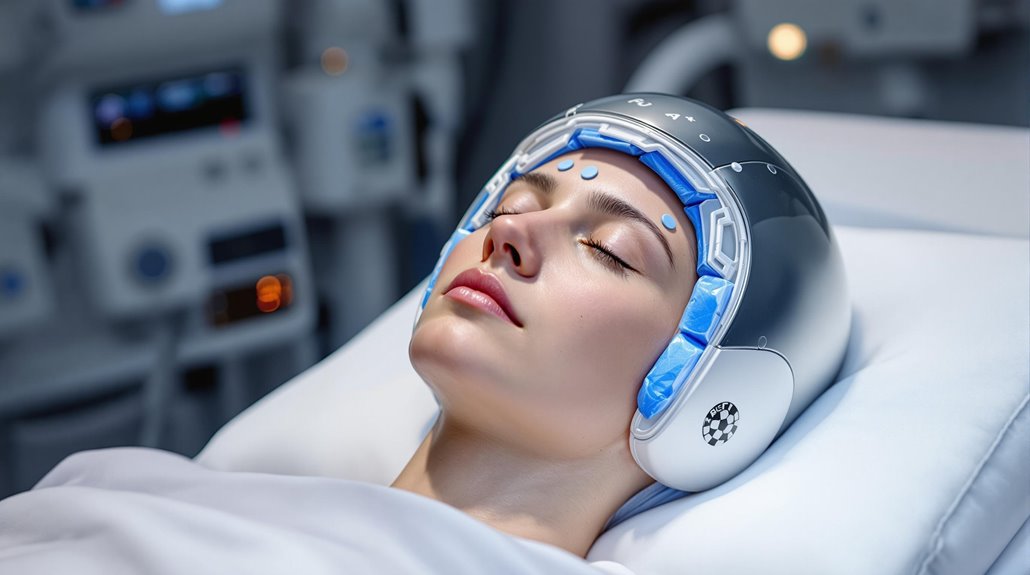
Safety stands at the forefront of any new medical treatment, and the cooling cap technology has proven remarkably well-tolerated. Research findings demonstrate that participants experienced no adverse side effects while using the frontal cerebral thermal transfer device, making it a promising option for those seeking insomnia relief.
You'll be pleased to know that this non-invasive approach doesn't disrupt your natural sleep patterns or interfere with the progression through different sleep stages. The cooling therapy maintains your normal sleep architecture while providing its therapeutic benefits. When you use the cooling cap, you can expect a comfortable experience that many users compare to a soothing, massage-like sensation.
The researchers' extensive safety assessment revealed no concerns about the device's use, highlighting its potential as a viable alternative to traditional sleep medications. You won't need to worry about invasive procedures or complex medical interventions - the cooling cap's simplicity is one of its greatest advantages. This straightforward approach to managing insomnia offers you a safe treatment option that aligns with your body's natural sleep processes while avoiding the complications often associated with pharmaceutical solutions.
Future Applications and Development
Beyond its current success in treating insomnia, the cooling cap technology shows tremendous potential for broader applications in sleep medicine. Through frontal cerebral thermal transfer, researchers are exploring how this innovative approach might benefit patients with various sleep disorders linked to frontal cortex hyperactivity. You'll be excited to know that scientists are working to perfect the technology for home use by insomnia patients, making it a more accessible treatment option.
As a natural and effective treatment, the cooling cap's development is focusing on three key areas:
- Refining the temperature control systems to deliver precise, personalized cooling therapy based on individual patient needs
- Creating user-friendly designs that allow comfortable wear during sleep while maintaining ideal thermal contact
- Developing smart monitoring capabilities that adjust cooling intensity based on real-time brain activity
The future of this technology looks promising as researchers continue to investigate the underlying mechanisms of how brain cooling improves sleep. With ongoing development, you might soon have access to this non-pharmaceutical solution in your own home, revolutionizing how we approach insomnia treatment and potentially other sleep disorders.
Home Treatment Possibilities
The cooling cap's potential for home use represents a significant breakthrough in insomnia treatment. If you're struggling with sleepless nights and seeking alternatives to medication, this innovative device could soon become your go-to solution. The cap's simple design and comfortable wear make it an ideal candidate for non-pharmaceutical treatment you can use in your own bedroom.
You'll appreciate that this novel approach to treating insomnia doesn't require complex medical procedures or daily trips to a sleep clinic. If you've found traditional sleep medications unsuccessful or experienced unwanted side effects, the cooling cap might offer the relief you've been seeking. The device's straightforward application means you won't need special training or medical supervision to use it effectively.
While researchers are still fine-tuning the technology and investigating how it works, you could soon have access to this natural sleep aid. The cooling cap's development as a home treatment option may revolutionize how you manage your sleep problems, potentially reducing or eliminating your dependence on sleeping pills while providing a safe, effective alternative right in your home.
Advancing Sleep Science
Recent advances in sleep science have revealed astonishing discoveries into insomnia's root causes, particularly the connection between sleep difficulties and increased metabolic activity in the brain's frontal cortex. As you investigate treatment options, you'll find that innovative approaches like cerebral hypothermia are revolutionizing how we tackle sleeplessness. This cooling technique directly targets the overactive frontal cortex, offering a natural sleep treatment without relying on medications.
Research shows three key ways this breakthrough advances our understanding of sleep:
- It demonstrates how targeted cooling of specific brain regions can effectively induce sleep
- It provides a measurable link between frontal cortex activity and sleep quality
- It opens doors for treating other sleep disorders related to brain hyperactivity
You'll be interested to know that scientists are continually refining this approach, studying the precise mechanisms behind its effectiveness. As research progresses, you can expect more sophisticated applications of this technology, potentially leading to customized solutions for different types of sleep disorders. This advancement represents a significant shift toward more natural, biology-based treatments that address the root cause of insomnia rather than just its symptoms.